
The complete guide
How To Choose And Fit Stainless Steel Bird Spikes
The mess that keeps coming back
Bird droppings on a balcony or shopfront are not a one-off problem. They are a routine. You scrub the ledge, it looks fine for a week, and then the same pigeons are back on the same spot doing the same thing. The reason is simple. Birds are creatures of habit, and once a surface is marked as a good roost, the flock keeps returning to it.
Cleaning treats the symptom. The droppings are acidic and will slowly eat into paint, render and metalwork, and nesting material in a gutter causes overflow that ends up soaking a wall. Meanwhile the smell and the hygiene risk make the space unusable. What you actually need to change is the surface itself, so it stops being a comfortable place to land.
That is the whole idea behind a stainless base bird spike fence kit. You are not chasing birds away each morning. You are making the ledge boring.
How spikes do the job
A bird coming in to land needs a flat area wide enough to put both feet down and settle its weight. Take that away and the landing attempt fails. The bird feels the obstruction, pulls up, and goes looking for somewhere easier.
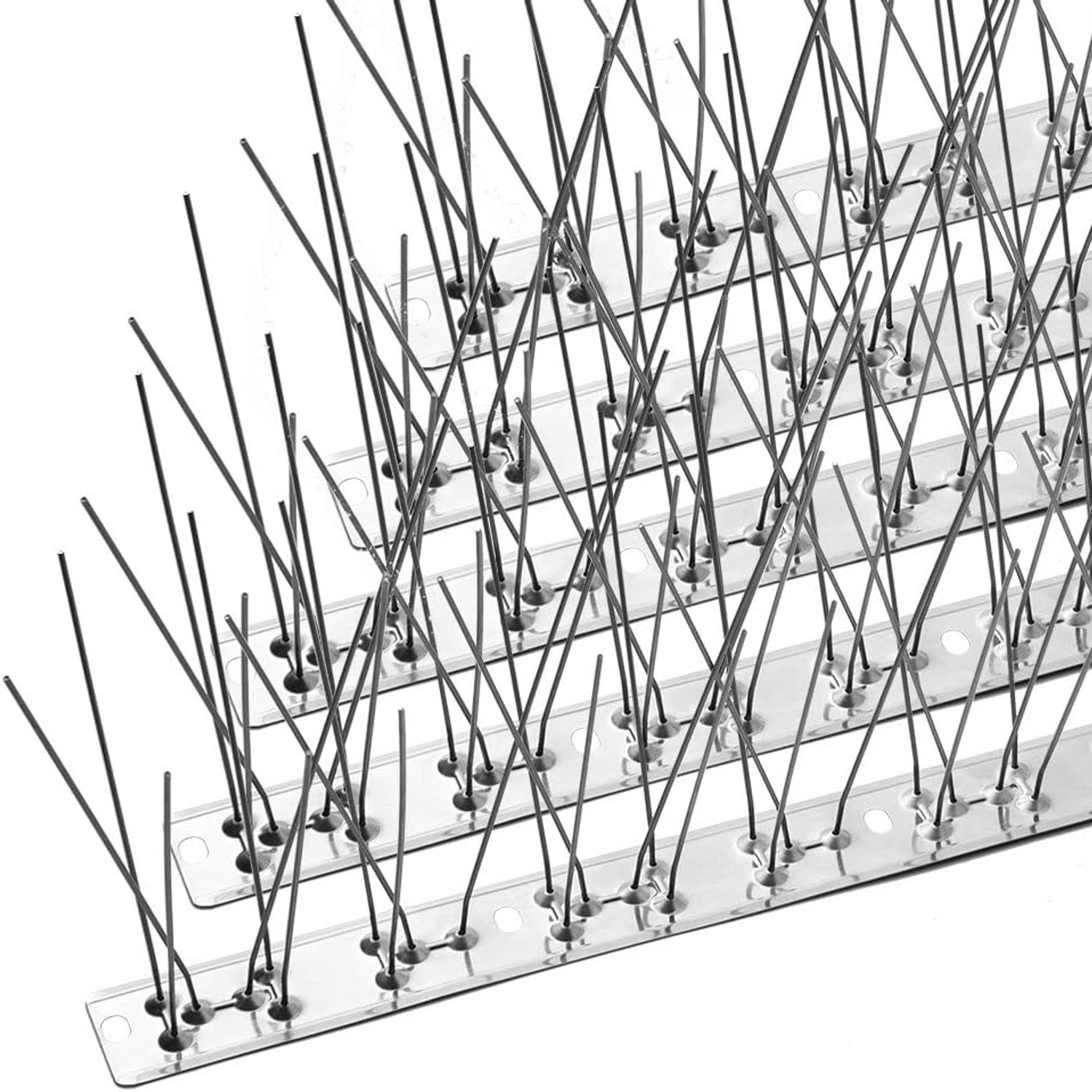
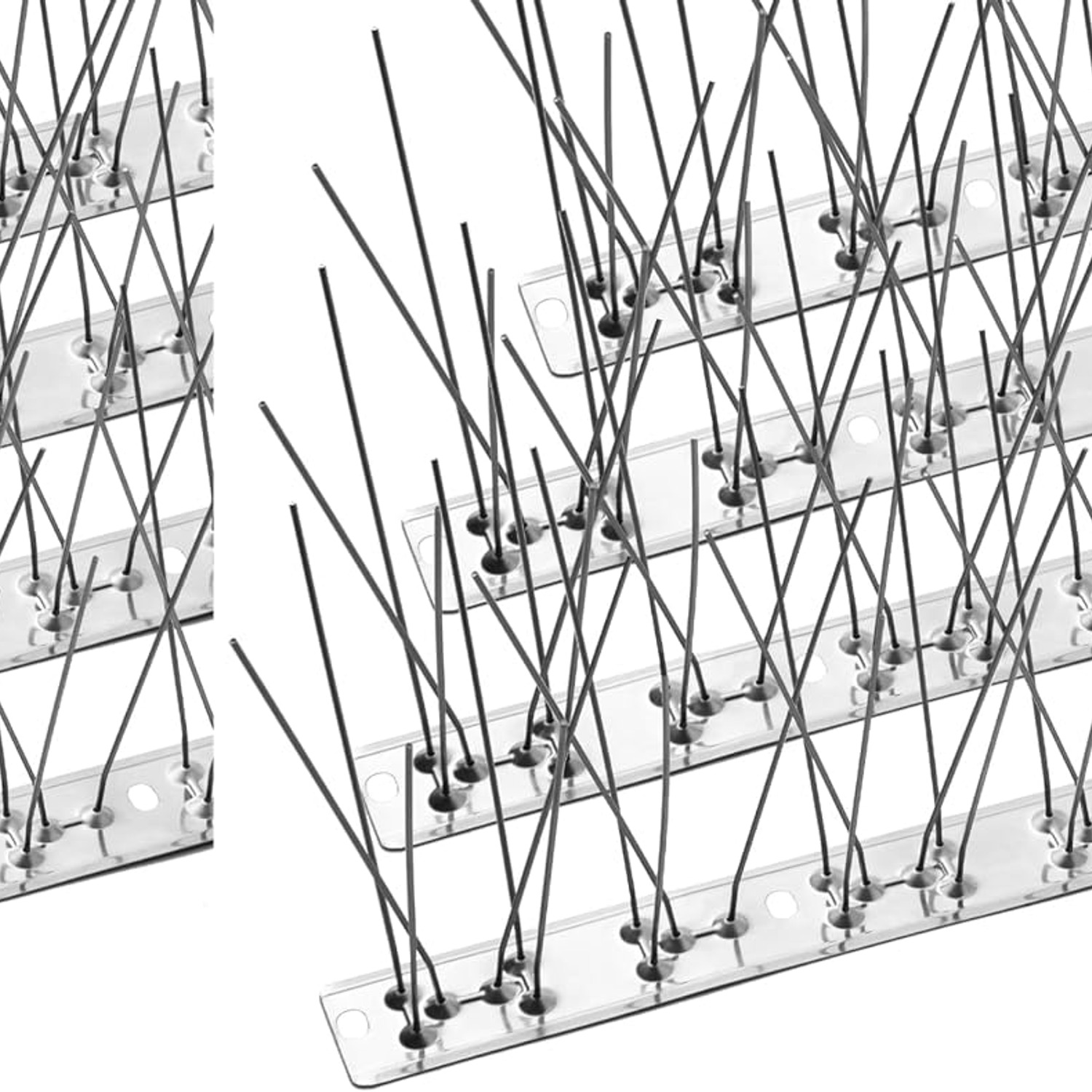
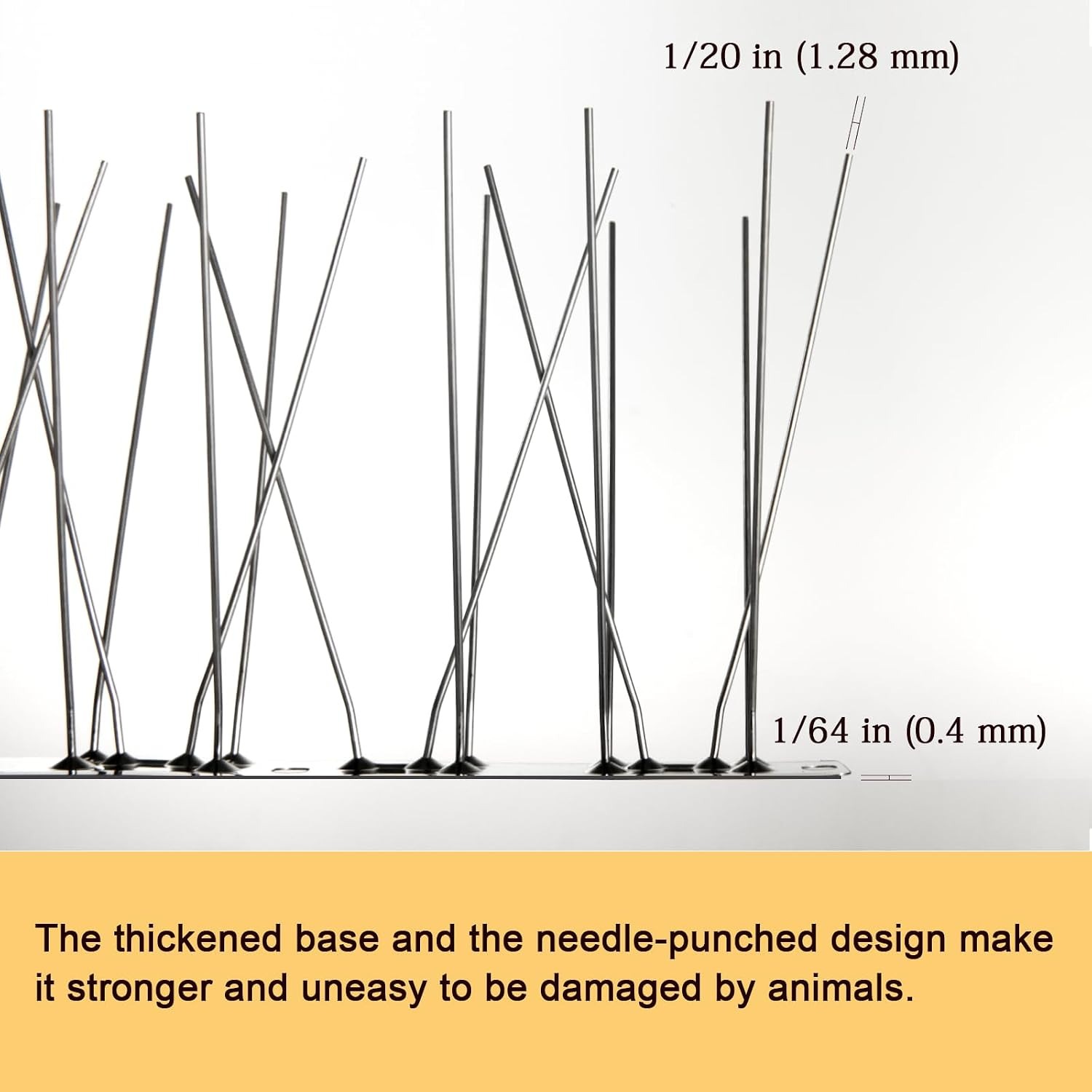
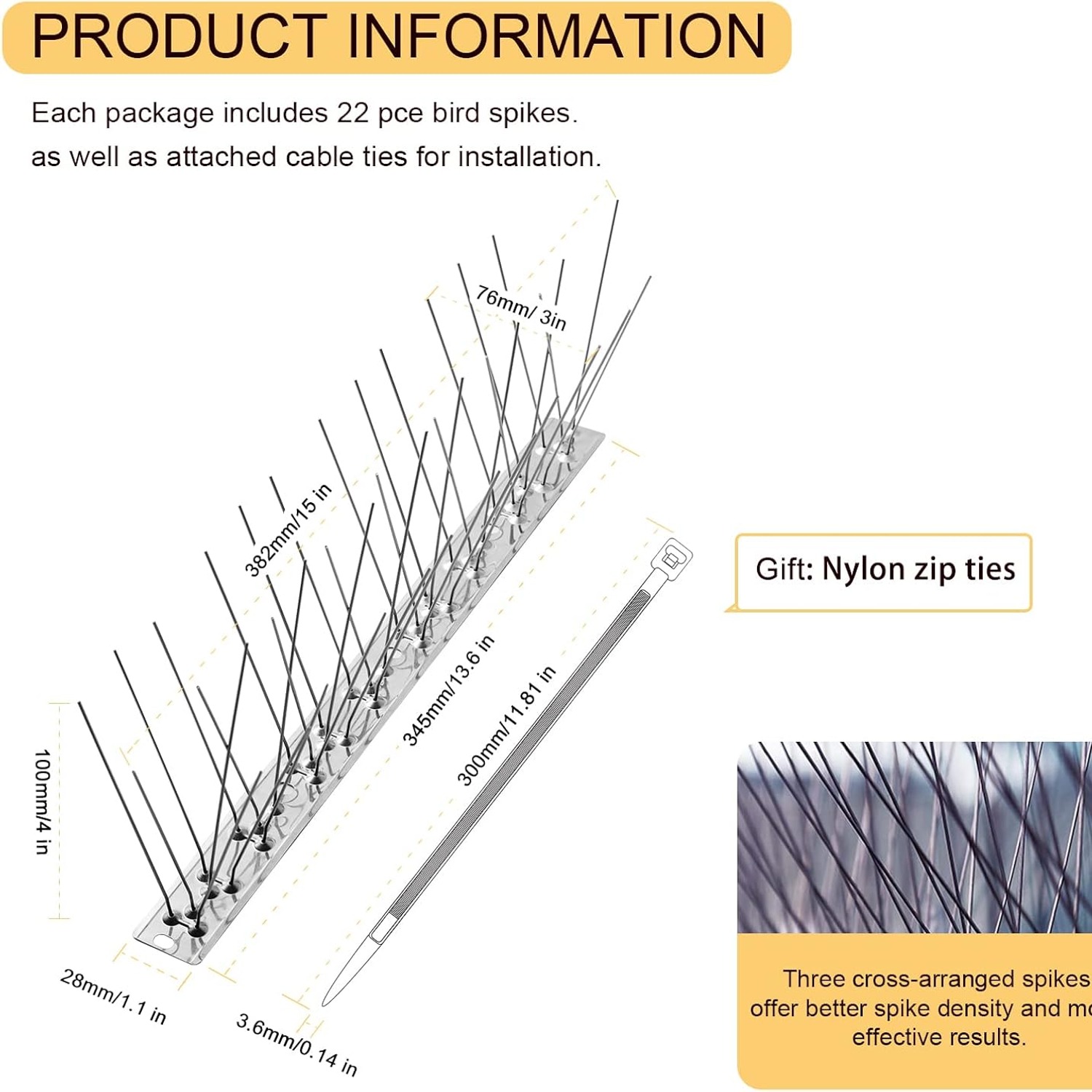
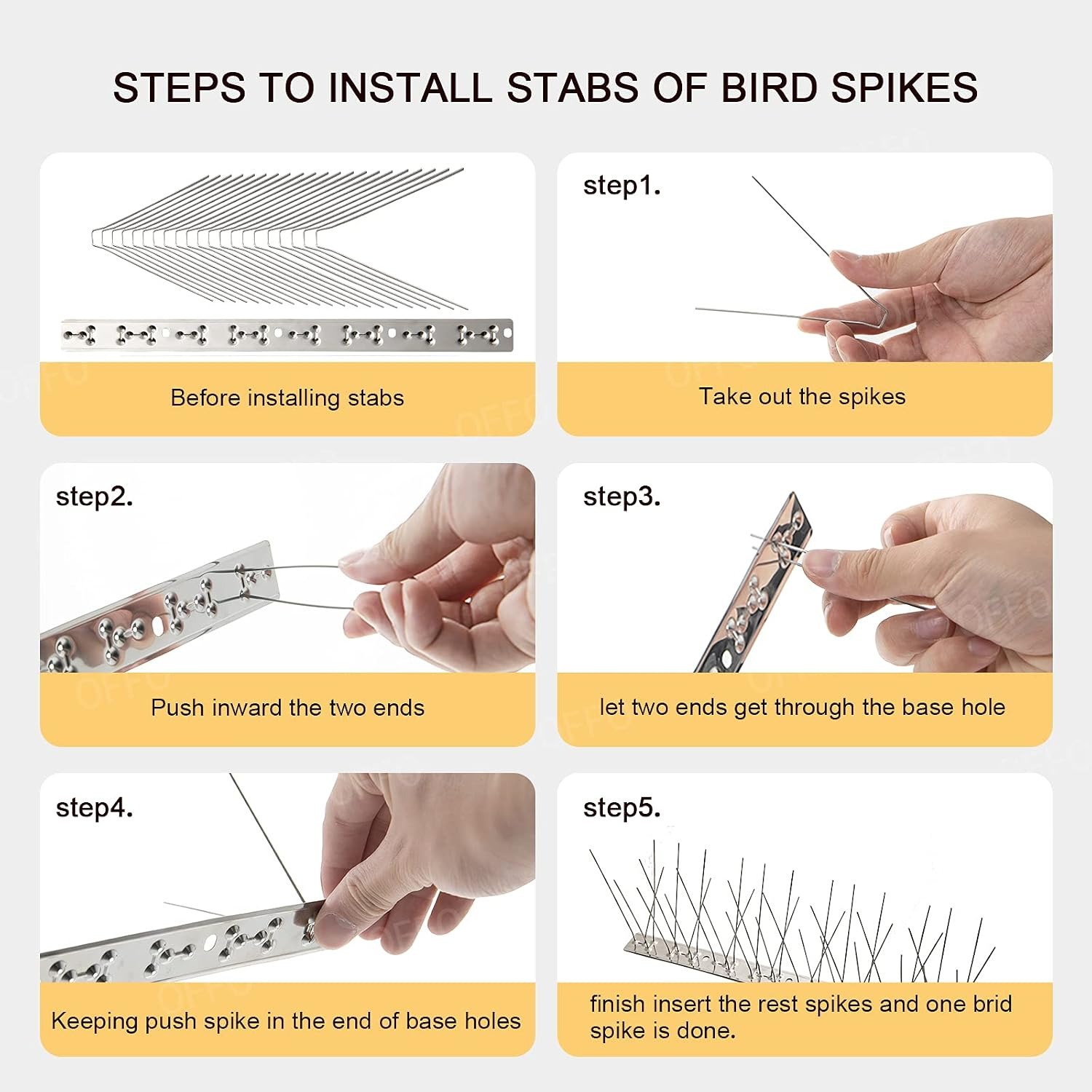
The needles here fan out in two directions, six per group, covering roughly a 3 inch width and rising about 4 inches off the base. That spread is the part people underestimate. Cheap strips with two or three straight pins leave clear channels, and a pigeon will happily balance in the gap between them. A wide fan closes those channels. There is no sweet spot left to aim for.
Polished steel adds a small bonus. The bright surface catches sunlight and moves light around in a way birds find off-putting as they approach. It will not do the job on its own, but combined with the physical barrier it makes the area less inviting still.
Nothing about this traps or injures anything. There is no glue, no poison, no electricity. This is why anti roosting spikes are the standard approach on so many commercial buildings, where both results and animal welfare have to stack up.
Why the base matters more than the needles
Most people compare bird spikes by looking at the pins. The more useful comparison is the base.
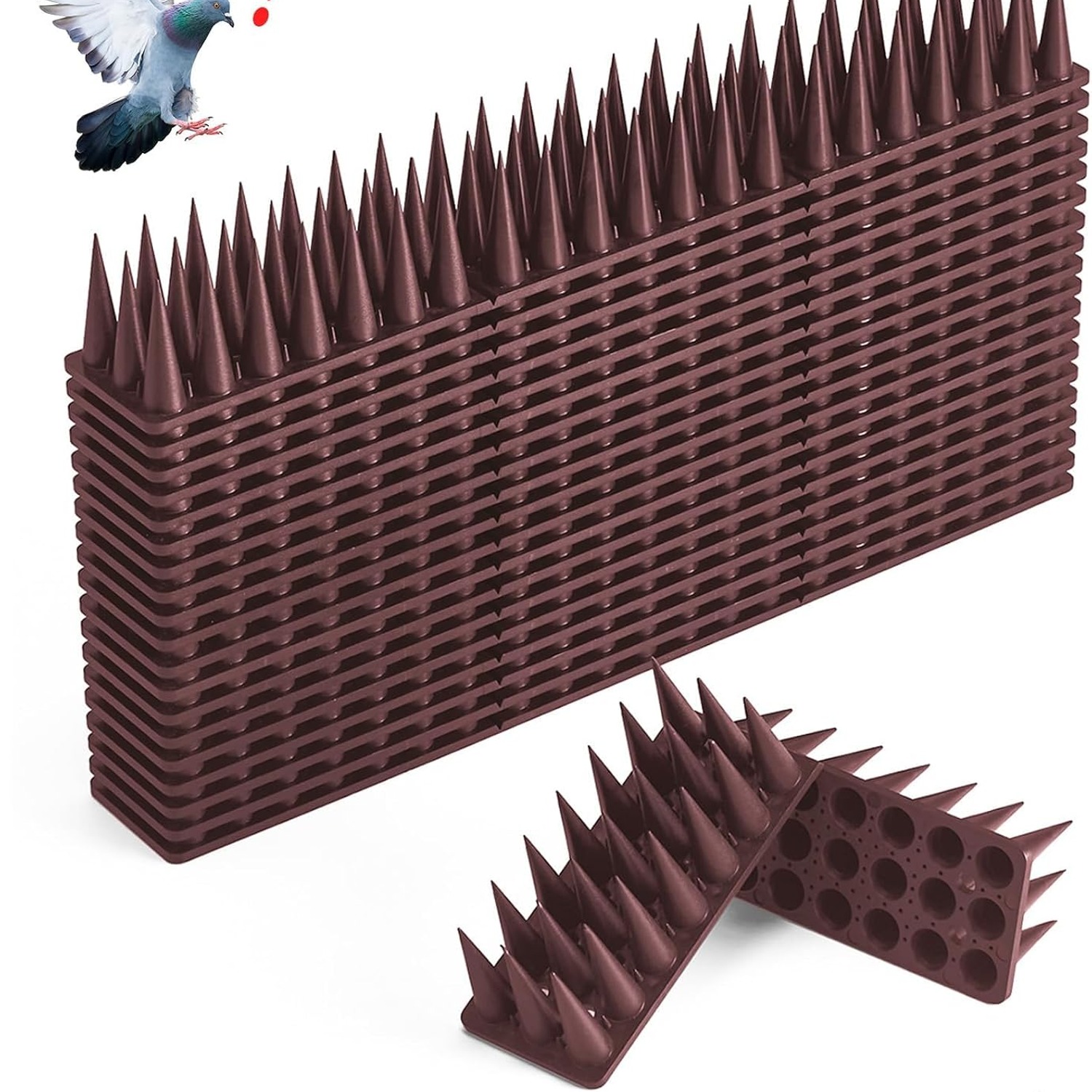
Plenty of spike strips are built on a polycarbonate or PVC base with metal pins set into it. They look fine on day one. The problem shows up two or three summers later, when UV light has worked on the plastic and repeated freeze-thaw cycles have flexed it. The base goes chalky, then brittle, then it cracks. Once it cracks, pins loosen and the strip starts shedding bits onto whatever is below.
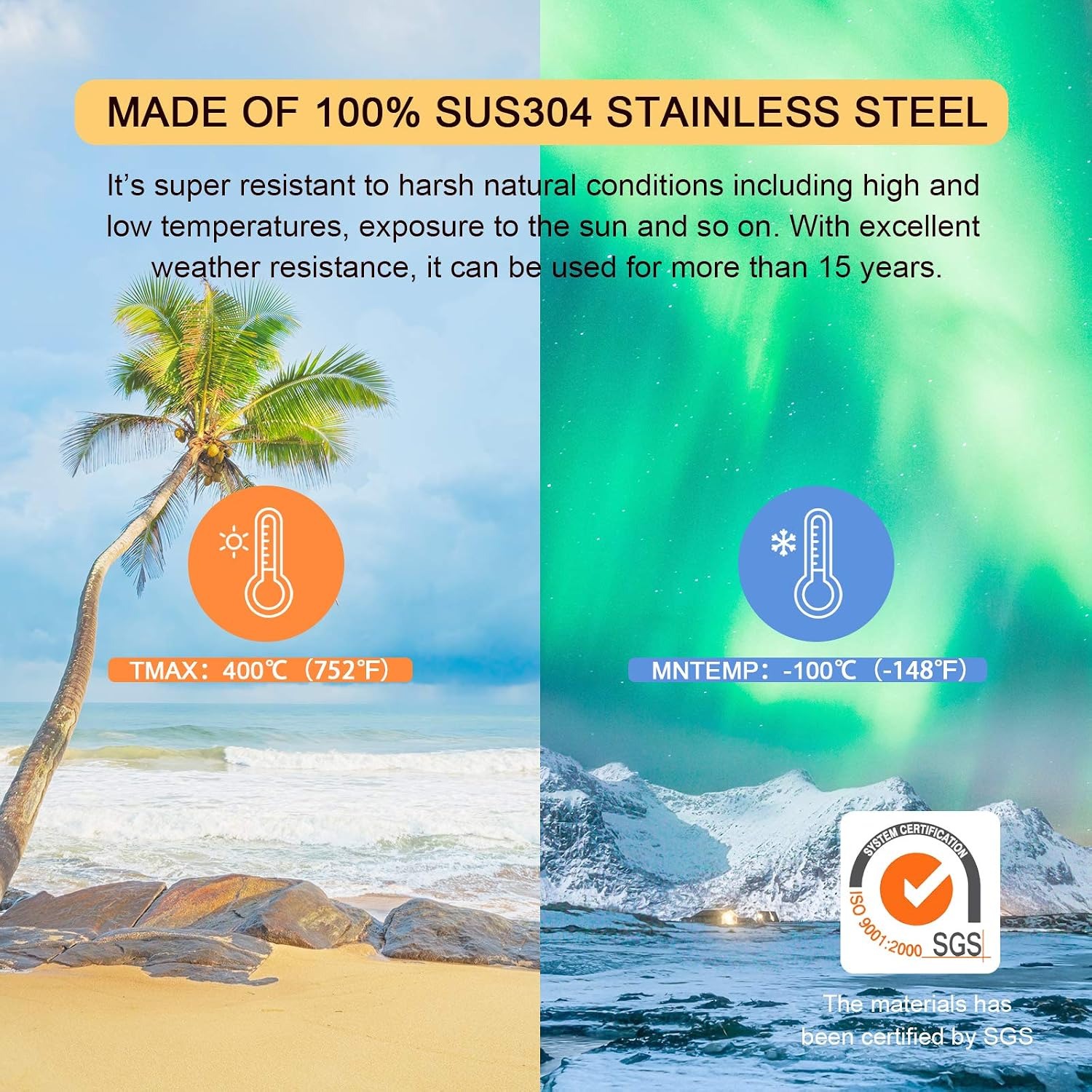
This kit uses stainless steel throughout, base included. There is no plastic component to degrade, which means no replacement cycle and no maintenance beyond the occasional rinse. If you are fitting spikes somewhere hard to reach, such as a high parapet or a gutter line, that difference is worth real money in avoided ladder trips.
Stainless also handles weather honestly. Rain, snow, frost and wind do not bother it. In coastal salt air, an occasional fresh water rinse keeps the finish clean.
Working out how much you need
The kit contains 22 strips at 13.6 inches each, giving about 25 feet of total coverage. Working out whether that is enough takes five minutes with a tape measure.
Measure the length of every surface you want protected. Add them together. Then look at the width of each surface. Anything up to about 4 inches works with a single row of strips. Anything wider needs a second parallel row, because a bird will simply land on the unprotected strip behind your single line. A 10 inch parapet, for example, really wants two or even three rows, so the length you need doubles or triples.
Do not forget the small stuff. Signage tops, security light housings, CCTV brackets and air conditioning units are all favorite perches, and a single strip in the right place often stops a surprising amount of mess. Many buyers looking for the best bird spikes for ledges end up using half the kit on obvious long runs and the rest on these smaller targets.
Fitting them properly
Preparation does most of the work. Clean the surface thoroughly first, which on a bird-fouled ledge means scraping, washing and letting it dry completely. Adhesive will not bond to a film of dried droppings or dust.
On smooth surfaces such as rendered ledges, metal sills and painted timber, an outdoor-grade construction adhesive or neutral cure silicone is the easiest method. Run a continuous bead along the underside of the base, press the strip down along its full length, and leave it to cure properly before the next rainfall. Check your adhesive instructions for the cure time.
On rough masonry, old brick or anywhere exposed to strong wind, screws give better long-term confidence. Use stainless fixings so you are not pairing steel with something that will corrode against it. For round railings and pipes, stainless cable ties around the base work well and let you adjust position later.
Lay the strips end to end where you want a continuous line. Avoid leaving gaps longer than a couple of inches, because birds are good at spotting them. Where a ledge turns a corner, continue the line round rather than stopping short.
Wear gloves. The tips are sharp enough to catch a finger when you are pressing a strip down.
Who this suits
Homeowners dealing with a fouled balcony or a doorway covered in mess are the obvious group. So are people with a gutter that keeps blocking because birds roost above it. A run of gutter bird spikes along the outer lip is often all it takes.
Shops and cafes with a canopy, sign or window ledge that birds have claimed get a lot out of this too, because the alternative is paying someone to clean the frontage every week. Landlords and property managers like steel spikes for the same reason, which is that they go up once and then stay there.
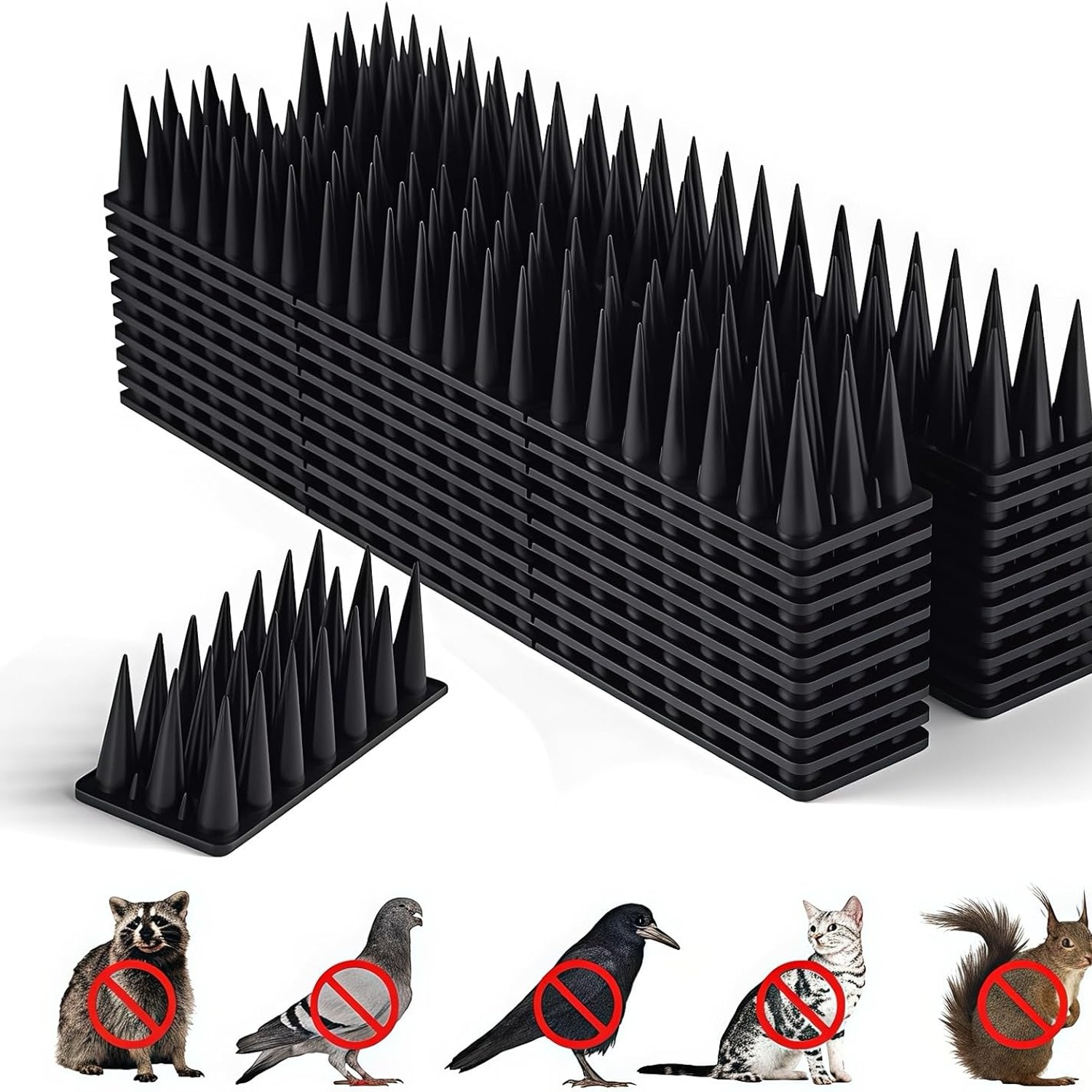
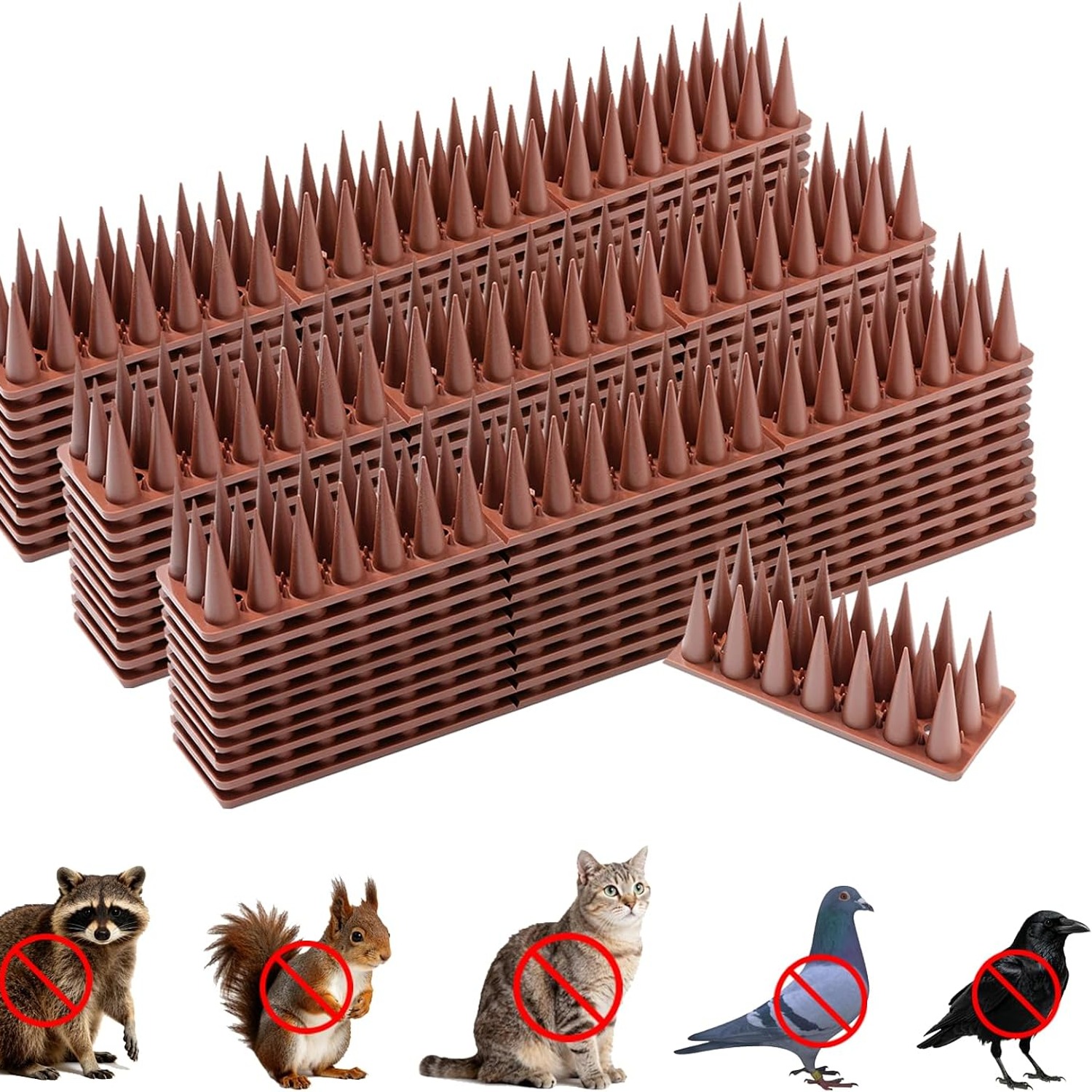
The kit is also handy for fence tops where cats are using the rail as a highway, since cats and squirrels are both listed among the target species. It will not make a fence impassable, but it makes it a lot less convenient.
Where spikes are less suitable is very large open surfaces, such as a whole flat roof or the top of a wide wall. Covering those with spikes is expensive, and netting or wire systems usually make more sense. Spikes shine on edges, lines and narrow ledges.
Keeping them working
Maintenance is light, but it is not zero. Twice a year, have a look along the line. Lift out any twigs, leaves or nesting material caught between the needles, because if debris builds up it eventually forms a platform and the whole point is lost.
Give them a rinse with clean water at the same time. A soft brush and mild soapy water deals with anything stubborn. Check your fixings too, especially after a storm, and re-glue or re-tighten any strip that has moved.
That is genuinely all. There are no batteries, no refills and nothing to reset.
The short version
Bird spikes fix a repeat problem by changing the surface instead of chasing the birds. This kit gives you 22 stainless steel strips, 25 feet of coverage, and six needles per group spreading about 3 inches wide and 4 inches tall, which is enough fan to close the gaps that cheaper two-pin strips leave open. The steel base is the quiet upgrade, because it removes the part that normally fails first.
Measure your ledges, double the length for anything wider than about 4 inches, clean the surface properly, and fix the strips down with adhesive, screws or cable ties depending on what you are fixing to. Then clear the debris a couple of times a year and leave them to it.