
The complete guide
Choosing and Fitting Anti Climb Fence Spikes: A Practical Buyer's Guide
The problem sits at the top edge
Think about how someone actually gets into a back garden. They rarely cut through a panel or dig under a wall. They put a hand on the top rail, a foot on a bin or a low wall, and swing over in a couple of seconds. The whole crossing depends on one thing, a flat surface at the top that is comfortable to grab and press against.
Cats and raccoons work on the same logic. A fence rail or wall cap is a highway. It is dry, it is off the ground, and it leads from one garden to the next without meeting a dog. If you have ever found paw prints on the car bonnet or seen a raccoon stroll along your boundary at dusk, you have seen that highway in use.
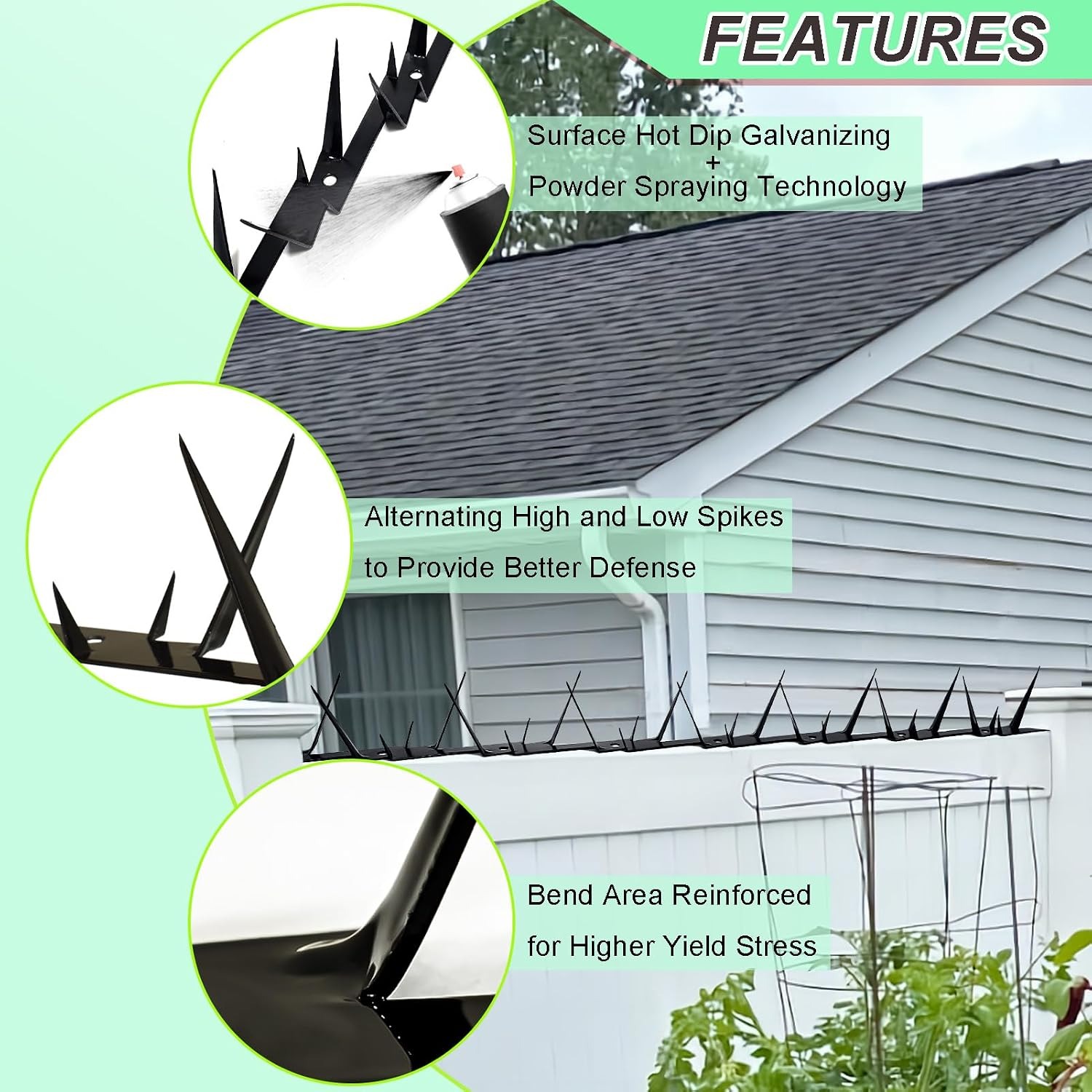
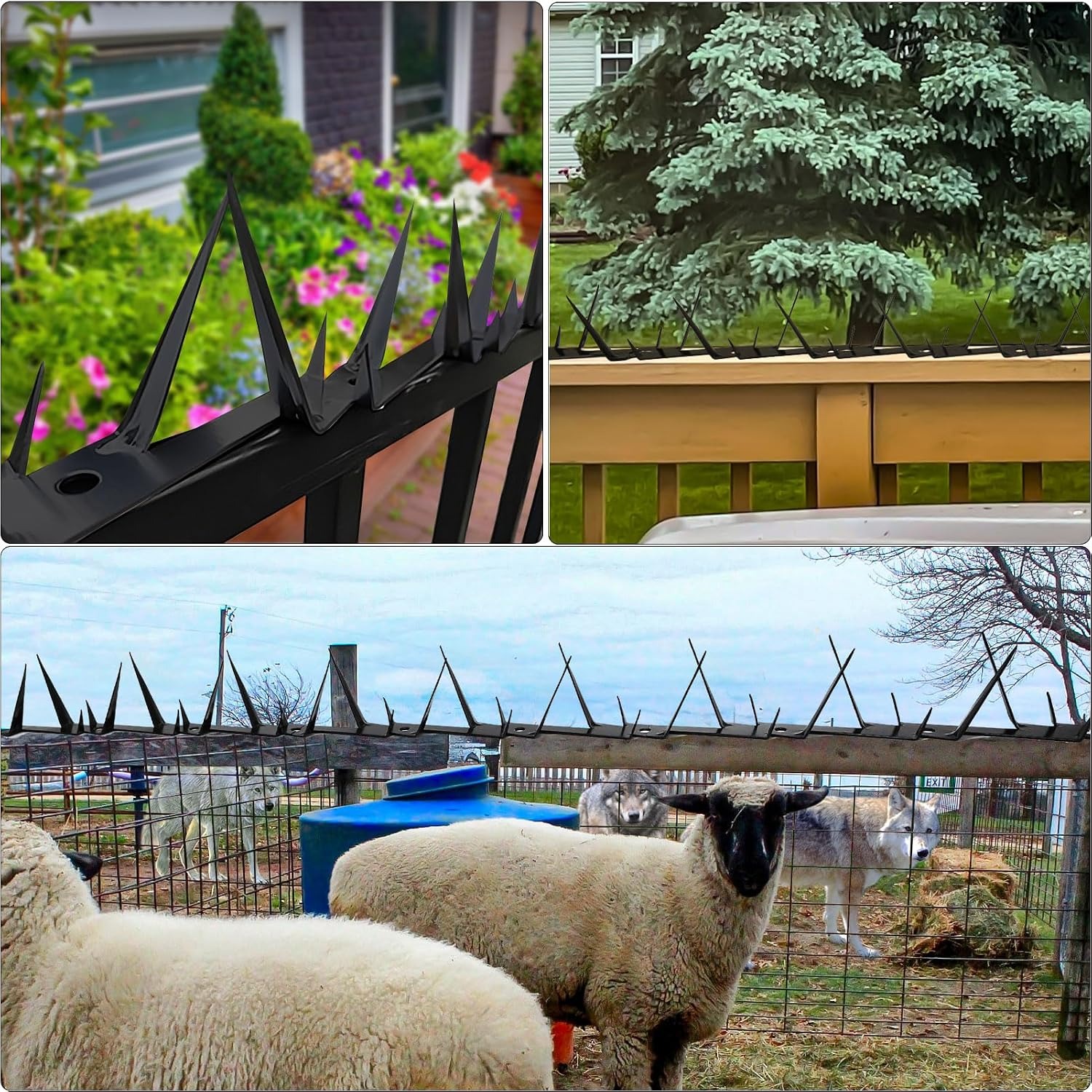
Heavy duty security fence spikes attack the weak point directly. Cover the top surface with upward facing points and the handhold disappears. There is nothing to grip, nothing to stand on, and nothing comfortable to land on. The crossing stops being quick and easy, and for most opportunists and most animals, that is enough.
How anti climb spikes actually work
The deterrent here is physical, not technological. No sensor decides whether to activate. No battery runs down. The strip simply sits there and changes the shape of the surface.
Two things happen at once. The first is immediate and tactile. A hand or paw touches the spikes and pulls back before any weight goes on. That reflex is fast and it does not need any thinking. The second is visual. Someone scanning a row of gardens for an easy way in sees a spiked top and reads it as effort and risk. They move along to the next property.
That second effect is why coverage matters more than ferocity. A visible run along the sections someone would actually use does more work than a short aggressive patch in the middle of a long fence.
What you get with this product
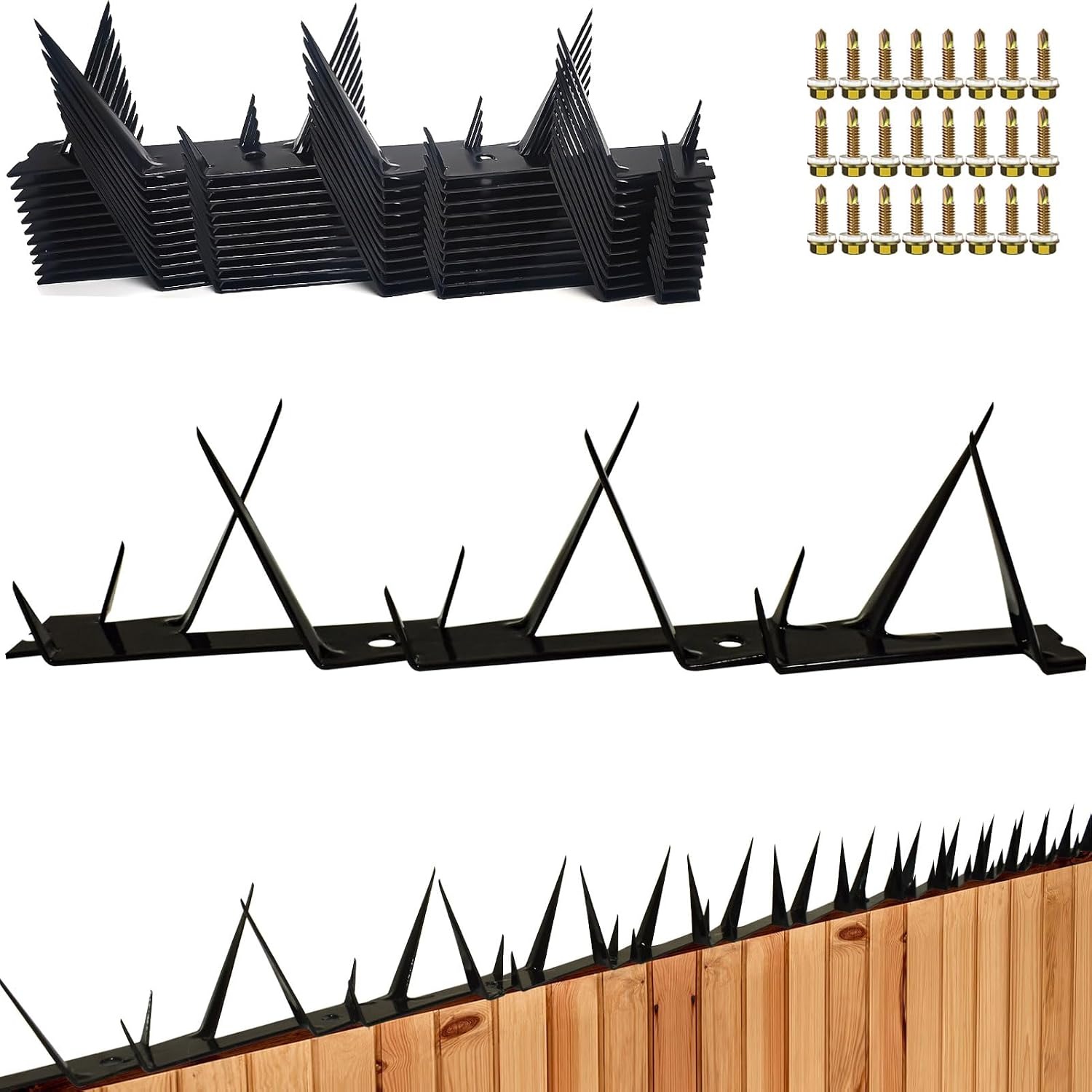
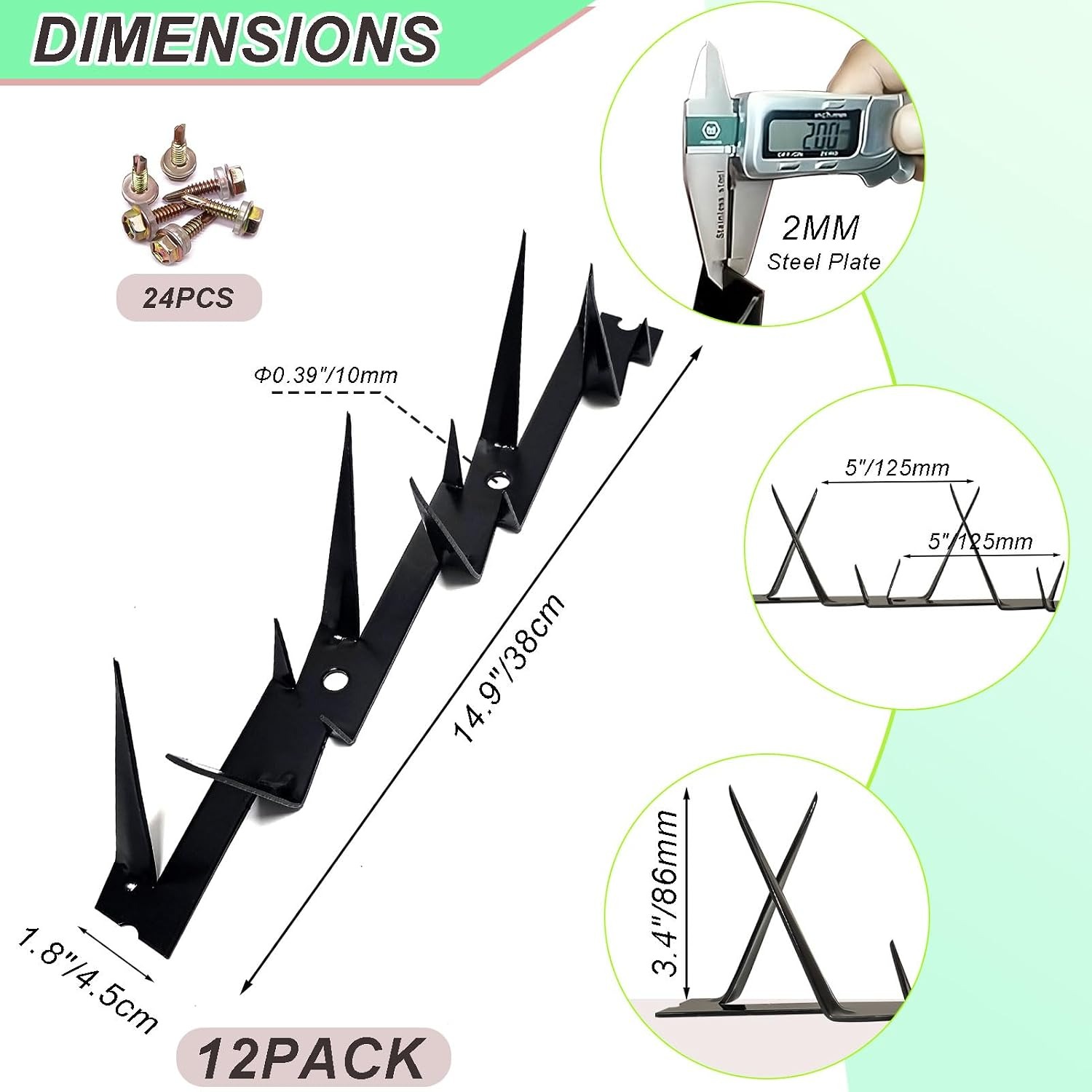
These are black metal strips, listed at 178 inches long and 1.8 inches wide, with one piece in the pack. Screws are included for fixing into timber fence frames, gate frames, walls and roof edges. The black finish is chosen so the strips sit quietly against dark fencing and brick rather than announcing themselves.
Some details are not stated in the product record, including the exact weight, country of origin and detailed material grade. If you need a specific written specification for an insurance requirement or a commercial job, ask us before you order and we will check what we can confirm.
Who they suit
Homeowners are the obvious group. A side gate that keeps getting hopped, a low rear fence that backs onto a lane, a garage roof that gives access to a bedroom window. These are the classic problem spots and they are exactly where spikes earn their keep.
Gardeners and allotment holders use them around sheds and plot gates where tools are stored. Schools, small businesses and storage yards fit them along boundary walls where fencing alone has not been enough. People with cat trouble use the same product for a completely different reason, to break the habit of a neighbourhood cat using the fence top as a route to the vegetable beds or the pond.
They suit less well on a boundary that faces directly onto a busy public footpath at low height, or anywhere small children might reach. Rules differ by area, so check local requirements before committing.
Planning the run before you buy
Measure first. Walk the boundary with a tape and write down the length of each section you want covered, then total them. Buy enough strips to complete the sections you decided on rather than spreading a short length thinly.
While you are measuring, look for the things that make a climb possible. A wheelie bin parked next to the fence. A stack of pallets. A sturdy planter. An air conditioning unit on the wall. Moving those items is free and often does as much as the spikes do. Fit the spikes where the climb would still be possible after you have cleared the props away.
Also check the condition of the surface you are fixing into. A rotten capping board will not hold a screw. A crumbling mortar joint will not hold a plug. Fix the surface first, then fit the strips, or they will work loose in the first winter.
Fitting them properly
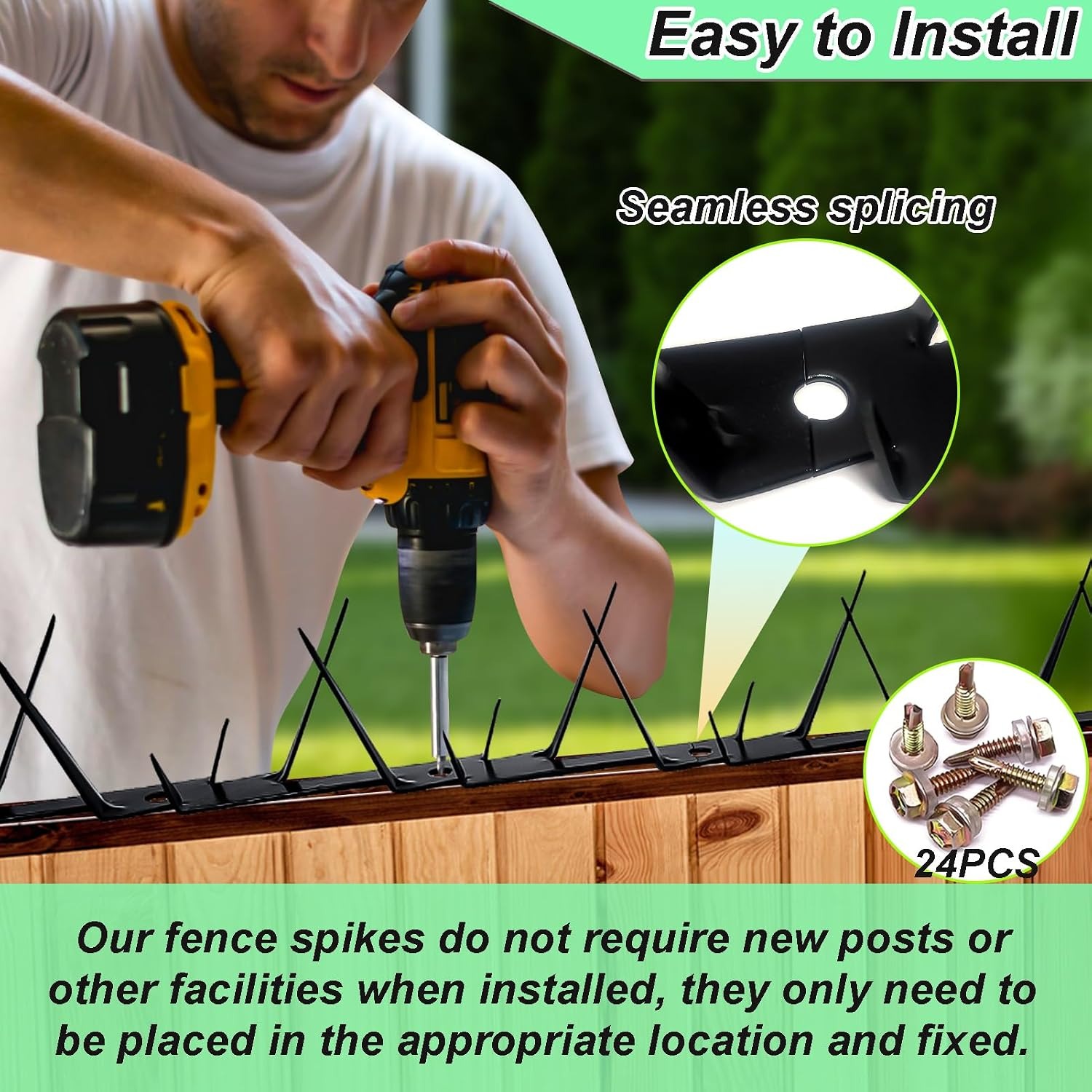
The job is within reach of anyone comfortable with a cordless drill. On timber, mark a straight line, pre-drill pilot holes if the wood is hard, and drive the supplied screws evenly along the strip. Even spacing matters. A strip fixed at only the two ends will flex and rattle in the wind.
On masonry, you will need a hammer drill, plugs and outdoor rated screws. Drill carefully into the brick body rather than the mortar joint where you can, as brick holds a plug better. On steel, bolting through the frame or welding are both common, and either way you should paint over any bare metal you expose so moisture cannot start rust.
Wear gloves. The points are the whole reason you are buying the product, and they do not know the difference between an intruder and the person fitting them. Safety glasses are a sensible addition if you cut anything.
If you do cut a strip to length, treat the cut edge with exterior metal paint. That one small step is the difference between a strip that looks the same in five years and one that shows a rust line along the end.
Care and how long they last
Maintenance is light. A rinse with the hose clears leaves, cobwebs and dust. A soft cloth handles the rest. Avoid wire brushes and abrasive pads, since they scratch the coating and give water a route to the metal underneath.
Once or twice a year, walk the line and push gently on each strip. Timber moves with the seasons and screws sometimes back out slightly. Tighten anything loose and you are done.
Keep the points clear of climbing plants. Ivy and clematis will happily grow over the top and turn your spikes into a soft mattress, which rather defeats the purpose. Trim back anything growing toward the run.
Spikes are one layer, not the whole wall
It is worth saying plainly. No single product secures a property. Spikes handle the climb. They do nothing about a gate left unlocked, a side passage with no light, or a window that opens from outside.
The combination that works for most homes is simple. A decent lock on the gate, a light that comes on when someone approaches, a clear view of the side passage from a window, and spikes along the sections that could otherwise be climbed. Each piece covers a gap the others leave open. Together they make your property slower and more visible to approach than the easier option two doors down, and that is what actually keeps people out.
The short version
If something is crossing the top of your boundary, whether that is a person, a cat or a raccoon, the top of your boundary is where the fix belongs. These black metal strips remove the grip and the footing that make the crossing possible, they need no power, and they keep working in the dark and the rain.
Measure your fence, decide which sections are genuinely climbable, clear away anything that acts as a step, and fit enough strips to cover those sections properly. Do that and you have turned your weakest edge into the part of the garden nobody bothers with.