American Pest Spikes
Company
Shop By Category
T&Cs
Shop Online
  • Clear materials and product specifications
  • Free tracked USA-wide delivery over $75
  • 14-day returns

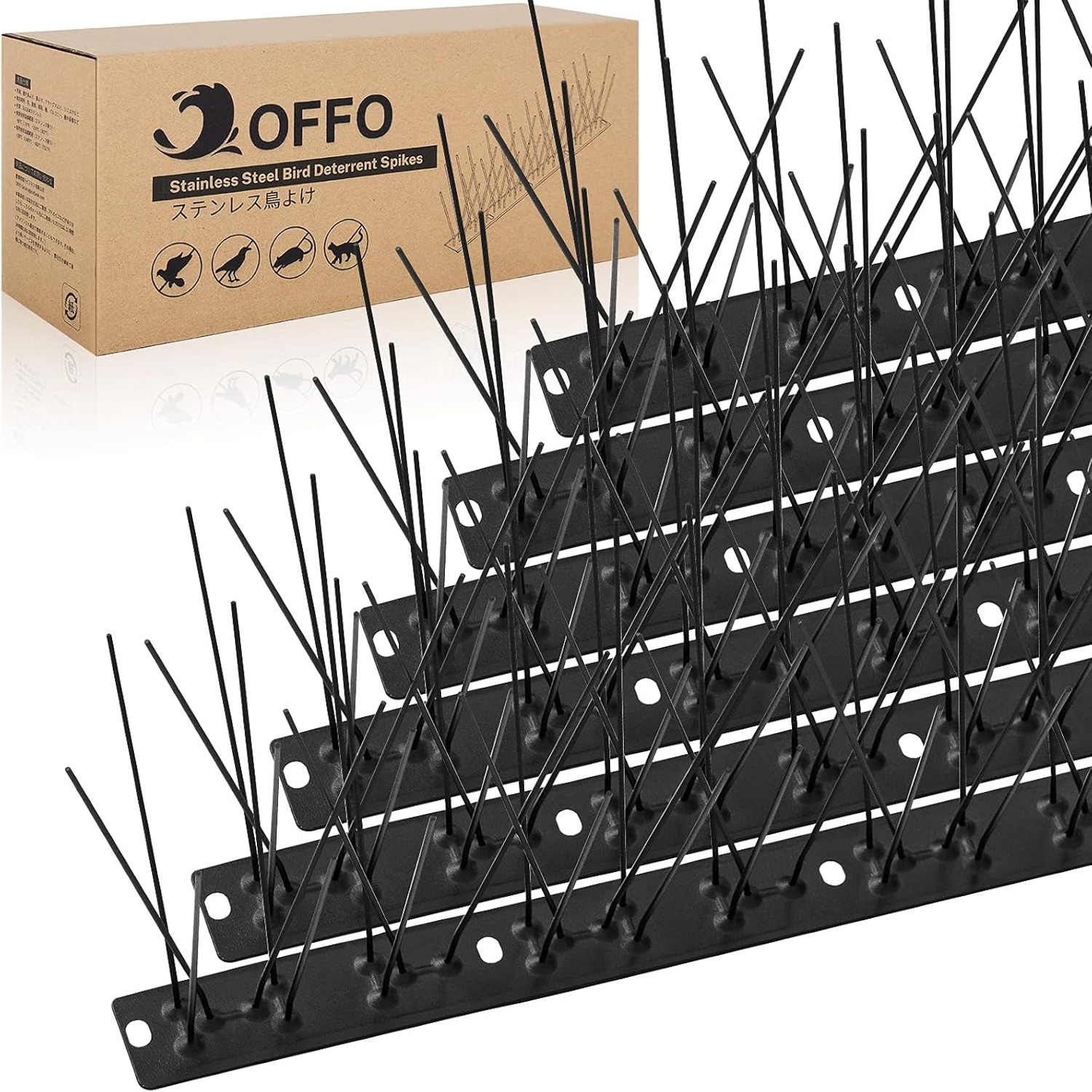
Pre-assembled bird spikes | Stainless steel pigeon spikes | bird deterrent spikes for outside

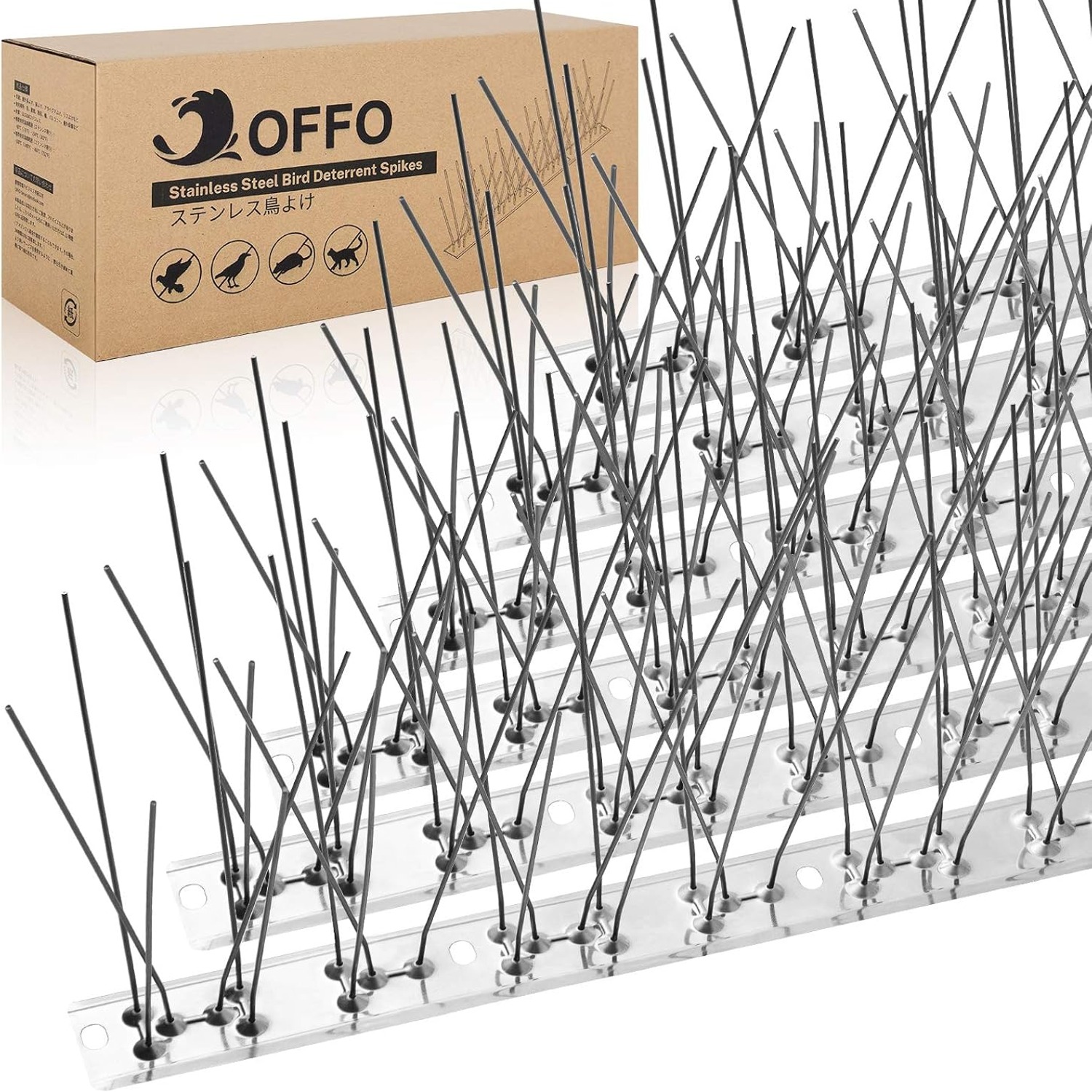
Pre-Assembled Stainless Steel Bird Spikes (10 ft)

$63.99 $76.99 Save $13
  • Stainless Steel Build
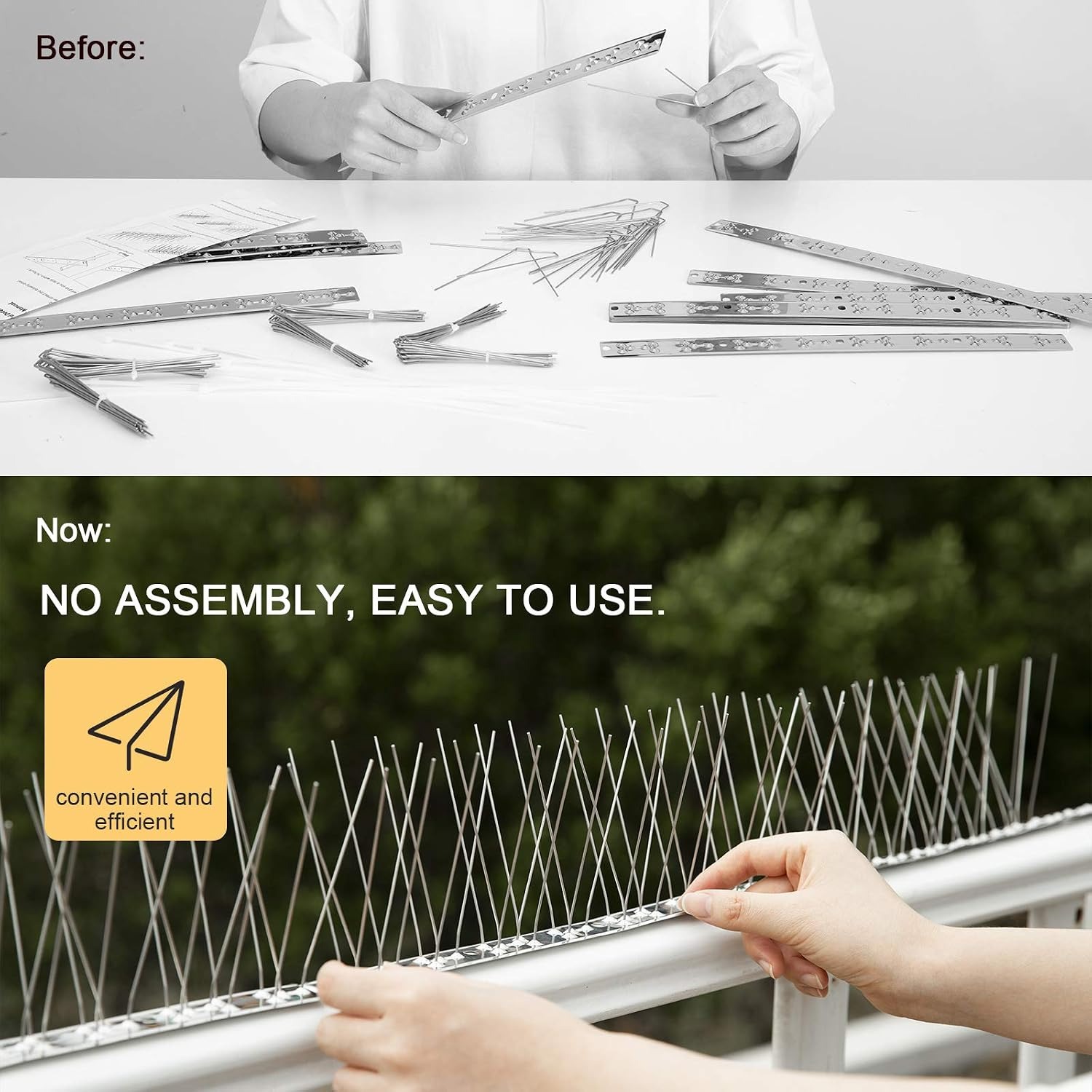
  • Arrives Pre-Assembled
  • Fix Any Way You Like
  • Blocks Perching

Price: $63.99 $76.99

  • Free tracked USA-wide delivery on orders $75+, otherwise a flat $9.95
  • Pay by card or PayPal, handled by the payment provider
  • 14 days to change your mind, plus your statutory rights
Product specifications
BrandOFFO
ColorBright Silver
MaterialStainless Steel
Coverage10 ft total length
AssemblyPre-assembled, ready to install
MountingTape, cable ties or nails
UseOutdoor and sheltered outdoor surfaces
Shipping & returns

Tracked delivery anywhere in the USA. It is free on orders of $75 or more, and a flat $9.95 below that.

If it is not right for you, send it back within 14 days of delivery in resaleable condition and we refund the price you paid, including standard delivery. That is a voluntary policy we offer on top of your legal rights. You cover the cost of returning it unless the item is faulty.

If it arrives faulty, damaged or not as described, we put it right at no cost to you under the consumer protection law of your state and the Federal Trade Commission Act, return postage included.

Shipping details · Refunds and returns

Stainless Steel BuildMetal spike wires made to stay out in the weather.
Arrives Pre-AssembledNo building or fiddly parts, just unpack and fit.
Fix Any Way You LikeMounts with tape, cable ties or nails on most surfaces.
Blocks PerchingUpright wires make ledges and rails unusable for birds.

Take back your railings and ledges with pre-assembled bird spikes that arrive ready to fit straight out of the box.

Flexible stainless steel wires sit upright across the surface so pigeons and other perching birds simply move on, with no assembly, no tools and no mess to clean up afterward.

Pre-assembled bird spikes that come ready to fit, so a ledge or railing can be protected the same day the box arrives.

Stainless steel spike wires stand upright and take up the space birds need to land and settle.

The flexible wire design lets each strip sit against curved rails, flat sills and awkward edges without fighting you.

Fits with outdoor tape, cable ties or small fixings, which means no drilling on surfaces you would rather not damage.

Works as a quiet, hands-off deterrent that keeps working through rain, wind and sun once it is in place.

Pre-Assembled Stainless Steel Bird Spikes (10 ft)

Bird droppings are not just unpleasant to look at. They are acidic, they stain render and paint, and they take real effort to scrub off a balcony rail or a window sill. The usual response is to clean more often, which only buys a few days. Pre-assembled bird spikes change the maths by making the surface itself unattractive, so the birds choose somewhere else and the cleaning stops being a weekly chore.

Pre-Assembled Stainless Steel Bird Spikes (10 ft)

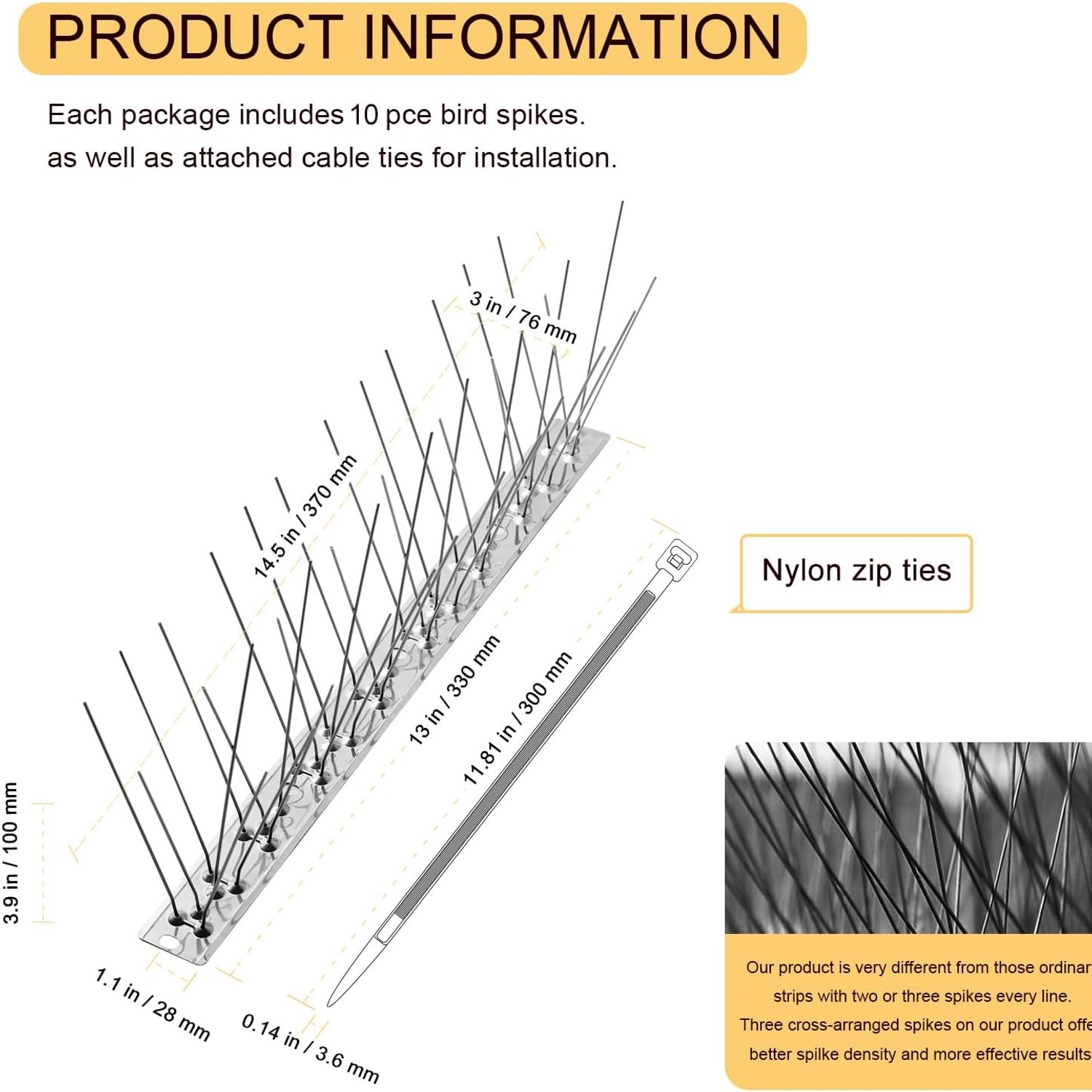
This set covers 10 ft in total and arrives already put together. There are no small parts to clip, no base strips to join and no instructions to puzzle over. You unpack the strips, hold them along the surface you want to protect, and fix them down. Most people finish a balcony rail or a short ledge in well under an hour, which is part of the appeal when you are dealing with a problem that has already dragged on too long.

Pre-Assembled Stainless Steel Bird Spikes (10 ft)

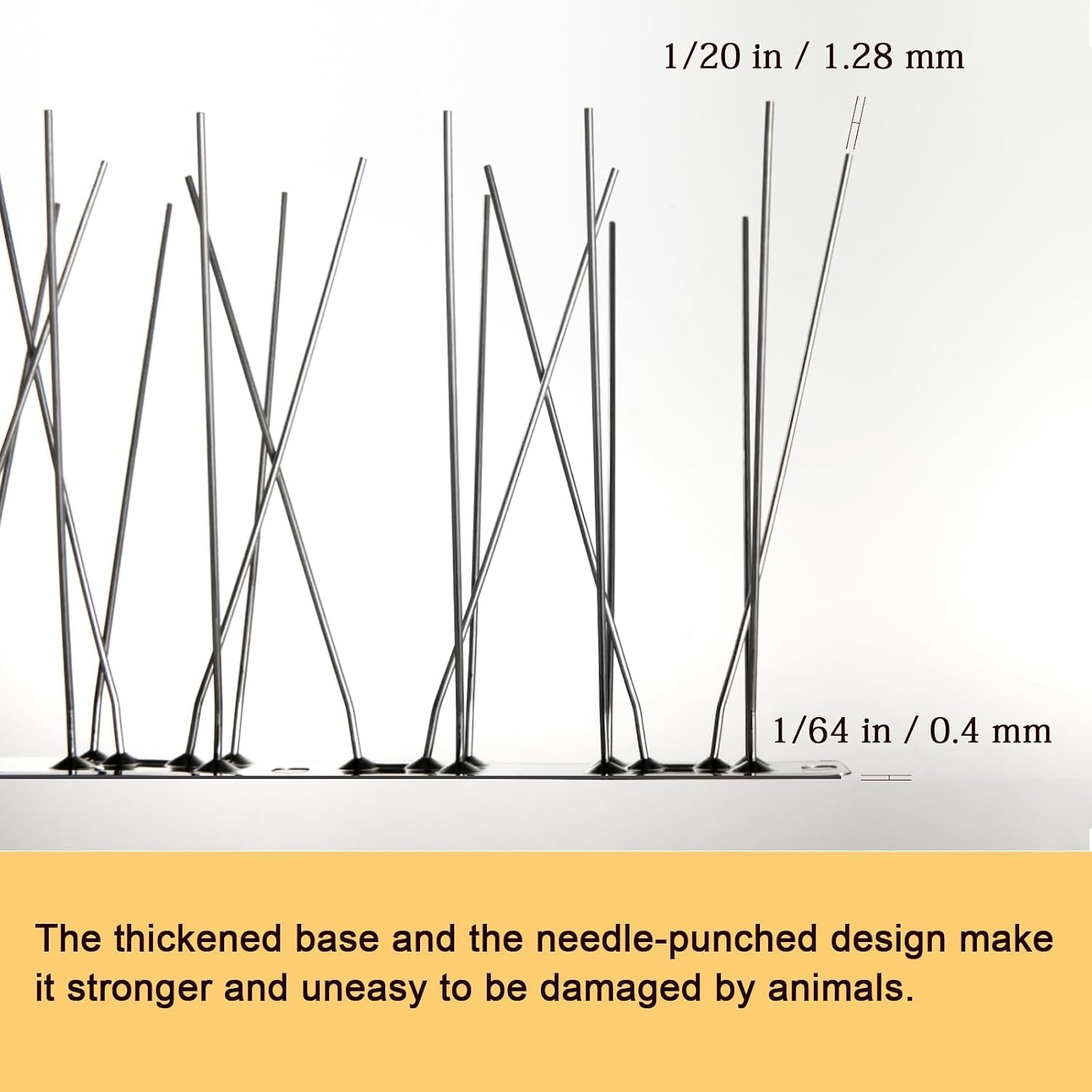
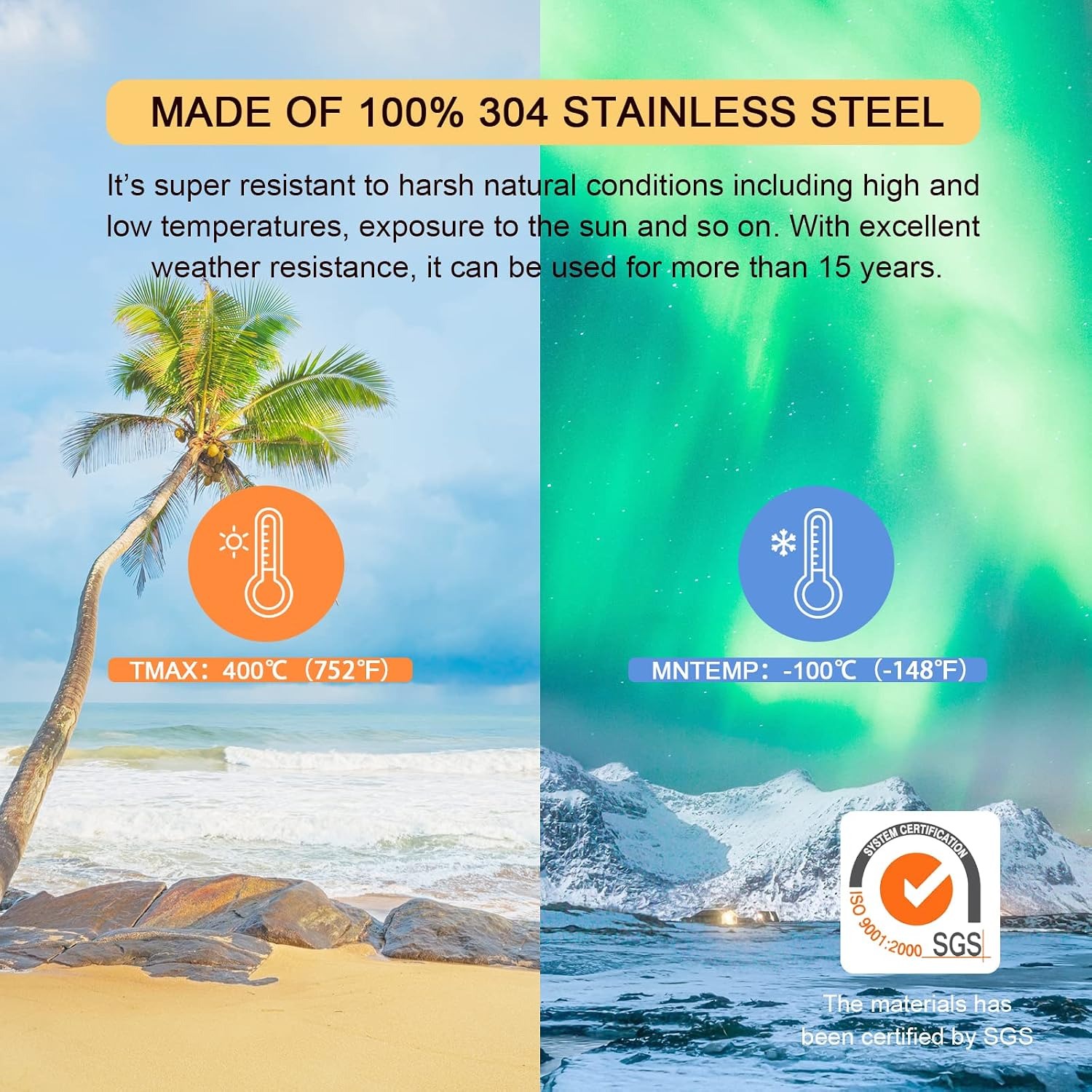
The spikes are stainless steel, which is the material you want for anything that lives outside all year. Steel wire holds its shape, does not soften in the sun, and copes with rain and frost far better than plastic. The wires themselves have some flex, so they can follow a curved handrail or a slightly uneven ledge rather than sitting proud at one end. That flexibility also makes them forgiving if you need to adjust the line after the first fixing.

Pre-Assembled Stainless Steel Bird Spikes (10 ft)

Fitting is deliberately low commitment. Strong outdoor tape works on clean flat surfaces, cable ties are the obvious answer on railings and pipework, and small nails or screws suit timber fences and fascia boards. Renters and apartment owners usually go the no-drill route, which leaves no permanent marks. Owners who want the spikes up for good tend to screw them down and forget about them.

Pre-Assembled Stainless Steel Bird Spikes (10 ft)

What this product does not do is harm anything. Birds land, feel the wires taking up the space, and move on to a flat surface somewhere else. There is nothing electric, nothing chemical and nothing that needs topping up. Once the strips are secure, the deterrent runs itself, which is why bird proofing strips stay popular with homeowners, cafes, body corporates and anyone else tired of pressure washing the same ledge.

Not sure yet? That is fine.

A spike strip has to fit the ledge, and you cannot always judge the base width or the run from a photograph. If it is not right for you, send it back within 14 days of delivery in resaleable condition and we refund the price you paid, including standard delivery. That is a voluntary policy we offer on top of your legal rights.

If it turns up faulty, damaged or not as described, that is on us. The consumer protection law of your state covers you, and we pay the return postage. Read the full detail on our refunds and returns page, or ask us anything before you order.

Frequently Asked Questions

What exactly is in this product?

It is a set of stainless steel bird spike strips covering 10 ft in total length. The strips arrive pre-assembled, so there is nothing to build. You simply fit them to the surface you want to protect.

How do bird spikes actually stop birds landing?

The upright wires take up the physical space a bird needs to put its feet down and balance. When the surface no longer offers a stable footing, the bird moves on to somewhere easier. Nothing shocks, traps or injures the bird.

Are bird spikes humane?

Yes. This is a passive, physical deterrent with no electricity, poison or adhesive traps involved. Birds approach, find nowhere comfortable to stand, and fly off. Most people are looking for exactly this kind of humane bird deterrent rather than anything harsher.

Will the spikes hurt a bird that lands on them?

They are designed to deny a landing spot, not to injure. Birds typically hover, touch down briefly or simply change course before settling. The wires have flex in them rather than being rigid blades.

What birds does this work on?

It is aimed at perching and roosting birds such as pigeons, doves, starlings and similar species that keep returning to the same ledge. It works best where birds are perching rather than nesting deep inside a cavity. Larger birds generally need the same approach but across a wider band of coverage.

Does it work on squirrels too?

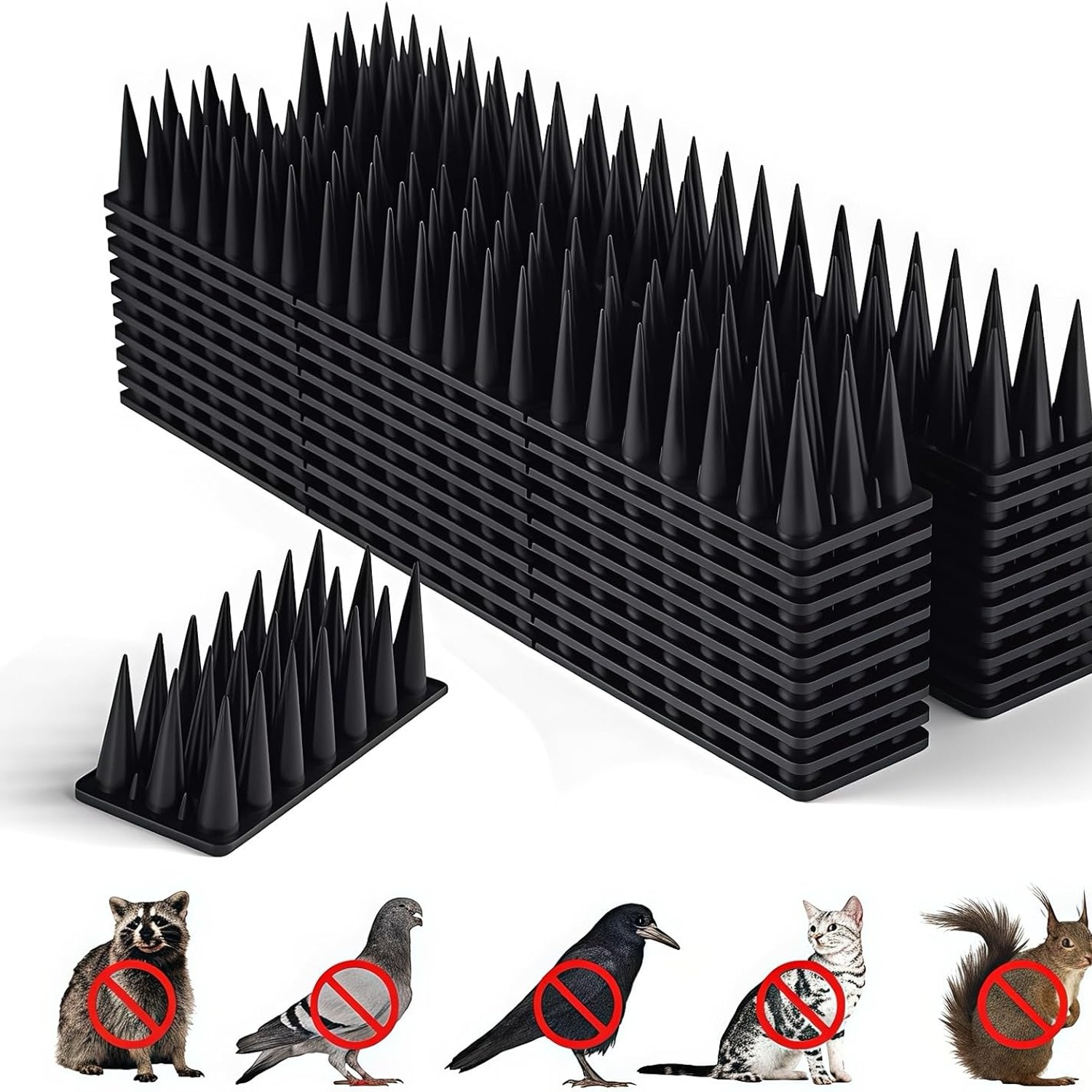
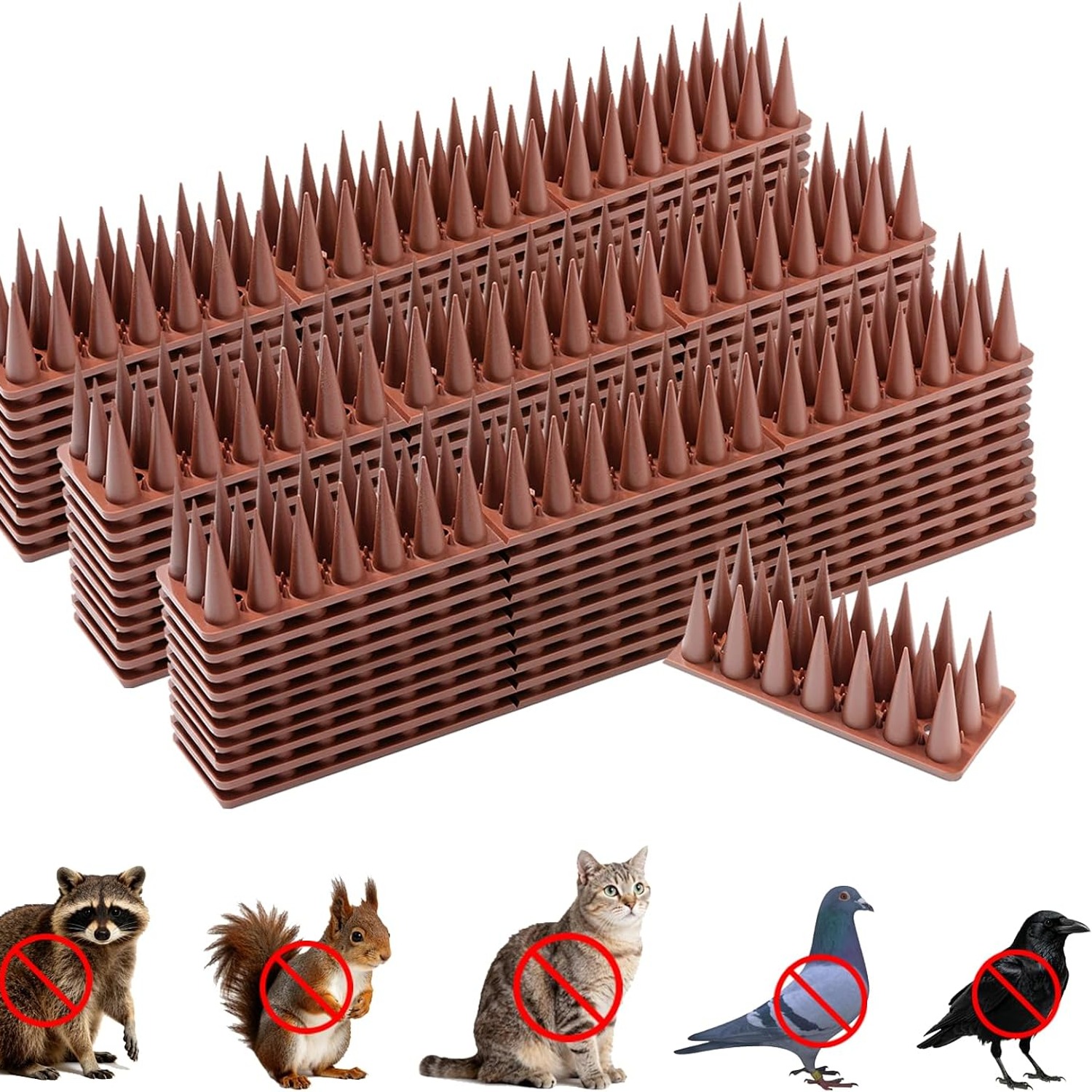
The supplier markets the same design for squirrels sitting on balcony surfaces, because the dense wires make the surface awkward to settle on. Results vary with how determined the animal is and how much alternative access it has. For squirrels, covering the full width of the route matters more than it does for birds.

How much length do I get?

The set covers 10 ft in total. Measure your ledge or railing first and add a little extra, because gaps are where birds will re-land. If you have a long run, buying more than one set is usually cheaper than re-doing the job later.

What is the material?

The spikes are stainless steel in a bright silver finish. Stainless is the usual choice for outdoor bird work because it resists rust and does not go brittle in the sun the way some plastics do. Exact gauge and grade are not specified in this record.

Will the spikes rust?

Stainless steel is far more resistant to rust than mild steel or coated wire. Keeping the strips free of damp leaf litter and bird debris helps them stay clean. If you are in a coastal spot with salt spray, rinse them occasionally with fresh water.

Do I need tools to install them?

Not necessarily. Many people fit them with strong outdoor tape or cable ties and use no tools at all. If you want a permanent fix on timber, a hammer or a drill driver and small fixings will do the job.

How do I fit them to a metal balcony railing?

Cable ties are the simplest answer on railings. Lay the strip along the top rail, run a tie around both the rail and the strip base, and pull it snug every short interval. Trim the tie tails so nothing flaps in the wind.

Can I fit them without drilling?

Yes. Outdoor-grade tape or construction adhesive works on clean, dry, flat surfaces, and cable ties cover anything round or railed. No drill bird spikes are the usual choice for renters and apartment balconies where you cannot alter the structure.

What surfaces can I use them on?

Balcony railings, brick and render walls, timber fence tops, window sills, gutters, parapets, signage and air conditioner housings are all common spots. The surface needs to be reasonably solid and clean before fixing. Crumbling render or flaking paint should be made good first.

Can I cut the strips to fit?

Most spike strips are designed so the base can be shortened between sections with a hacksaw or heavy snips. Work slowly and file any sharp edge you create. If you would rather not cut, plan the layout so joins land at corners.

Do I need to cover the whole ledge?

Yes, in practice. Birds are good at finding the one uncovered inch and standing on it. Run the strips edge to edge along the full width, including the corners, for the best result.

How wide a ledge will one row cover?

One row suits narrow rails and sills. Wider ledges usually need two or more rows side by side so there is no clear landing strip behind the spikes. Measure the depth of your surface before you order.

Will they look ugly on my balcony?

From street level the silver wires are far less noticeable than most people expect, especially against metal railings. They are certainly less visible than the staining they prevent. If appearance matters, keep the lines straight and the ties trimmed.

Are they safe around children and pets?

Keep them out of reach of small hands and avoid fitting them at seated height on a balcony where someone might lean. Like any wire product, sensible placement matters. Fitted along the top of a rail or a high ledge, they sit well away from everyday contact.

How long do bird spikes last outdoors?

Stainless steel spike wires typically last for years in normal outdoor conditions. The weak point tends to be the fixing rather than the spikes, so tape and ties are what you check over time. Replace any tie that has gone chalky or brittle.

Do I need to maintain them?

Very little. Rinse them off when they collect dust, leaves or cobwebs, and clear anything that builds up at the base. A quick look at the fixings once or twice a year is enough.

What if birds build a nest around the spikes?

Clear any nesting material early, before it becomes established, and check whether local rules protect active nests at certain times of year. Debris sitting on top of the spikes creates a flat surface that defeats the point. Regular clearing in spring usually prevents it.

Will wind blow them off?

Properly fixed strips stay put. Tape is the one method that can fail in strong wind if the surface was dusty or damp at installation, so clean and dry the surface first. Cable ties and screws are the more secure options in exposed spots.

Can I use them on a roof ridge?

Yes, bird spikes for roof ridge work are a common application, usually screwed or glued along the ridge line. Take normal roof safety precautions and consider getting a professional involved if the pitch is steep. Do not fit anything that blocks drainage paths.

Are these suitable for commercial sites?

They suit shopfronts, signage, awning frames, cafe pergolas and similar places where birds gather above customers. For a large building a specialist survey is still worth doing. For one or two problem ledges, strips like these are the quick fix.

Do they work in all weather?

Stainless steel copes with rain, sun, wind and frost. There is no battery, no sound and nothing to switch on, so performance does not drop at night or in bad weather. That is the main advantage over sonic and reflective devices.

How is this different from plastic spikes?

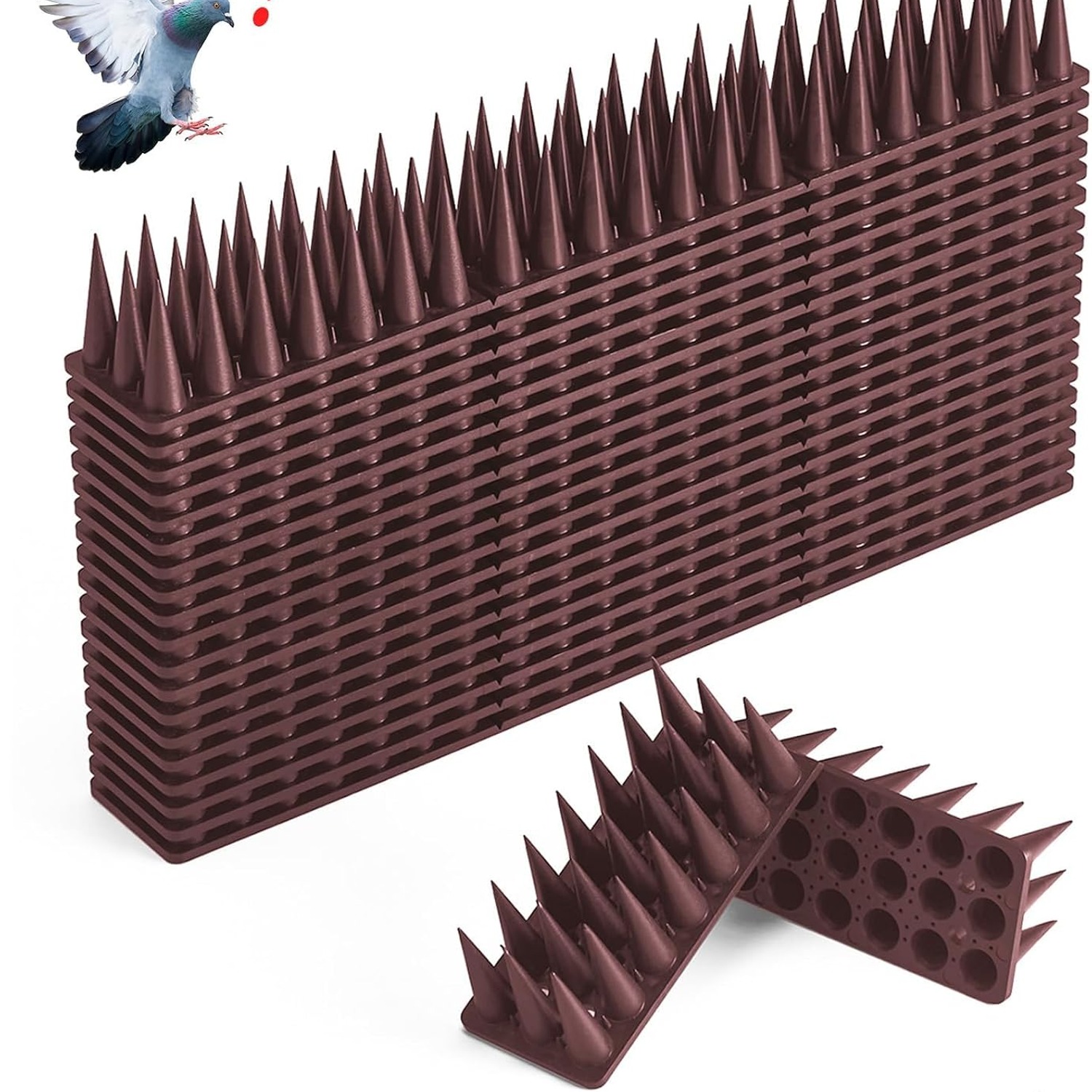
Plastic spikes are cheaper but tend to become brittle and discolour after a few seasons of UV exposure. Stainless steel anti bird spikes hold their shape and their finish for longer. Over the life of the installation, metal usually costs less.

Do they need to be installed on a dry day?

If you are using tape or adhesive, yes, dry and above about ten degrees gives the best bond. Cable ties and screws are not weather sensitive. Either way, clean the surface before you start.

Can I move them later?

Cable-tied strips can be cut free and refitted elsewhere in minutes. Taped strips usually come away with patience and a plastic scraper, though the tape itself is single use. Screwed installations leave small holes, so choose that method where you intend to keep them.

How fast will I see results?

Most people notice fewer birds within days. Birds that have used a ledge for years may circle back a few times before giving up, so give it a couple of weeks before judging. Clean off the old droppings at the same time, since the scent of an established roost encourages return visits.

What if the spikes are not right for my situation?

Check the measurements and the surface type against your ledge before fitting, since an unopened set is always the easiest to deal with. If something arrives damaged or clearly not as described, contact us with your order number and photos and we will sort it out. Our returns terms are set out on the site and apply as normal.

Bird Spikes Buyer's Guide - Choosing, Fitting and Living With Them

6 min read American Pest Spikes

The problem nobody warns you about

Birds pick a spot and stick with it. A balcony rail, the top of a fence, the flat ledge above a shop sign, the housing of an air conditioner. Once two or three pigeons decide a surface works, the mess starts, and it does not stop. Droppings stain render, eat into paint, block gutters and make a balcony unusable for anything other than hanging washing you then have to wash again.

Most people start by cleaning. Then they clean again a week later, and again the week after that. Cleaning treats the symptom. The surface is still perfect for landing on, so the birds come back, usually within a day or two.

The only thing that breaks the cycle is making the surface itself a poor place to stand. That is all bird spikes do. They are not clever, they are not high tech, and that is exactly why they keep working years after a sonic gadget has stopped bothering anyone.

How bird spikes work

A bird landing on a ledge needs flat space to put its feet down and balance. Spike strips fill that space with upright wires. The bird approaches, sees nowhere to settle, and goes elsewhere. No shock, no noise, no chemical.

This set uses stainless steel wires arranged densely enough that there is no clear gap to stand in. The wires have some give rather than being rigid, which does two useful things. It means they follow the shape of a curved rail or a slightly uneven ledge, and it means a bird that brushes them is pushed away rather than impaled. Anti roosting spikes work by inconvenience, not injury.

The strips arrive pre-assembled. That sounds like a small thing until you have opened a bird spike kit that needed base rails clipped together one section at a time. Here, you open the box and the product is ready to go onto the wall.

Who this suits

Apartment owners and renters are the biggest group. A balcony rail is a classic perching spot, and most people in a flat cannot drill into shared structure. Cable ties solve that entirely, and they come off cleanly when you move.

Homeowners use them on fence tops, pergola beams, window sills, gutter edges and the top of garden walls. Anywhere you keep finding white streaks down the brickwork, there is a perch above it.

Small businesses use them above doorways, on signage and on awning frames, where droppings land on customers and stock. A cafe with a pigeon sitting over the outdoor tables has a real problem, and bird deterrent spikes for outside use are usually the fastest fix.

Owners dealing with squirrels on a balcony sometimes use the same product. The logic is the same, the dense wires make the surface awkward, though a determined squirrel takes more coverage than a pigeon does.

Working out what you need

Start with a tape measure, not a shopping cart. Measure the full length of every surface you want to protect, then measure the depth of each one.

Length tells you how many sets to buy. This set covers 10 ft in total, and the rule is simple: cover the whole run. Birds are very good at finding the one bare inch you left at the end and standing there instead. A gap at a corner or behind a downpipe is an invitation.

Depth tells you how many rows you need. A narrow handrail or a window sill takes a single row. A wide parapet or a deep ledge needs two or three rows side by side, otherwise the bird simply lands behind the spikes on the clear strip at the back. This is the single most common mistake people make with pigeon deterrent for ledges, and it is the reason some installations seem to do nothing at all.

Also look at what is above and beside the spot. If birds are sitting on a rail because there is a sheltered nook two feet away, you may need to treat both.

Fitting them without making a mess of your wall

There are three normal ways to fix spike strips, and the right one depends on your surface.

Outdoor tape or construction adhesive suits clean, flat, solid surfaces like concrete sills, painted timber and smooth render. Clean the surface properly first. Dust, old droppings and damp are what cause tape failures, not the tape itself. Fit on a dry day and press along the whole base.

Cable ties are the answer for anything round or railed. Lay the strip along the top of the rail, thread a tie around both, pull it tight and trim the tail. Repeat every short interval. This is the method renters should default to, since nothing is altered and nothing is left behind.

Nails or small screws suit timber fence tops, fascia boards and shed edges. This is the most permanent option and the most wind-proof. Pre-drill hardwood to avoid splitting.

Whichever method you use, keep the line straight and the spikes facing up. A strip that sits skewed leaves a usable edge, and that edge is where the birds will land.

Living with them

Maintenance is close to nothing. Rinse the spikes occasionally so dust, cobwebs and leaf litter do not build up at the base. Debris is the real enemy, because a pad of twigs and leaves sitting on top of the wires creates a flat surface again, which is the opposite of what you wanted.

Check your fixings once or twice a year. Cable ties are the part most likely to age, especially cheap ones left in full sun. Replace any that have gone chalky. Tape is worth inspecting at the ends, where lifting starts.

If birds start bringing nesting material in spring, clear it early. Also check your local rules, since active nests are protected in many places at certain times of year, and the sensible move is to deter before the nesting season rather than during it.

Clean off the old droppings when you install. An established roost carries a scent that encourages birds to return, so stripping the surface back at the same time as fitting rust proof bird spikes makes the deterrent work faster.

Steel versus plastic, briefly

Plastic spikes cost less up front. They also go brittle under UV, yellow off, and snap at the base after a few summers. You end up refitting the same ledge.

Stainless steel holds shape and finish for years and shrugs off rain and frost. If the spikes are going somewhere high, awkward or expensive to reach, the metal version is the cheaper choice over the life of the job, because you only climb the ladder once.

What to expect in the first few weeks

Most people see a drop in bird activity within days. Birds that have used a spot for years may come back and circle a few times before accepting the change, so give it two weeks before you judge the result.

If birds are still landing after that, the cause is almost always coverage. Look for a gap at the end of a run, a bare strip behind a single row on a deep ledge, or a nearby perch you did not treat. Fixing the gap usually fixes the problem.

The short version

Bird spikes stop the cycle of cleaning and re-cleaning by making the perch unusable. This set is stainless steel, covers 10 ft, and comes pre-assembled so you can fit it the day it arrives. Measure both the length and the depth of every surface, cover the full run with no gaps, and pick your fixing to suit the surface: tape for flat and clean, cable ties for rails, screws for timber. Clean the old mess off at the same time. After that, there is very little to do beyond an occasional rinse and a yearly look at the ties.

Browse the shop

Not sure how much you need?

Measure the full length and depth of the ledge, then get in touch and we will help you work out how many sets to order.

Ask us a question

Page summary

Pre-assembled bird spikes supplied by OFFO, covering 10 ft in total. The spikes are stainless steel in a bright silver finish and arrive fully assembled, so no construction is needed before fitting. Flexible spike wires stand upright to occupy the landing space on ledges, balcony railings, fence tops, walls and similar outdoor surfaces, discouraging pigeons and other perching birds without harming them. The strips can be fixed with outdoor tape, cable ties or nails, so drilling is optional. Exact strip dimensions, base width, spike height, product weight and country of origin are not specified in this record. No warranty terms, certifications or customer rating figures are provided in this record either.