American Pest Spikes
Company
Shop By Category
T&Cs
Shop Online
  • Clear materials and product specifications
  • Free tracked USA-wide delivery over $75
  • 14-day returns

Bird deterrent spikes 10 ft | Stainless steel pigeon spikes | bird deterrent spikes for outside

Bird Deterrent Spikes 10 ft Stainless Steel Strip Set

$35.99 $42.99 Save $7
  • Humane Perch Blocker
  • Stainless Steel Build
  • Cut And Bend
  • Angled Coverage

Price: $35.99 $42.99

  • Free tracked USA-wide delivery on orders $75+, otherwise a flat $9.95
  • Pay by card or PayPal, handled by the payment provider
  • 14 days to change your mind, plus your statutory rights
Product specifications
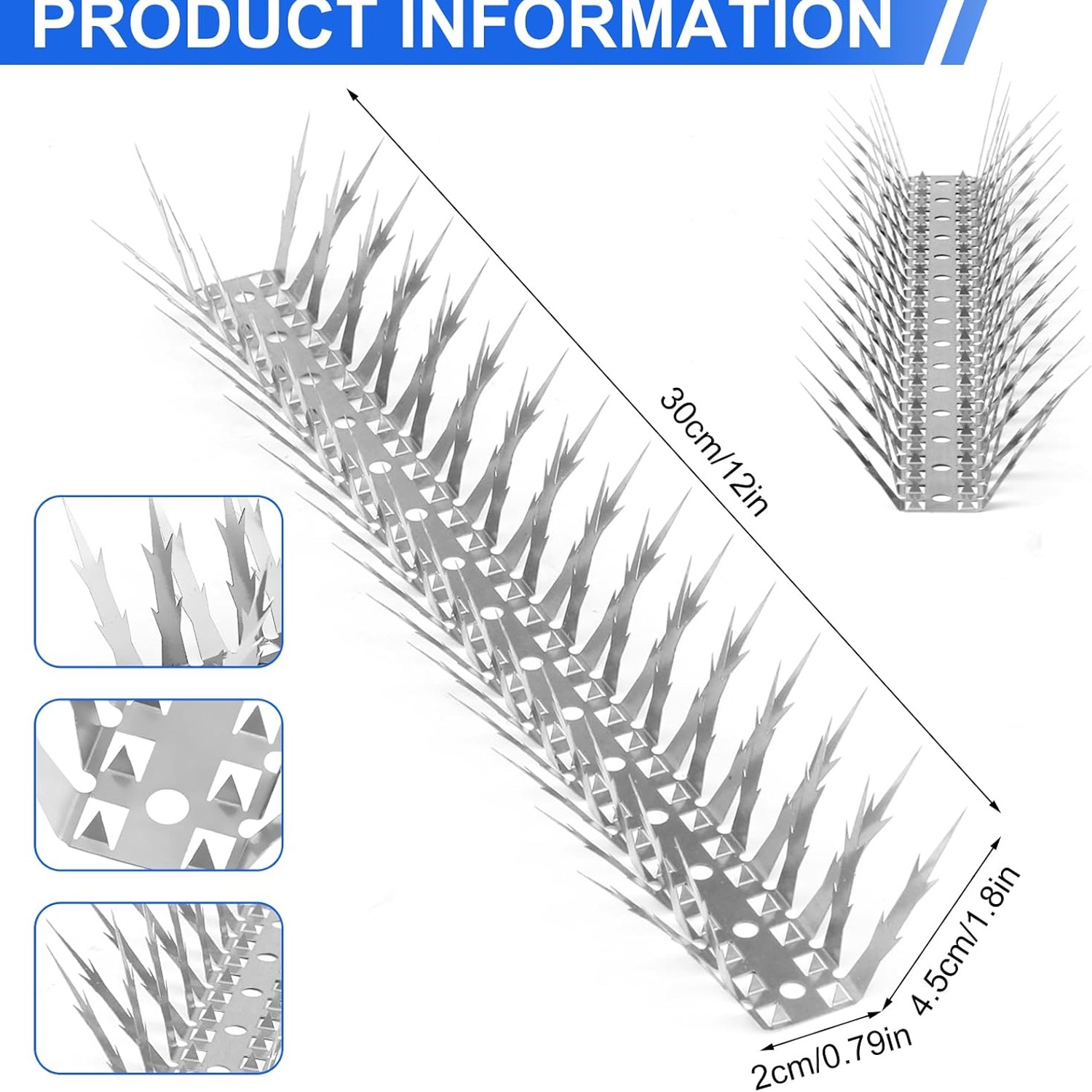
Coverage Length10 ft total
MaterialStainless steel
ManufacturerQuunoot
Package Dimensions12.2 x 3.54 x 2.83 in
Item Weight14.4 oz (0.41 kg)
ConditionNew
InstallationBendable and cuttable to length
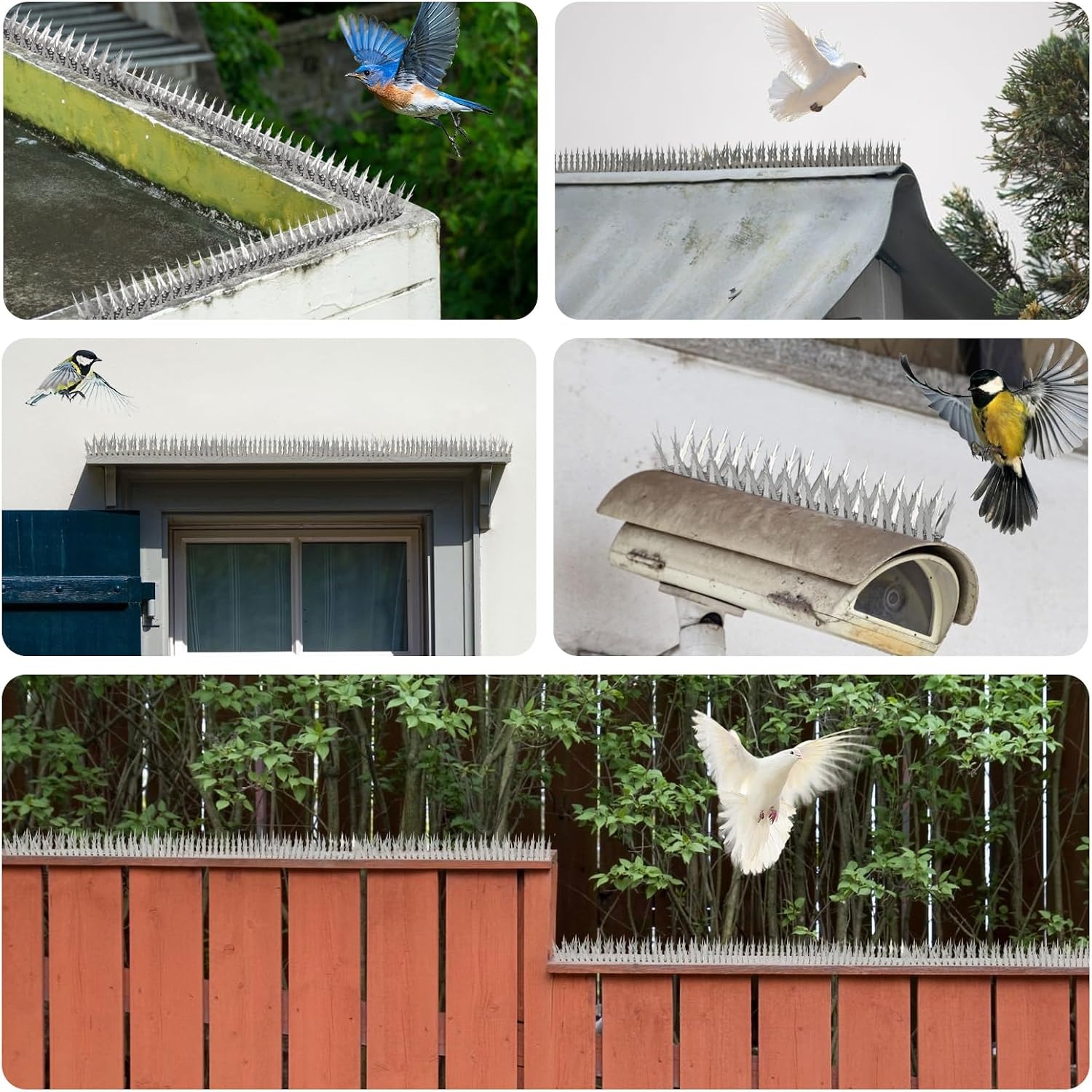
Best Suited ToSmall and medium birds on ledges, rails, fences and poles
Weight0.41 kg
Shipping & returns

Tracked delivery anywhere in the USA. It is free on orders of $75 or more, and a flat $9.95 below that.

If it is not right for you, send it back within 14 days of delivery in resaleable condition and we refund the price you paid, including standard delivery. That is a voluntary policy we offer on top of your legal rights. You cover the cost of returning it unless the item is faulty.

If it arrives faulty, damaged or not as described, we put it right at no cost to you under the consumer protection law of your state and the Federal Trade Commission Act, return postage included.

Shipping details · Refunds and returns

Humane Perch BlockerStops birds landing without trapping or injuring them.
Stainless Steel BuildMade to live outside through sun, rain and frost.
Cut And BendTrim with wire cutters and shape around curves.
Angled CoveragePoints lean in and out so there is no easy landing gap.

Take back your ledges, rails and rooflines with bird deterrent spikes 10 ft that keep perching birds moving on without harming them.

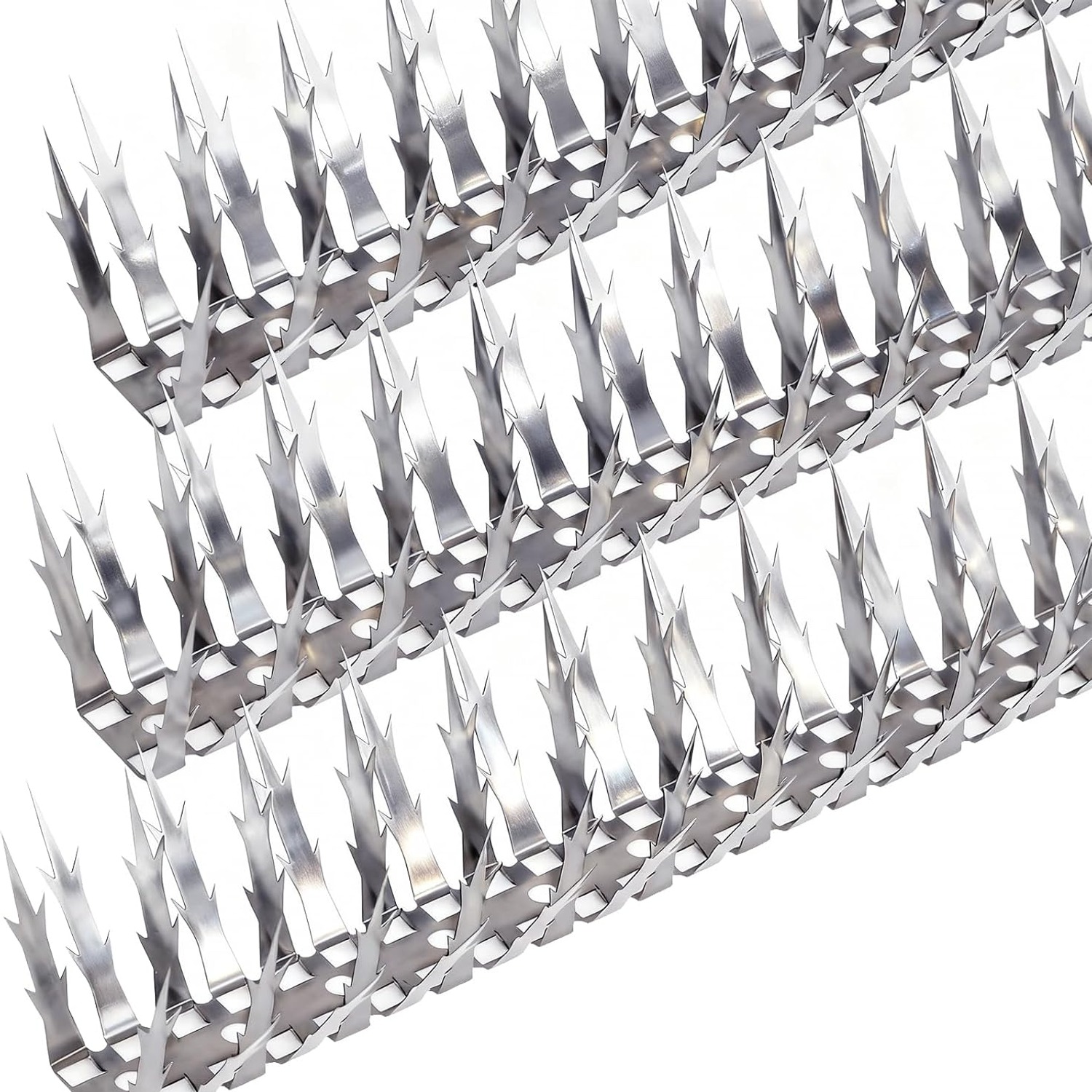
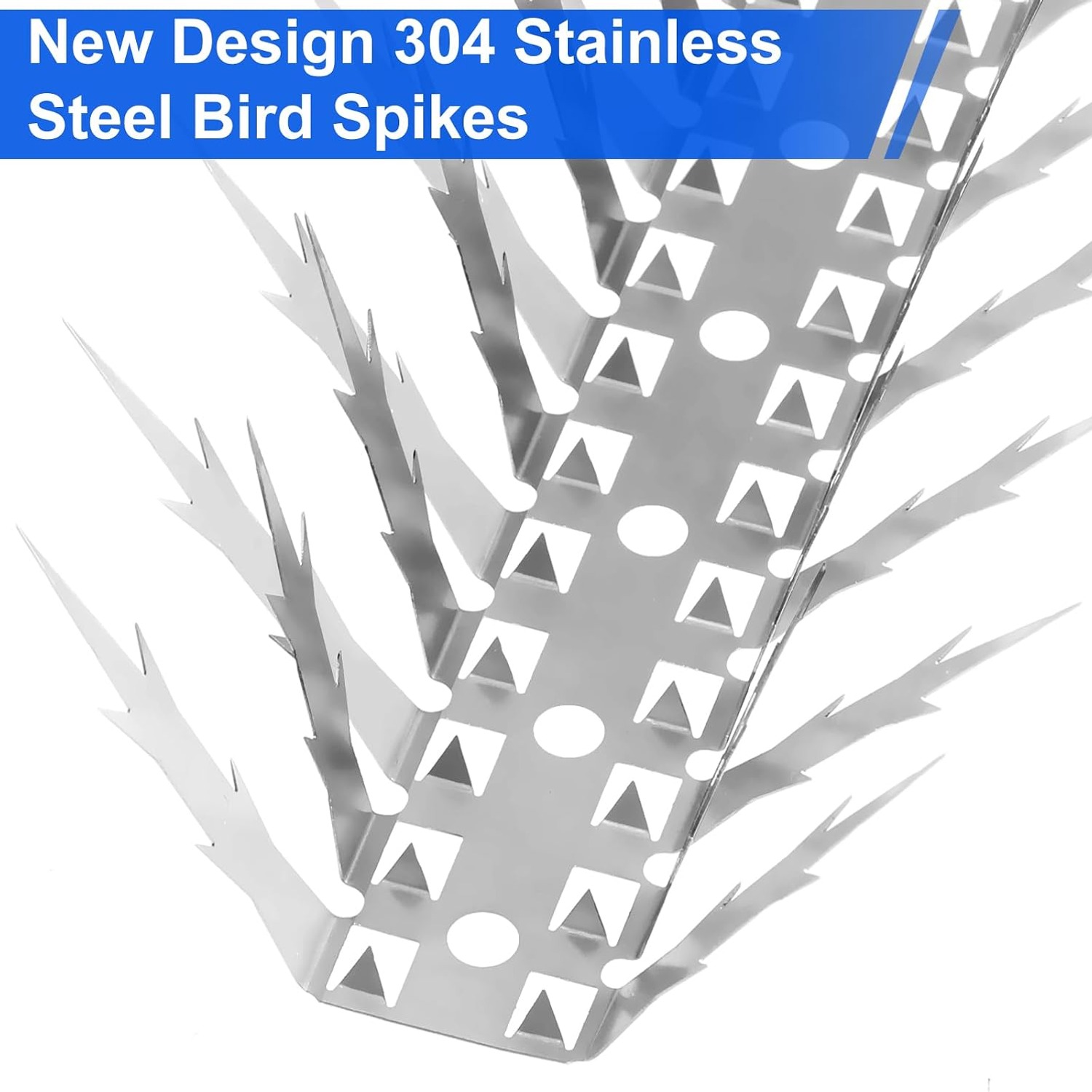
Bendable stainless steel strips with staggered angled points cover 360 degrees of a surface, cut to length with wire cutters and hold up outdoors year after year.

A 10 ft run of stainless steel bird deterrent spikes that turns flat ledges, rails and beams into surfaces birds will not settle on.

Each strip carries rows of staggered points angled both inward and outward, so there is no clear landing strip left in the middle.

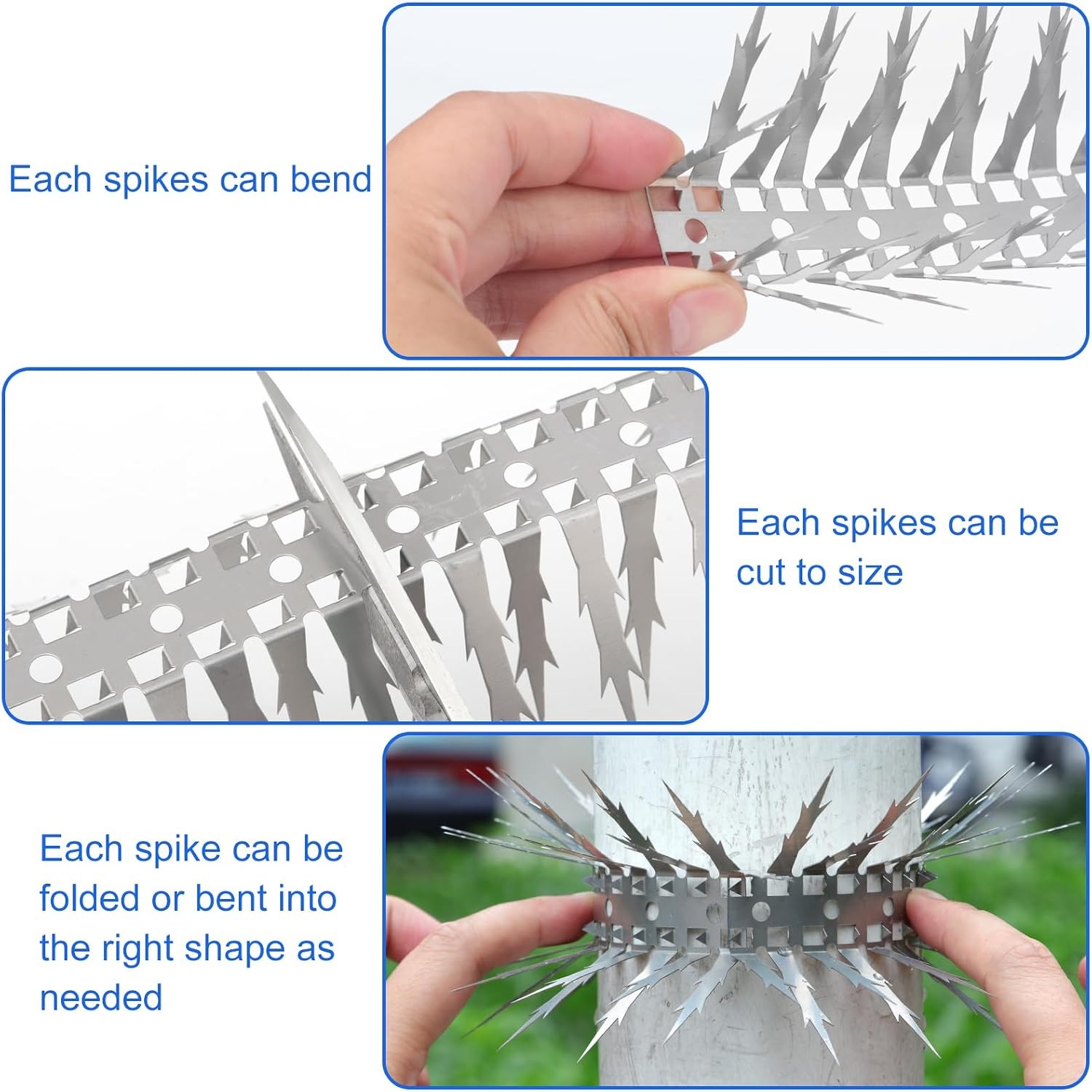
The metal strips bend around pipes, feeder poles, gutter lips and curved railings, then cut down to size with wire cutters or a hacksaw.

Stainless steel resists rust and weathering far better than plastic bases, so the strips keep working without annual replacement.

It is a no-contact deterrent, designed to make a spot uncomfortable to stand on rather than to hurt anything that lands nearby.

Bird Deterrent Spikes 10 ft Stainless Steel Strip Set

Bird droppings are not just unpleasant to look at. They stain render, eat into paint, clog gutters and make a balcony or shopfront entrance genuinely unhygienic. Once a few birds decide your ledge is a good roost, more follow, and nesting usually comes next. This set of bird deterrent spikes 10 ft tackles the problem at the source by removing the comfortable flat surface birds are looking for in the first place.

Bird Deterrent Spikes 10 ft Stainless Steel Strip Set

The strips work on simple physics rather than noise, chemicals or scare tactics birds get used to. Rows of slim metal points sit at mixed angles, some leaning out from the strip and some leaning back in, which closes off the gap a bird would otherwise aim for. A bird approaching the ledge cannot find a stable footing, so it banks away and looks elsewhere. There is nothing to switch on, nothing to refill, and nothing that stops working after a week.

Bird Deterrent Spikes 10 ft Stainless Steel Strip Set

Because the base is stainless steel rather than plastic, the strips cope with the things that usually kill cheap deterrents. UV does not make them brittle, winter does not crack them, and they will not leave rust streaks down the front of your building. That matters most on south-facing roof edges and exposed parapets, where a plastic base can go chalky and snap within a season or two.

Bird Deterrent Spikes 10 ft Stainless Steel Strip Set

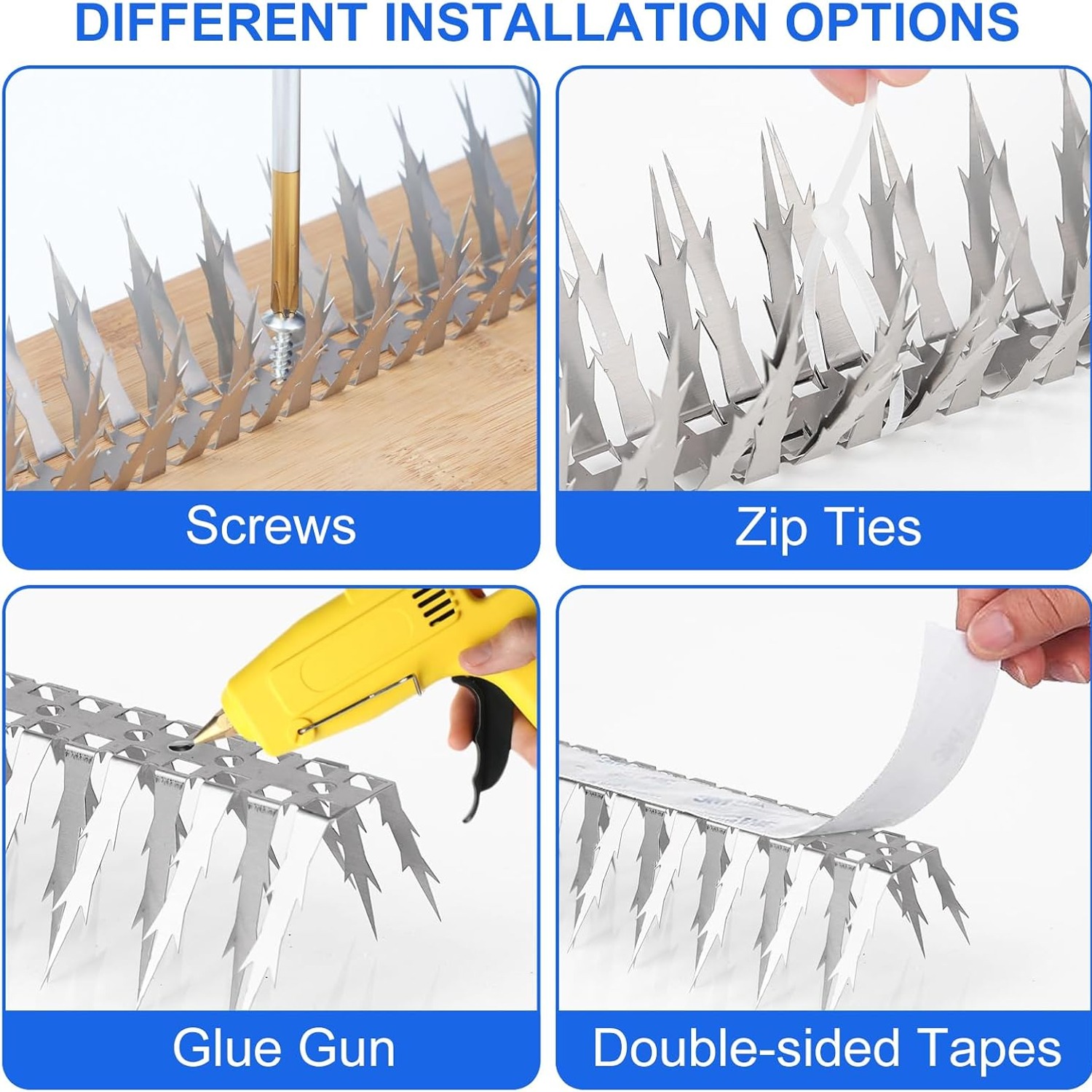
Fitting is straightforward if you plan a little. The metal can be bent by hand to follow a curve, wrapped around a feeder pole or pipe, and cut to length with wire cutters, tin snips or a hacksaw. The angle of individual points can be nudged to suit the surface. Fix the strips down with outdoor silicone, exterior adhesive, screws or cable ties depending on what you are mounting to, and leave no soft landing gaps at the ends of a run.

Bird Deterrent Spikes 10 ft Stainless Steel Strip Set

These spikes are aimed at pigeons, starlings, sparrows and other small to medium birds, and they also discourage squirrels and similar climbers from using a ledge or pole as a highway. Wear thick gloves for handling and cutting. The points are sharp enough to do their job, which also means they are sharp enough to catch a careless hand.

Not sure yet? That is fine.

A spike strip has to fit the ledge, and you cannot always judge the base width or the run from a photograph. If it is not right for you, send it back within 14 days of delivery in resaleable condition and we refund the price you paid, including standard delivery. That is a voluntary policy we offer on top of your legal rights.

If it turns up faulty, damaged or not as described, that is on us. The consumer protection law of your state covers you, and we pay the return postage. Read the full detail on our refunds and returns page, or ask us anything before you order.

Frequently Asked Questions

What exactly is in this set?

You get stainless steel spike strips that add up to 10 ft of coverage in total. They are shipped flat in a box measuring roughly 12.2 x 3.54 x 2.83 inches. The whole package weighs about 14.4 ounces.

How do bird spikes actually stop birds?

They take away the flat, stable surface a bird needs to land and settle. The angled points make the spot feel unsteady and awkward, so birds choose somewhere else. It is a physical barrier rather than a scare device, which is why it keeps working long after noise or reflective tape stops fooling anyone.

Do the spikes hurt the birds?

They are designed to deter, not to injure. Birds approach, find no footing and fly on before they commit to landing. This is the usual approach for the best humane bird deterrent products, and it is why spikes are widely used on public buildings.

Will these work on pigeons?

Yes, pigeons are one of the main targets for stainless steel pigeon spikes. They tend to use wide flat ledges and parapets, which spikes cover well. Make sure you run the strips right to the edges so there is no bare strip of ledge left.

What about small birds like sparrows?

Small birds can sometimes squeeze into gaps that stop a pigeon, so coverage matters more with them. Keep the strips close together and fill the full width of the ledge. On very narrow sills a single run is often enough.

Can I use these against squirrels?

They do discourage squirrels from using ledges, pipe runs and feeder poles as walkways. Squirrels are persistent, so cover the whole route rather than one spot. Many people buy them as the best squirrel deterrent spikes for bird feeder poles for exactly this reason.

Will they stop birds nesting under my solar panels?

Spikes help along accessible edges, but solar panel gaps are usually better closed with mesh. You can combine the two, using mesh for the main gap and spikes on the frame edges. Clear out any existing nest material first.

How much area does 10 ft cover?

Enough for a standard window ledge, a short run of railing, the top of a gate post, or a section of fence rail. For a long parapet or full roofline, measure first and order multiple sets. It is better to have a little spare than to leave a gap.

Can I cut the strips shorter?

Yes. Wire cutters, tin snips or a hacksaw will all do the job. Cut between the rows of points so the base stays intact, and wear gloves while you work.

Can they bend around a round pole?

The metal base is bendable by hand, so it can be wrapped around a pipe, a feeder pole or a curved rail. Work slowly and shape it a little at a time. Secure it with cable ties or exterior adhesive once it sits flush.

What is the best way to attach them?

Outdoor silicone or construction adhesive works well on brick, concrete, render and timber. Screws suit wooden fences and beams. Cable ties are the easiest fix on poles, pipes and metal railings.

Do I need to drill holes?

Not necessarily. Adhesive mounting avoids drilling altogether, which is handy on rendered walls or rented property. Drilling is only worth it on surfaces where glue would struggle, like old flaking paint.

Will adhesive hold through winter?

A quality exterior-grade silicone or polyurethane adhesive will, provided the surface is clean and dry when you apply it. Wipe away dust and droppings first. Give it the full cure time stated on the tube before you expect it to hold in wind.

Can I fit these on a balcony railing?

Yes, balcony rails are one of the most common jobs for these strips. Cable ties along the top rail are usually the quickest method. If you rent, check your tenancy terms before fixing anything permanently.

Are they suitable for gutters?

They can run along the outer gutter lip to stop birds perching there. Do not lay them inside the channel where they will catch leaves. For gutter interiors, a guard or mesh is the better fit.

Will the spikes rust?

Stainless steel is chosen for outdoor use precisely because it resists corrosion far better than plated or painted steel. That means no orange streaks running down your wall. Near the coast, give them an occasional freshwater rinse to clear salt build-up.

Are plastic spikes not cheaper?

They usually are, and they often fail sooner. Sun makes plastic brittle, and a brittle base cracks and drops points over a ledge. Metal costs more up front and tends to stay put.

Do they look obvious from the ground?

From a distance they read as a thin line along the edge and most people never notice them. Up close they are visible, but they are far less noticeable than netting. On a dark ledge the metal can catch the light slightly.

Can I paint them to match my building?

You can, with an exterior metal paint and a suitable primer. Keep paint off the tips so the points stay sharp and defined. Most people leave them bare since the finish weathers quietly.

What surfaces do they suit best?

Flat or gently curved surfaces where birds perch. Think windowsills, ledges, parapets, fence rails, beams, signs, security lights, pipe runs and air conditioning units. Anywhere you find droppings is a candidate.

Will they work on a chimney?

They can be fitted to a flat chimney shoulder or the top edge of brickwork. For the flue opening itself, a proper chimney cowl or cap is the right tool. Never block a working flue with spikes.

How do I clean under existing droppings first?

Soften the mess with water, scrape it off, then wash the area and let it dry fully. Droppings carry bacteria, so wear gloves and a mask and avoid dry brushing, which sends dust into the air. Clean surfaces also give adhesive a far better grip.

How do I clean the spikes later?

Rinse with water and work a soft brush between the points to lift leaves or nesting scraps. Let them air dry. Skip the steel wool and strong abrasives.

Do they need any maintenance?

Very little. Check them once or twice a year, more often after a big storm, and straighten any points that have been knocked flat. Clear debris that collects along the base. That is usually the whole job.

Are they safe around pets?

Keep them out of reach of cats, dogs and children. They are intended for ledges, roof edges and rails that pets cannot get to. The points are genuinely sharp, so plan placement with that in mind.

Do I need gloves to install them?

Yes, use thick work gloves. The points will catch skin if you slip while bending or cutting. Eye protection is also sensible when cutting metal.

Will wind blow them off?

Not if they are fixed properly. A continuous bead of exterior adhesive, screws or tight cable ties will all hold in strong weather. Loose or part-glued strips are the ones that lift.

How fast will birds give up on the spot?

Often within days, though birds with an established nesting habit may test the area for a week or two. Being consistent matters, so do not leave a bare patch nearby for them to switch to. Removing old nests at the same time speeds things up a lot.

Do you deliver and how long does it take?

Yes, we ship to all our serviced countries, with delivery times shown at checkout for your address. You will get tracking as soon as the parcel leaves the warehouse. Remote and rural addresses can take a few extra days.

What if they are not right for my situation?

Get in touch and tell us what surface you are trying to protect and which birds are causing the trouble. We can often suggest a different length, layout or product type that fits better. If the item is unused and in its original packaging, our standard returns policy applies and the details are on our returns page.

Bird Spikes Buying Guide: Choosing, Fitting and Living With Them

6 min read American Pest Spikes

The problem with a good ledge

Birds are not being difficult. They are doing what any sensible animal does, which is finding a flat, warm, sheltered spot with a clear view. A window ledge, a parapet, the top rail of a balcony, the beam under a carport: all of these look like ideal real estate to a pigeon.

The trouble starts after they move in. Droppings are acidic and they stain render, pit paint and corrode metal over time. They block gutters. They make an entrance doorway genuinely unpleasant for customers and a balcony unusable for you. Then there is nesting material, which jams downpipes and brings mites and mess along with it.

Most people try the cheap options first. Reflective tape, plastic owls, hanging CDs, spike mats held down with a bit of tape. These work for a few days while birds are suspicious, and then they do not, because birds learn fast. Anything that relies on surprise has a short shelf life.

How spikes actually work

Spikes do not frighten birds and they do not hurt them. They remove the thing the bird wants, which is a stable flat surface to put its feet on.

A bird coming in to land makes a quick decision in the last meter or so of its approach. If the surface looks unstable or crowded, it banks away and goes elsewhere. That is the whole mechanism. There is nothing to get used to, because the physical obstacle is still there on day five hundred just as it was on day one.

This set uses rows of slim points set at staggered angles, leaning both outward from the strip and back in toward it. That mixed angling matters more than people expect. A single straight row of vertical points leaves a tempting gap on either side, and a determined pigeon will stand in it. Crossing the angles closes that gap, so the protected zone is genuinely covered rather than just decorated.

The strips also catch daylight, which adds a small extra bit of discouragement. That is a bonus, not the main event. The physical barrier is what does the real work.

Who these suit

If you have droppings on a sill, a rail, a sign, a security light, an air conditioning unit or a fence top, this is the right kind of product. They are aimed at small and medium birds, which covers pigeons, starlings, sparrows and most of the usual suspects around homes and shopfronts. They also discourage squirrels and similar climbers from using a pole or pipe as a route.

They are less suited to a few situations. Large open roof areas are better handled with netting or wire systems, because you would need a huge quantity of strip to cover the ground. Gaps and cavities where birds get inside need blocking with mesh rather than spiking around the entrance. And if birds are already nesting with eggs or chicks present, check your local wildlife rules before you touch anything, because active nests are protected in many countries.

Working out how much you need

Measure the full length of every edge you want to protect, then add roughly ten percent. Corners eat more strip than you think, and it is miserable to be four inches short with the adhesive already open.

Width matters too. A narrow sill of a few inches is usually fine with one run along the outer edge. A wide parapet or a deep ledge needs two parallel runs, one near the front edge and one near the back, or birds will simply sit behind the single row you fitted. If a bird can stand comfortably anywhere on the surface, the job is not finished.

This set gives 10 ft of coverage in total, which suits a window ledge, a short rail section, a gate post top, or a run of fence. Bigger jobs just mean more sets. Order a little over rather than under.

Fitting them properly

Start by cleaning. Soften old droppings with water, scrape them away, wash the surface and let it dry fully. Wear gloves and a mask, and do not dry brush, because dried droppings throw up dust you should not breathe. A clean dry surface is also the only kind adhesive will stick to.

Then choose a fixing to match the surface. Exterior silicone or construction adhesive handles brick, concrete, render, stone and timber without drilling, which is the usual choice on a finished building or a rental. Screws work well on wooden fences, beams and rafters. Cable ties are the fastest fix on round poles, pipes and metal railings, and they are easy to undo later.

Cut to length with wire cutters, tin snips or a hacksaw, cutting between rows so you leave the base intact. Bend the metal by hand to follow a curve, working gradually rather than forcing a sharp crease. If you are wrapping a pole, shape the strip around it and tie it off tight so it cannot spin.

Wear thick gloves throughout. These points are sharp, which is the point, and a slip while bending metal is how people end up with a cut thumb. Eye protection is worth having when you cut.

One last thing on layout. Do not leave a bare patch at the end of a run or a clean gap between two strips. Birds will find it within a day and settle right there, which looks like the spikes failed when really they were just incomplete.

Why the material matters

The base material is the part most people ignore, and it is the part that decides whether the strips are still working in five years.

Plastic bases are cheaper. They also go brittle under UV, especially on a south-facing wall, and once they crack the points start dropping off into the garden below. Plated or painted steel rusts where the coating gets scratched, and that rust runs down the front of your building in brown streaks that are far uglier than the droppings you were trying to prevent.

Stainless steel avoids both problems. It handles heat, frost, rain and sun without going fragile, and it does not leave stains. Near the sea, where salt is in the air constantly, an occasional rinse with fresh water keeps everything looking clean. That is the whole maintenance routine for most installations.

Care and upkeep

There is not much to do. Twice a year, have a look along the run. Clear out leaves, seed husks or scraps of nesting material that have collected around the base, because a build-up of debris can eventually create a flat-ish platform again.

Rinse with water and a soft brush if they look grubby. Let them dry naturally. Avoid steel wool and gritty cleaners.

Check your fixings after heavy storms. Straighten any points that have been knocked flat by a falling branch or a ladder. That is genuinely all of it.

The short version

Bird spikes work because they are boring and permanent. They do not depend on a bird being startled, so they do not stop working once the bird gets used to them.

Measure your full run and buy slightly more than you need. Clean the surface properly before you fix anything. Cover the whole width of a ledge, not just the front lip. Use a fixing that suits what you are sticking to, and wear gloves while you work.

Do that, and the ledge that has been a problem for years just quietly stops being one.

Browse the shop

Not sure how much you need?

Measure the full run you want to protect, add a little spare for corners and overlaps, and we will help you work out how many sets to order.

Ask us a question

Page summary

Bird Deterrent Spikes 10 ft is a stainless steel anti-perching strip set sold by Quunoot in the bird-spikes category. The set covers 10 ft in total and is designed for ledges, windowsills, fences, railings, roof edges, gutters, signs, pipes and feeder poles. Rows of slim points sit at staggered inward and outward angles so birds cannot find a stable landing spot. The strips can be bent by hand around curves and poles and cut to length with wire cutters, tin snips or a hacksaw. Packaged dimensions are 12.2 x 3.54 x 2.83 inches and the item weight is 14.4 ounces (0.41 kg). Color, exact base material grade, country of origin and warranty are not specified in this record. Gloves are recommended for installation.