
The complete guide
How To Bird Proof Solar Panels With Mesh, A Practical Buyer's Guide
The problem nobody mentions when they sell you solar
Solar panels get sold on output, payback period and warranty. What rarely comes up is the gap. Every rooftop array sits a few inches clear of the roof surface so air can move behind the panels and keep them cool. That gap is genuinely useful for the system. It is also, from a pigeon's point of view, a perfect place to raise a family.
The cavity is shaded, dry, warm from the back of the panels, hidden from predators overhead and almost impossible for anything to reach from the side. Birds find it quickly. Pigeons are the worst offenders because they nest year round and return to the same spot, but starlings, sparrows and in some areas squirrels and rats all use the same route in.
What follows is predictable. Nesting material packs in around the mounting feet. Droppings build up on the roof covering and corrode it over time. Debris washes into gutters and blocks downpipes. The noise above a bedroom ceiling at five in the morning is its own kind of problem. And in the worst cases, rodents chew through DC wiring under the array, which is both expensive and a genuine fire risk.
None of this is a fault in the panels. It is just an open space that got left open.
How a mesh guard actually works
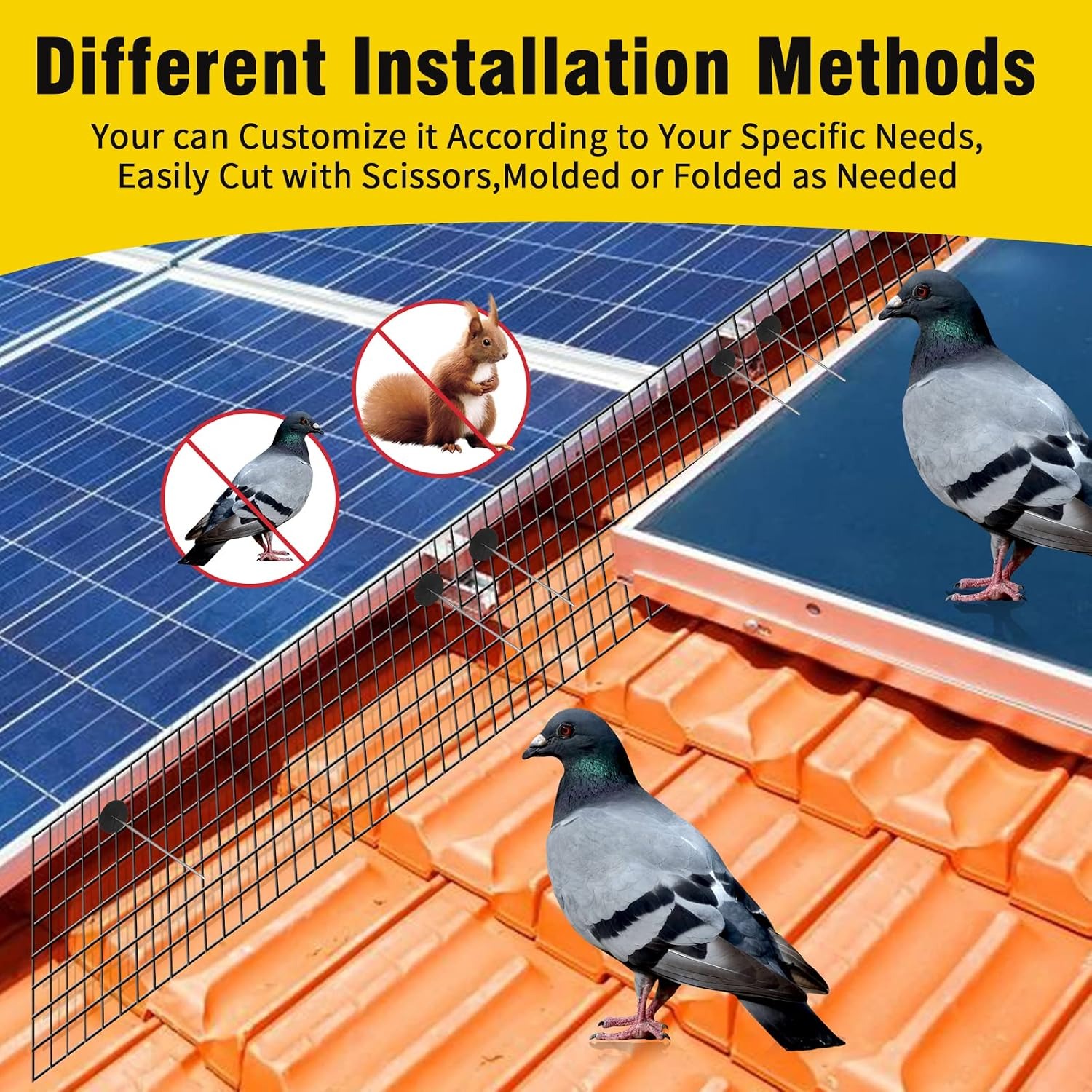
The fix is simple in concept. You close the perimeter of the array with mesh so nothing can get into the cavity, while leaving the cavity itself open to air and water.
That last part matters. People sometimes reach for solid flashing or foam strip to close the gap, and it does keep birds out. It also stops airflow under the panels, and panels lose efficiency as they heat up. Blocked drainage is worse again, because water that cannot run off pools against the roof covering.
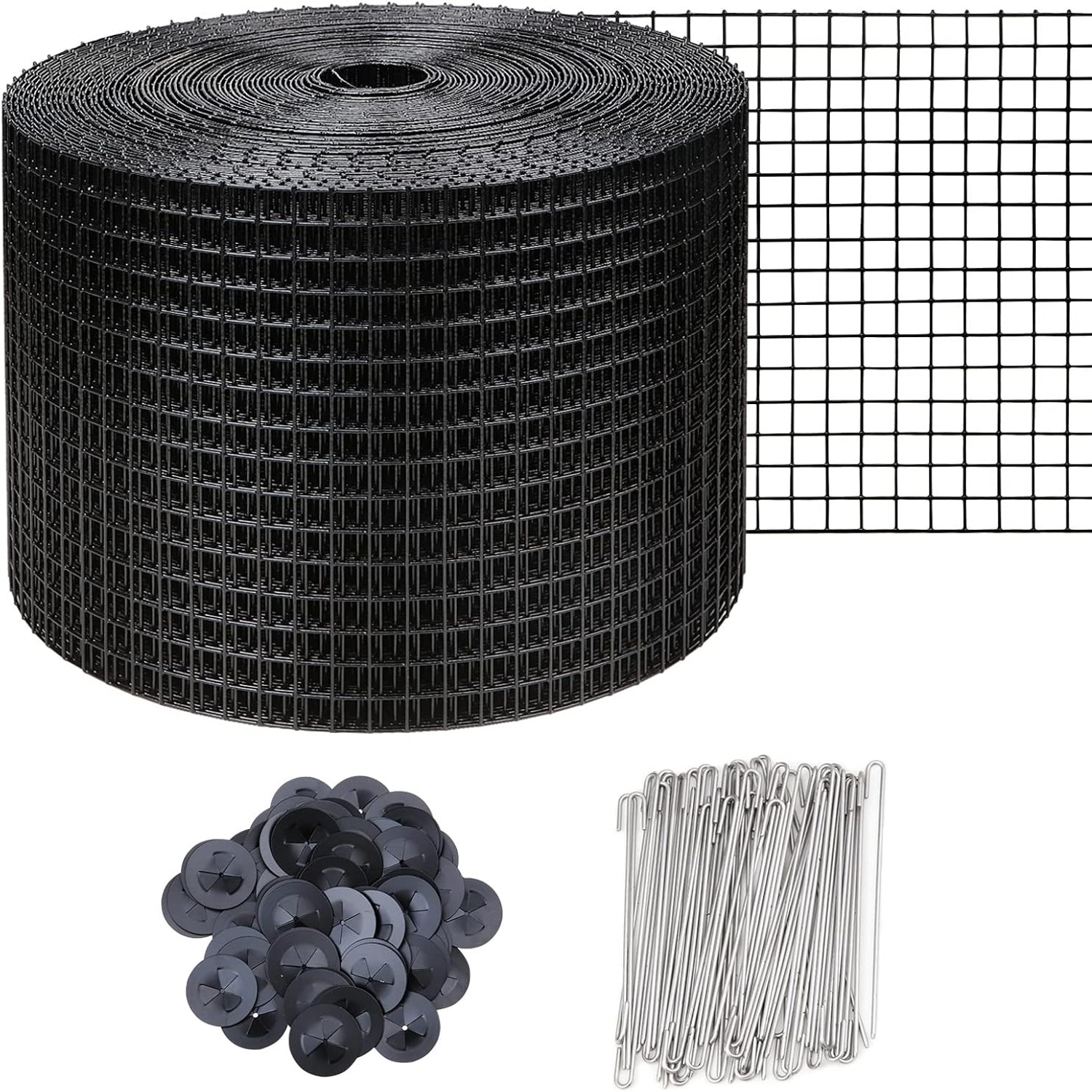
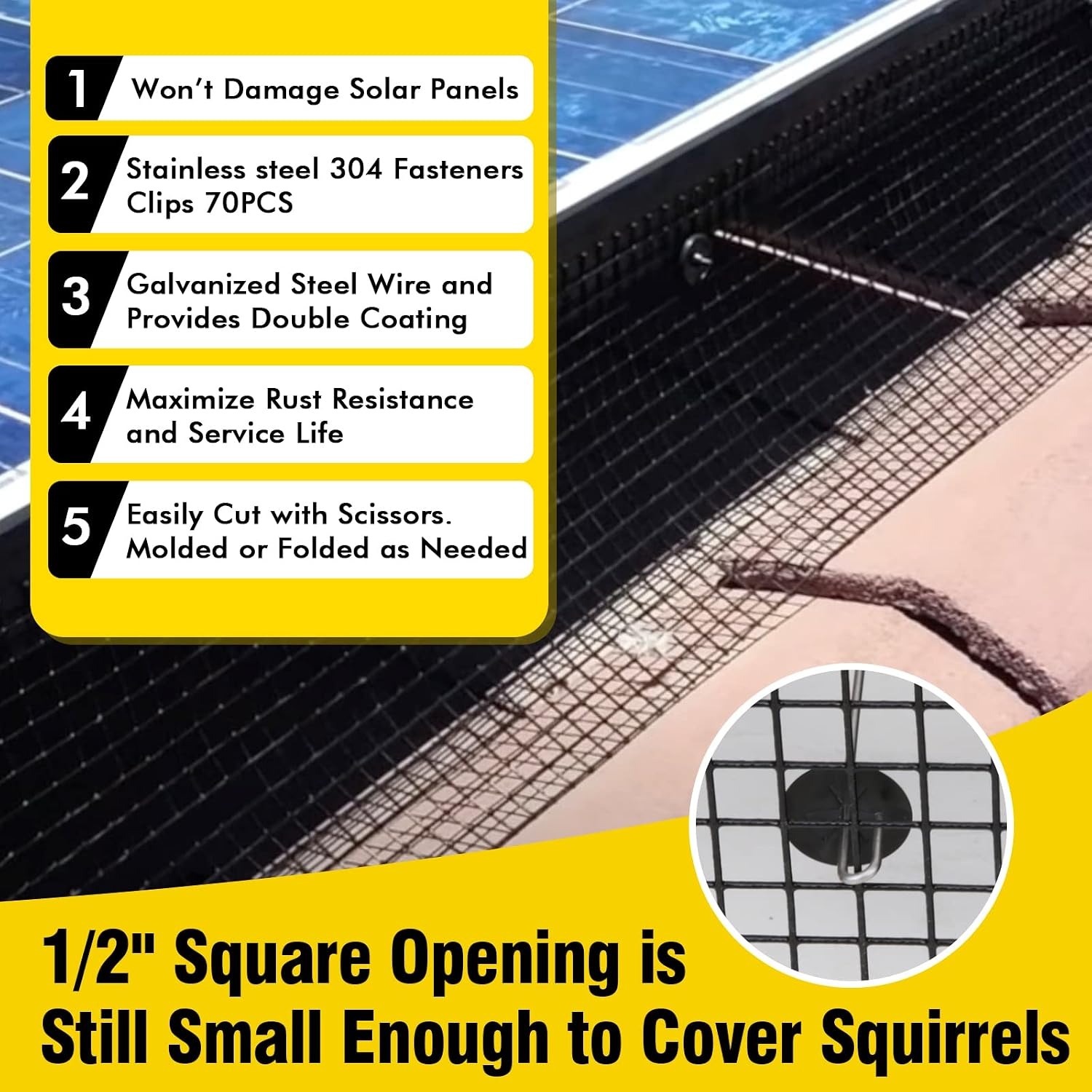
Open mesh solves both at once. Half inch square openings are small enough that a pigeon cannot push through and a squirrel cannot wriggle in, but the material is mostly air by surface area. Wind still moves behind the panels. Rain still drains. Leaves mostly wash down and off rather than piling up behind a solid barrier.
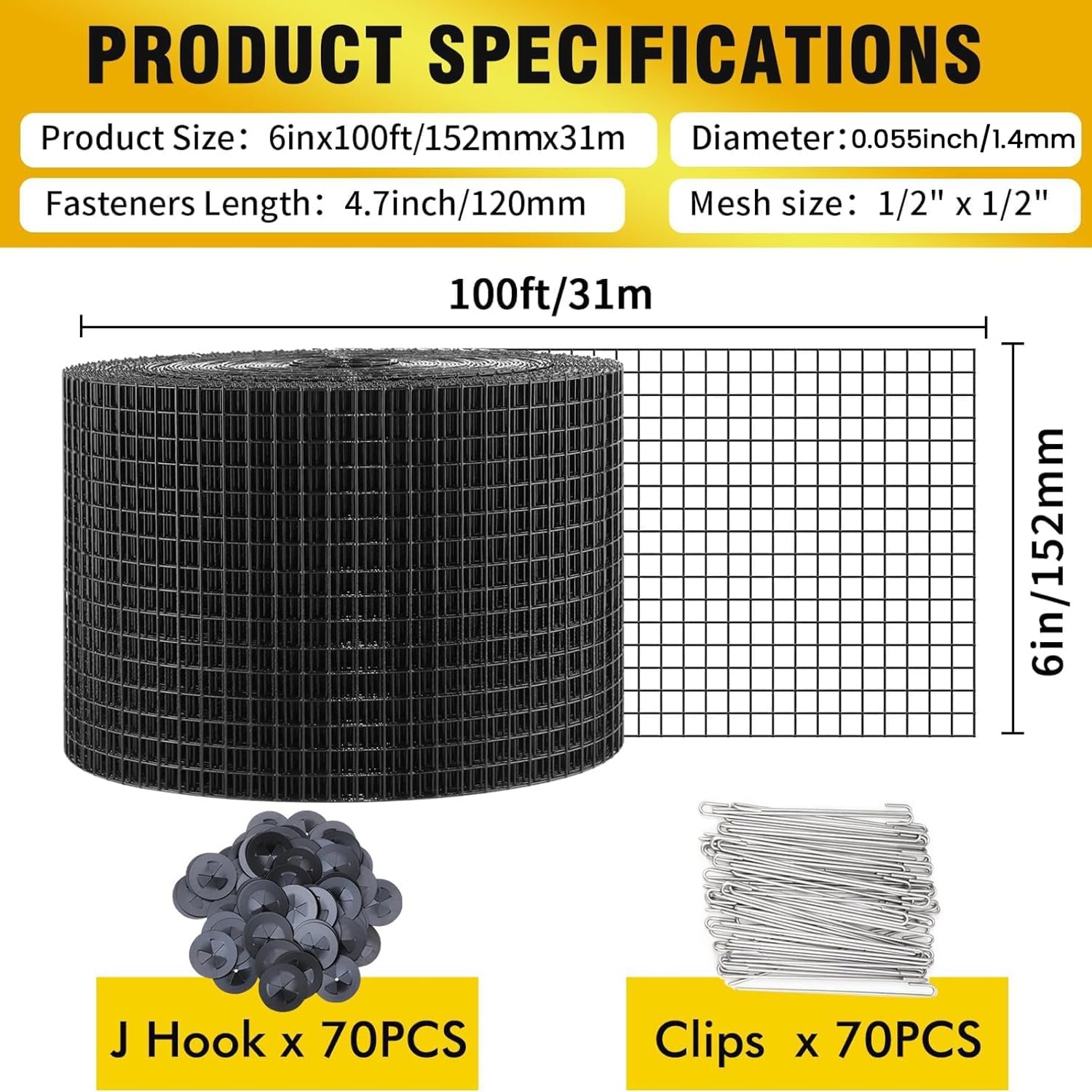
This particular roll is steel wire with a PVC coating over it. The coating is what keeps the mesh going on a roof, where it faces sun, rain, frost, grit and in coastal areas salt. Bare steel mesh in that environment starts to show rust streaks within a season or two, and the streaks run down your roof. Coated wire holds up far better, which is why it is the standard choice for the best critter guard roll in this category.
Black is the usual color for a reason. From the ground, a black strip tucked behind a dark panel frame is close to invisible. Galvanized silver mesh catches the light and draws the eye straight to it.
Who needs this and who can skip it
If you have a rooftop array and you have ever heard scratching or cooing above the ceiling, you need it. If you can see nesting material poking out from under a panel edge, or there are droppings down the tiles below the array, you needed it a while ago.
You should also consider it before birds arrive if you are in an area with a visible pigeon population, if neighboring houses with solar already have the problem, or if your roof is low enough that the gap is easy to reach. Prevention is far less work than cleanup.
You can probably skip it if your array is a small ground mount sitting flat on a frame with no real cavity, or if your panels are integrated into the roof itself rather than mounted above it. In-roof systems have no gap to close.
Choosing the right guard
A few things separate a guard that lasts from one you redo in two years.
Opening size. Half an inch is the sweet spot. Bigger openings let small birds and young rats through. Much smaller openings restrict airflow and clog with debris. If you are comparing products, the opening dimension tells you more than almost anything else on the spec sheet.
Coating. Look for galvanized wire with a PVC coat rather than plain galvanized alone. The two together handle weather better, and the coating protects the wire where it rubs against the panel frame.
Width. Six inch width suits most standard roof mounts where the panel sits roughly three to five inches above the roof. You want enough material to bridge the gap plus a lip to fix with. Too narrow and you are fighting to make it reach. Too wide and you are trimming every strip.
Length. Measure your array perimeter before you buy. Not the edge of each panel, the outside edge of the whole block. A 100 ft roll handles most residential installs, but a large array or two separate blocks can eat it up faster than you expect.
Flexibility. The mesh needs to bend and hold the bend. Roofs have conduit runs, vents and mounting feet in the way, and a stiff mesh fights you at every obstacle. Malleable wire lets you form the strip around things rather than cutting a hole for each one.
Fitting it without making things worse
Start with safety. Roof work causes real injuries. If your roof is steep, high, wet or brittle, pay someone. The cost of a fall is not worth the saving.
Before anything else, clear what is already up there. Lift a panel edge and check. If there is a nest, confirm it is empty and that the birds have finished with it before you touch anything. Sealing live birds under a panel is cruel, and in many places it is also against wildlife protection rules. Once it is clear, remove the debris and droppings, rinse the area and let it dry.
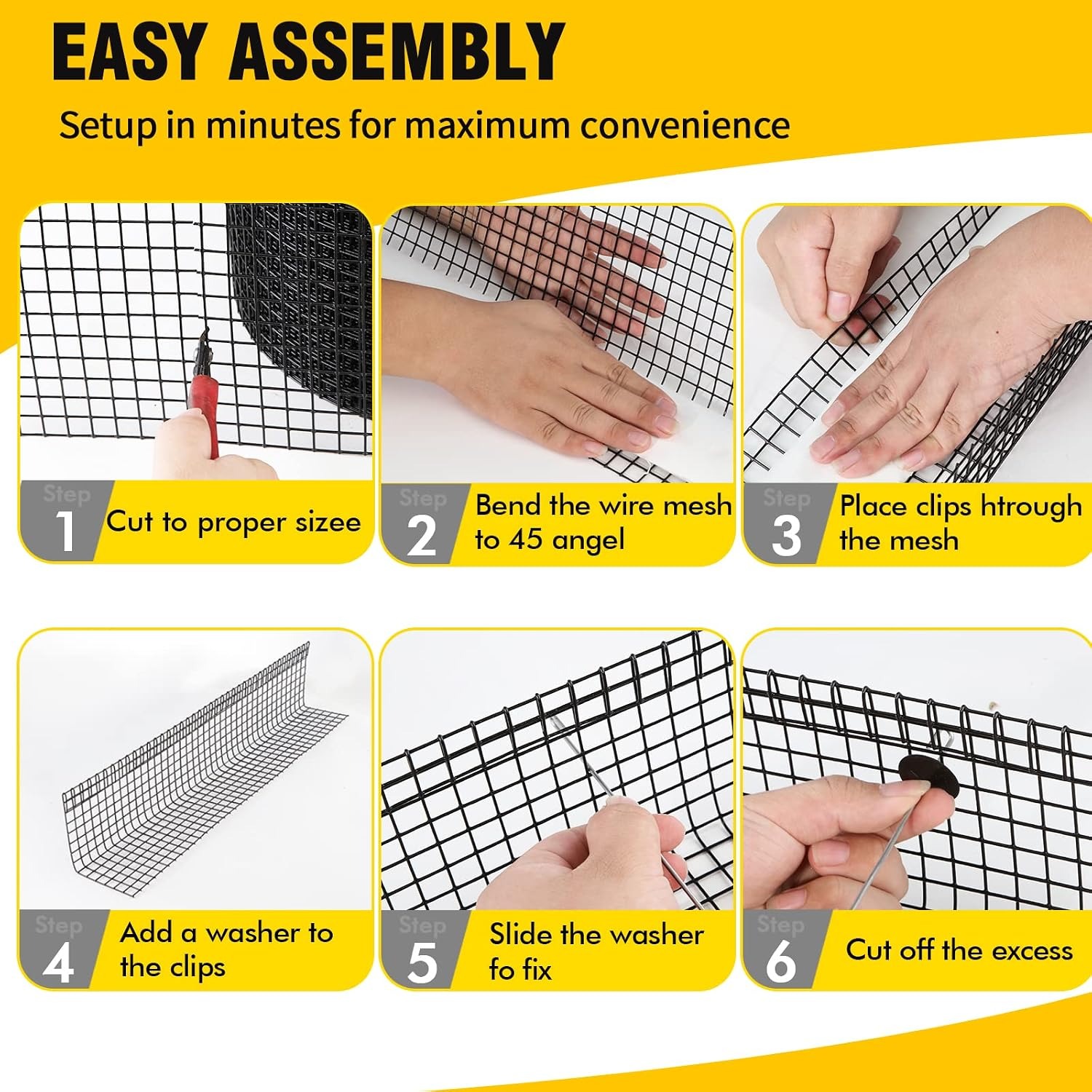
Then measure each run of the perimeter and cut strips to match. Snips and gloves. The cut ends are sharp and they are also bare steel, so dab them with exterior paint once the strip is in place.
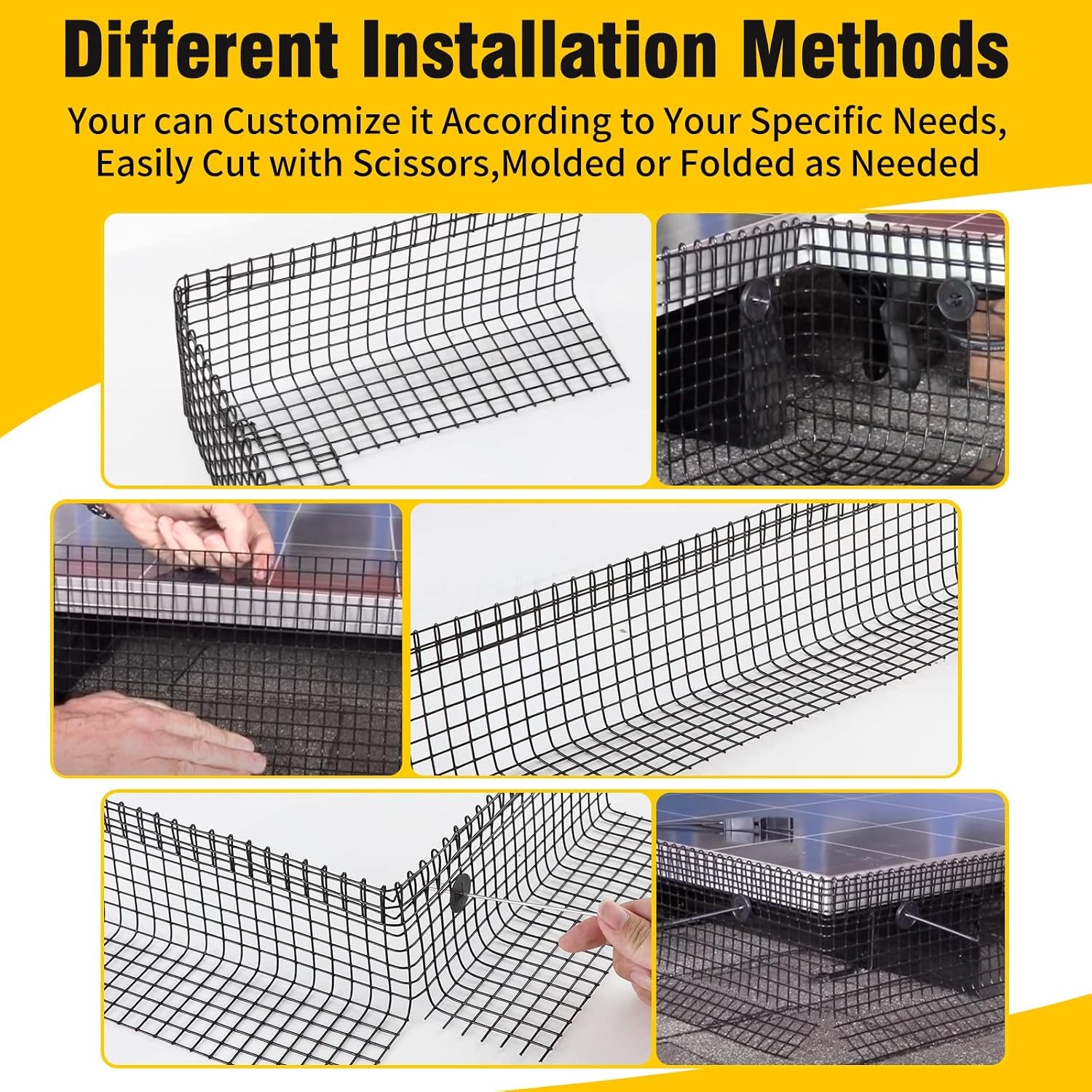
Fix to the panel frames or the mounting rails, never into the roof covering. Clips designed for solar frames are the cleanest method and leave no holes. Self-tapping screws into the frame work too, but check with your installer first, since some warranties have conditions about drilling frames.
Work your way around the array and pay close attention to the corners. Corners are where gaps get left, and a bird only needs one. Overlap the strips slightly rather than butting them end to end.
Keeping it working
This is low maintenance, not no maintenance. Twice a year, hose the mesh down to clear leaves, grit and feathers from the openings. A clogged section stops breathing, which defeats part of the point.
While you are there, run your eye along the fixings. Thermal movement and wind work screws and clips loose over time, and a loose section is an invitation. Tighten anything that has shifted.
Check the cut ends too. If you see any rust starting, clean it back and touch it up. A few minutes with a brush saves you redoing a run later.
The short version
Solar panels create a sheltered cavity above your roof, and birds will find it. A half inch coated steel mesh around the perimeter closes that cavity without blocking the airflow the panels need.
This roll gives you 100 ft of black PVC-coated steel mesh at 6 inch width, enough for most residential arrays. It bends around obstacles, cuts with hand snips and fixes to the panel frames rather than the roof.
Clear out any existing nesting first, measure your full array perimeter before you order, fix to frames rather than roofing, and rinse it down a couple of times a year. Do that and the problem stays solved.