
The complete guide
How To Choose And Use A Cat Scat Mat That Actually Works
The problem with one favorite spot
Cat owners and gardeners usually describe the same thing. There is one bed, one pot, one bench or one chair that the animal keeps returning to. Everywhere else is fine. That single spot gets dug up, scratched, sat on or used as a toilet, over and over.
The reason is simple. Animals repeat what works. Freshly turned soil is soft and easy to dig. A warm benchtop is a good lookout. A particular armchair smells right. Once the behavior pays off a few times, it becomes routine, and shouting at the cat afterward does nothing because the cat has already left.
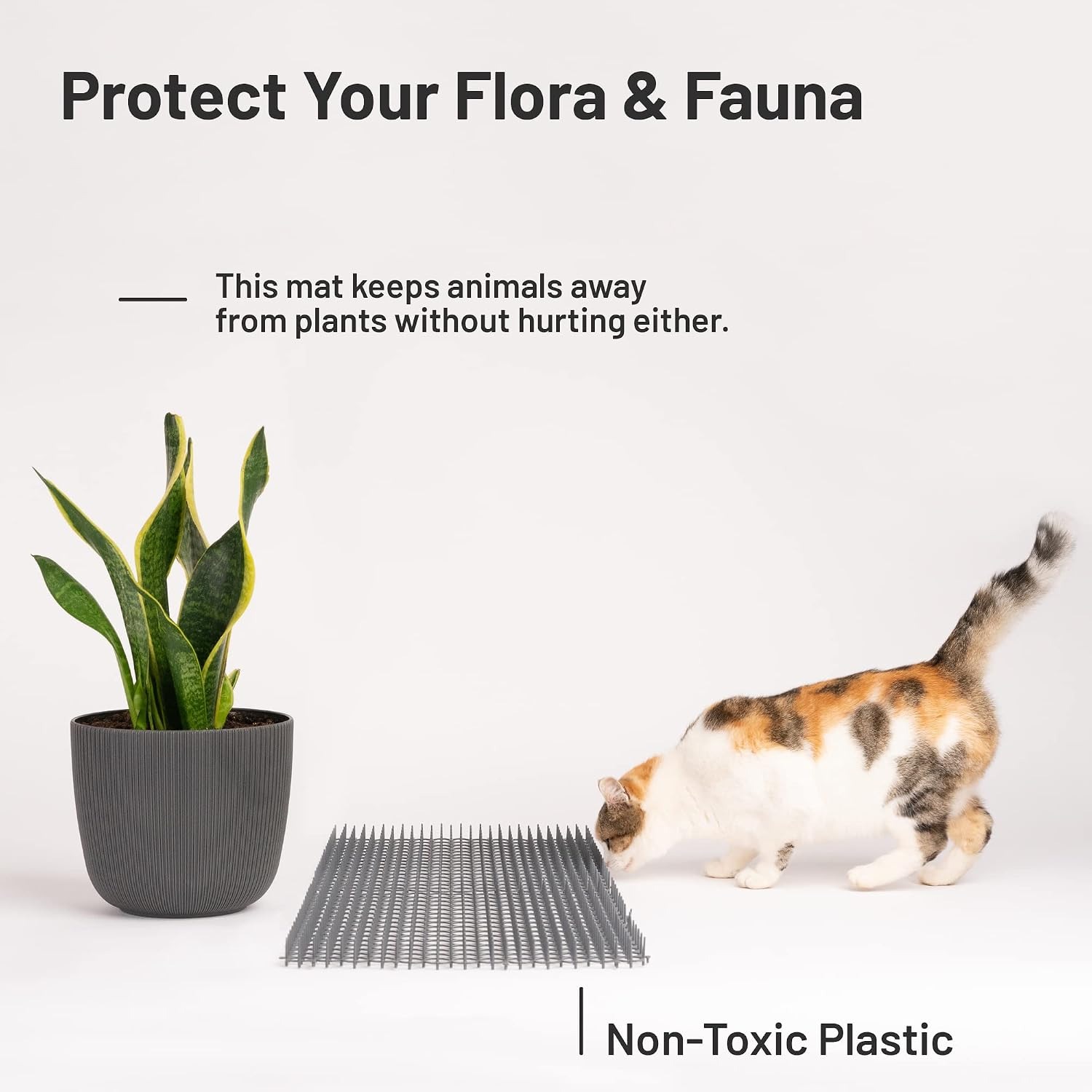
A scat mat breaks that routine by changing how the spot feels. The surface becomes awkward underfoot, so the animal picks somewhere else. You do not have to be home, you do not have to catch it in the act, and nothing is sprayed into the air or onto your plants.
How a spiked deterrent mat works
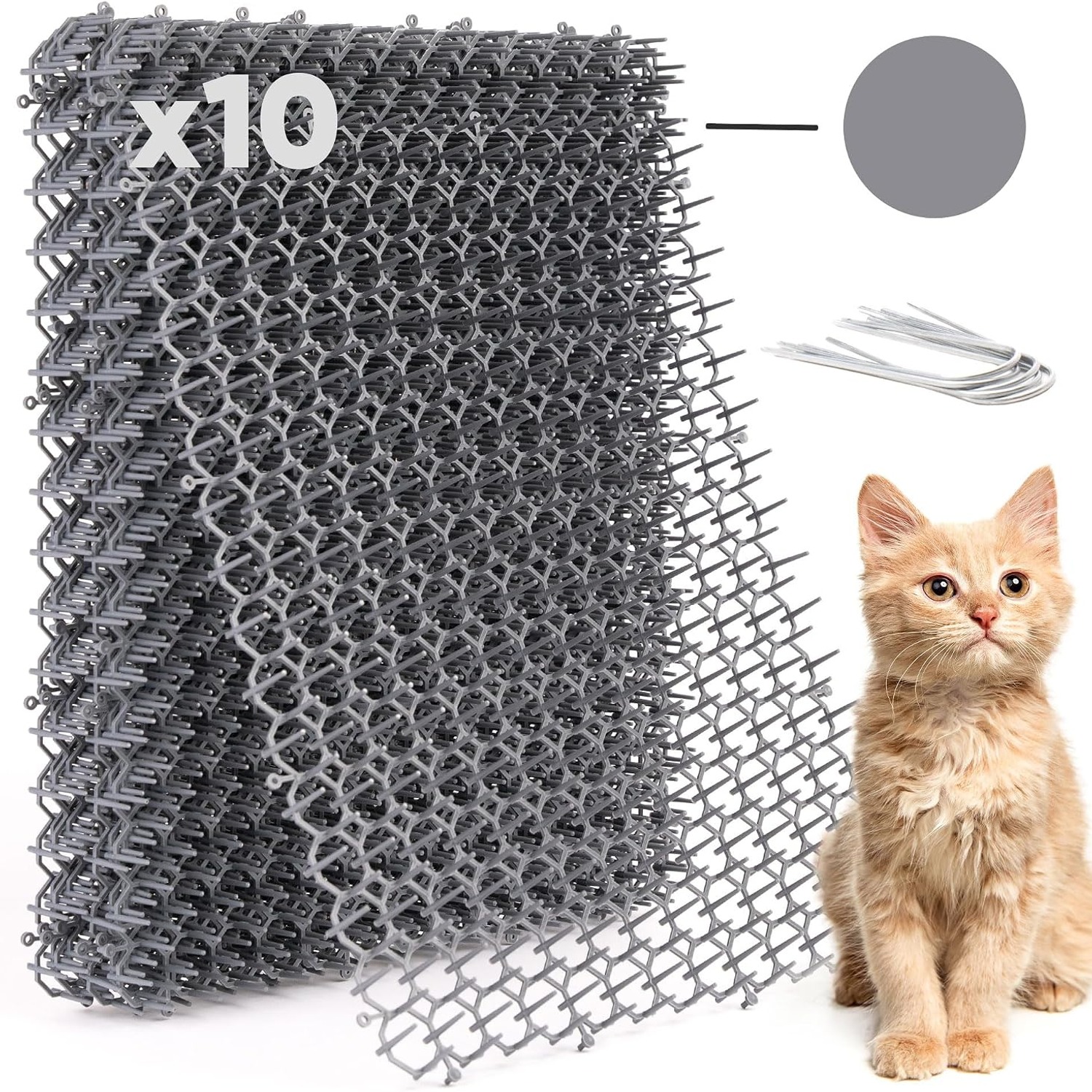
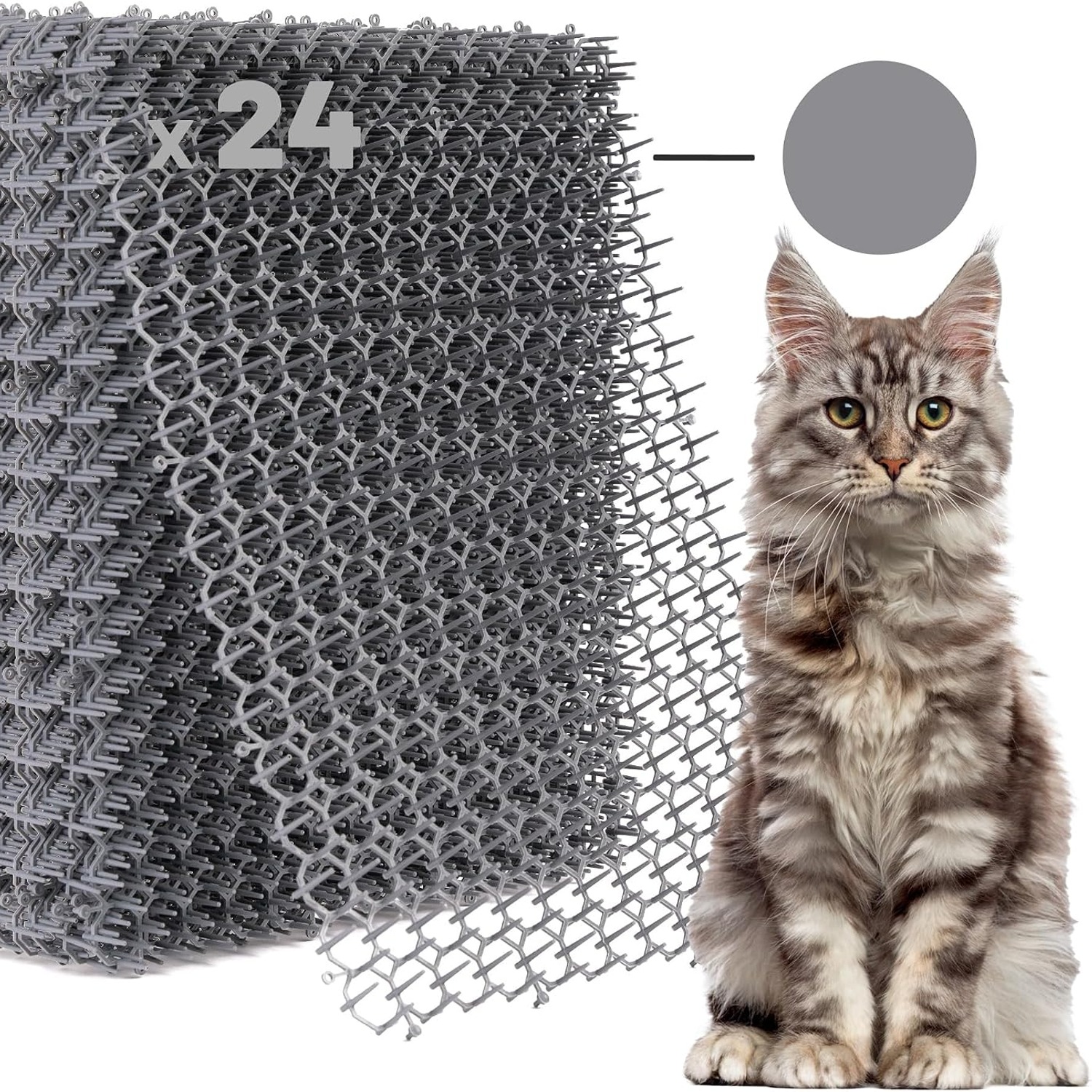
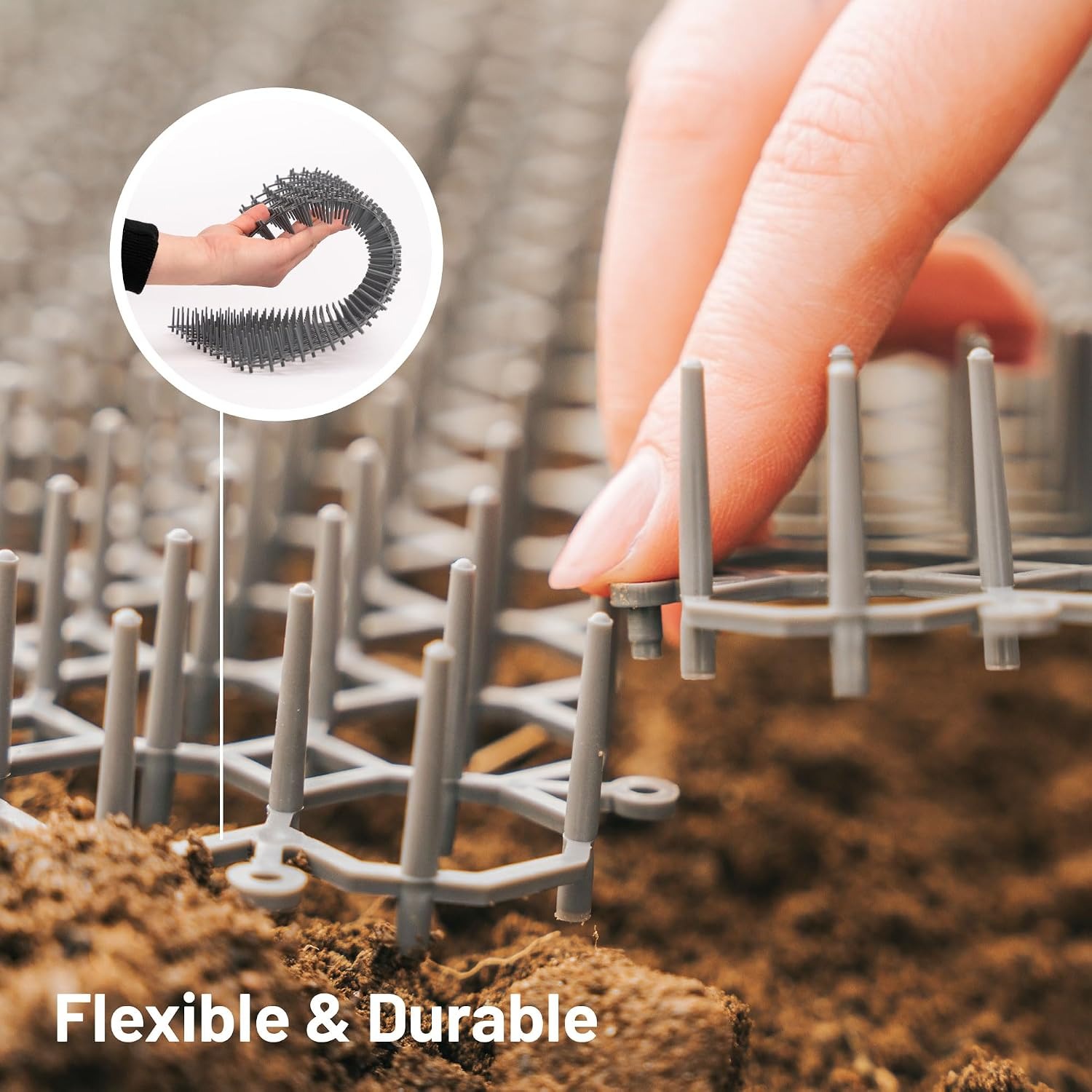
Each panel in this set is molded polypropylene with rows of short, blunt spikes standing about an inch proud. When a paw lands on it, the footing feels unstable and prickly. Cats dislike that strongly. Most will lift the paw, step back and leave.
The important word is blunt. These are not spikes in the sense of anything that pierces. They are shaped to create pressure across the pad so the animal registers "this is not nice here" and moves on. That is the whole mechanism. No batteries, no noise, no scent.
Because the effect is physical rather than startling, it does not wear off the way a noise deterrent can. A cat that learns a sound is harmless will ignore the sound. A cat that steps on an uncomfortable surface gets the same message every single time.
Why ten panels matter more than you think
The single most common reason deterrent mats disappoint people is partial coverage. If you lay one mat on a bed that is four feet long, the cat uses the other three feet. It is not outsmarting you, it is just following the easy path.
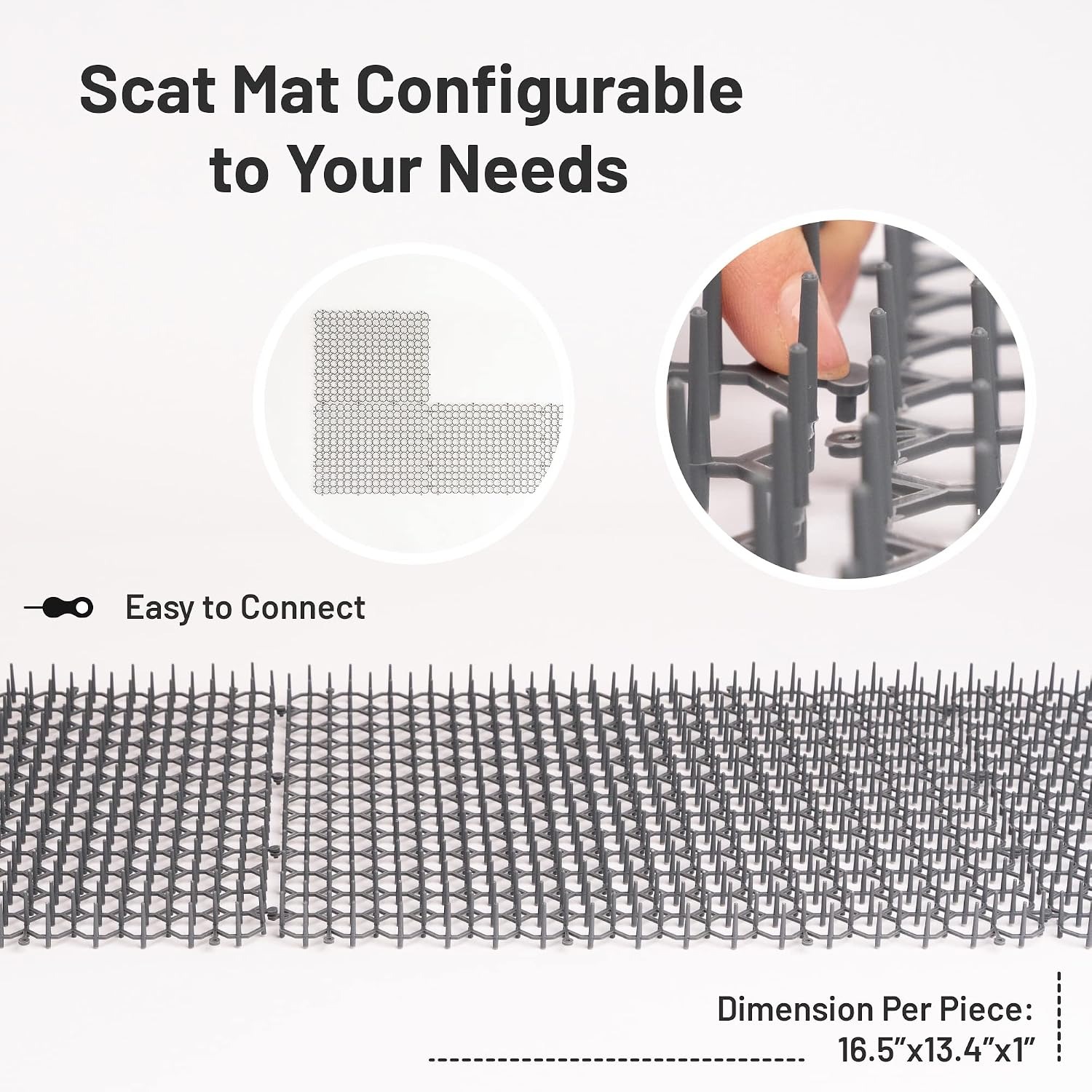
This set includes ten panels at 16 x 13 inches each, for roughly 15 square feet total. That is enough to treat a whole small bed, or a bench run, or a pot cluster plus a sofa. You can cover the problem properly the first time instead of ordering more a week later.
The panels also connect by hand, so you can build one long unbroken strip rather than leaving gaps between separate pieces. Gaps are invitations.
Fitting them where you need them
Outdoors, lay the panels over the soil, overlap or clip them, and press the six included staples in to hold everything down. Mulch, loose soil and turf all take the staples easily. On hard or stony ground you may want longer garden pins instead.
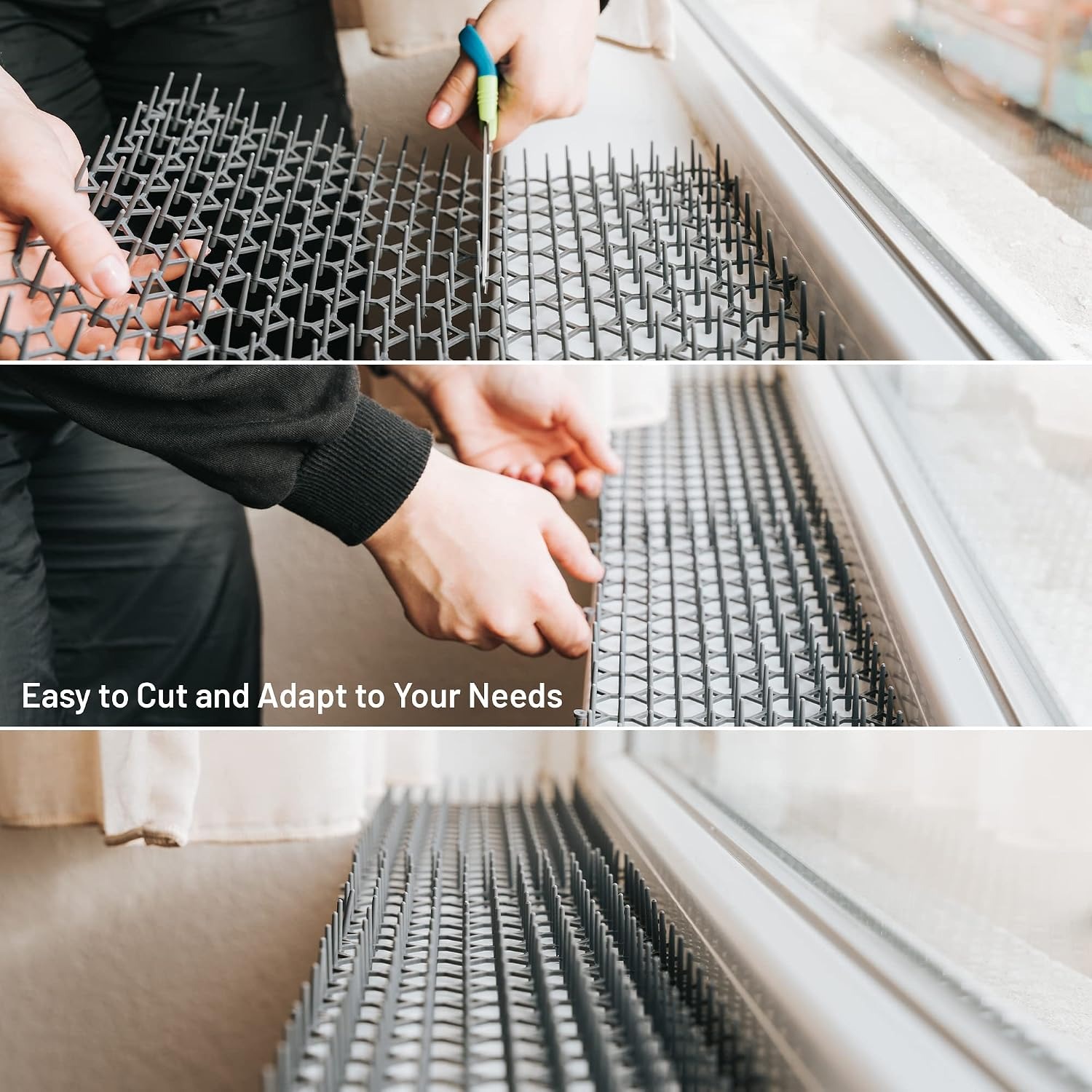
Around plants, cut an opening with household scissors and slide the panel in around the stem. Cut between spike rows so you are not left with a jagged edge. For pots, cut a circle slightly smaller than the rim and make a single slit to the center.
Indoors, there is less to do. Lay a panel on the bench, the cushion, the window sill or around the base of a Christmas tree. Weight and texture are usually enough. If the surface is slippery, a thin cloth underneath helps stop the panel sliding and protects polished timber.
Who these mats suit
They suit anyone with a repeating problem in a fixed location. Seedling beds in spring, when the soil is soft and tempting. A benchtop that a cat has claimed. A couch arm being used as a scratching post. Potted plants that squirrels keep excavating. A freshly laid lawn patch a dog has decided to dig.
They are less useful if the problem moves around. A cat that roams a whole large garden is harder to manage with mats alone, because you cannot realistically cover an entire yard. In that case, focus on the two or three spots that matter most and accept that the rest of the garden is shared territory.
They also suit households that do not want chemical sprays. Nothing goes into the soil, nothing is sprayed near food plants, and nothing needs reapplying after rain.
Choosing the right coverage for your space
Before you lay anything, spend a day noticing where the animal actually goes. People often guess wrong and cover the wrong half of a bed. Look for flattened soil, paw prints, disturbed mulch or hair on fabric.
Then measure the area roughly. A small raised bed might be eight square feet, which three or four panels will handle with overlaps. A long kitchen bench might need five linked panels. Work out your layout before you start cutting, because cutting is one way only.
Keep one or two panels uncut in reserve. Animals adapt, and you will almost certainly find a second spot you want to treat once the first one is protected.
Living with them day to day
Garden panels collect leaf litter and soil between the spikes over time. A quick blast with the hose clears them. Indoor panels take a wipe with a damp cloth and a little mild soapy water. Let them dry before stacking, otherwise grit gets trapped and the stack ends up gritty next season.
Lift the outdoor panels when you weed, feed or top up mulch, then put them straight back. Leaving them off for a week is often all it takes for a cat to rediscover the spot.
Store them flat somewhere out of long term direct sun. Keep the six staples in a labelled bag with the stack, because small metal pieces vanish in sheds.
Pairing deterrence with a better option
The mats work faster when the animal has an alternative. If a cat is digging in your vegetable bed, give it a patch of loose sand or soil in a corner you do not mind losing. If a cat has claimed a benchtop for the view, put a perch or cat tree beside the same window. If a dog digs, set up a designated digging area and bury something interesting in it.
Deterrence tells an animal where not to go. It does not tell it where to go instead. Doing both halves is the difference between a quick fix and a long argument with your pet.
When to expect results
Most people notice a change within a week or two. Some cats give up on the first attempt, others test the mats a few times before accepting the new rule. Consistency matters more than intensity. Leave the coverage in place long enough for the old habit to fade.
After a few weeks you can usually lift the mats and see what happens. If the behavior returns, put them back for another stretch. Many gardeners simply redeploy them each spring when new planting goes in, which is when fresh soil draws the most attention.
The short version
This is a ten panel set of blunt-spiked polypropylene mats, each 16 x 13 x 1 inches, covering around 15 square feet in total, with six staples for anchoring. It works by making a specific spot unpleasant to stand on, which breaks the habit without hurting the animal.
Cover the whole problem area rather than part of it, cut panels to fit around plants and corners, anchor them outdoors, and give your pet a reasonable alternative nearby. Clean them when they get dirty, store them flat, and bring them back out whenever the habit tries to return.