American Pest Spikes
Company
Shop By Category
T&Cs
Shop Online
  • Clear materials and product specifications
  • Free tracked USA-wide delivery over $75
  • 14-day returns

Metal anti-climb fence spikes | Cat and raccoon deterrent spikes | anti climb fence spikes

Metal Anti-Climb Fence Spikes (6 Pack)

$49.99 $59.99 Save $10
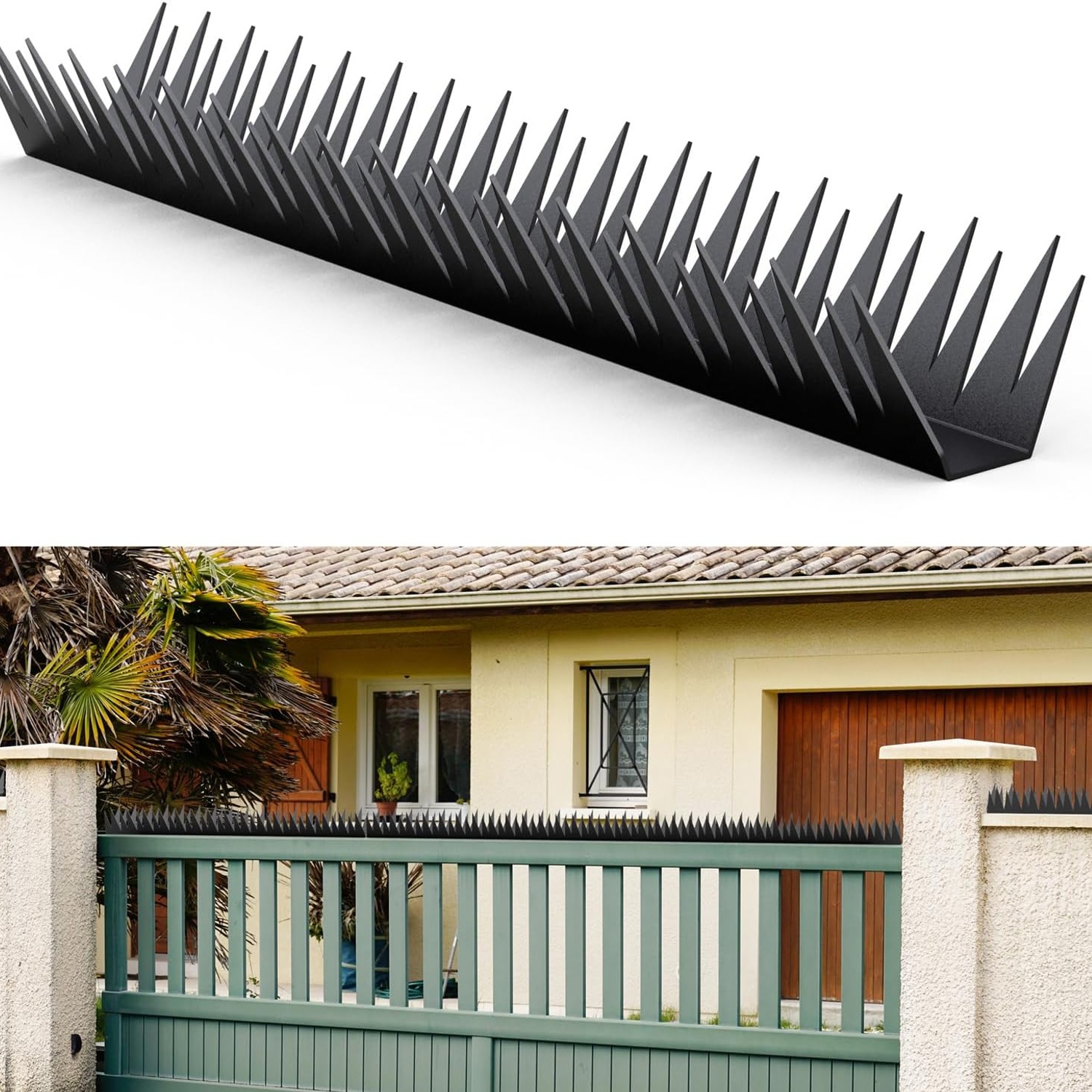
  • Alloy Steel Build
  • Pre-Drilled Holes
  • Climb Deterrent
  • Six-Strip Pack

Price: $49.99 $59.99

  • Free tracked USA-wide delivery on orders $75+, otherwise a flat $9.95
  • Pay by card or PayPal, handled by the payment provider
  • 14 days to change your mind, plus your statutory rights
Product specifications
MaterialAlloy Steel
ColorBlack
BrandQZXRKEJI
StyleModern Minimalist
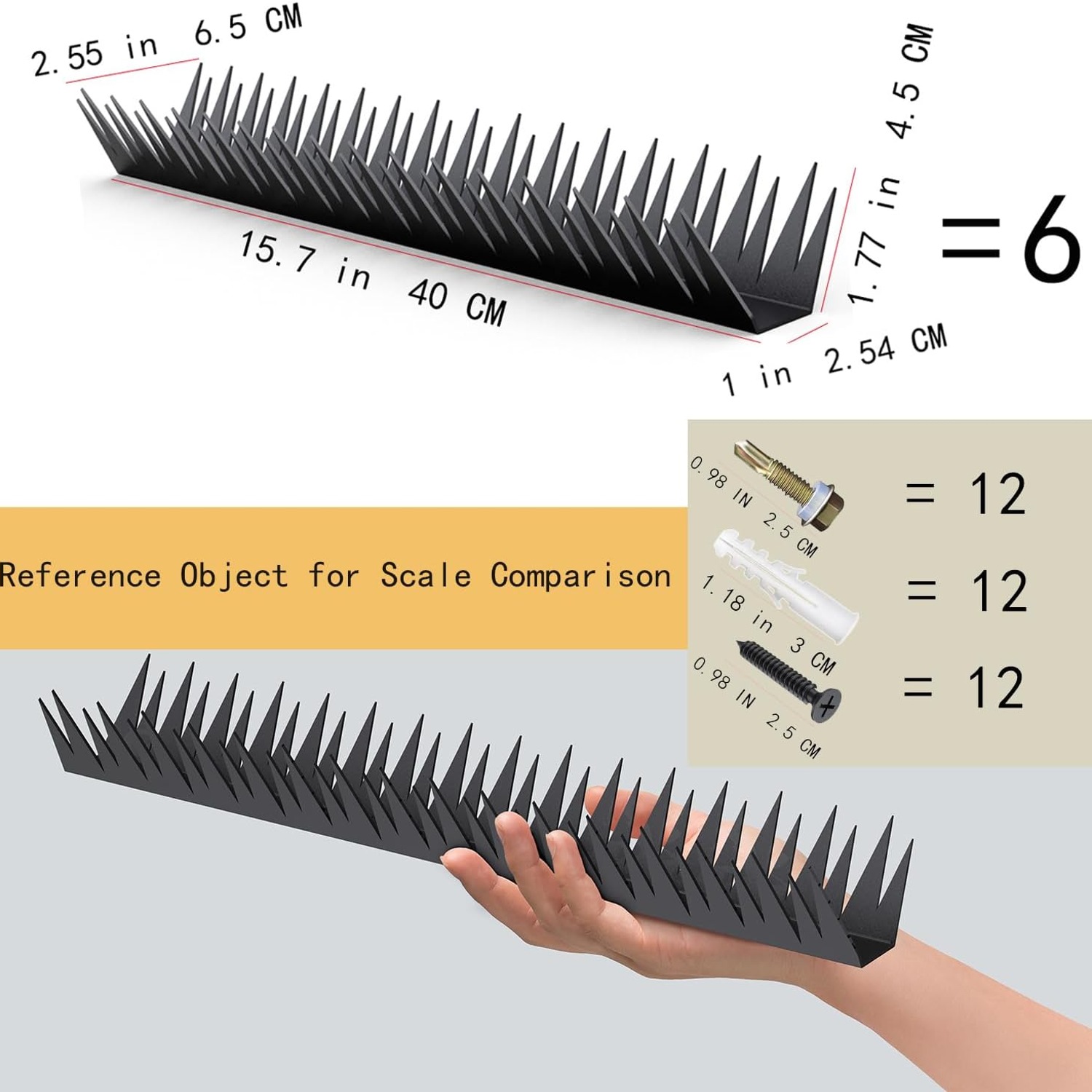
Strip Dimensions15.7 in long x 2.55 in wide
Pack Quantity6 strips
FixingPre-drilled holes for screws
ConditionNew
Shipping & returns

Tracked delivery anywhere in the USA. It is free on orders of $75 or more, and a flat $9.95 below that.

If it is not right for you, send it back within 14 days of delivery in resaleable condition and we refund the price you paid, including standard delivery. That is a voluntary policy we offer on top of your legal rights. You cover the cost of returning it unless the item is faulty.

If it arrives faulty, damaged or not as described, we put it right at no cost to you under the consumer protection law of your state and the Federal Trade Commission Act, return postage included.

Shipping details · Refunds and returns

Alloy Steel BuildMade from alloy steel so it stands up to outdoor weather better than plastic strips.
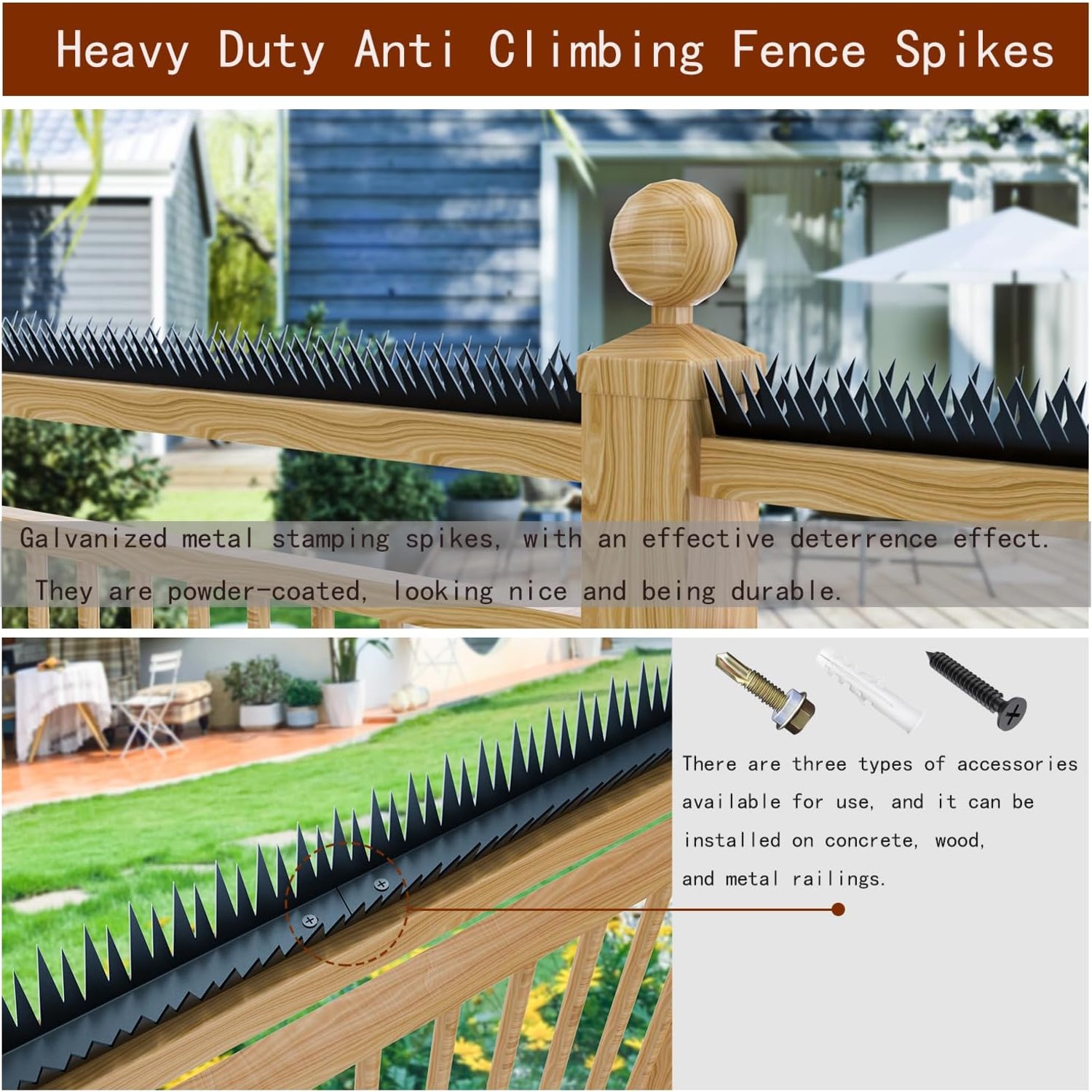
Pre-Drilled HolesScrew straight down onto flat timber, masonry or metal with no extra drilling.
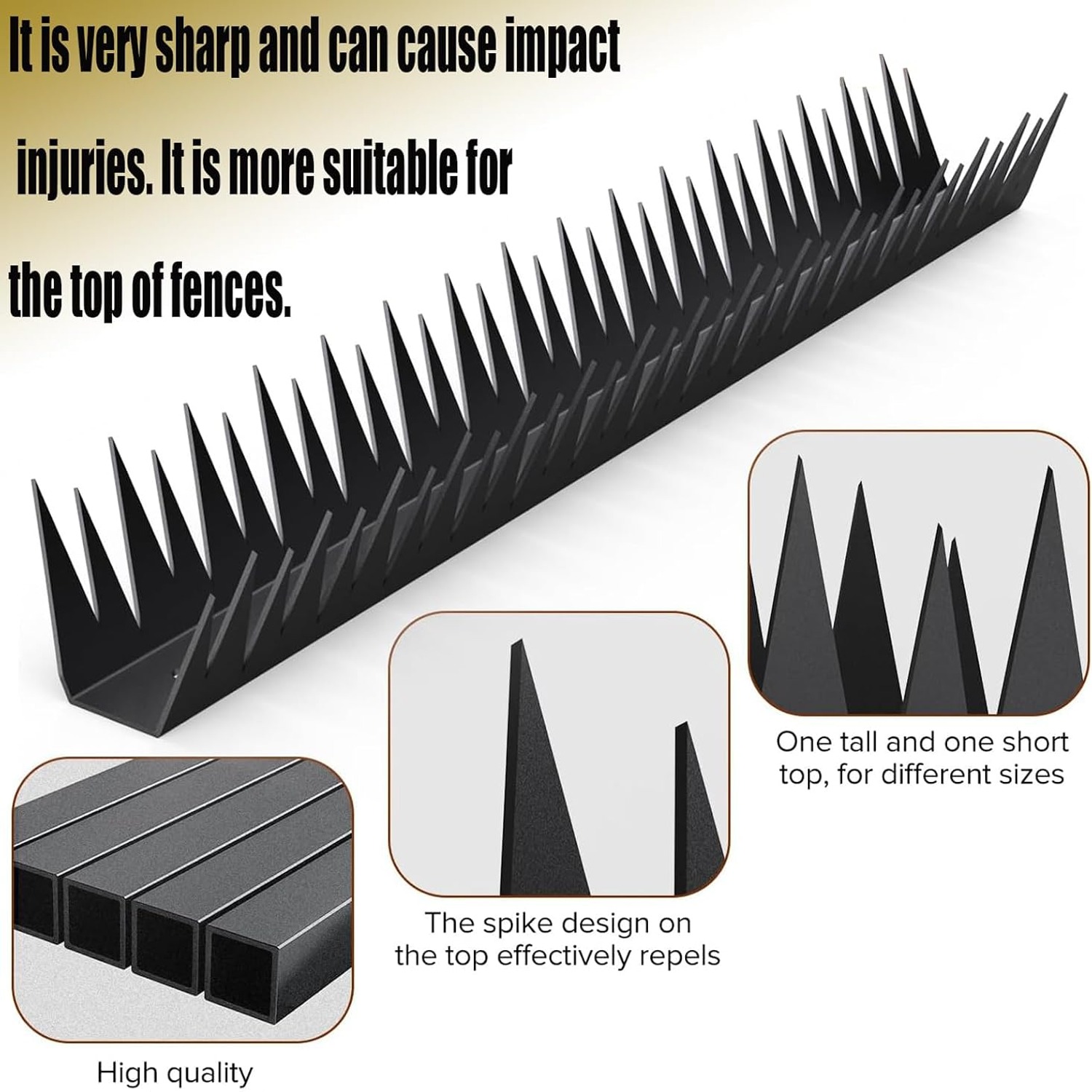
Climb DeterrentSharp points discourage cats, raccoons and people from using your fence top as a route.
Six-Strip PackSix strips at 15.7 inches long cover a useful run of fence, gate or coop edge.

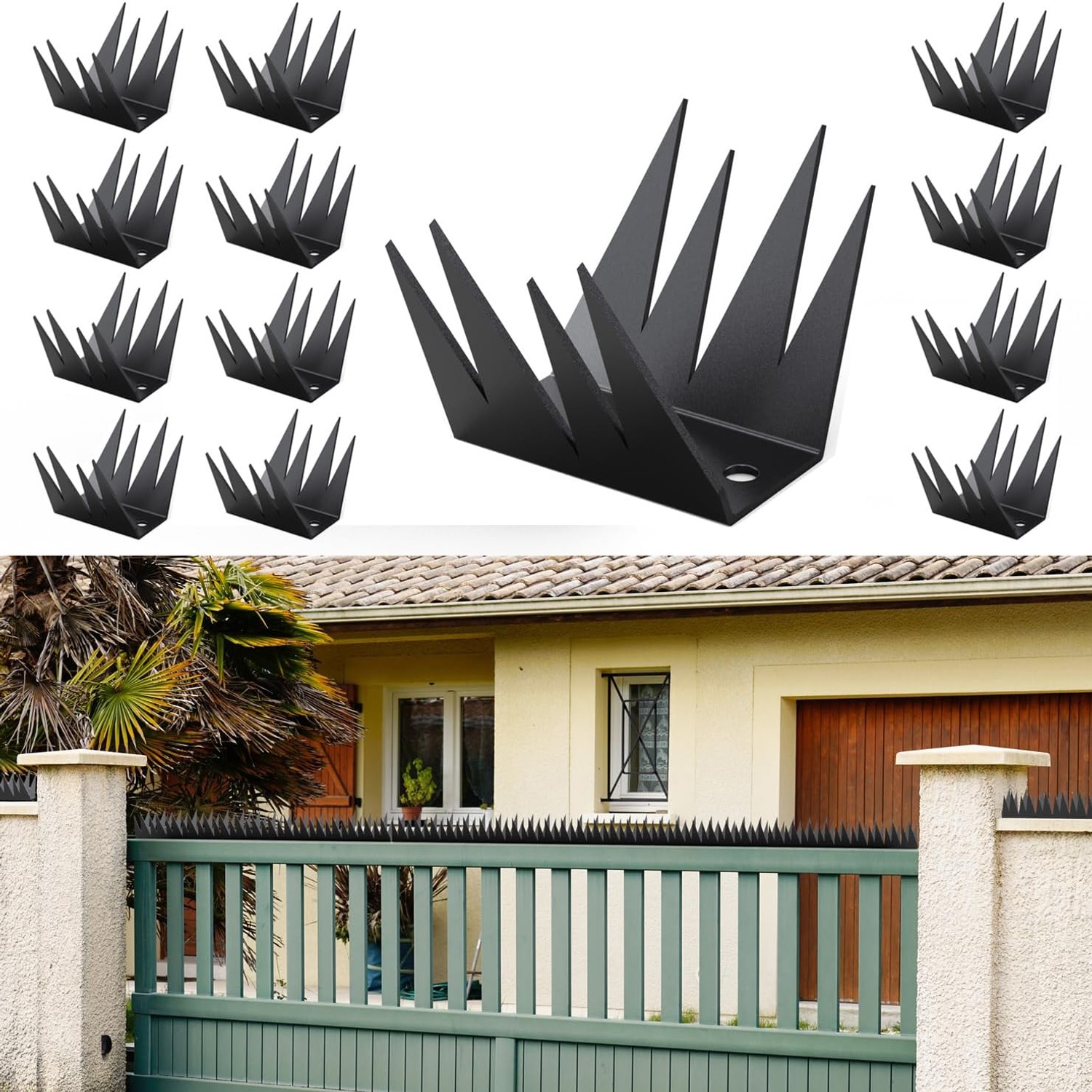
Keep the top of your fence off-limits with metal anti-climb fence spikes that quietly do their job, day and night.

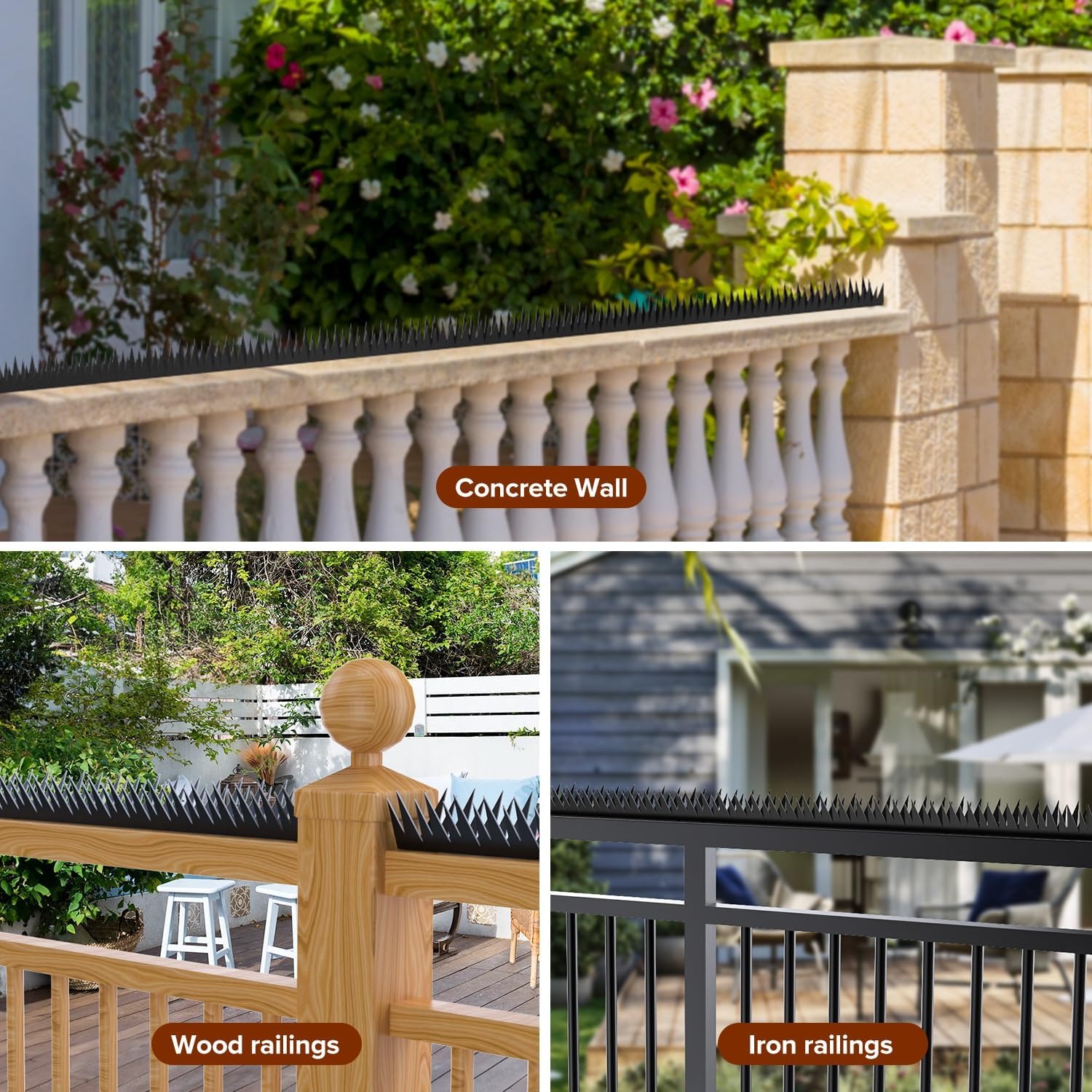
Six alloy steel strips with pre-drilled holes fit fences, gates, walls and coop roofs, giving you a sharp physical barrier that stops cats, raccoons and climbers from getting a foothold.

Six alloy steel anti-climb fence spike strips give you a sharp, visible barrier along the top of a fence, gate or wall.

Each strip measures 15.7 inches long by 2.55 inches wide, so they line up end to end along a rail or capping board.

Pre-drilled holes mean you can fix them with screws on flat surfaces without measuring and drilling your own.

The black finish keeps them low-key against dark fence paint, stained timber and metal railings.

Because they work by physical shape rather than noise, batteries or chemicals, they keep deterring in rain, wind and darkness.

Metal Anti-Climb Fence Spikes (6 Pack)

Most fence problems start at the top. A cat walks the capping board every night, a raccoon drops onto the chicken coop roof, or someone uses the gate rail as a step. Once an animal or a person works out that a route exists, they keep using it. This six-pack of metal anti-climb fence spikes attacks the problem at the exact point where it happens, by making the top edge of the fence an uncomfortable place to put a paw or a hand.

Metal Anti-Climb Fence Spikes (6 Pack)

The strips are made from alloy steel and finished in black. That matters outdoors, where cheap plastic spikes go brittle after a couple of summers and snap off in the wind. Each strip is 15.7 inches long and 2.55 inches wide, a size that sits neatly on a standard fence rail or capping board, and you can butt them end to end to extend the run as far as you need.

Metal Anti-Climb Fence Spikes (6 Pack)

Fitting is straightforward. Pre-drilled holes run through each strip, so you line the strip up along the flat top surface, mark the holes and drive screws straight in. On timber that is a quick job with a cordless driver. On masonry you will want plugs or a suitable fixing. Some people also bond strips to smooth capping with an exterior-grade adhesive, which suits surfaces you would rather not drill.

Metal Anti-Climb Fence Spikes (6 Pack)

These spikes are genuinely sharp, which is why they work and also why they need respect. Wear thick gloves while you handle and install them, keep the pack away from children and pets during fitting, and think about who walks past the finished line. Along a shared path or a low garden wall at hand height, a warning sign and a slightly higher mounting position are sensible additions.

Metal Anti-Climb Fence Spikes (6 Pack)

Once they are on, there is very little to do. There are no batteries to change, no spray to top up and no sensor to misfire at 3am. You check the fixings at the start of a season, clear off leaves, and that is about it. The deterrent keeps working in the rain, in the wind, and through the long winter nights when most of the climbing happens anyway.

Not sure yet? That is fine.

A spike strip has to fit the ledge, and you cannot always judge the base width or the run from a photograph. If it is not right for you, send it back within 14 days of delivery in resaleable condition and we refund the price you paid, including standard delivery. That is a voluntary policy we offer on top of your legal rights.

If it turns up faulty, damaged or not as described, that is on us. The consumer protection law of your state covers you, and we pay the return postage. Read the full detail on our refunds and returns page, or ask us anything before you order.

Frequently Asked Questions

What exactly is in the pack?

You get six individual anti-climb fence spike strips. Each strip is 15.7 inches long and 2.55 inches wide, made from alloy steel with a black finish. Screws and fixings are not listed as included, so plan to supply your own.

How much fence length will six strips cover?

Six strips at 15.7 inches each give you a little over 94 inches of continuous coverage if you butt them end to end. That is roughly the width of a standard gate plus a short run of adjoining fence. For a long boundary you would need several packs.

What are the spikes made of?

Alloy steel, according to the product details. Steel holds its shape far better than plastic in sun and frost, which is why most of the best metal fence spikes use it. The specific alloy grade is not stated in this record.

Will they stop cats walking along my fence?

That is one of the main reasons people buy them. Cats are careful about where they put their paws, and a line of sharp points along the capping board removes the flat surface they rely on. Cover the whole route rather than one section, or they will simply step around the gap.

Do they work against raccoons?

Raccoons grip and pull themselves up over edges, so a spiked top edge takes away the handhold they need. Many buyers fit them around chicken coop roofs and run tops for this reason. Combine them with a secure latch, because a determined raccoon will test every weak point.

Can I fit them to a brick or block wall?

Yes, as long as the top surface is reasonably flat. Mark through the pre-drilled holes, drill into the masonry and use wall plugs with suitable screws. On very uneven or crumbling capping, repair the surface first so the strip sits flush.

Do I need to drill my own holes?

No. The strips come with pre-drilled holes, so you line them up, mark through and fix. That saves a lot of time compared with strips you have to punch yourself, and it keeps the spacing even.

Can I use adhesive instead of screws?

On smooth, clean, flat surfaces an exterior-grade construction adhesive is a workable option, and it is popular where people do not want to drill into a shared wall or a rental fence. Clean and dry the surface first and let the adhesive cure fully before testing. Screws are still the stronger long-term fix.

Are they sharp enough to hurt someone?

Yes, they are deliberately sharp and should be treated as such. Wear heavy gloves during installation, keep children and pets clear while you work, and think carefully before fitting them at hand height next to a footpath. Where the public can reach them, a warning sign is a sensible addition.

Is it legal to put spikes on my fence?

Rules vary by country, state and even council, and some areas restrict anti-climb devices below a certain height or require signage. Check your local regulations and any tenancy or body corporate rules before fitting. The safe approach is to keep them on your own property, above head height where possible, and clearly marked.

Will they rust?

Alloy steel with a protective finish resists weather, but any cut, scratch or drilled edge can let moisture in over time. Avoid scraping the coating during installation and touch up any damage with exterior metal paint. That small habit is what keeps the best fence top spike strips looking good for years.

Can they go on a metal railing?

If the railing has a flat top rail wide enough to take a 2.55 inch strip, yes. Use self-tapping screws suited to the metal thickness, or bolt through where you can reach the back. Pilot drill to avoid the strip shifting while you fix it.

What about a timber fence that is only an inch or so wide on top?

The strip is wider than a narrow capping board, so it will overhang. That is not necessarily a problem, but the overhang can be a snag point. Where boards are very narrow, fix the strip slightly inboard or add a wider capping rail first.

Do they help with birds?

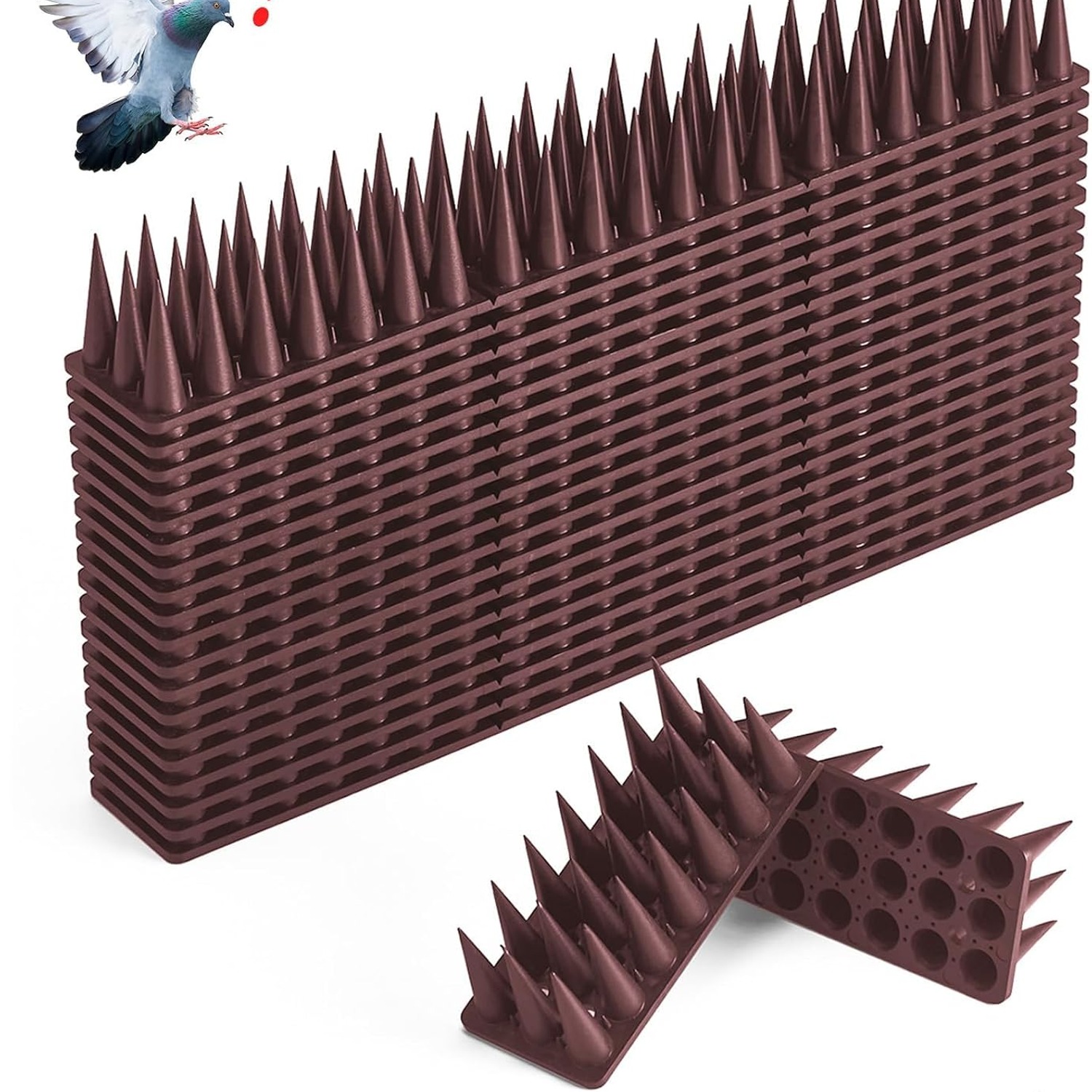
They are designed as a climb deterrent rather than a bird product, and the spacing suits paws and hands rather than small perching birds. For pigeons and similar birds, a dedicated bird spike with tighter pin spacing is a better match. These are the best anti climb fence spikes for mammals and people, not for fine bird work.

Will they stop squirrels and possums?

They make a fence top much harder to walk or grip, which discourages many climbing animals. Agile species can sometimes jump a short gap, so the more continuous your coverage the better the result. Also trim overhanging branches that let them bypass the fence entirely.

Can I cut a strip to fit a shorter run?

Steel can be cut with an angle grinder or a hacksaw if you have the right tools and safety gear. Keep the cut end away from reach and seal it with exterior paint to prevent rust. If you are not comfortable cutting steel, plan the layout so you use whole strips.

How long does installation take?

Fitting a single strip to timber takes a few minutes with a cordless driver. A full six-strip run along a gate and fence top is usually a one-hour job including marking out. Masonry takes longer because of drilling and plugs.

What tools do I need?

Thick gloves, a tape measure, a pencil, a drill or driver and screws suited to your surface. For brick or block add a masonry bit and wall plugs. Safety glasses are worth wearing when drilling overhead.

Do they come in other colors?

This listing is black. Black blends well with dark stained timber, wrought iron and most powder-coated metal fencing, which is part of why it is the common choice. Other finishes are not listed in this record.

Will they damage my fence?

Fixing anything with screws leaves holes, so expect small marks if you remove them later. On timber, the holes fill easily with exterior filler. On rented or shared fences, get permission first and consider adhesive mounting.

Are they suitable for a chicken coop?

Many owners fit them along the top edges of coop and run frames to stop raccoons and other climbers reaching the birds. Keep the spikes on the outside faces and edges, away from where chickens perch or flap. A good predator-proof latch is the other half of the job.

Can I use them on a flat roof edge?

They can be fixed to flat surfaces including rooflines where climbing access is a concern. Make sure you do not compromise any waterproof membrane when you drill, and seal around fixings. If the roof covering is delicate, talk to a roofer before drilling.

Do they need any maintenance?

Very little. Brush off leaves and debris occasionally, and check the screws twice a year. Timber moves with the seasons, so a screw that was tight in summer can loosen by spring.

Are they visible from a distance?

Up close they are clearly visible, which is part of the deterrent. From the street the slim black profile tends to read as part of the fence detail rather than something dramatic. If you want the visual warning to be stronger, that works in your favour.

Can I paint them?

Yes, exterior metal paint will take to them if you clean and lightly key the surface first. People often match them to a fence color. Avoid heavy paint build-up on the points themselves.

Will snow or ice affect them?

Steel handles freezing conditions without becoming brittle the way some plastics do. Heavy snow can bury a low strip temporarily, which reduces the deterrent until it clears. Mounting on the highest edge helps.

How do I keep children safe around them?

Fit them well above child height, keep them away from play areas and climbing frames, and store spare strips out of reach. Explain to older children why the fence top is off-limits. Supervision during installation matters just as much as placement.

How are they packed for delivery?

They ship as a six-strip pack in protective packaging. Open the box carefully and wear gloves when you lift the strips out. Packaged weight and dimensions are not specified in this record.

What is the delivery and returns position?

Orders ship from our fulfilment partner and you will get tracking once the parcel moves. If something arrives damaged or incorrect, contact us with your order number and a photo and we will sort it out. Unused items in original packaging can be returned under our standard returns policy.

What if they are not right for my fence?

Measure your fence top before you drill anything, and dry-fit one strip to check the width and overhang. If it turns out the profile does not suit your fence, get in touch before fitting and while the strips are still in their packaging, and we will help with a return or point you toward a better match for your setup.

Anti-Climb Fence Spikes, A Practical Buyer's Guide

6 min read American Pest Spikes

The problem starts at the top of the fence

Fences do a decent job of marking a boundary. What they do badly is stop anything that can climb. A cat treats your capping board like a footpath. A raccoon uses the gate rail as a ladder to reach a coop roof. A person who wants to get into your yard will test the lowest, easiest point and go over it in a few seconds.

What all of those have in common is the top edge. It is flat, it is grippable, and it is the one part of the fence nobody ever thinks about. Anti-climb fence spikes work because they remove that advantage. A line of sharp points along the capping board means there is nowhere comfortable to put a paw, a hand or a knee.

This pack gives you six alloy steel strips, each 15.7 inches long and 2.55 inches wide, in black. That is enough to cover a gate top and a short run either side, or the edges of a chicken coop frame.

How they actually work

There is nothing clever going on here, and that is the point. These are a physical deterrent. They do not need power, they do not need a sensor to detect anything, and they do not run out partway through winter the way a repellent spray does.

An animal approaching your fence makes a quick decision about whether the route is worth it. A flat rail is an easy yes. A rail bristling with steel points is an easy no. Most cats will not even attempt it after one look, because they test surfaces with a paw before committing weight.

With people, the effect is a mix of physical and psychological. Someone scouting an easy way in will look for the path of least resistance. A visibly spiked fence line says this is going to be slow, awkward and painful, and most opportunists move on to a softer target.

The thing to understand is that a deterrent works on continuity. If you spike half a fence and leave the other half bare, you have not solved the problem. You have simply told the cat exactly where to climb. Cover the whole accessible run, or at least every section an animal can reach from a wall, bin, shed or branch.

Who these suit

They make sense for a few clear situations.

Homeowners with a cat problem are the biggest group. If neighbourhood cats patrol your fence line, spray in your garden beds or fight with your own cat at the boundary, taking away the walkway usually settles things down faster than anything else.

Poultry keepers come a close second. Raccoons, in particular, are climbers and manipulators. They pull themselves up and over edges with real strength. Fitting spikes to the top rails of a run and around the coop roofline removes the handhold. Pair that with a proper two-step latch, because raccoons are genuinely good at opening simple catches.

Then there are people dealing with repeat trespass. Back gates, side alleys, low garden walls that back onto a lane. If the same spot keeps getting used, that spot needs changing.

They are less suited to very narrow capping boards where the strip overhangs awkwardly, to fences where the public walks within arm's reach at hand height, and to bird control, where you want a product designed with much tighter pin spacing.

Choosing and positioning them

Start with a tape measure. Walk the boundary and mark every section a climber could realistically use. Include the gate, any point next to a bin store or air-conditioning unit, and anywhere a tree branch hangs close. Measure the total length of those runs, divide by 15.7 inches, and round up to work out how many strips you need. Buying one pack short is the most common mistake, and a gap undoes a lot of the work.

Next, check the surface. The strips want a flat top at least as wide as the strip, or close to it. Standard timber capping, a gate rail, a flat brick or block capping, and a flat metal top rail all work well. A rounded or very narrow capping is harder, and you may need to fit a flat capping board first.

Height matters too. The higher the spikes sit, the better they deter and the less likely anyone is to brush against them by accident. On a tall boundary fence you have no problem. On a low front wall, think hard. In many places there are rules about anti-climb devices below a certain height, and signage is often expected. Check your local rules before you fit anything, and keep everything on your own property.

Finally, think about neighbors. A quiet conversation before you start saves friction, especially on a shared fence where permission may be needed.

Fitting them without drama

Wear gloves. Thick ones. These are sharp by design, and the single most common injury happens while lifting strips out of the box, not during use.

For timber, hold the strip in place, mark through the pre-drilled holes with a pencil, then drive exterior-rated screws straight in. A cordless driver makes it a few minutes per strip. Butt each strip tight against the last so there is no gap at the join.

For masonry, mark through the holes, drill with a masonry bit, push in wall plugs and screw down. Take your time with the marking, because moving a hole in brick is not easy.

For smooth capping you would rather not drill, an exterior construction adhesive can work. Clean the surface, let it dry, apply the adhesive and leave it to cure fully before you test anything. It is a reasonable option for rentals.

If you need a part-length run, steel can be cut with a grinder or hacksaw, but only if you have the tools and safety gear. Seal the cut end with exterior metal paint so rust does not creep in.

Looking after them

This is a low-effort product once fitted. Brush the strips clear of leaves and cobwebs a couple of times a year. Run a damp cloth along them if dust builds up.

Check the fixings at the start and end of each season. Timber swells and shrinks with the weather, and a screw that was snug in July can be loose by March. Tighten anything that has moved.

Keep an eye out for scratched coating, especially around the screw holes. Any bare steel is a starting point for rust. A dab of exterior metal paint takes thirty seconds and adds years. If you ever remove the strips, fill the screw holes in timber with exterior filler so water does not sit in them.

The short version

Anti-climb fence spikes solve a narrow problem well. They turn the top of a fence from a highway into a dead end, and they do it without batteries, chemicals or noise.

This six-pack gives you 15.7 inch alloy steel strips in black, with pre-drilled holes for quick screw fixing to timber, masonry, metal or coop framing. Measure your run first, buy enough to cover it without gaps, fit them as high as you sensibly can, and wear gloves while you do it.

Check local rules on anti-climb devices before fitting, keep them away from public reach at hand height, and add a warning sign where anyone could brush past. Do those things and you have a quiet, durable deterrent that keeps working on the nights you are not watching.

Browse the shop

Not sure how many strips you need?

Measure the top edge you want to protect, divide by 15.7 inches, and round up. Message us with your measurements if you would like a second opinion.

Ask us a question

Page summary

Metal Anti-Climb Fence Spikes (6 Pack) is a set of six alloy steel spike strips sold by the brand QZXRKEJI, finished in black and listed with a modern minimalist style. Each strip measures 15.7 inches long by 2.55 inches wide. The strips have pre-drilled holes so they can be fixed with screws, or bonded with adhesive, onto flat surfaces such as fence tops, gates, walls, rooftops and chicken coop edges. They act as a physical deterrent against climbing by cats, raccoons and intruders, working by shape rather than power, chemicals or noise. Overall pack weight, country of origin, exact material grade beyond alloy steel and packaged dimensions are not specified in this record.