

The complete guide
How To Use A Scat Mat To Keep Cats, Dogs And Birds Out Of Your Space
The problem nobody warns you about
You plant something. You water it. Two mornings later there is a crater where the seedlings used to be, and the soil has been raked into neat little piles by something with paws. Or you walk into the living room and the one chair you asked everyone not to sit on has a cat-shaped dent in the cushion and a fine layer of fur.
Scolding does not fix this. The animal is not being difficult on purpose. Soft turned soil is simply the nicest toilet in the neighbourhood, and a warm cushion by the window is the best bed in the house. If you want the behavior to stop, you have to change how the spot feels, not how loudly you react to it.
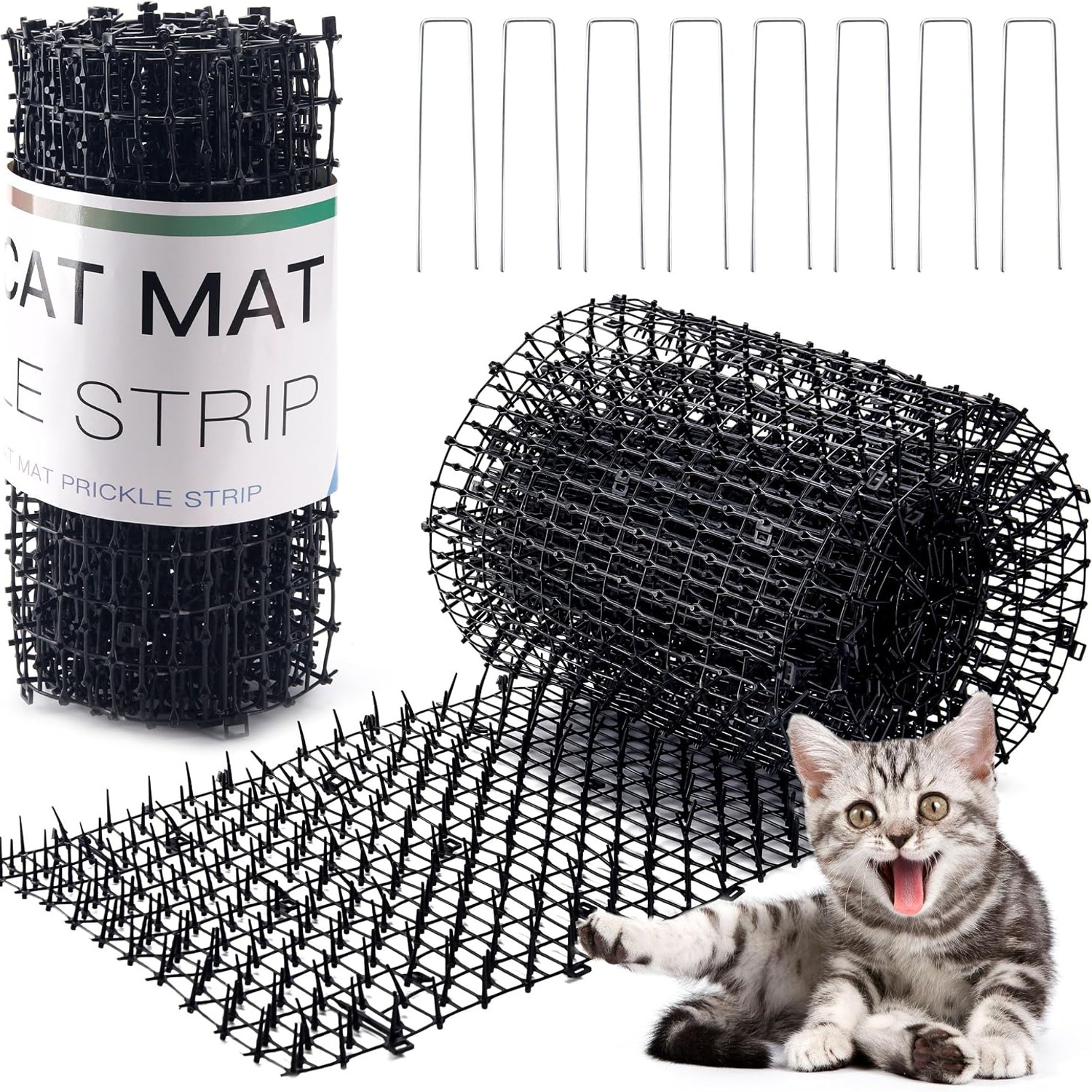
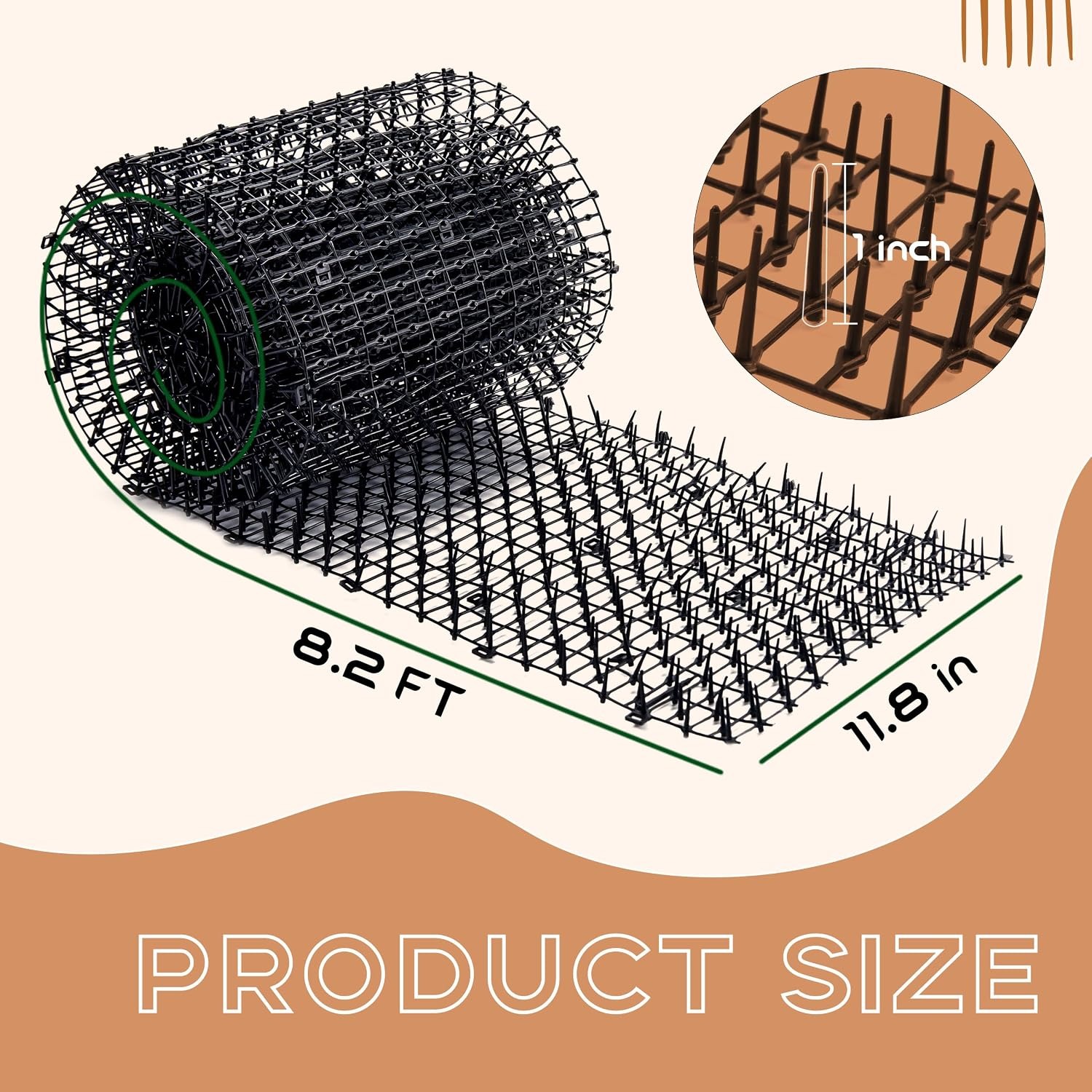
That is what a scat mat roll 16 ft long does. It makes the good spot feel like a bad spot. The animal tries it, does not enjoy it, and goes somewhere else. No chasing, no spray bottle, no standing guard.
How a spiked deterrent mat actually works
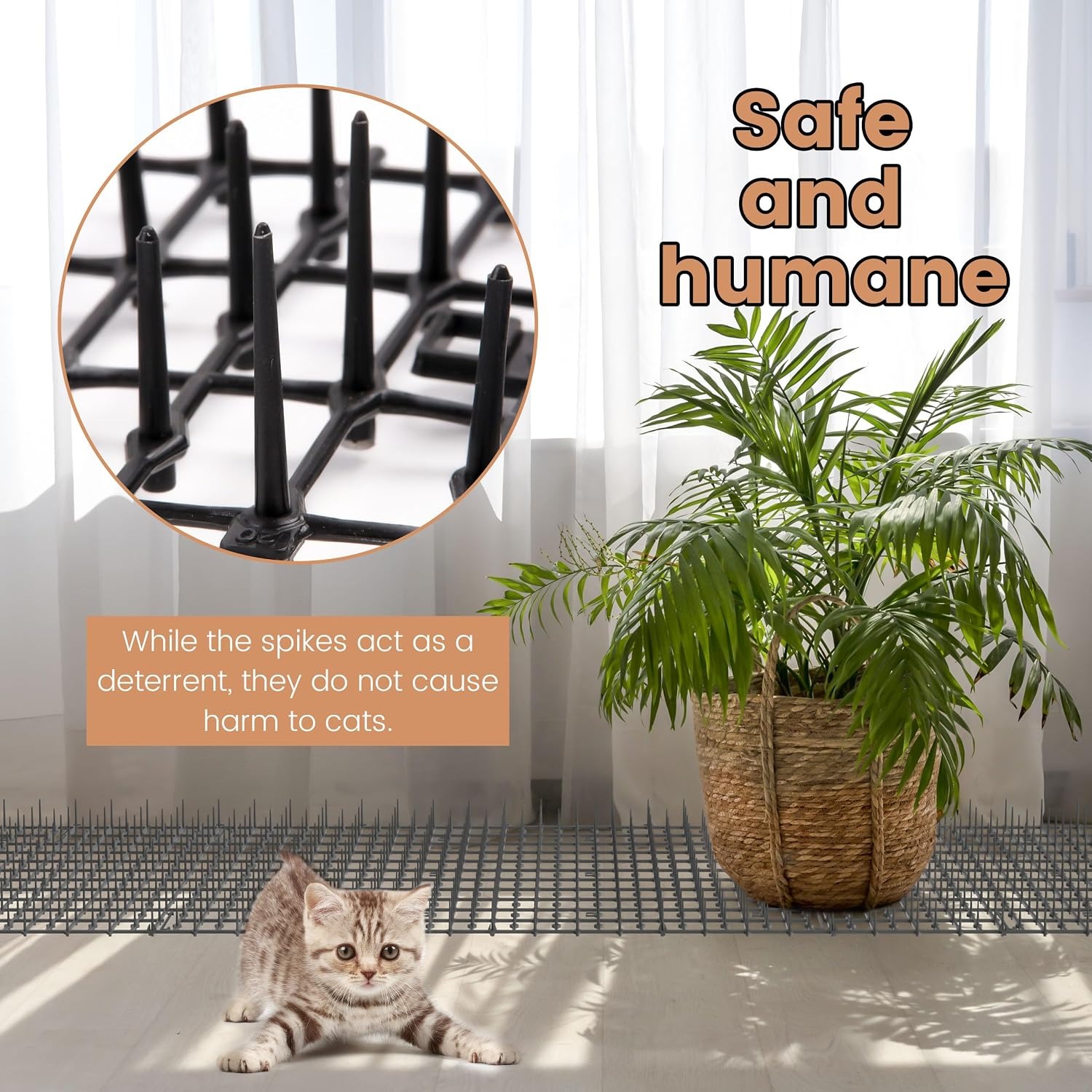
The surface is covered in short plastic spikes. They are blunt. Press your palm on one and it feels prickly and odd, not painful. That is the point. Cats and dogs have sensitive pads, and they are very good at avoiding surfaces that feel unstable or scratchy underfoot.
The first encounter is usually the whole lesson. A cat jumps up, feels the strange texture, and backs off. It might try again from a different angle the next day. After two or three failed attempts, the spot drops off its mental list.
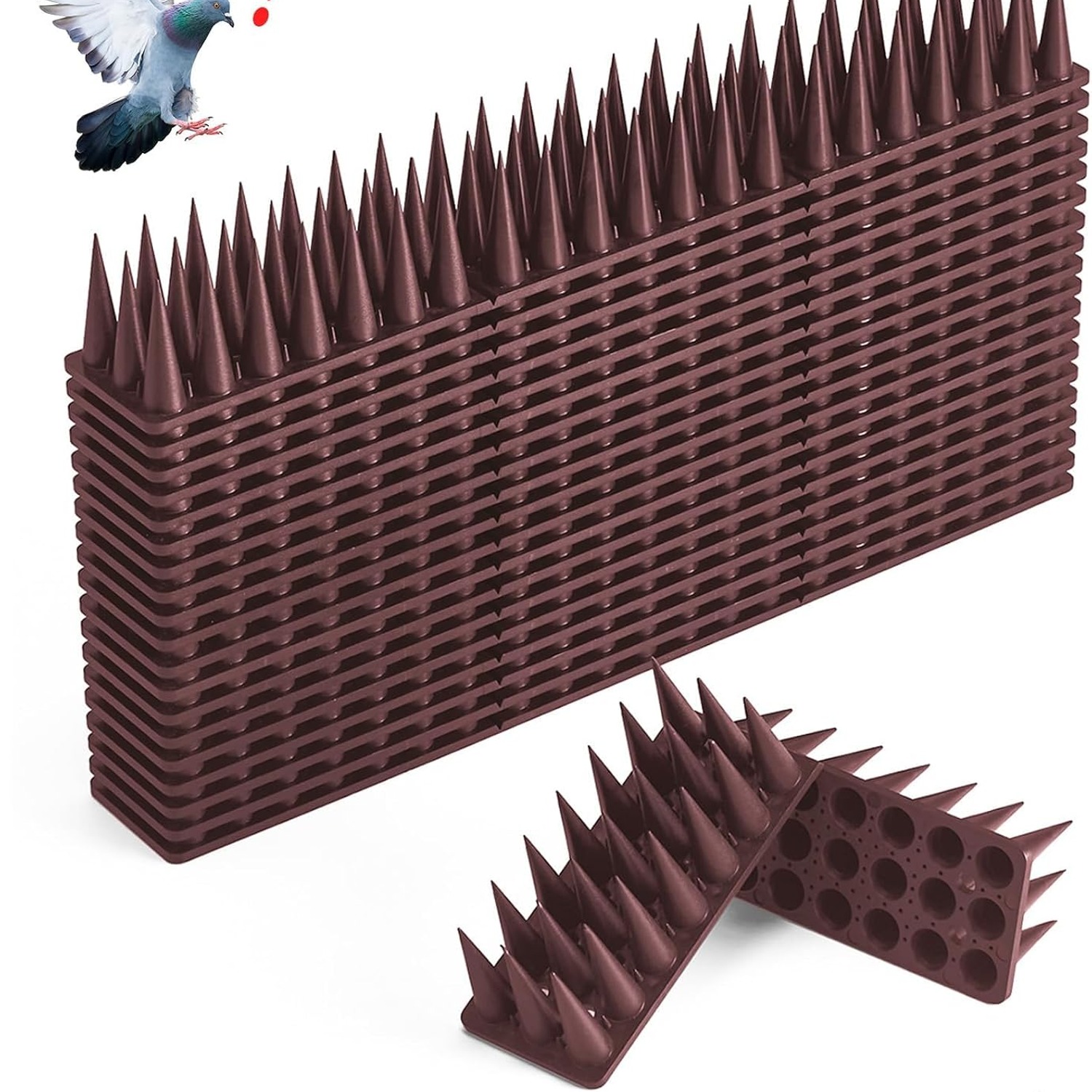
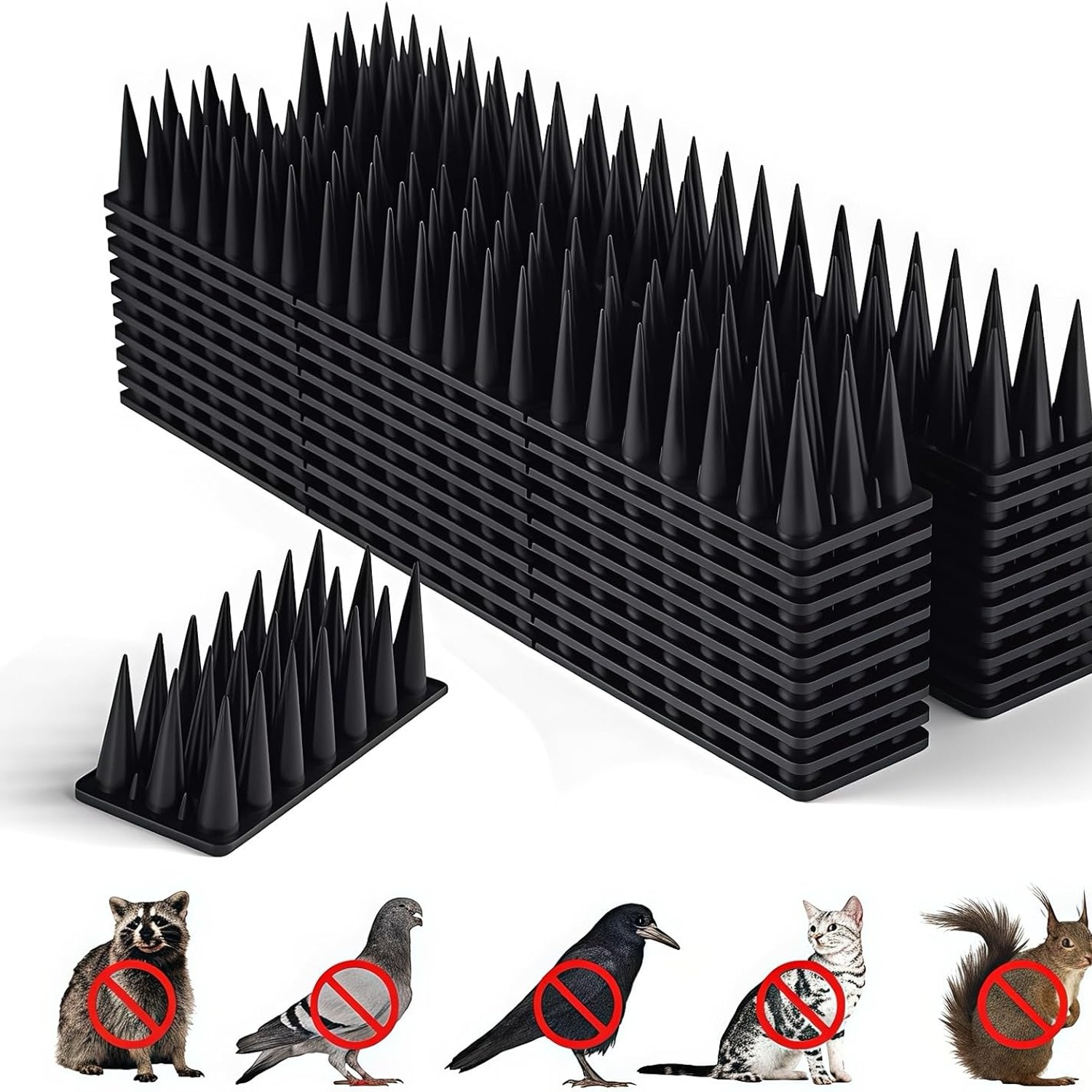
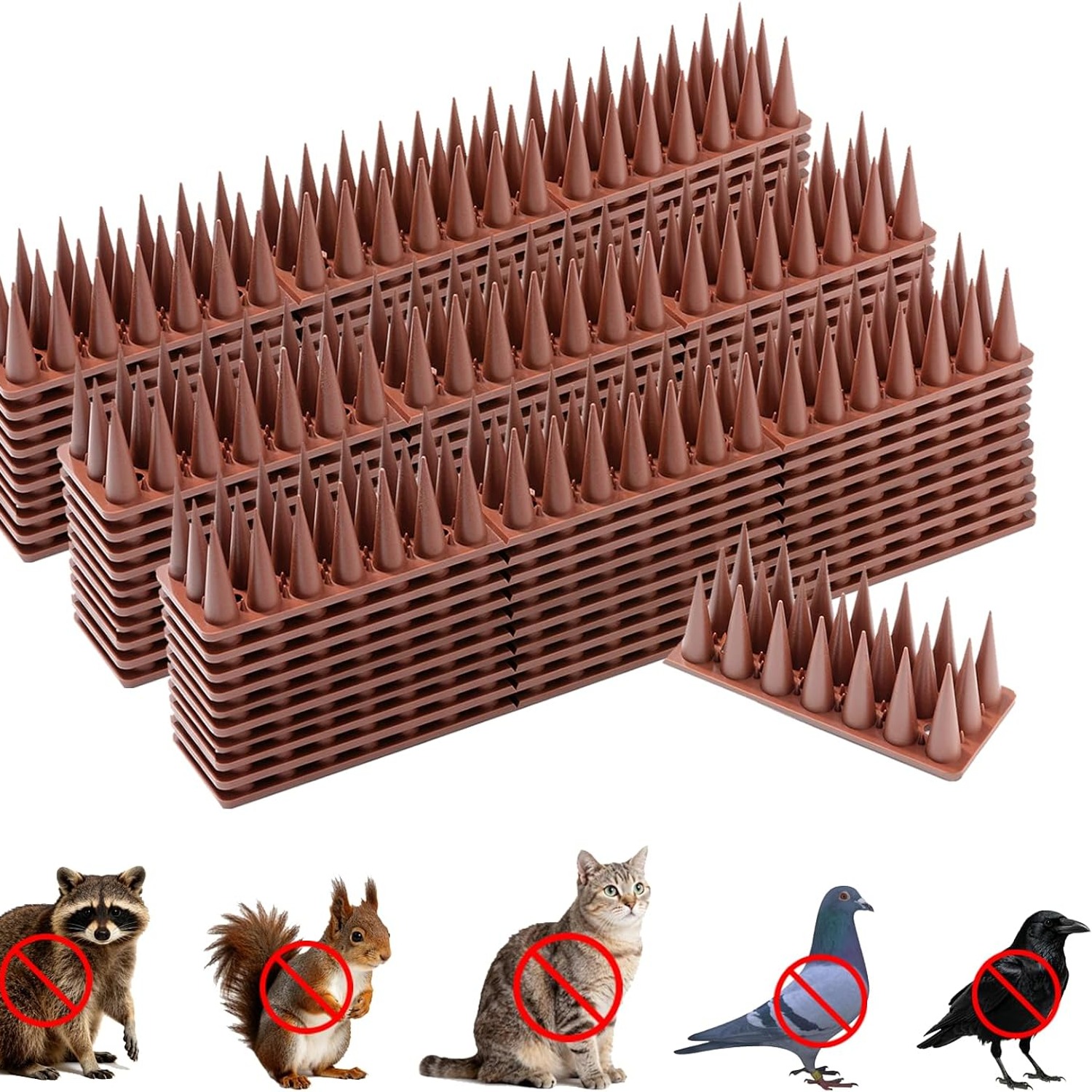
Birds work the same way. A ledge or rail that was a comfortable perch becomes awkward to land on, so they go and sit somewhere easier.
The reason this method sticks is that it works whether or not you are watching. A sprinkler needs water pressure. A noise device needs power. A best humane cat deterrent that is just a shaped piece of plastic keeps doing its job at three in the morning when you are asleep.
What is in the set and why it matters
This package contains two flexible polypropylene strips and eight curved garden staples. The strips are the deterrent. The staples are what stop a cat from simply dragging the strip aside with one paw, which is exactly what they will try.
Polypropylene is a good choice for this job. It is light, it does not rust, it does not soak up water, and it will not rot sitting in a damp bed through winter. You can hose it off, leave it in the sun to dry, and roll it up for next season.
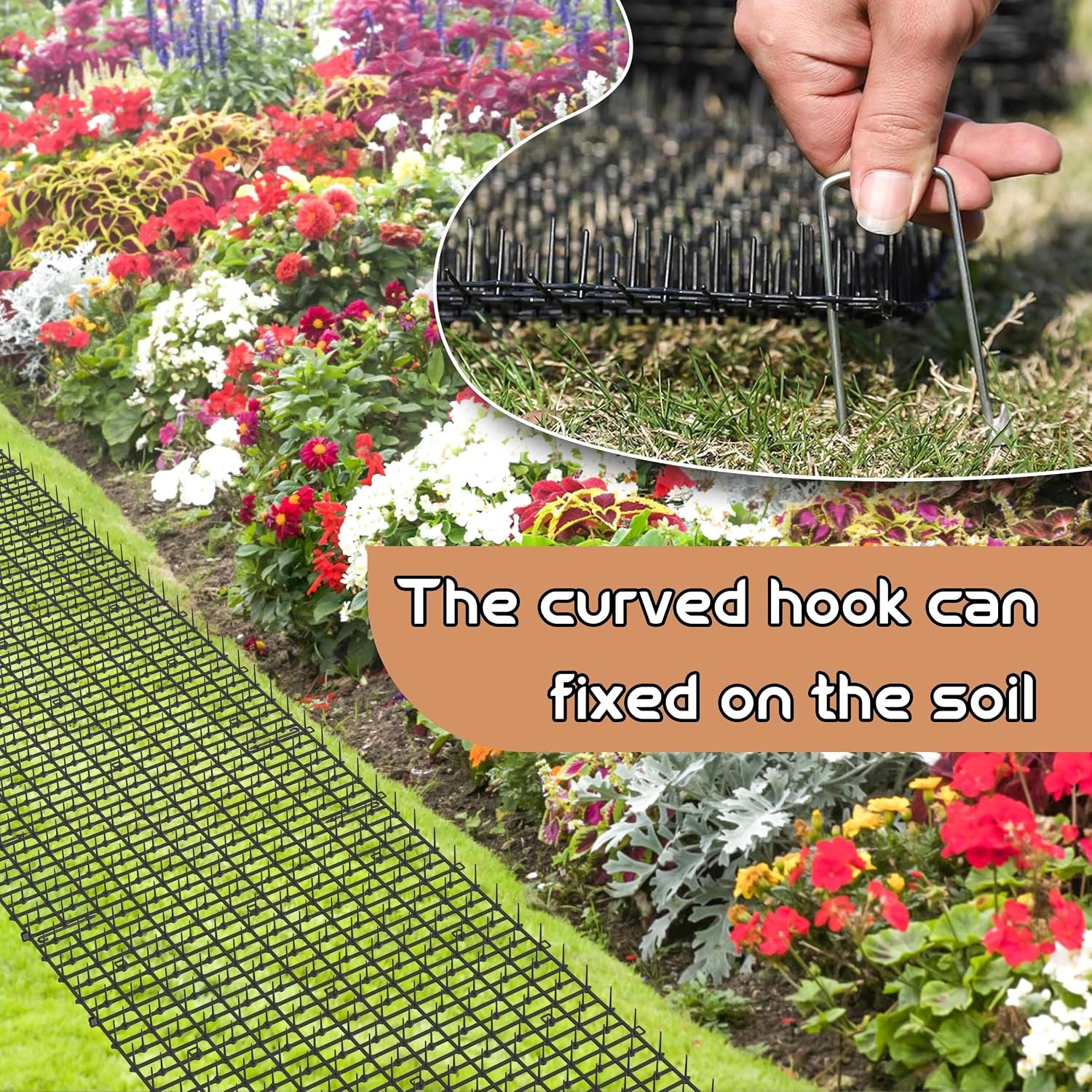
The curved staple shape matters more than it looks. A straight pin pulls out of soft soil easily. A hook bends under the surface and grips. Push them in until the top of the hook sits flush with the strip so nobody catches a toe on it.
Where people put it
Garden beds and borders. The classic use. Lay strips across the areas being dug, especially freshly turned soil, which is always the first target. Many gardeners run a strip either side of a row of new plantings and leave it there until the plants are big enough that the soil is no longer bare and inviting.
Vegetable patches. Same idea, and with food crops there is a hygiene reason to care. A best digging deterrent for garden soil is worth having around any bed you intend to harvest from.
Fence rails and gate tops. Cut short lengths and fix them along the rail where cats walk the boundary. This one is about stopping entry rather than protecting a specific plant, and it can solve several garden problems at once.
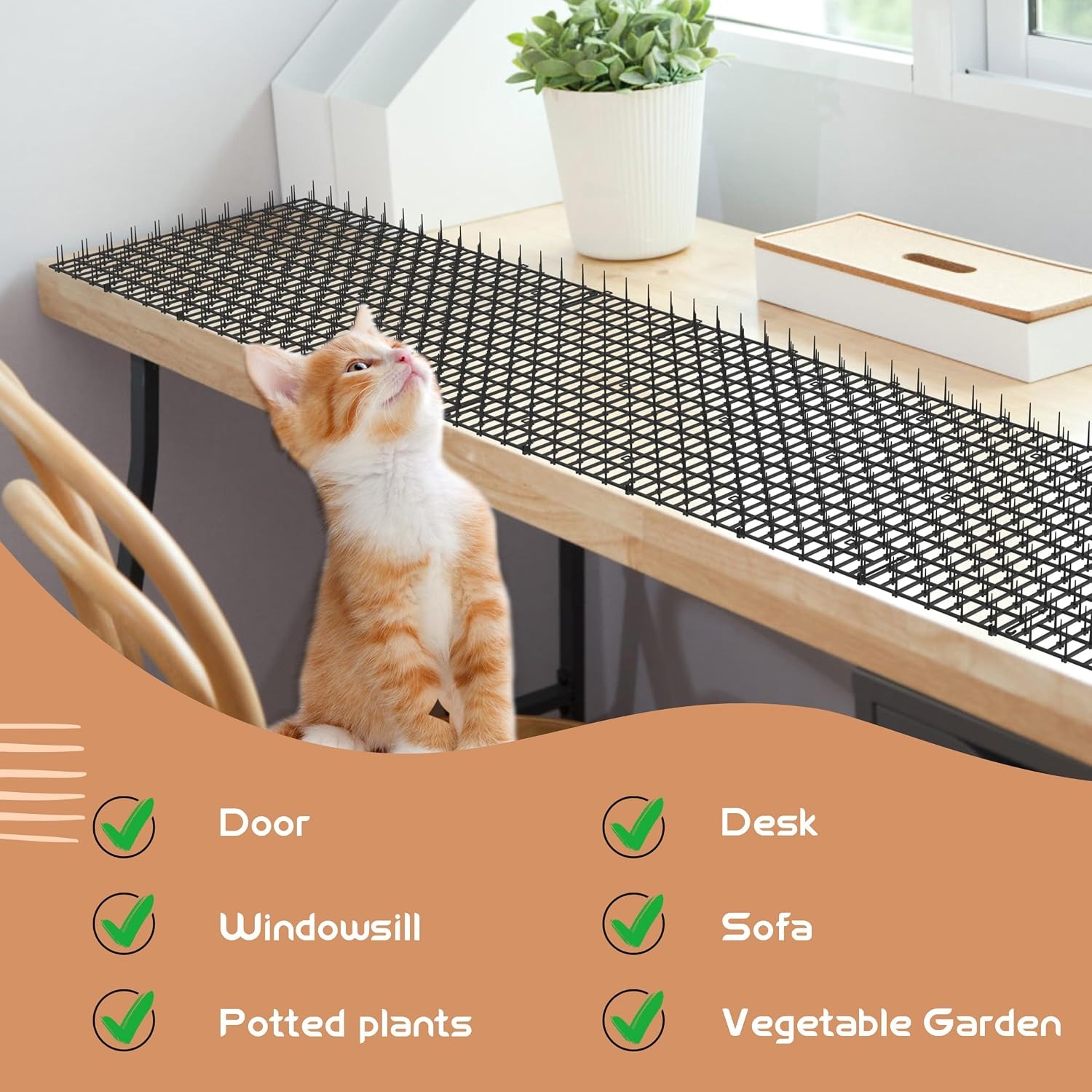
Sofas, chairs and beds. Indoors, a strip on the cushion of the chair you want left alone works quickly. Cats dislike it enough to pick a different seat, and once the habit shifts you can usually take it away.
Counters and windowsills. A narrow run along a kitchen bench edge handles the jumping-on-the-counter stage of a new cat. People search for a best pet deterrent strip for sofas and end up using the same product in four rooms.
Sheds, shelves and stored items. Anywhere something valuable is being used as a scratching post or a nap spot.
Getting the layout right
The single biggest reason a deterrent mat fails is partial coverage. If a cat can land on bare soil next to the strip, it will. Animals are very good at finding the gap.
Think about where the animal lands, not just where it digs. Watch for a day if you can. The paw prints will tell you the approach route. Cover the landing zone and the digging zone together.
Use the scissors. Real spaces have curves, pots, stems and odd corners. Cut the strips into shapes that fill those corners rather than leaving a tidy rectangle with inviting bare ground around it. Two parallel runs give a wider band than one strip on its own.
For a large bed, you may need more than one pack. Measure the run you want covered before ordering, then add a bit for the edges.
Installing it properly
On soil, lay the strip spike-side up and press it flat. Push a staple through near each end and space the rest evenly along the length. In loose mulch, angle the staples slightly so they catch more material, or put a stone at each end as backup.
On lawn edges, the staples go straight through the turf and hold well.
On hard surfaces, you have options. Many indoor strips just sit under their own weight. For a fence rail or a windy ledge, outdoor double-sided tape or a couple of cable ties through the base will keep things where you put them.
Check the installation after heavy rain. Wet soil softens, and a staple that was solid in dry ground can lift. Pressing it back takes ten seconds.
Keeping it working
Clean it when debris builds up. Leaves, soil and fur collect between the spikes and gradually fill in the texture that makes the mat effective. A hose or a damp cloth is enough. Let it dry before rolling it.
Keep it away from heat sources and open flame. It is plastic.
At the end of a season, rinse, dry and roll. Store it somewhere it will not be stood on so the spikes stay upright. A shed shelf or the back of a garage cupboard is fine.
Realistic expectations
Most people see a change within a few days. A habit that has been running for months may take two or three weeks to break properly, and during that time you need to keep the coverage complete. Pulling the mat up too early is the second most common mistake after leaving gaps.
Very large dogs with thick pads notice it less than cats do. For a big dog, widen the covered area rather than relying on a single narrow run.
And be fair about what it does. It redirects animals. It does not teach them a lesson or punish them. If the cat has nowhere else to go, consider giving it a better option, a patch of loose sand in a corner of the garden, for example, so the redirection has somewhere to land.
The short version
Two spiked polypropylene strips, eight garden staples, cut to any length with scissors. Spike-side up, staples in, cover the whole landing area rather than part of it. Rinse it when it gets dirty, roll it up when the season ends.
It is a simple product doing a simple job, and the reason it keeps selling is that it works without power, without chemicals and without anyone standing in the garden waving their arms.