




The complete guide
How to Choose and Use Scat Mats for Dogs and Cats
The problem with "get off there"
Every pet owner has a spot they keep losing. The kitchen counter. The good armchair. The flowerbed that gets dug up every spring. You say no, the pet gets down, and twenty minutes later you walk back in and they are up there again, looking perfectly comfortable.
The reason this goes in circles is simple. Your pet is not learning that the counter is off limits. They are learning that the counter is off limits when you are in the room. The moment you leave, the rule leaves with you. That is not stubbornness, it is just how animals read the situation.
A deterrent mat changes that equation. It sits on the surface whether you are home or not, so the feedback comes from the place itself. Step up, feel something odd underfoot, step back down. After a handful of attempts, the spot stops being appealing and the pet finds somewhere better. No raised voices, no running battle.
How a spike mat actually works
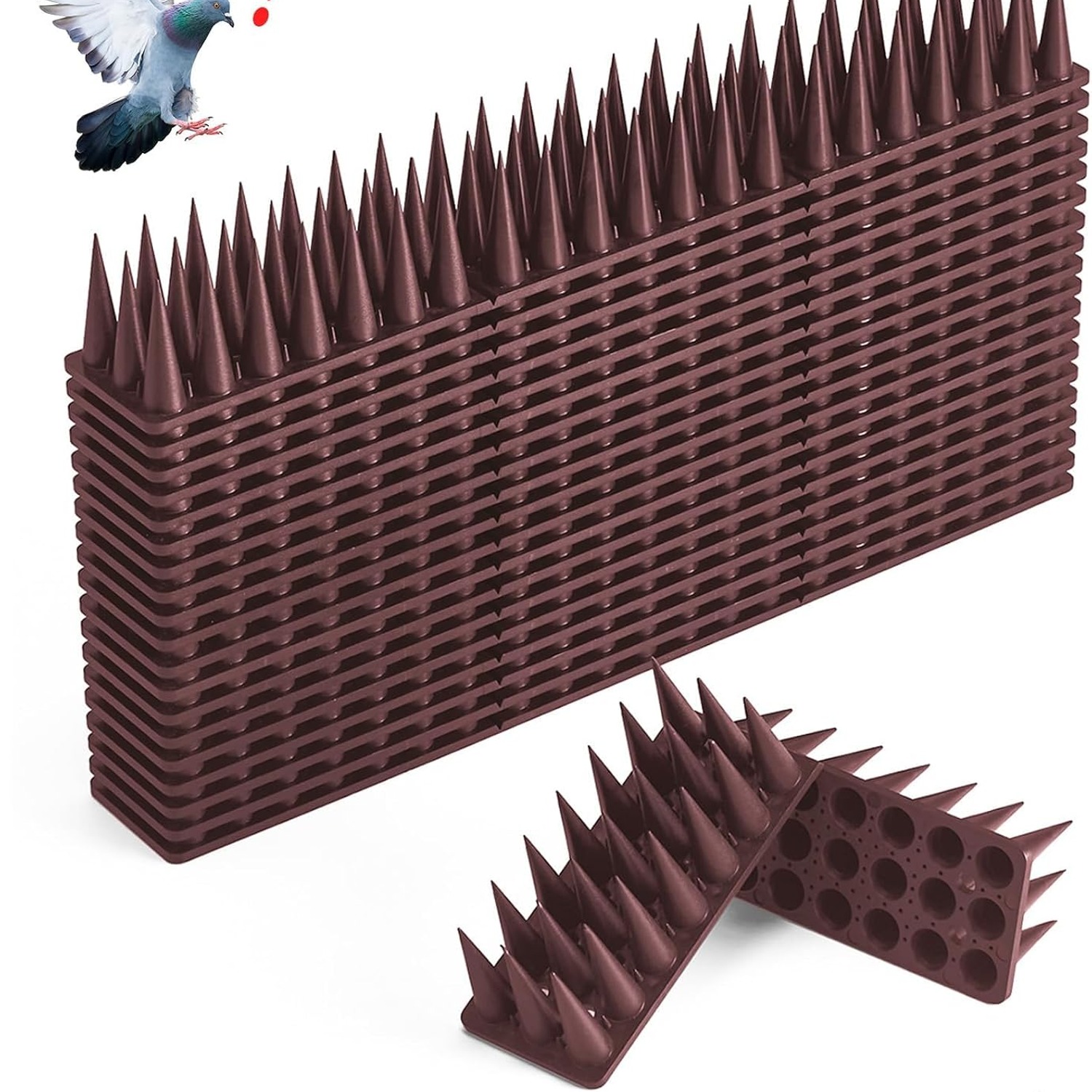
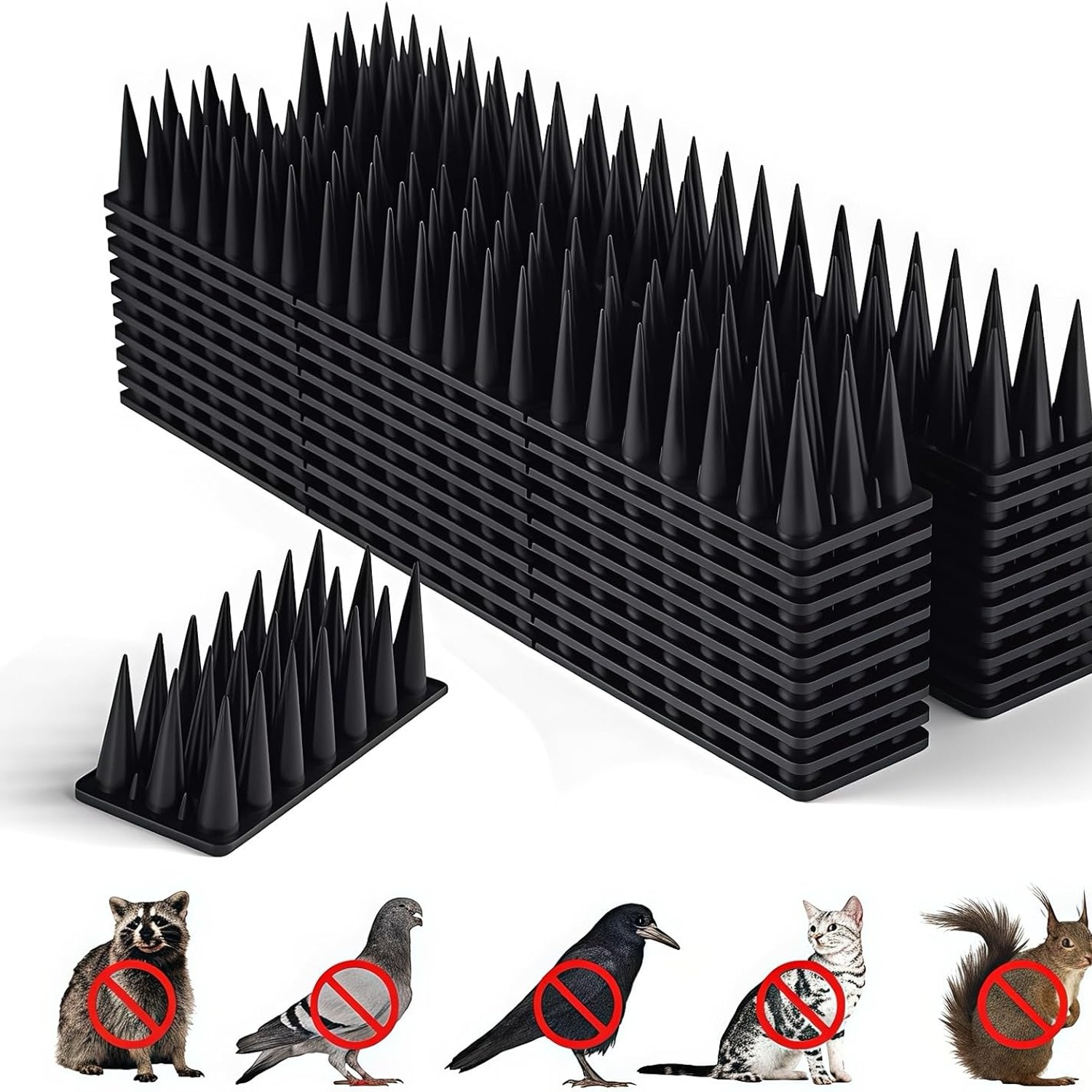
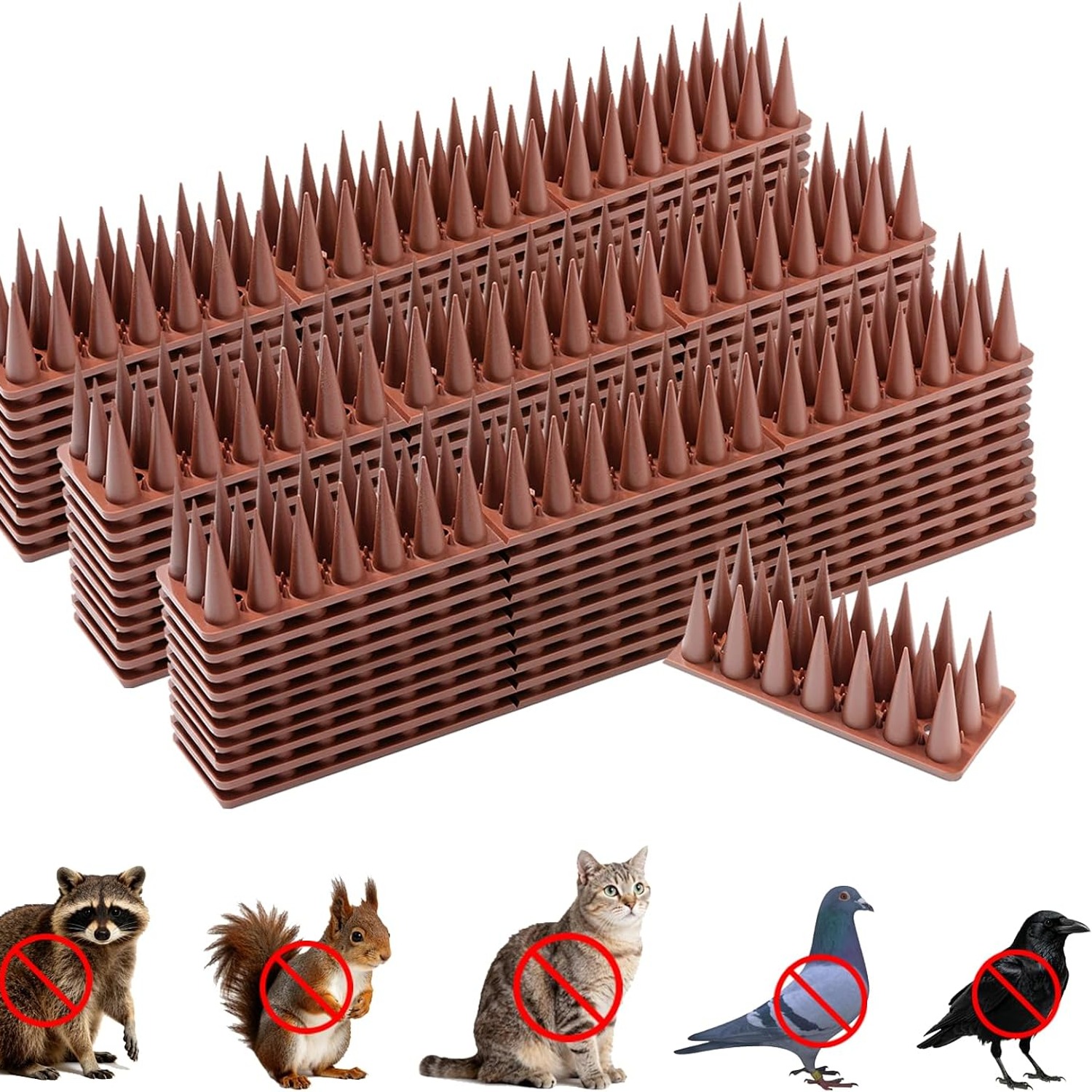
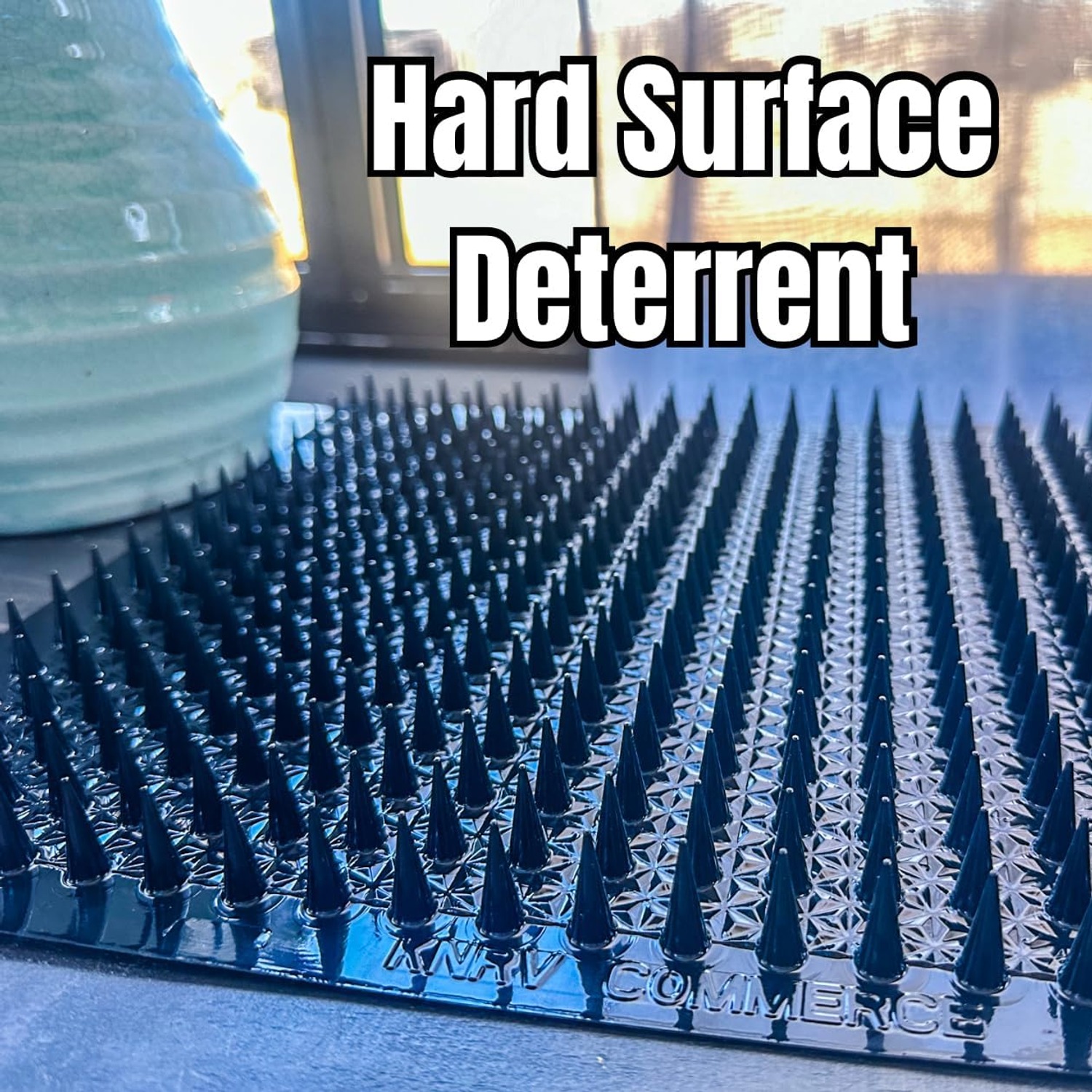
The mats in this set carry rows of short plastic prongs. They are blunt, not sharp. The sensation is closer to standing on a stiff doormat than anything painful, and that is the design intent. You are not punishing the animal, you are making one specific surface less comfortable than every other surface in the house.
Cats tend to respond quickest. They are fussy about footing and they test a surface before committing weight to it. One paw on the prongs is usually enough. Dogs vary more. A small dog may refuse immediately, while a confident larger dog might test the mat two or three times before deciding it is not worth the bother.
The key factor is coverage. Pets are good at spotting a gap. Leave a bare ten inches at the end of a sofa and that is exactly where they will land. This is why a ten pack is more useful than a single pad, and why the connectors matter.
Making the most of ten mats
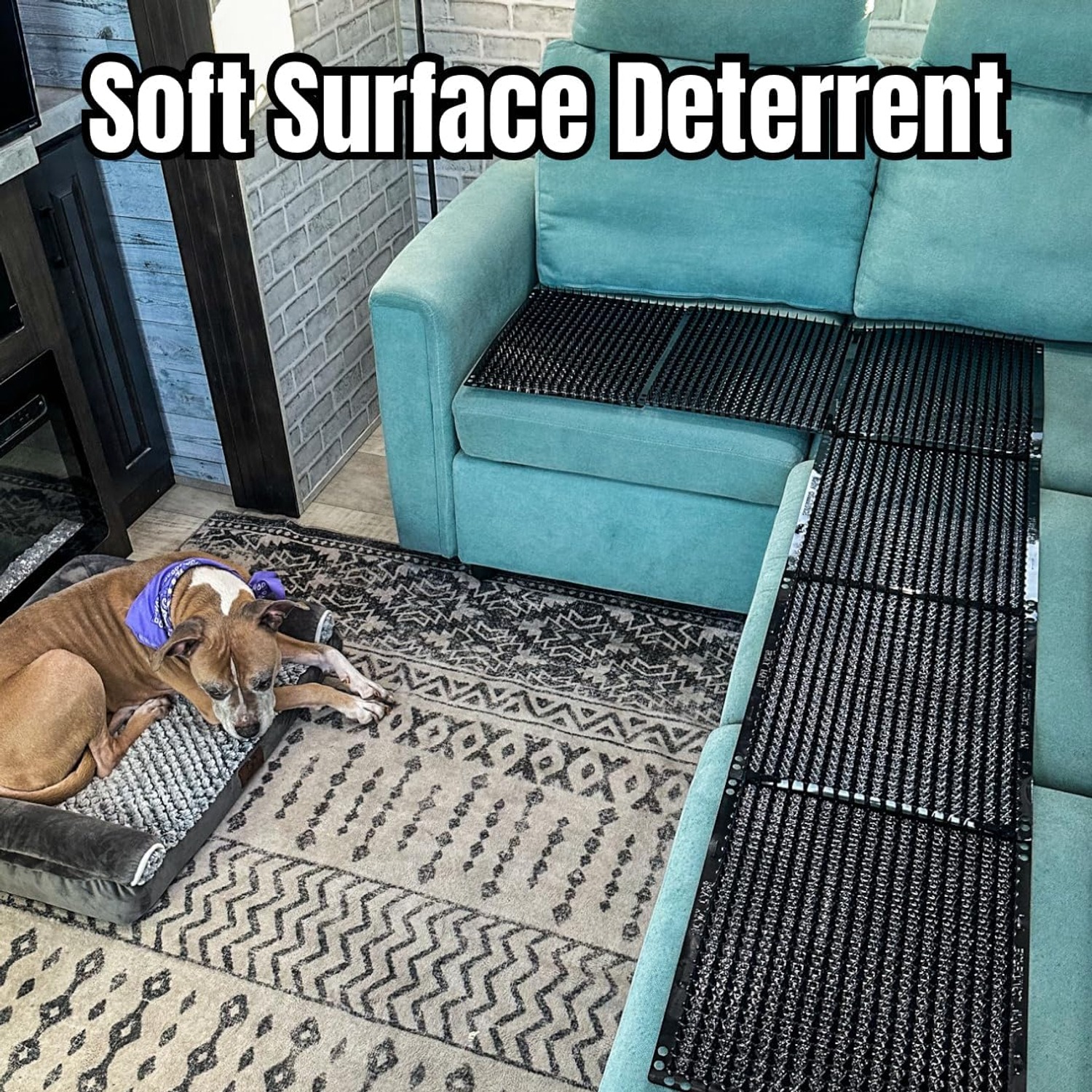
Each mat here is 16.5 inches by 13 inches, about the size of one seat cushion. That gives you a handy mental unit for planning. A two seat sofa takes two or three mats. A three seater takes three or four if you only cover the seats, five or six if your dog also likes the backrest.
The 24 hook and loop connectors join neighboring mats underneath so they behave as one piece. This solves the most common complaint about any pet deterrent mats for couch use, which is mats drifting apart and leaving a gap. A joined row is also heavier and harder for a determined animal to shove aside.
Attachment stickers are included for smooth surfaces. On a kitchen worktop, a bathroom vanity or the flat top of a cabinet, a sticker keeps a mat exactly where you put it. Clean and dry the surface first, and test on a hidden corner if the finish is delicate.
Common layouts people use:
- A straight run of four to six mats along a kitchen counter edge, which is the classic cat repellent mat for counters setup.
- Three or four mats across a sofa, with one on each arm if your dog likes to perch.
- An L shape around the corner of a bed, covering the two sides the pet actually jumps from.
- Scattered single mats in planters and borders as a spike mat for garden beds, to stop digging.
- A doorway strip to discourage a pet from entering one particular room.
Who this suits
This set makes sense if you want a training tool that does not involve sprays, noise or anything electronic. It is quiet, it needs no batteries, and it does not startle other pets or children in the house.
It also suits people with more than one problem area. One mat solves one cushion. Ten mats let you tackle the sofa, the bed and a section of worktop at once, or split the set between two floors of a house. If you only have a single small spot to protect, a ten pack is more than you need.
It is less suited to outdoor-only use. The listed style is indoor, and while people do use these in garden beds, sun and frost are hard on plastic. If the garden is your main problem, expect to replace them sooner than you would indoors.
Getting the training to stick
Deterrents work much better when paired with an alternative. If you are pushing a cat off a sunny windowsill, give them a perch somewhere else that gets the same light. If you are keeping a dog off the sofa, put a proper dog bed in the same room, ideally with a view of the door. You are redirecting, not just blocking.
Give it time. Two to four weeks is normal for a habit that has been building for months. Resist the urge to lift the mats after four days because the pet "seems to have got it". That is usually the point where they are just waiting to see if the mats stay.
Watch for workarounds. A cat that cannot reach the counter from the floor may start using the bar stool as a launchpad. If that happens, move the stool or cover it too. Behavior change often just moves the problem one step sideways until you close that route as well.
Once the habit has faded, pack the mats away in the box. Do not throw the connectors out. Habits come back after a change in routine, a holiday, a house move or a new pet joining the household, and having the set ready saves you starting over.
Care and storage
Cleaning is straightforward. Wipe with a damp cloth and a little mild soap, rinse and let them dry completely before they go back in the box. Avoid solvents and bleach, and do not run them through a dishwasher or washing machine.
Hair and dust gather between prongs over time, especially if the mats sit under furniture. A soft brush or a vacuum nozzle clears it in seconds. Check the hook and loop connectors occasionally too, since fur on the hook side reduces grip.
Store the mats flat or lightly stacked in the supplied box. Do not pile heavy objects on top, since sustained pressure can bend plastic prongs out of shape. The whole set weighs 2.31 pounds, so it is easy to tuck on a shelf or in a cupboard.
A note on safety and common sense
Blunt prongs are not sharp, but these are still adult-placed household items. Keep them away from crawling babies and toddlers, and keep the small connectors out of reach. They are designed for dogs and cats, and are not appropriate for rabbits or other small animals with delicate feet.
Think about human traffic too. A loose mat on a stair tread or in a hallway is a trip hazard. If you need to block a staircase, a connected row at the bottom is a better idea than individual mats on the steps.
The short version
Ten black spike mats, each 16.5 by 13 by 1.5 inches, with 24 connectors, attachment stickers and a storage box. They stop pets using a surface by making it feel unpleasant underfoot, with no shocks, sprays or chemicals involved.
Cover the whole area rather than part of it, connect the mats so they do not drift, give your pet a better alternative nearby, and give it two to four weeks. Then pack the set away until you need it again. For most households that is the entire job, done without a single raised voice.