

The complete guide
The Practical Guide To Fitting Bird Spikes On A Building
The mess is the real problem
Nobody buys bird spikes because they dislike birds. They buy them because of what lands under the birds. Droppings are acidic, they stain stone and render, they corrode metal flashing, and they turn a path or a parked car into a daily chore. Add the noise at dawn, the feathers in the gutter and the nesting material blocking a downpipe, and a small roosting habit becomes an expensive one.
The habit part matters. Pigeons and gulls return to the same perch because it worked last time. Chasing them off, hanging a plastic owl or stringing up foil tape gives you a few quiet days, then they figure out nothing bad actually happens. The only thing that reliably changes the pattern is making the perch physically unusable.
That is what a bird spikes 60 ft bulk pack is for. Not one sill, not one patch of guttering, but the full run of ledges on a building, done in a single afternoon.
How spikes actually work
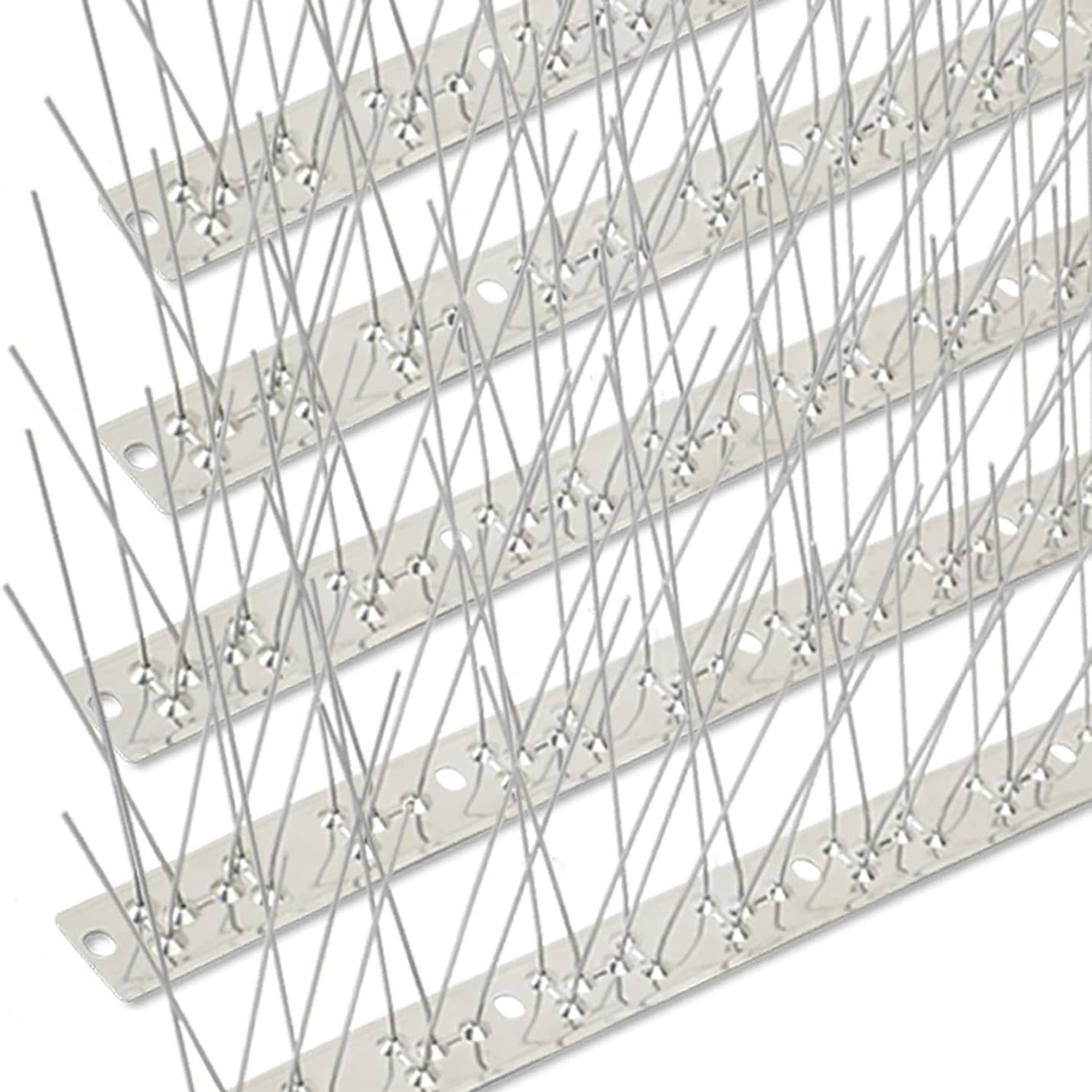
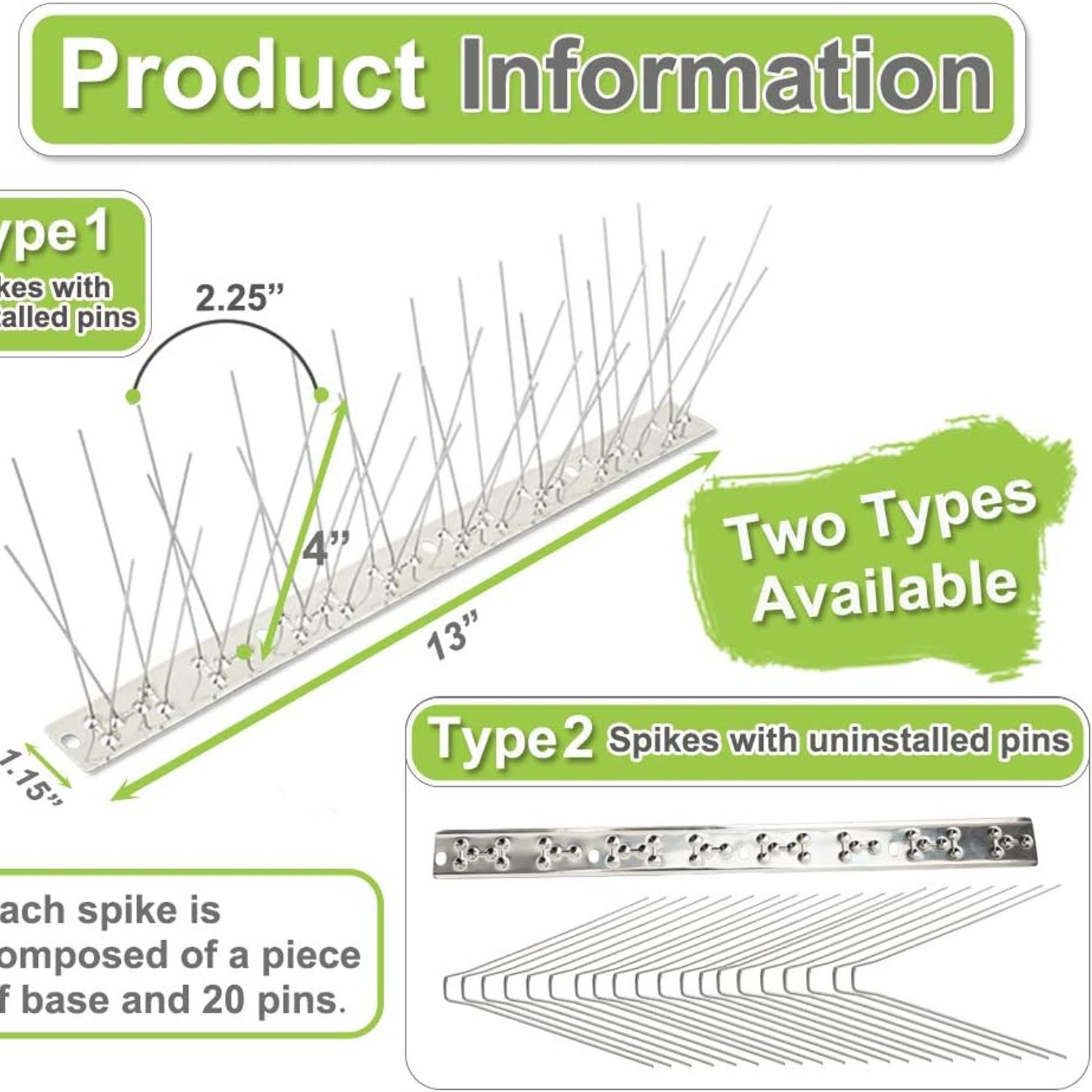
A bird coming in to land needs a flat surface it can see from the air and put both feet on. Spikes break that up. The pins stand about four inches high and fan outward, so the protected zone is wider than the narrow base they sit on. From above, there is no clear patch to aim for.
Each strip here is 13 inches long with 20 pins, and each pin splits into two points, giving 40 points per strip. That spacing is deliberate. Too sparse and a pigeon finds a gap to stand in. Too dense and the strip costs more than it needs to while catching more leaf litter.
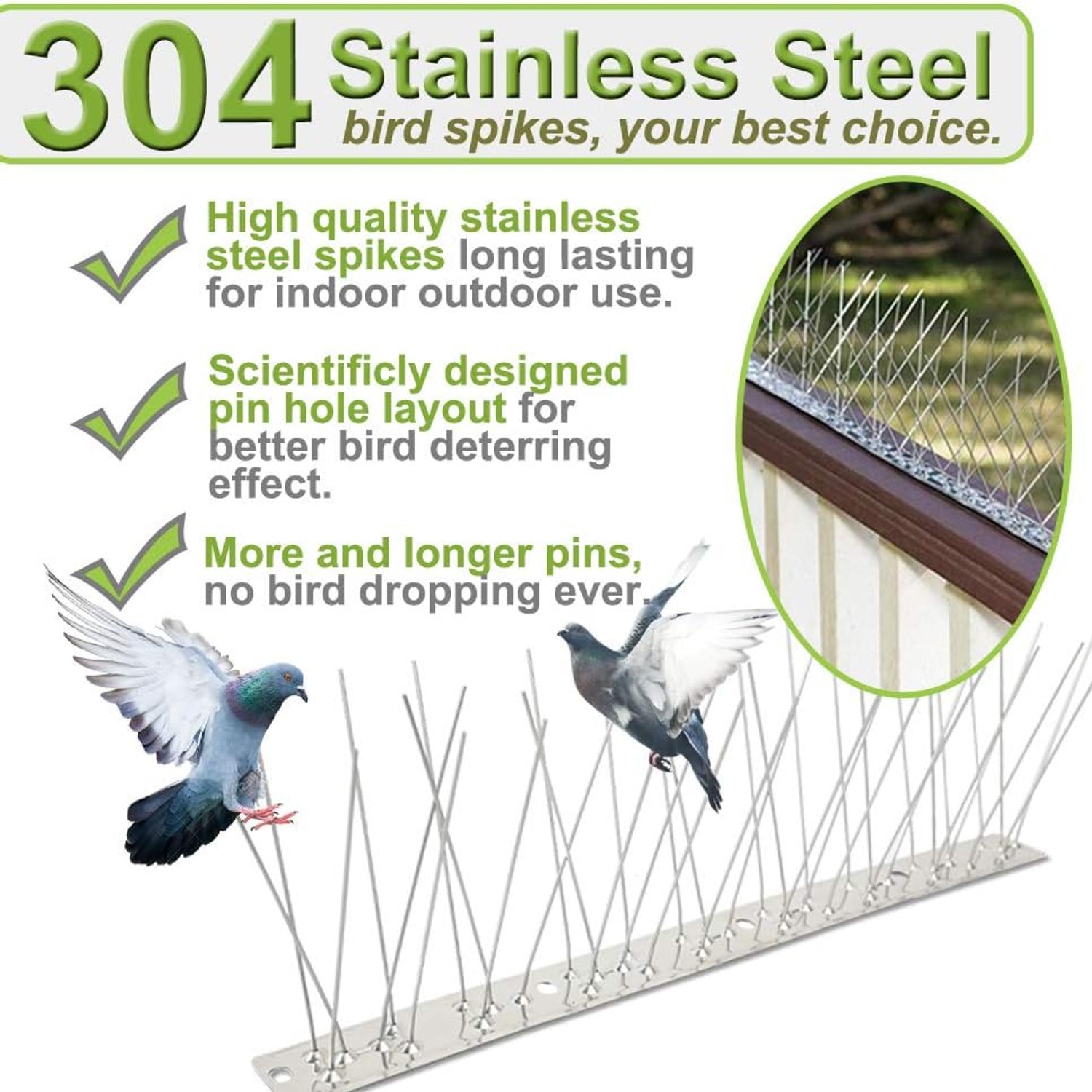
Crucially, the points are not there to hurt anything. A bird approaching a spiked ledge simply aborts the landing and goes elsewhere. That is why spikes are generally considered a humane bird deterrent and why they turn up on so many public buildings, heritage sites and shopfronts.
Why steel beats plastic outdoors
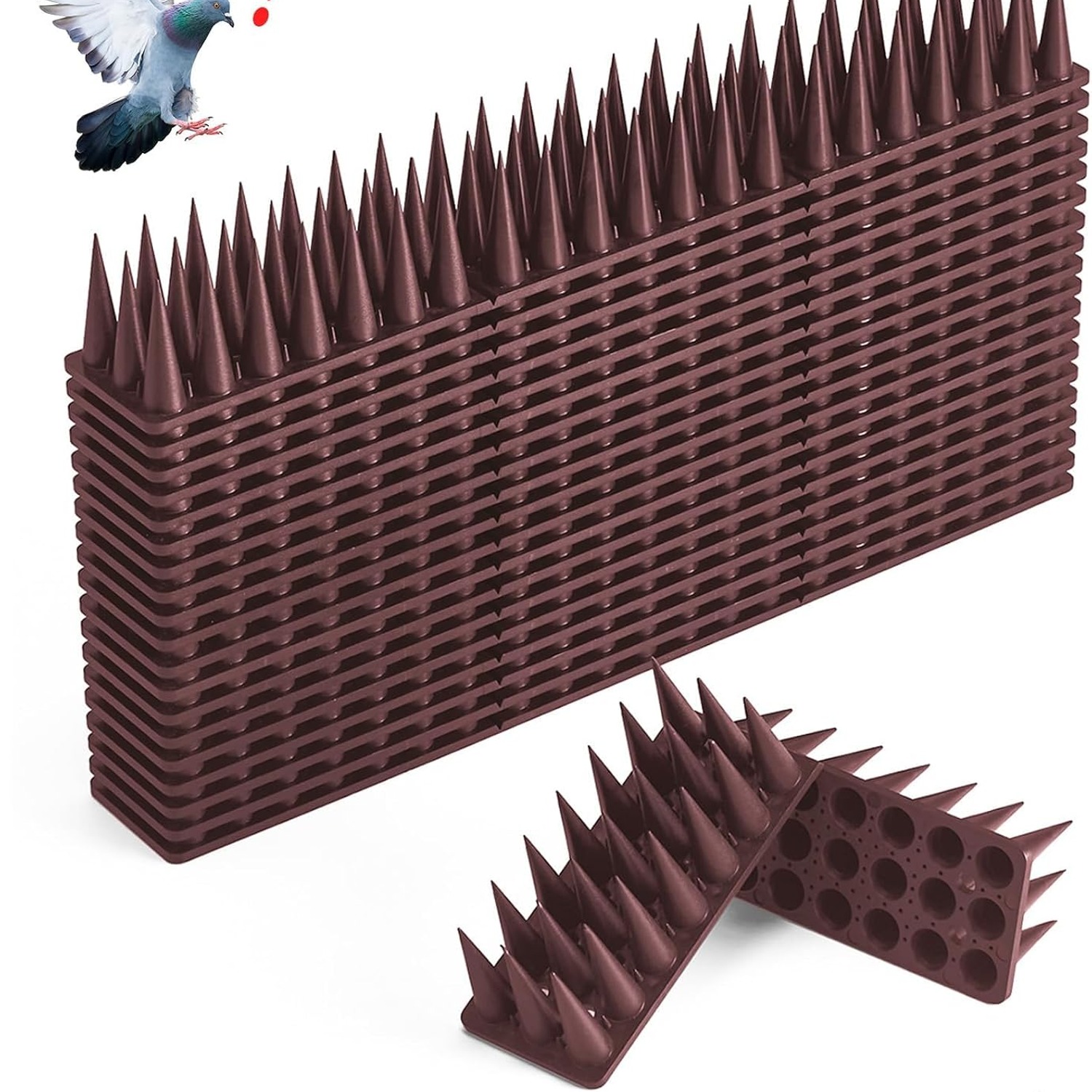
Plastic spikes are cheap and they work on day one. The problem is sunlight. UV breaks plastic down over a couple of seasons, so the pins go chalky, lose flex and eventually snap off, usually in the exact spot you cannot reach without a ladder.
Both the pins and the bases in this pack are stainless steel. Steel holds its shape through heat, frost and rain, and it keeps its springiness so a pin that gets knocked sideways can be bent back rather than breaking. For anything you want to fit once and forget, stainless steel pigeon spikes are the sensible choice.
The bases also have a useful amount of flex. You can bend a strip slightly to follow the curve of a pipe, a rolled gutter edge or a shaped coping stone without it sitting proud at the ends.
Working out how much you need
Get a tape measure and walk the building. Measure every surface a bird could stand on, not just the ones you have seen them use. That usually means window sills, the top of the parapet, exposed beams and rafters, chimney edges, the flat top of a sign, fence rails and any ledge above a doorway.
Add it all up in linear feet. One pack covers 60 feet in a single row, which is enough for most houses and small shopfronts.
Two things catch people out. First, wide ledges. If the surface is more than about six inches deep, a single row near the front leaves a comfortable strip behind it, and birds will use that strip. Run a second row and halve your coverage figure accordingly. Second, corners and odd lengths. You will trim a few strips, so buy a little more than your measurement suggests rather than coming up two feet short with the ladder already out.
It is also worth protecting everything at once. If you spike the front ledge and leave the side one, the flock just shifts around the corner and you have solved nothing.
Fitting them properly
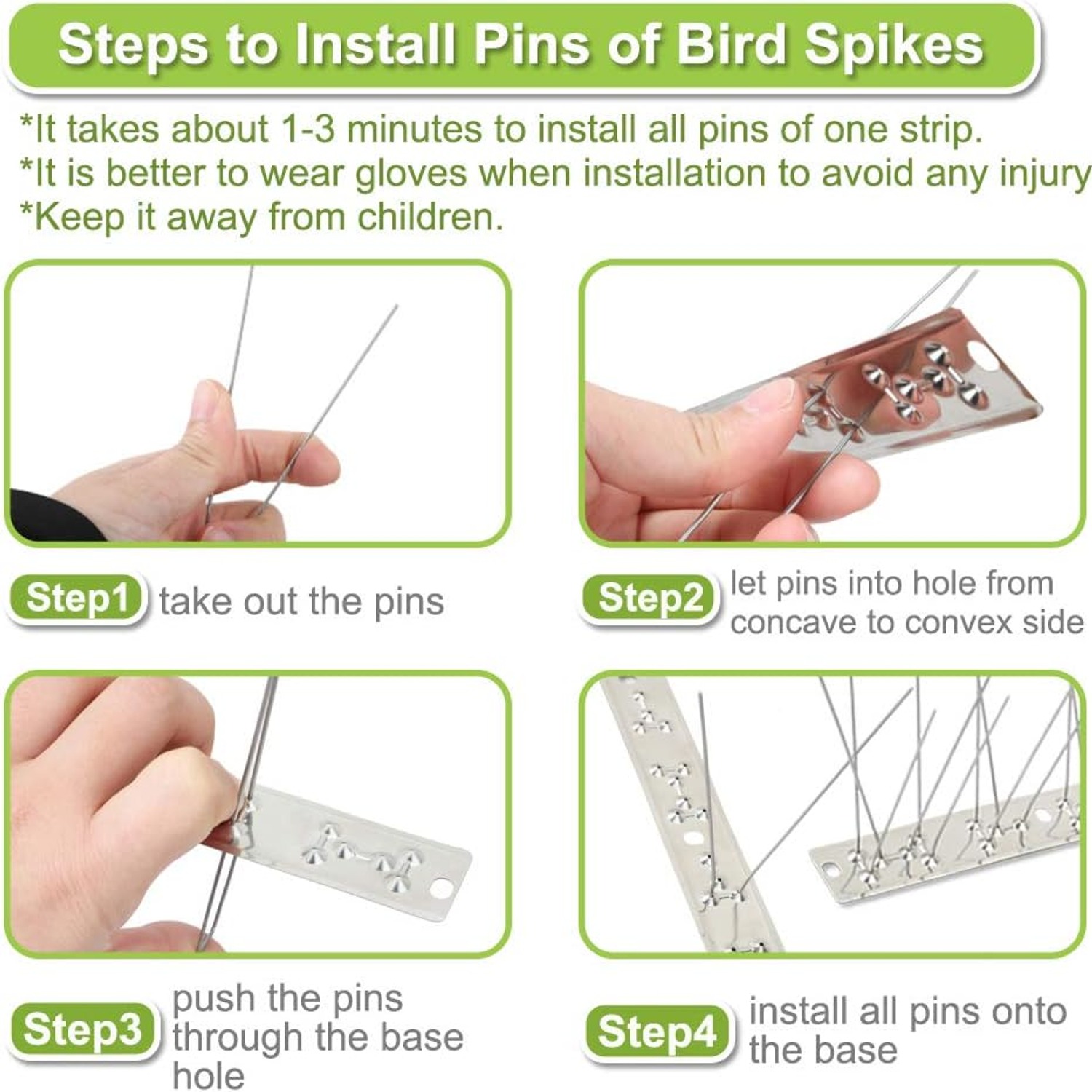
The pins arrive unassembled. They push into the bases by hand, which takes a few minutes for the whole pack and makes the box far easier to ship. Do this at ground level, not up a ladder.
Surface prep is the step people skip and regret. Scrape off old droppings and nesting debris, wash the area, and let it dry completely. Adhesive will not bond to dust, and screws into crumbling render will not hold.
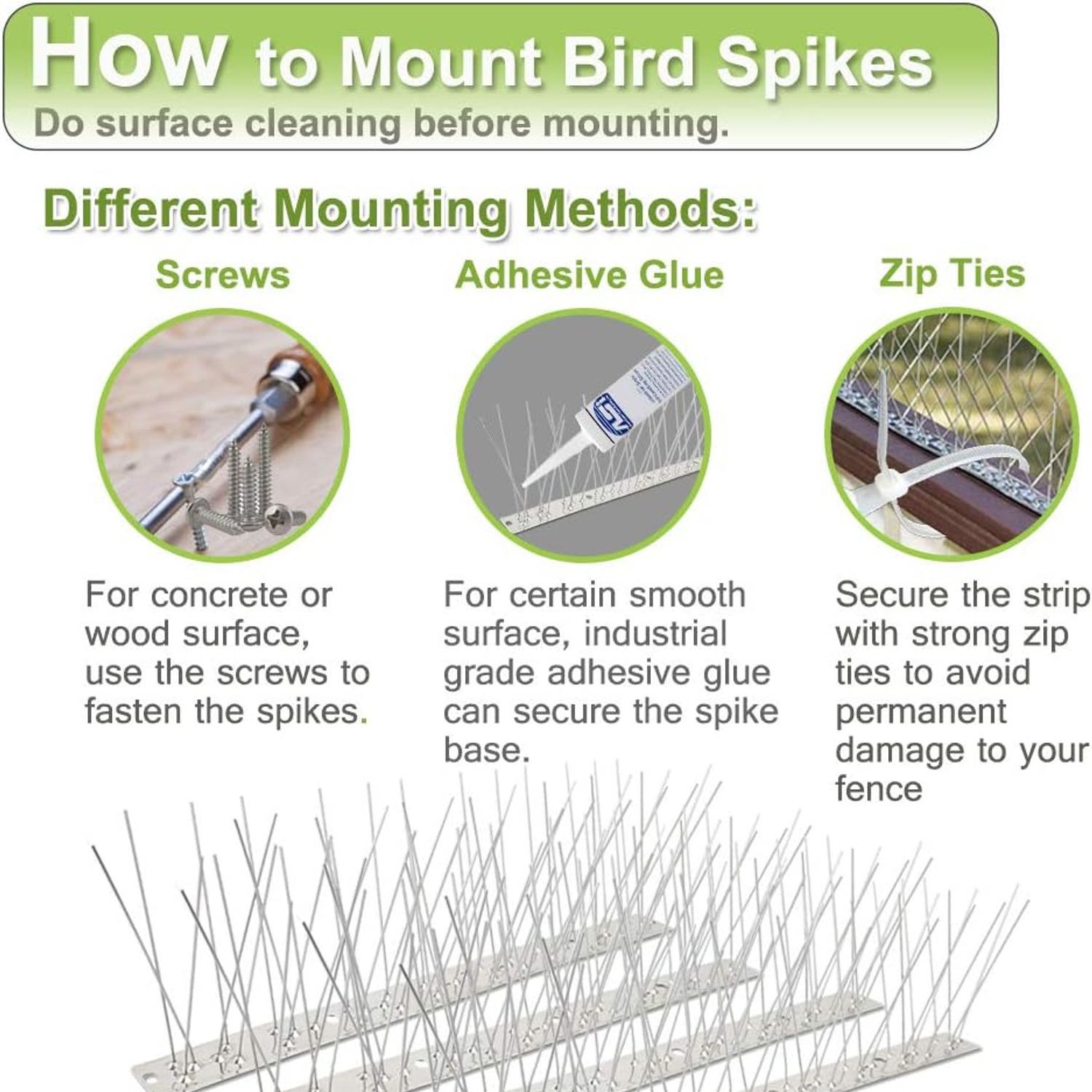
You have three fixing options:
Adhesive. Outdoor construction adhesive suits concrete, brick, stone and most masonry. Run a continuous bead along the base, press firmly, and leave it to cure before you test it.
Screws. For timber, use wood screws through the holes set between each fan of pins. Secure both ends tightly. The ends are always where a loose strip starts lifting.
Cable ties. Best for pipes, railings and anything you would rather not drill or glue. Thread them around the rail and through the base, pull tight and snip the tails.
Wear gloves. The points are sharp by design, and a full pack means a lot of handling.
Who this suits
Homeowners dealing with pigeons on a roofline or gulls on a chimney. Landlords with repeated complaints about a shared balcony. Small businesses whose awning or signage has become a perch directly above a doorway. Anyone who has already tried the cheap deterrents and watched the birds come straight back.
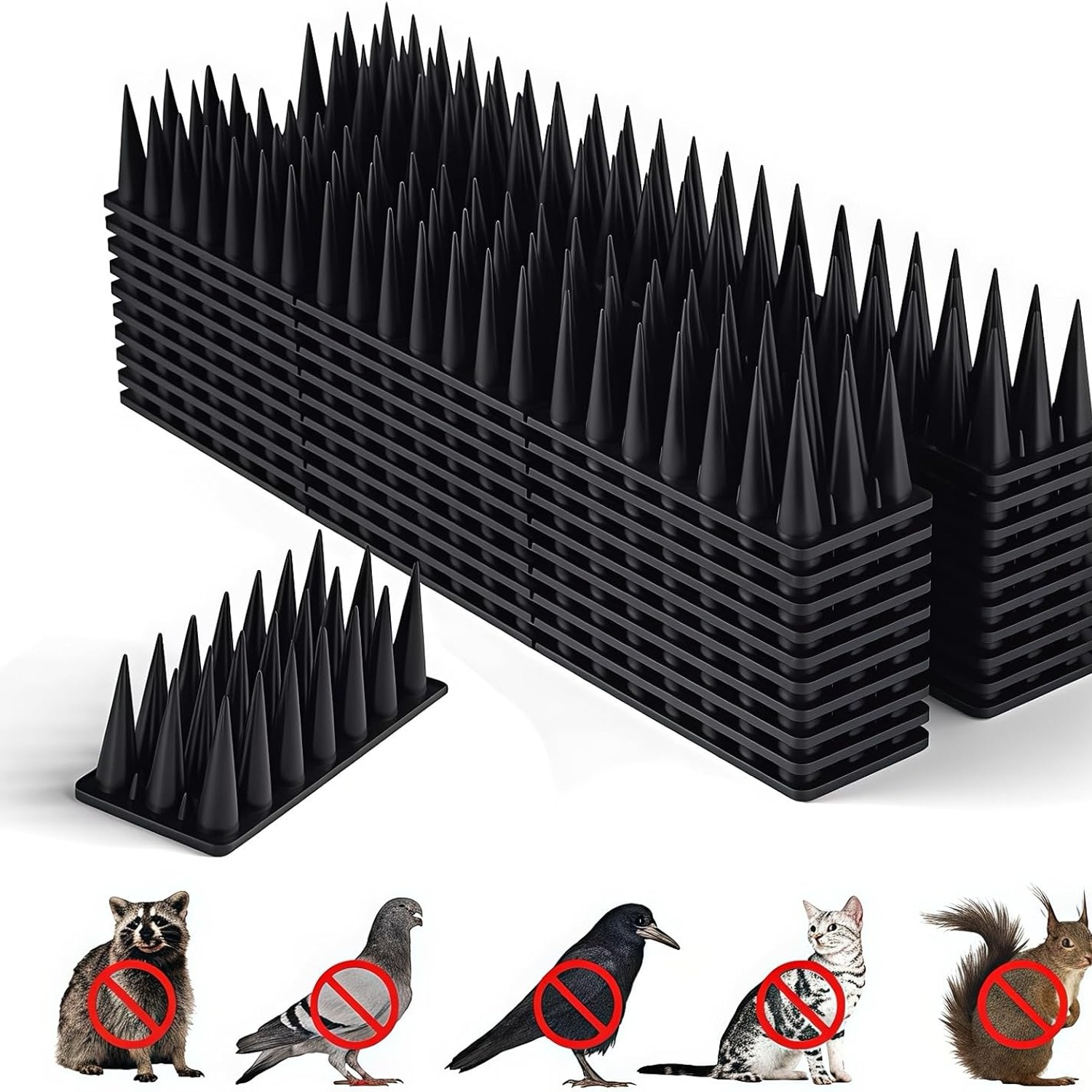
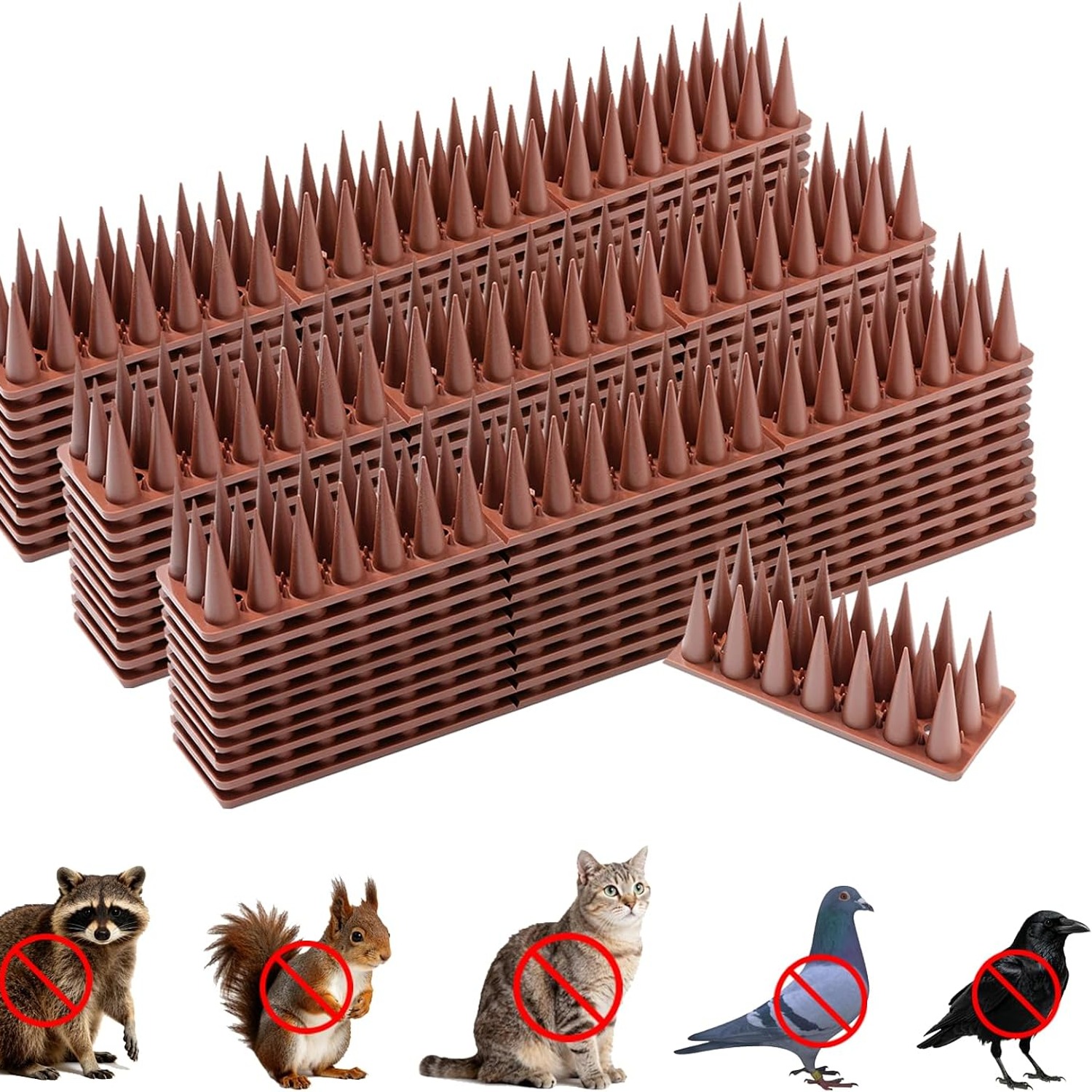
It also works for climbing animals. The listing names squirrel as a target species, and the same four inch barrier that defeats a pigeon makes a fence top awkward for cats too.
Where spikes are not the right tool: very small birds that can land between pins, large open areas where netting makes more sense, and anywhere there is an active nest. In many places it is illegal to disturb nesting birds, so check your local rules and wait until the nest is empty.
Keeping them working
Maintenance is light but not zero. Once or twice a year, look along the run. Clear out leaves, twigs and anything the wind has deposited between the pins, because a packed base gradually becomes a flat surface again, which is exactly what you were trying to remove.
Check the fixings at the same time. Adhesive can let go at one end after a few freeze cycles, and a cable tie exposed to constant sun will eventually need replacing. Re-securing one strip takes a minute. Ignoring it for a year gives the birds a foothold to work on.
Rinse with clean water if the strips look grubby. No special cleaner is needed, and gloves are a good idea.
The short version
Spikes work because they remove the landing surface, and they keep working because birds give up on perches that never pay off. This pack gives you 56 stainless steel strips, 60 feet of coverage, 40 points per strip and three ways to fix them down. Measure your ledges before you order, allow extra for corners and double rows, clean the surface properly, and treat every perch at once rather than one at a time. Do that and the problem tends to stay solved.