
American Pest Spikes
Company
Shop By Category
T&Cs
Shop Online
  • Clear materials and product specifications
  • Free tracked USA-wide delivery over $75
  • 14-day returns

Raccoon and cat deterrent spikes | Cat and raccoon deterrent spikes | anti climb fence spikes

Raccoon and Cat Deterrent Spikes 20 Pack

$59.99 $71.99 Save $12
  • Cut To Length
  • Humane Barrier
  • Four Fixing Options
  • Rust Free Plastic

Price: $59.99 $71.99

  • Free tracked USA-wide delivery on orders $75+, otherwise a flat $9.95
  • Pay by card or PayPal, handled by the payment provider
  • 14 days to change your mind, plus your statutory rights
Product specifications
BrandBORHOOD
ColorBlack
StyleClassic
MaterialPlastic
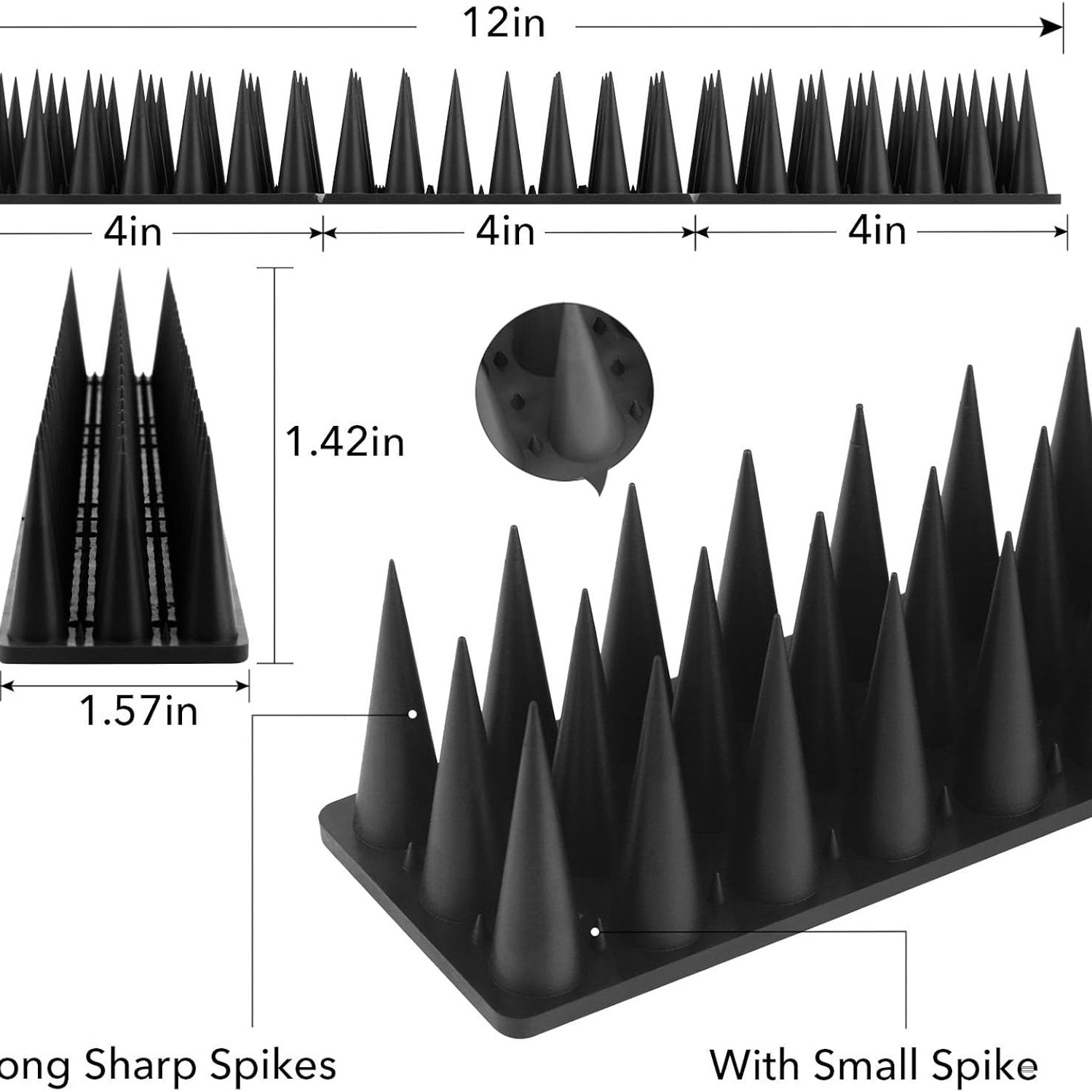
Product Dimensions11.22 in L x 1.57 in W x 1.57 in H
Item Weight1.7 lb
Pack Size20 strips
Shipping Weight0.77 kg
ConditionNew
Weight0.77 kg
Shipping & returns

Tracked delivery anywhere in the USA. It is free on orders of $75 or more, and a flat $9.95 below that.

If it is not right for you, send it back within 14 days of delivery in resaleable condition and we refund the price you paid, including standard delivery. That is a voluntary policy we offer on top of your legal rights. You cover the cost of returning it unless the item is faulty.

If it arrives faulty, damaged or not as described, we put it right at no cost to you under the consumer protection law of your state and the Federal Trade Commission Act, return postage included.

Shipping details · Refunds and returns

Cut To LengthTrim each strip so it fits narrow rails, short ledges or long fence runs.
Humane BarrierWorks as a visual and physical block rather than a trap or shock device.
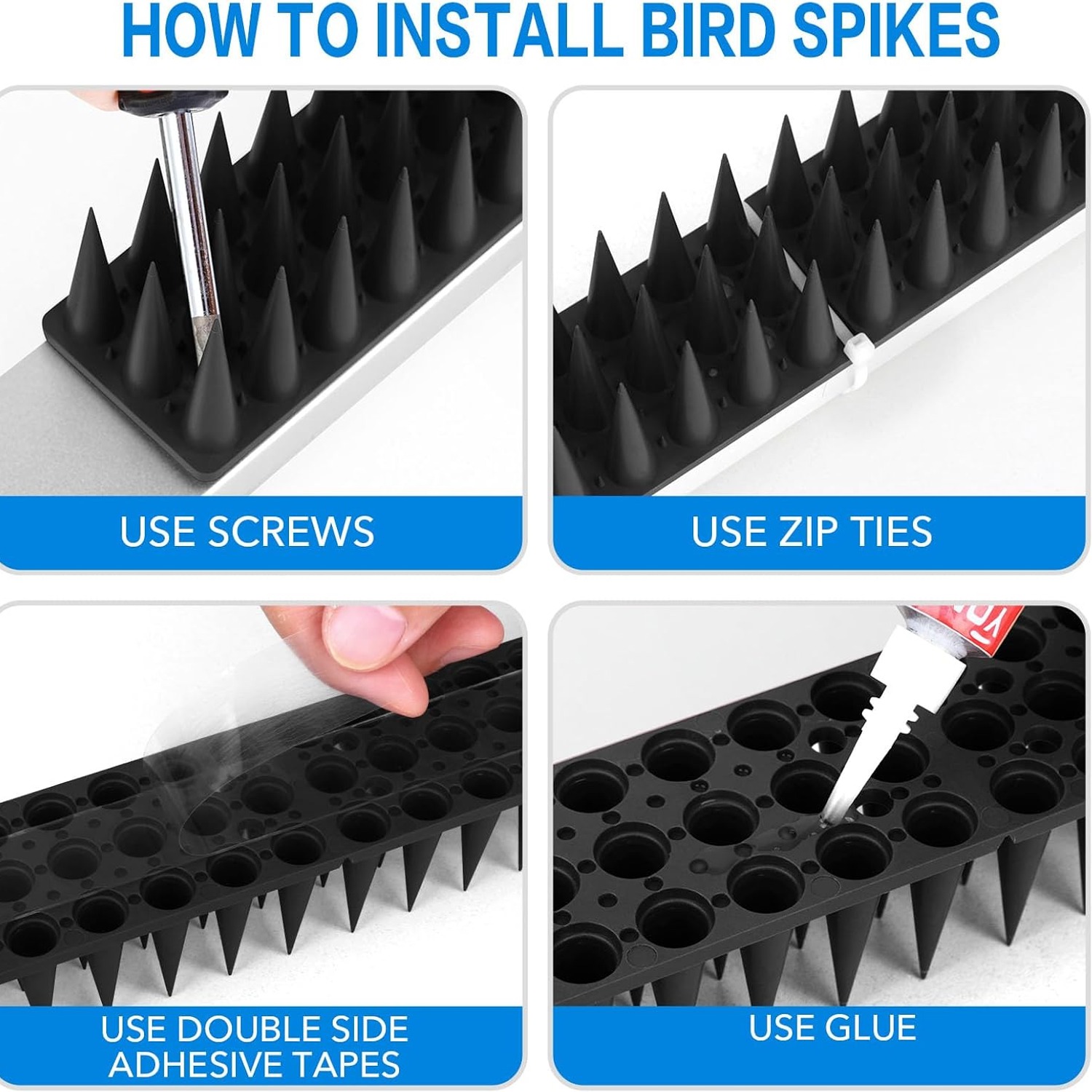
Four Fixing OptionsScrews, nails, strong double-sided tape, glue or zip ties all work.
Rust Free PlasticPlastic construction will not rust like bare metal strips can.

Keep fences, roof edges and garden walls off-limits with raccoon and cat deterrent spikes that work quietly, day and night.

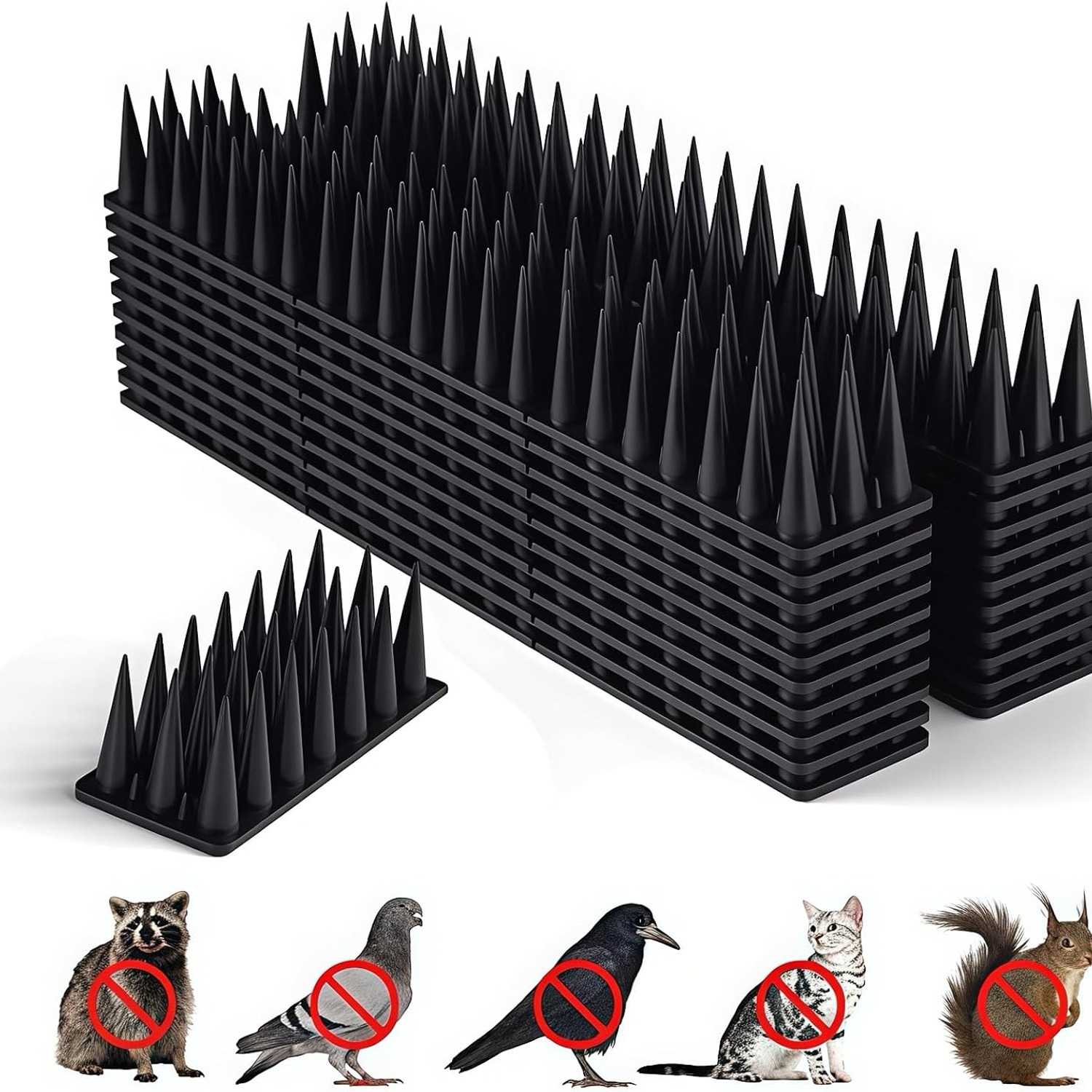
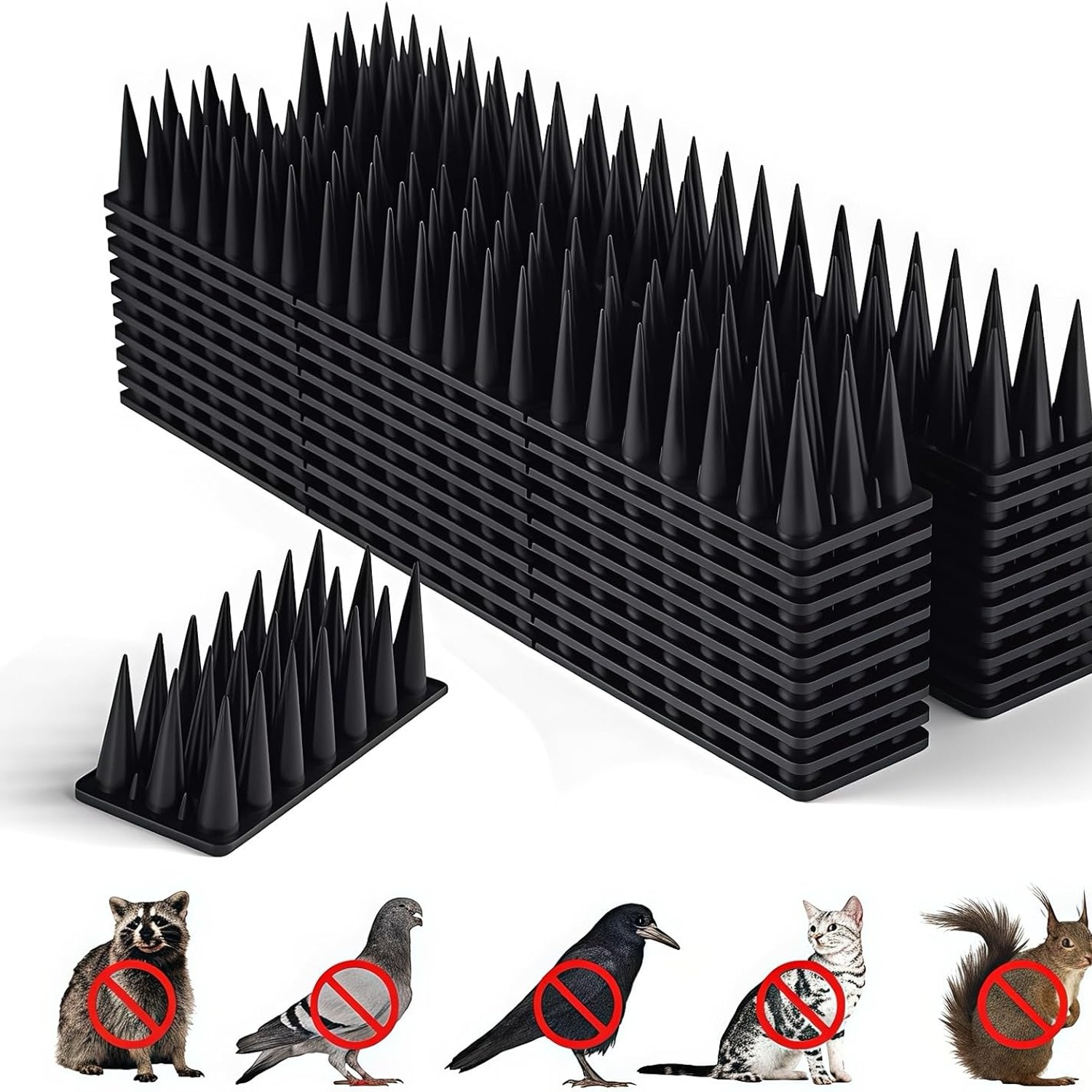
A 20 pack of black plastic spike strips that can be cut to length, fixed with screws, glue, tape or zip ties, and used to make narrow ledges and rails an unwelcome place to land or climb.

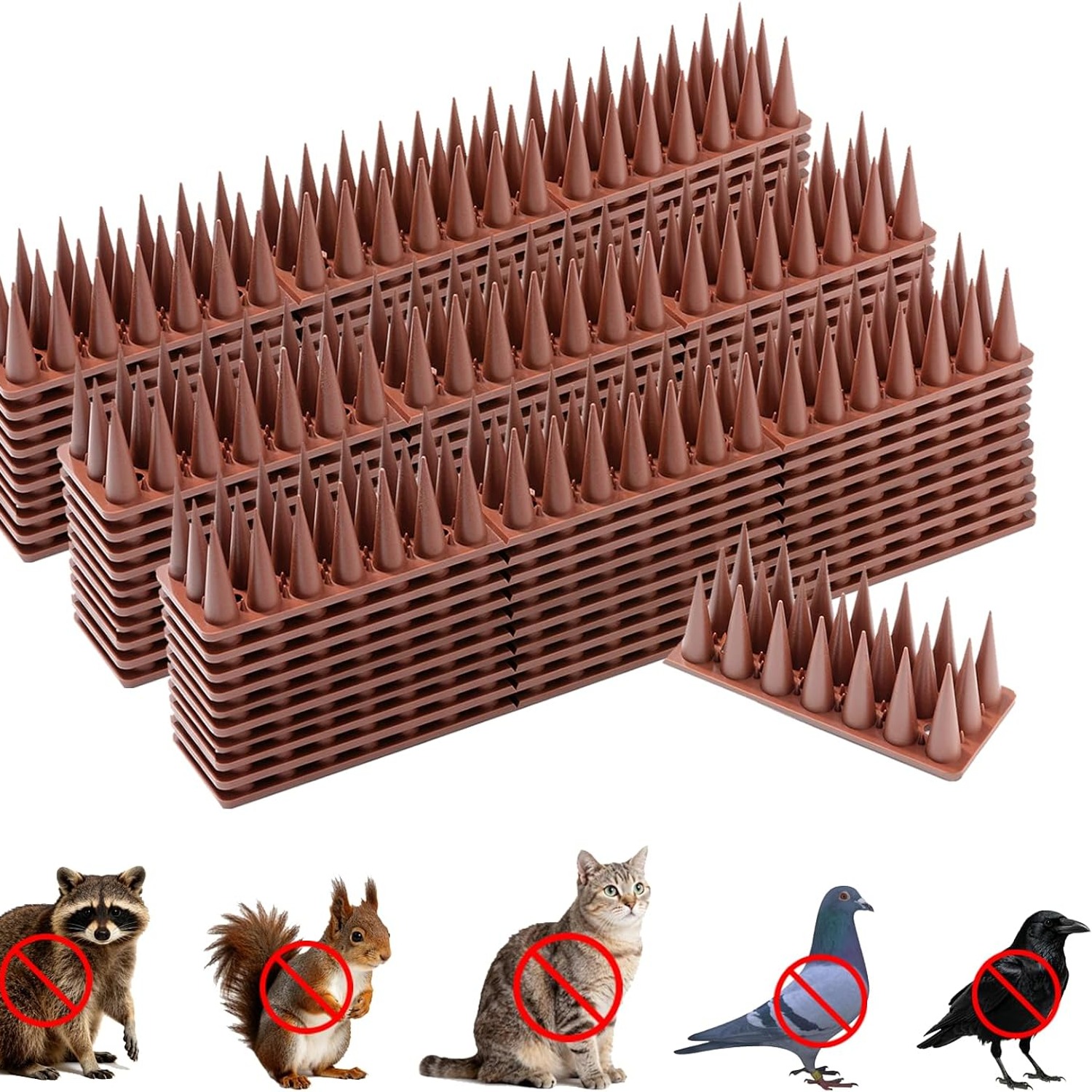
A 20 pack of black spike strips designed to stop cats and raccoons from settling on, or climbing over, fences and walls.

Each strip measures roughly 11.22 inches long by 1.57 inches wide and 1.57 inches high, so it suits narrow rails and ledges.

The strips can be cut down with snips, which makes awkward lengths around posts and corners much easier to cover.

Fixing is flexible, with screws, nails, outdoor glue, heavy double-sided tape or zip ties all suitable depending on the surface.

Plastic construction means the spikes will not rust, so they keep working through wet seasons without staining the surface underneath.

Raccoon and Cat Deterrent Spikes 20 Pack

Cats and raccoons are creatures of habit. Once a fence rail or a flat section of wall becomes part of their route, they will use it every night until something changes. These deterrent spikes change the surface itself, so the route stops being comfortable and the animal picks a different path. That is the whole idea behind anti climb fence spikes, and it is why they tend to work better than sprays or noise devices that fade after a few days.

Raccoon and Cat Deterrent Spikes 20 Pack

The pack contains 20 black plastic strips. Each one is about 11.22 inches long and sits roughly 1.57 inches wide and 1.57 inches tall, which is a good match for standard fence caps, narrow brick ledges, window sills, gutter lips and the tops of garden walls. The mix of longer and shorter points across the strip gives an uneven surface that paws and claws cannot settle on, without the strip needing to be tall or obvious from the ground.

Raccoon and Cat Deterrent Spikes 20 Pack

Installation is deliberately simple. The strips can be screwed or nailed down on timber, bonded with outdoor adhesive or heavy-duty double-sided tape on smooth surfaces, or fastened with zip ties along pipes, rails and mesh. Because the plastic can be cut, you are not stuck with fixed lengths. Trim one strip to fill the gap beside a post, or run several end to end along a longer rail, whichever the job needs.

Raccoon and Cat Deterrent Spikes 20 Pack

Plastic has a practical advantage outdoors. It does not rust, so there are no brown streaks running down a painted fence or a rendered wall after a wet winter. It also stays light, which matters when you are fixing to gutters, flashing or thin timber capping that cannot carry much weight. The black finish blends into dark fence tops and shadow lines reasonably well, especially once the strips have been in place a few weeks.

Raccoon and Cat Deterrent Spikes 20 Pack

These spikes are a deterrent, not a trap. They are designed to make a surface unpleasant to stand on so animals move along, and they should be installed on a continuous run with no easy gaps. Used that way, a 20 pack covers a meaningful stretch of fence top, shed edge or balcony rail, and it keeps working without power, refills or any ongoing attention beyond an occasional clean.

Not sure yet? That is fine.

A spike strip has to fit the ledge, and you cannot always judge the base width or the run from a photograph. If it is not right for you, send it back within 14 days of delivery in resaleable condition and we refund the price you paid, including standard delivery. That is a voluntary policy we offer on top of your legal rights.

If it turns up faulty, damaged or not as described, that is on us. The consumer protection law of your state covers you, and we pay the return postage. Read the full detail on our refunds and returns page, or ask us anything before you order.

Frequently Asked Questions

What does this 20 pack actually contain?

It contains 20 individual plastic spike strips. Each strip is roughly 11.22 inches long, so laid end to end they cover a little over 18 feet of surface. You can also cut strips down and spread the coverage across several smaller spots.

Will these spikes hurt cats or raccoons?

They are designed as a deterrent rather than a weapon. The points make a surface uncomfortable to stand on, so animals choose a different route instead of settling there. Used as intended on a flat surface, they work as a physical and visual block.

Do they work on raccoons specifically?

Raccoons rely on flat footing and a good grip to pull themselves over a fence top or along a ledge. Taking that footing away is the main reason the best raccoon deterrent spikes work. Cover the whole run, because a raccoon will find any gap you leave.

Will they stop cats walking along my fence?

In most cases yes, provided the strips are fitted along the full length the cat uses. Cats are agile and will step around a short section. Continuous coverage is what makes the best cat deterrent spikes for fences effective.

Can I cut the strips to fit?

Yes. Each strip can be trimmed with strong snips or a fine saw so it fits short ledges, odd gaps beside posts, or curved sections. Cutting is one of the main reasons these are easy to fit on real-world fences rather than perfect straight runs.

How do I attach them to a timber fence?

Screws or nails through the base are the most secure option on timber. Pre-drilling helps avoid splitting old or dry wood. Space the fixings evenly so the strip sits flat and does not lift at the ends.

What about brick, render or concrete?

Outdoor construction adhesive is the usual choice on masonry. Clean and dry the surface first, press the strip down firmly, and leave the adhesive to cure before any weather hits it. Masonry screws and plugs also work if you prefer a mechanical fixing.

Can I fix them without drilling?

Yes. Heavy-duty outdoor double-sided tape or adhesive both avoid drilling, which suits rental properties and surfaces you do not want to mark. For pipes and railings, zip ties are often the neatest no-drill answer.

Will zip ties hold them on a railing?

Zip ties work well on tubular rails, mesh and pipework. Use UV-stable outdoor ties, pull them firm, and trim the tails. Check them each season, since ties are usually the first part to degrade in strong sun.

Are these the same as bird spikes?

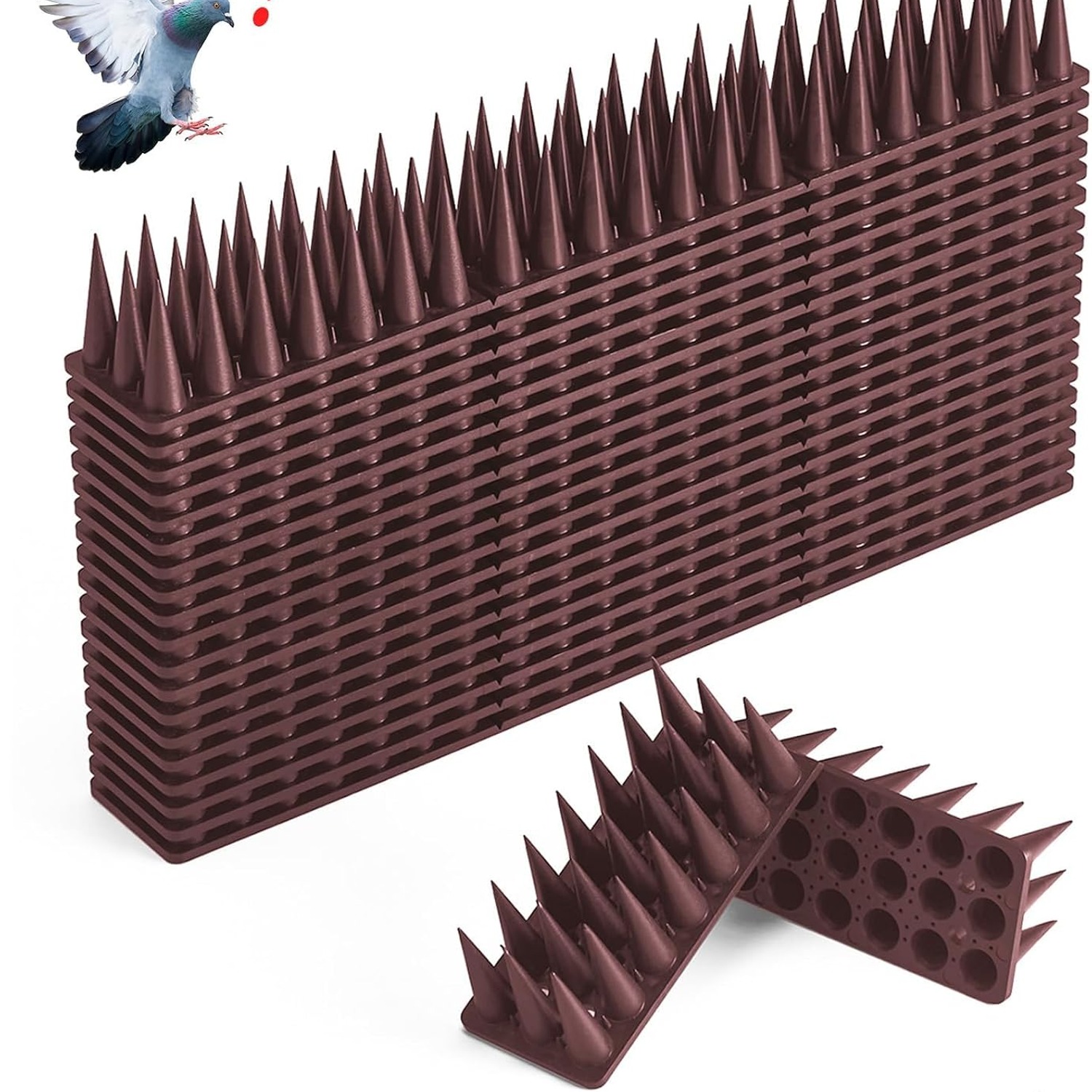
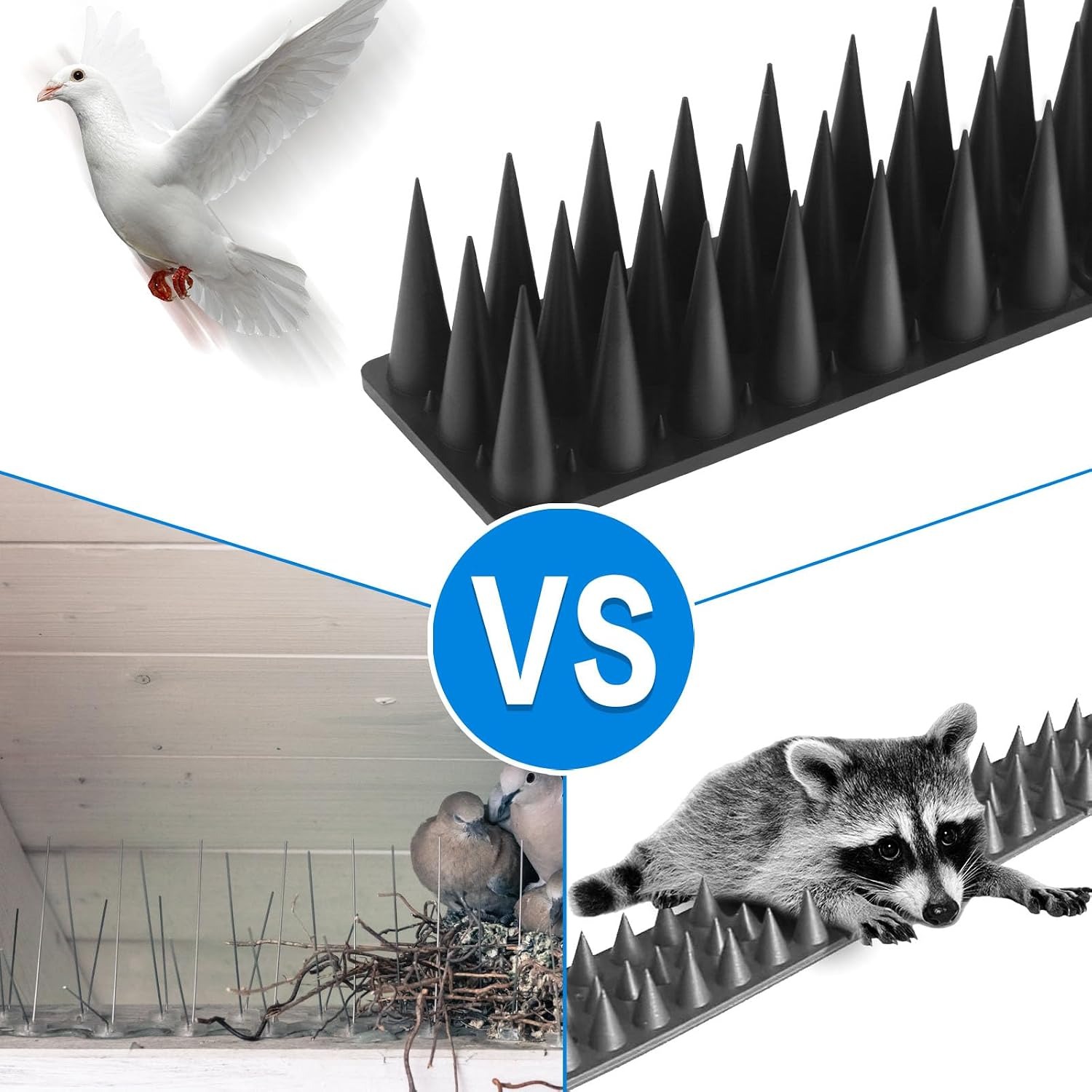
The principle is the same. A spiked surface stops anything from settling comfortably, so the same strips are often used as the best plastic bird spikes for pigeons and nesting birds as well as for cats and raccoons.

Will they rust?

No. The strips are plastic, so there is nothing to corrode. That is useful on painted fences and light-colored walls, where rusting metal can leave stains that are hard to remove.

How tall are the spikes?

The strip measures about 1.57 inches high overall. That is enough to break up a flat surface while staying low profile, which matters if you do not want the fence top to look fortified from the street.

How wide is the base?

Around 1.57 inches. That suits narrow fence caps, brick courses, sills and gutter lips. On a wider surface you may want two rows side by side so there is no clear strip of bare footing left.

Can I use them on a shed roof edge?

Yes, that is a common use. Fitting the strips along the lower edge and any ridge an animal uses to step up removes the easy landing point. Keep the spikes clear of the actual water path so runoff still drains.

Will they damage my gutters?

Fitted along the outer lip with adhesive or clips, they should not. Avoid screwing through the gutter base, since that creates leak points. Clear leaves regularly so debris does not sit behind the strip and hold water.

Do they work on balcony railings?

They are often used that way to stop birds and cats from perching. Zip ties along a tubular rail are the simplest method. Check your building rules first if you live in an apartment with shared exterior surfaces.

Will they stop animals getting into my garden entirely?

They stop animals using the surface you cover. If there is a tree branch, a bin, a low shed or a gap under the fence giving access, the animal will use that instead. Walk the boundary and close the other routes too.

How many strips do I need per meter?

Each strip is about 28.5 cm long, so roughly three and a half strips cover one meter in a single row. A 20 pack covers close to five and a half meters in one row, or less if you double up on wide surfaces.

Can I paint them?

You can use a plastic-friendly outdoor paint if you want them to match a fence color. Clean the surface first and use light coats so paint does not build up on the points and blunt them. The black finish already blends with most dark fence tops.

Do they need power or batteries?

No. They are a purely physical deterrent with no electronics, no refills and no ongoing cost. Once they are fitted correctly, the only maintenance is an occasional clean and a check of the fixings.

Will snow or ice affect them?

Heavy snow can sit on top of the strips and briefly bridge the points. Clearing the worst of it restores the effect. The plastic itself handles cold, though adhesives are best applied in milder, dry conditions.

How do I clean them?

Rinse with water and work a soft brush between the points to lift dust, leaves and droppings. Skip solvents and strong cleaners, which can make plastic brittle. A clean every few months is usually plenty.

How long will they last outdoors?

That depends mostly on sun exposure and how well they are fixed. Plastic strips kept clean and firmly attached typically give years of service. Replacing a degraded zip tie now and then costs almost nothing.

Are they safe around children?

They are sharp enough to deter animals, so fit them where children cannot reach or lean on them. Fence tops, high ledges and roof edges are fine. Low walls that double as seating are not a good spot.

Can I use them indoors?

Some people fit short cut sections on indoor shelves or window sills a cat keeps jumping onto. Use the no-drill fixings for that, and keep them out of walkways and anywhere a person could brush past.

Do they deter squirrels or possums?

Any animal that needs flat footing finds a spiked surface awkward, so they often help. Results depend on how determined the animal is and whether another route exists. Coverage with no gaps is still the key factor.

What is the item weight?

The listing gives an item weight of 1.7 pounds and a shipping weight of 0.77 kg. They are light enough to fit to gutters, capping and thin timber without adding meaningful load.

How is it delivered?

It ships as a boxed pack through our standard delivery service, with tracking provided once dispatched. Delivery timing varies by destination and is shown at checkout.

Does this make a practical gift?

It does for anyone fighting a recurring cat, raccoon or pigeon problem on a fence, shed or balcony. It is a practical present rather than a decorative one, so it suits gardeners and new homeowners more than a general gift list.

What if these are not right for my situation?

Get in touch with our team and explain the surface and the animal you are dealing with, and we will help you work out whether a different length, a different fixing method or another product in the range is a better match. If the item is unused and in its original packaging, our standard returns process applies, and we will walk you through it.

Raccoon and Cat Deterrent Spikes, A Practical Buyer's Guide

6 min read American Pest Spikes

The problem with a favorite fence

Most animal problems in a garden are really route problems. A cat does not sit on your fence because it likes your fence. It sits there because the fence connects two places it wants to be, and the top rail happens to be flat and comfortable. A raccoon behaves the same way. It finds the route with the best grip and the fewest obstacles, uses it once, then uses it every night after that.

That is why sprays, scent granules and noise devices often disappoint. They either wash away, run out, or stop registering as a threat after a week or two. Animals are quick learners, and anything that never actually changes their experience of the surface gets ignored.

Physical deterrents work differently. They change the surface itself. A fence top with spike strips along it is simply not a good place to stand, and no amount of habit makes it one. That is the logic behind the best anti climb fence spikes, and it is why they keep working long after a spray bottle is empty.

How these spikes work

Each strip in this pack is a run of plastic points on a narrow base, about 11.22 inches long, 1.57 inches wide and 1.57 inches high. The points sit close enough together that a paw cannot find a flat place to rest, and the whole strip is low enough that it does not turn a garden fence into something that looks like a prison wall.

There are two effects at play. The first is visual. An animal approaching a ledge can see the surface is broken up and often just picks another path before touching it. The second is physical. If the animal does try, the footing is unstable and uncomfortable, so it backs off. Neither effect relies on injury. The point is to make the surface unattractive, not to punish the animal.

This is also why the same strips get used against birds. Pigeons looking for a ledge to roost on have exactly the same problem as a cat looking for a fence rail, which is why plastic bird spikes and cat deterrent strips are essentially the same product in different packaging.

Where they go

The honest answer is anywhere flat and narrow that something keeps standing on. In practice, the most common spots are:

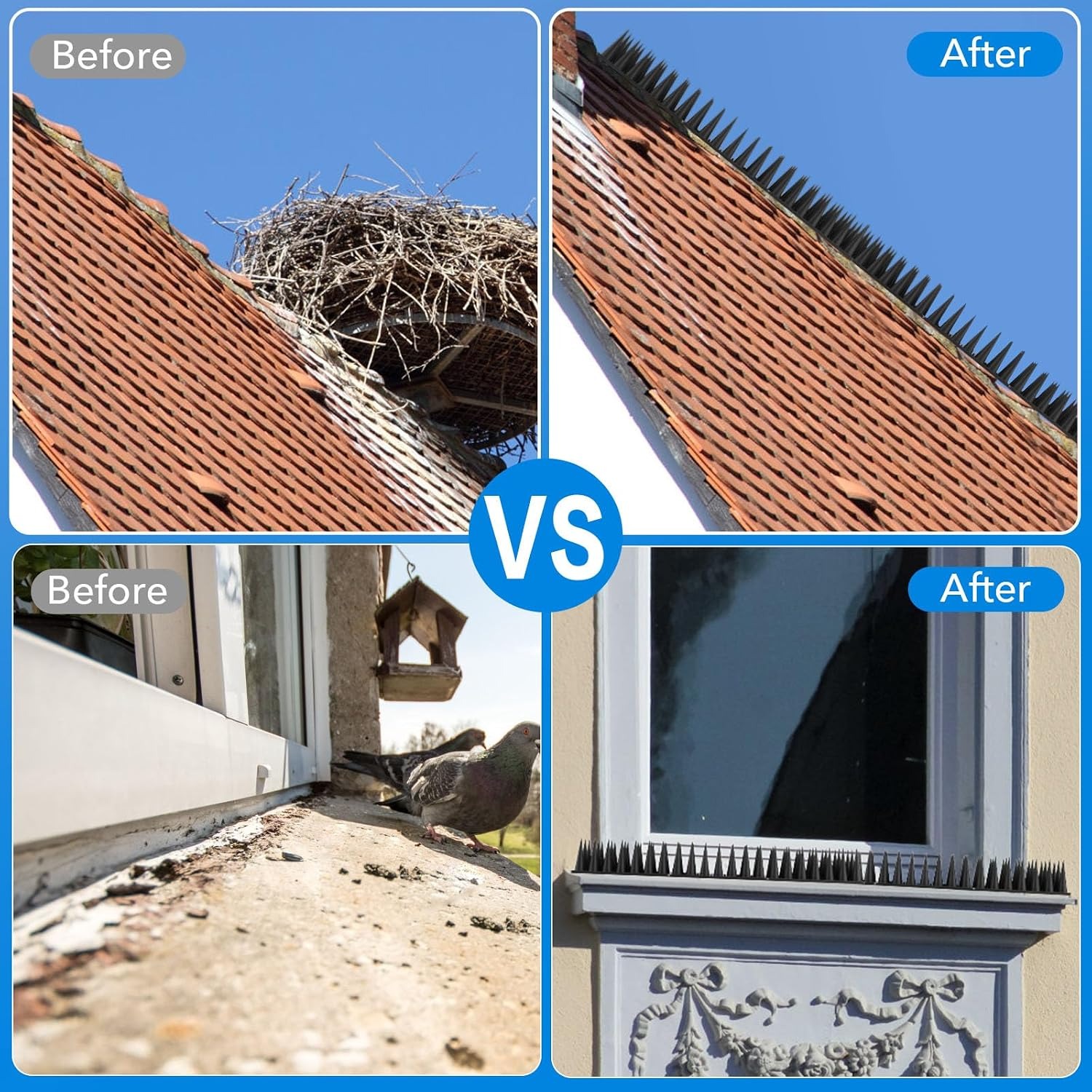
Fence tops and capping rails, which is the classic use. Garden walls, especially brick walls with a flat course that lines up with a neighboring roof. Shed roof edges and ridges. Gutter lips and flashing where pigeons settle. Window sills and ledges on the exterior of a house. Balcony railings and the top rail of metal fencing.

The one rule that matters more than any other is continuity. A run of spikes with a two-foot bare section in the middle is just a run of spikes with a doorway. Cats in particular will find that gap on the first night. Plan the full length you need before you start fixing anything.

Fixing them properly

The strips can be cut, which is the feature that saves most installations. Real fences have posts, brackets, downpipes and corners. Being able to trim a strip to 7 inches so it fits neatly beside a post means you get full coverage instead of a compromise.

Choose the fixing to suit the surface. On timber, screws or nails are the most secure, and pre-drilling stops old wood from splitting. On brick, render or concrete, outdoor construction adhesive works well as long as the surface is clean and dry before you start. On smooth painted metal or tile, heavy-duty exterior double-sided tape is a reasonable no-drill option. On rails, pipes and mesh, UV-stable zip ties are usually fastest and neatest.

A few things worth knowing before you commit. Adhesive needs dry weather and some cure time, so check the forecast. Tape struggles on dusty or chalky surfaces, so wipe the area first. Zip ties are the component most likely to need replacing after a few years in strong sun, which is a small job, but worth putting on the list.

Who they suit

These strips suit anyone with a boundary problem that keeps repeating. Gardeners who are tired of finding dug-up beds and paw prints in the soft soil. Homeowners who can hear something crossing the shed roof at two in the morning. People whose bins keep getting worked over by a raccoon that arrives via the fence line. Anyone with a balcony that pigeons have decided is now theirs.

They also suit people who want a solution they do not have to think about. There is nothing to charge, refill or reset. Once it is fitted, it is doing its job every night whether you remember it or not.

They are less suited to a few situations. If you have small children who play right against a low wall, do not fit spikes at child height. If your problem animal is getting in under the fence rather than over it, spikes on top will not help and you need to fix the gap instead. And if your fence top is broad and flat, you may need two parallel rows rather than one, which changes how many strips you should order.

Choosing the right quantity

Work out the length you need to cover first. Each strip is roughly 28.5 cm, so three and a half strips make up a meter in a single row. A 20 pack covers a bit over five and a half meters in one row. Double that up for wider surfaces and the coverage halves.

Measure the actual run an animal uses, not the whole boundary. Most of the time there are one or two preferred crossing points rather than a free-for-all along the whole fence. A few evenings of watching, or a look at where the moss is worn off the top rail, usually tells you exactly where to concentrate.

Buy slightly more than your measurement suggests. Offcuts, awkward corners and that one extra ledge you had not thought about will eat into the pack faster than you expect.

Looking after them

Maintenance is light. Rinse the strips with plain water and a soft brush when dust, leaves or droppings build up between the points. Skip solvents and strong cleaning chemicals, which can make plastic brittle over the long run.

Check the fixings a couple of times a year, and always after a bad storm. Screws loosen, adhesive edges lift, and zip ties stretch. A quick walk along the fence with a screwdriver takes five minutes and keeps the barrier doing its job.

Also keep the area behind the strips clear. If leaves pile up against a run on a gutter or a flat roof edge, water sits where it should not, and that causes more trouble than the animals ever did.

The short version

These are 20 black plastic spike strips, each about 11.22 inches long, meant for fence tops, walls, ledges, gutters and railings. They are cuttable, so they fit real surfaces rather than ideal ones. They fix with screws, nails, adhesive, outdoor tape or zip ties, and plastic means no rust stains on paintwork.

They work by taking away comfortable footing, which is the one thing cats, raccoons and roosting birds all need. Cover the full run with no gaps, fix them firmly, check them once or twice a year, and the problem route stops being a route.

Browse the shop

Not sure how many strips you need?

Measure the run you want to cover, then message our team and we will help you work out the pack count and the best fixing method for your surface.

Ask us a question

Page summary

The Raccoon and Cat Deterrent Spikes 20 Pack from BORHOOD is a set of 20 black plastic spike strips used to stop cats, raccoons and birds from perching, nesting or climbing on fences, walls, roof edges, ledges and railings. Each strip measures about 11.22 inches long by 1.57 inches wide by 1.57 inches high and is listed as plastic in a classic style. The strips can be cut to length and fixed with screws, nails, outdoor glue, strong double-sided tape or zip ties. Plastic construction avoids rust. The item weight is listed as 1.7 pounds and the shipping weight as 0.77 kg. Country of origin, color code, exact plastic grade and certification details are not specified in this record.