
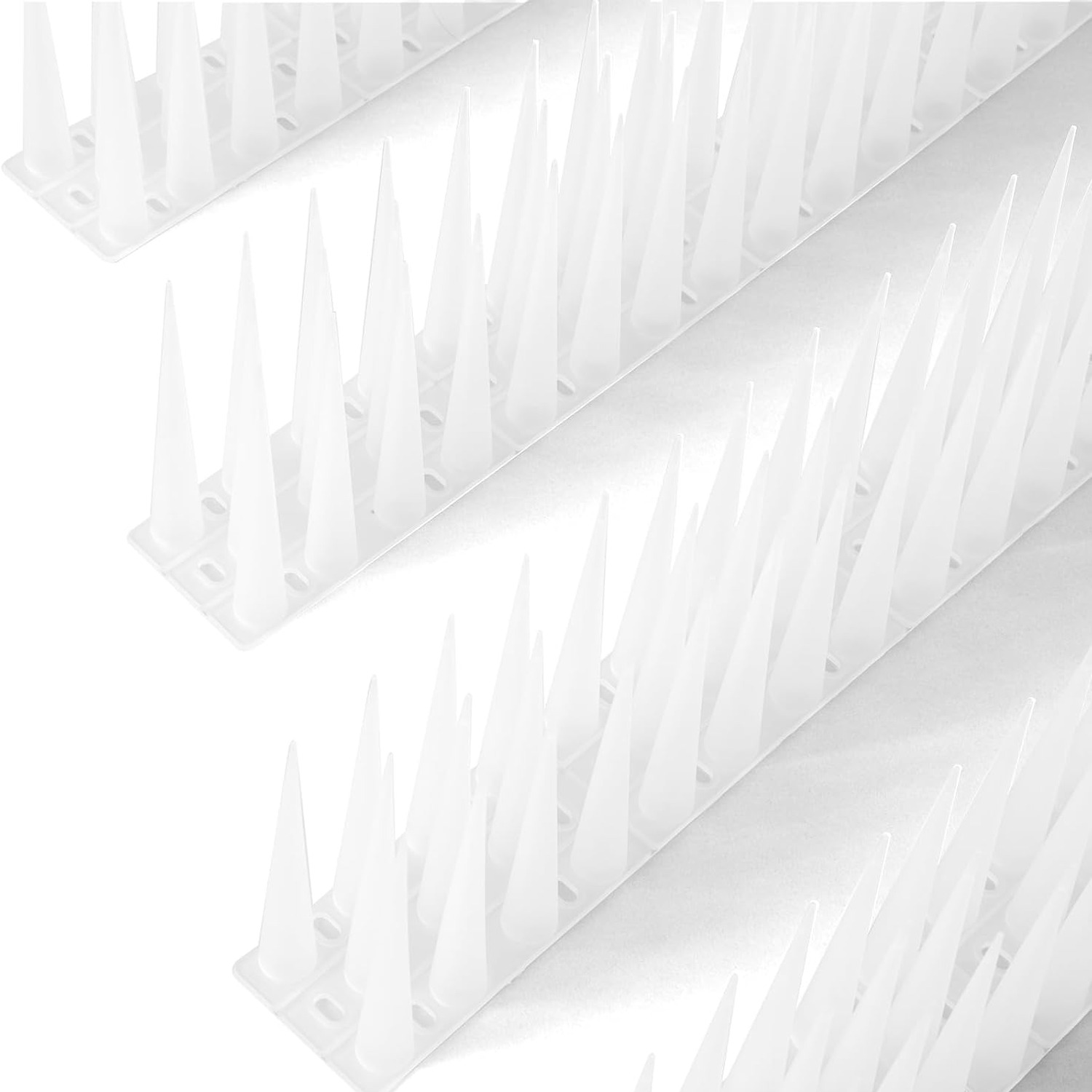

The complete guide
Bird Spikes Buyer's Guide, How To Choose And Fit Them Properly
The problem nobody warns you about
Birds are not a problem until suddenly they are. One pigeon finds a ledge above your front door. A week later there are two. By the end of the month the paintwork has streaks down it, the doormat needs hosing every few days, and there is a mat of twigs wedged behind the downpipe.
It gets worse than mess. Droppings are acidic and they eat into paint, render and some metals over time. Nesting material blocks gutters, which backs water up under roof tiles. And once a bird has raised a brood somewhere, it treats that spot as home and comes back the following season.
Cleaning does not fix it. You are removing the evidence, not the reason. The reason is that you have a flat, sheltered surface that a bird finds comfortable, and until that changes the bird keeps coming back.
How bird spikes actually work
The idea is simple and a bit clever. Spikes do not catch birds or shock them. They copy the shape of a thorn bush, which birds have avoided for millions of years. A bird comes in to land, sees nowhere to put its feet, and peels off to find somewhere easier.
That is the whole mechanism. No noise, no power, no chemicals, nothing to refill. Once a run of spikes is fitted and fixed down properly, it just sits there doing its job through every season.
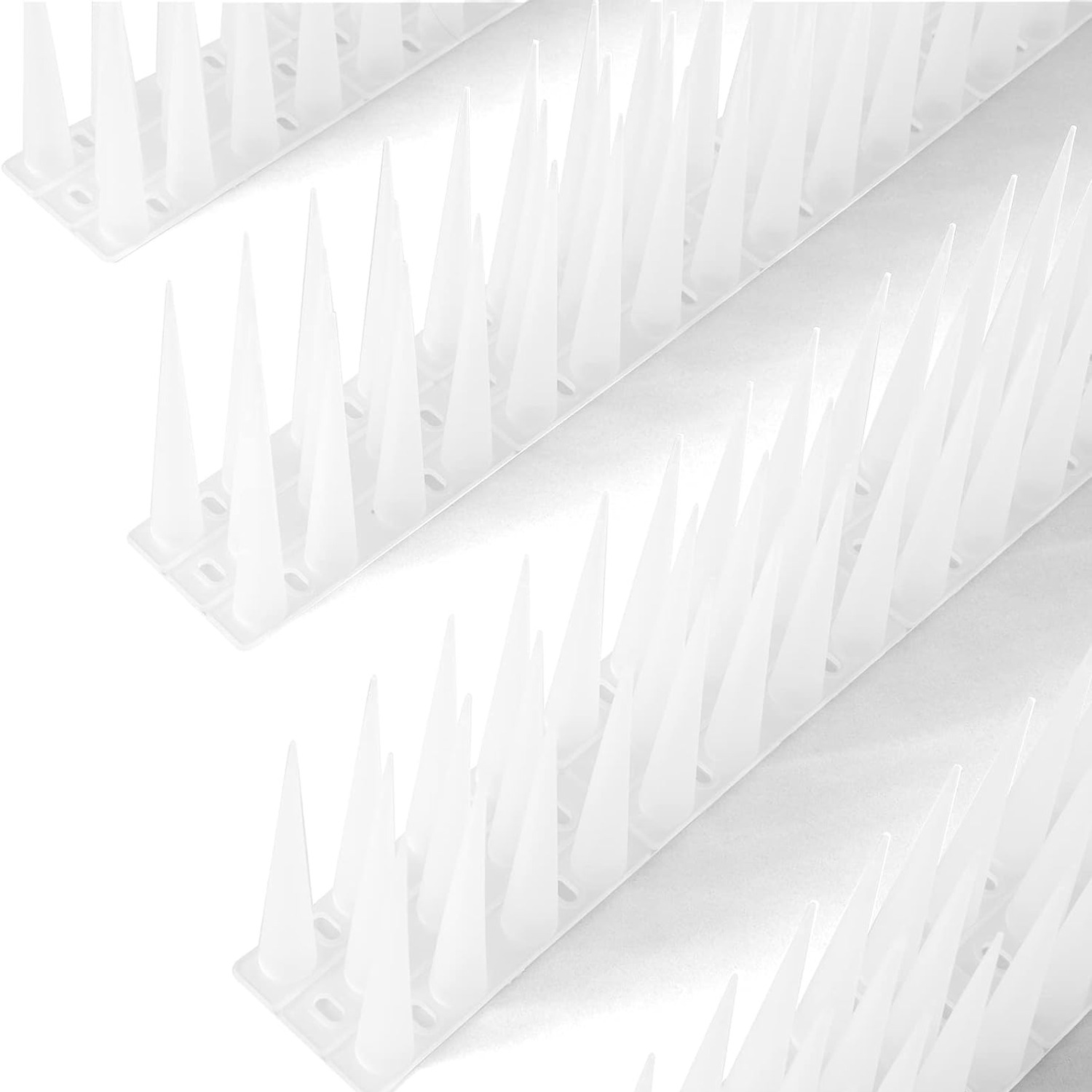
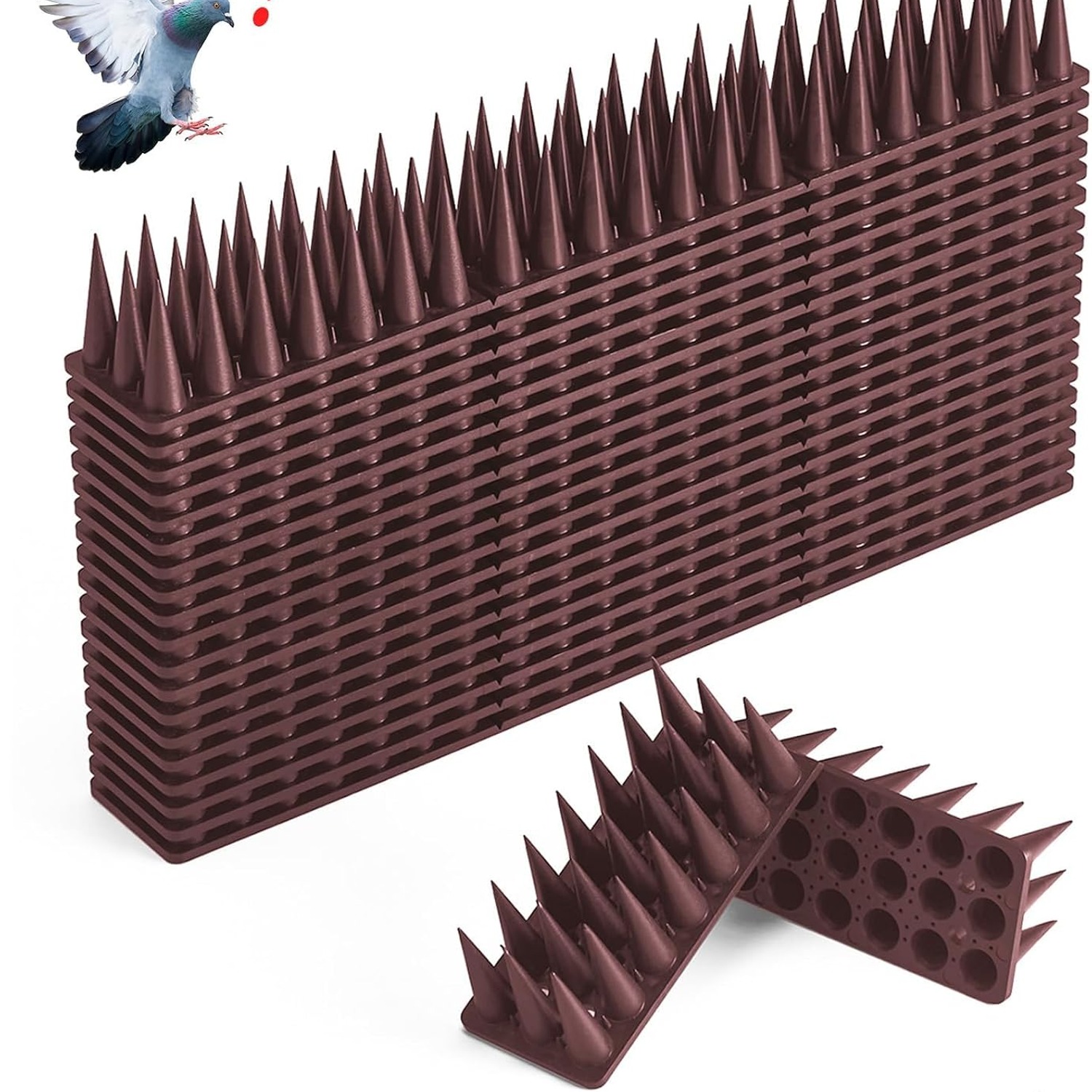
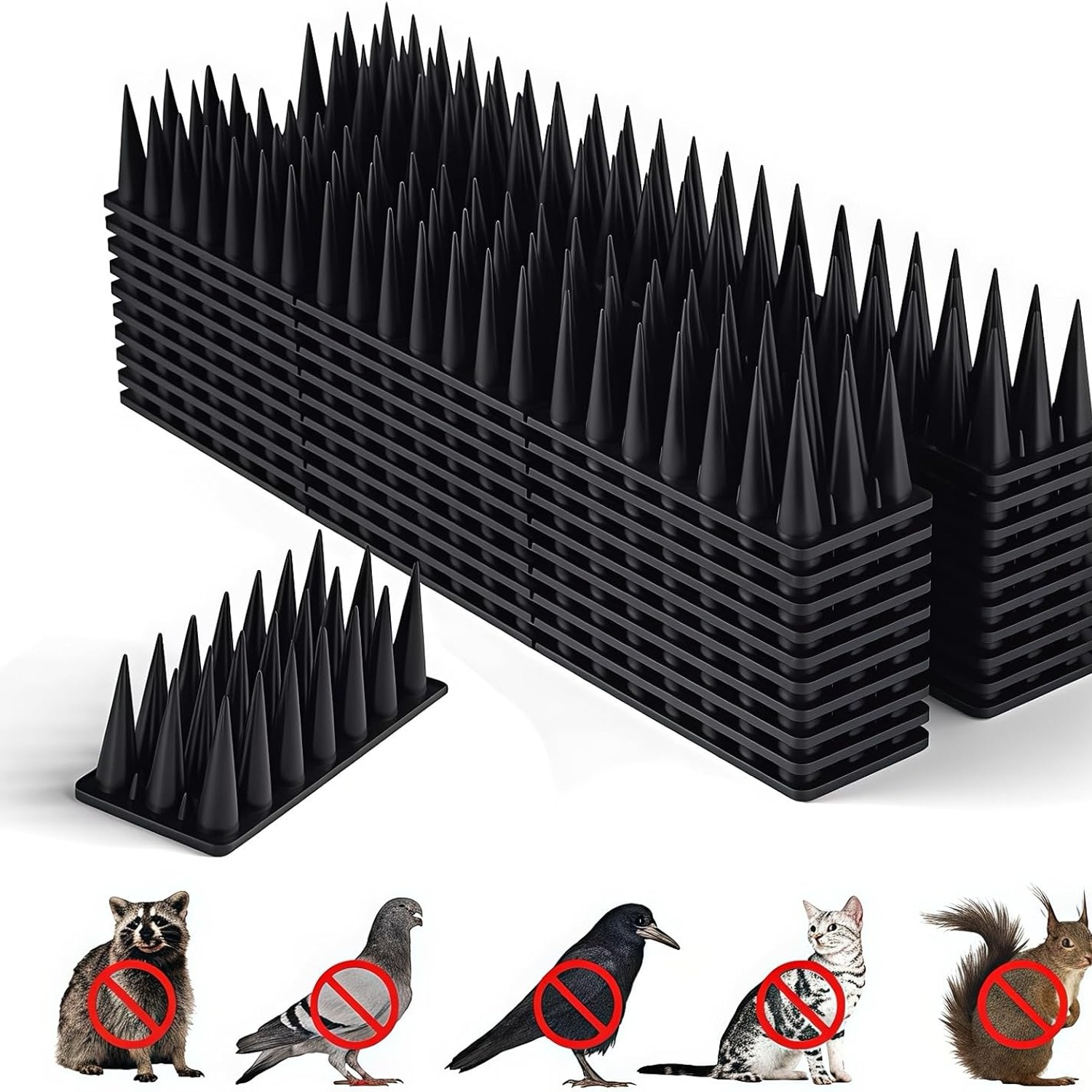
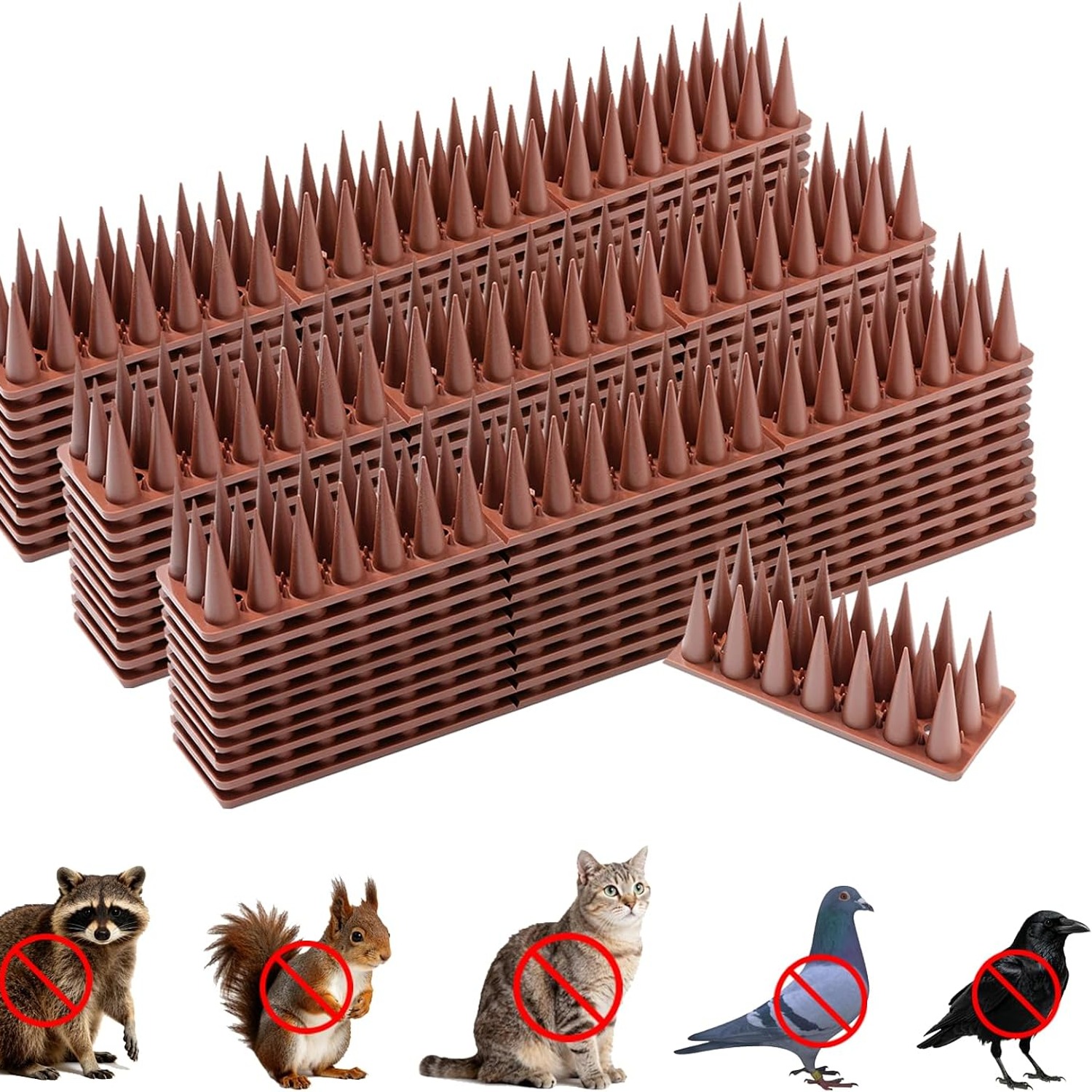
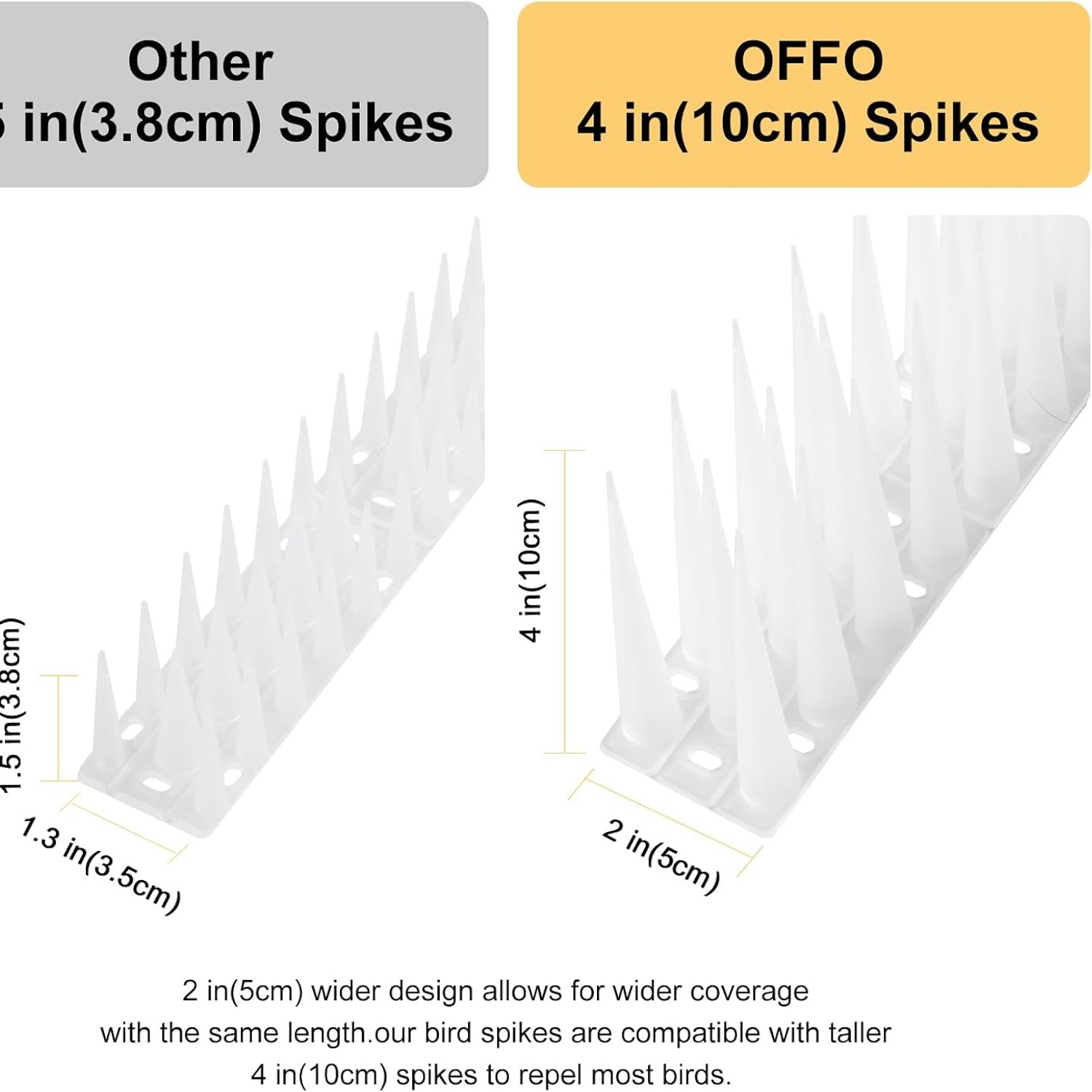
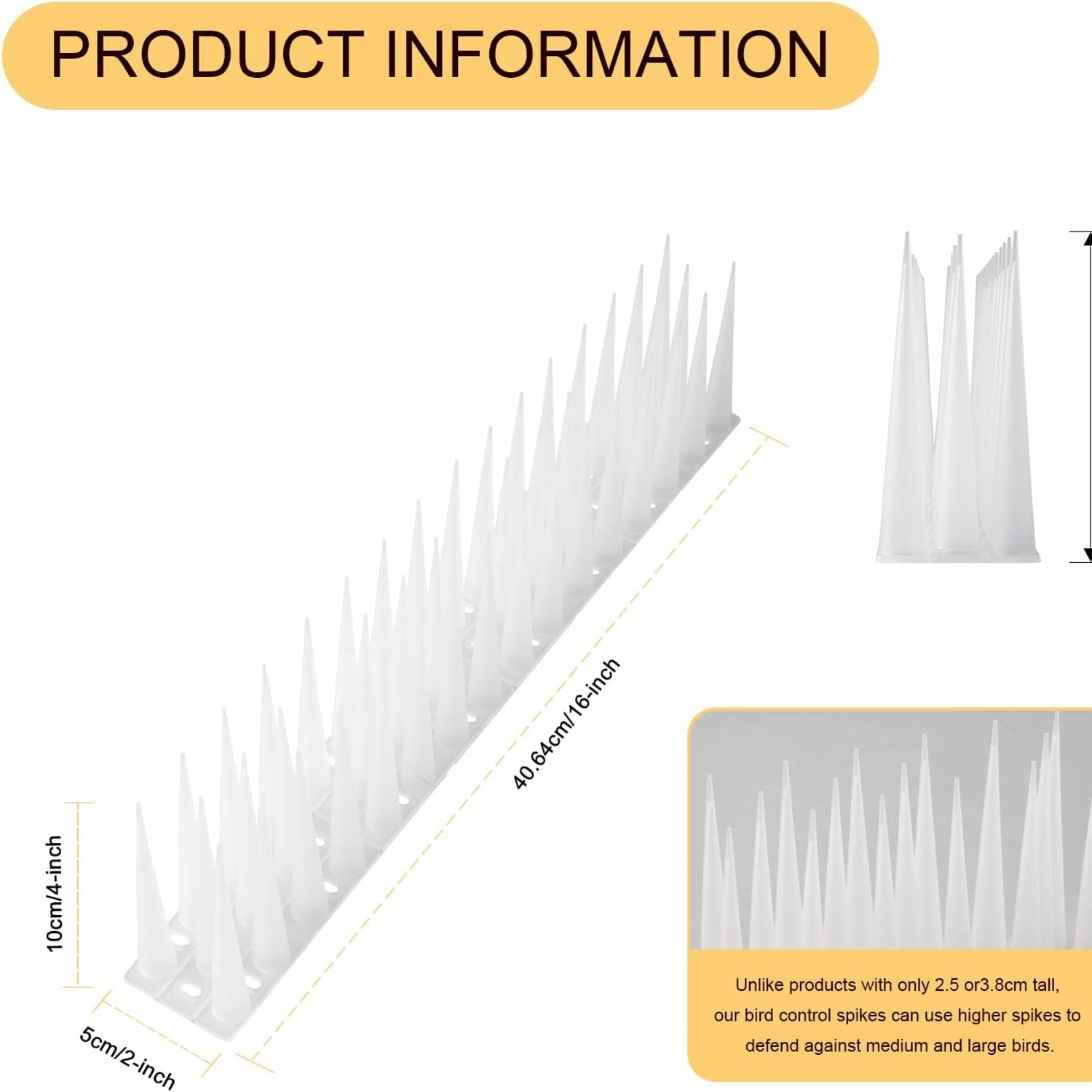
Height matters more than most buyers realize. A lot of cheap strips use spikes of about 1 inch. A pigeon can stand on the base between them. A gull can press straight down on top. The spikes on this product are 4 inches (100mm) tall and 2 inches (51mm) wide, which puts them in the range that genuinely stops medium and large birds rather than mildly annoying them.
Width matters too. A single 2 inch row leaves half a 4 inch sill open, and a bird will happily use the free half. Two rows side by side cover the sill properly. When people complain that spikes "did not work", patchy coverage is usually the real story.
Plastic or metal
You will see both. Metal spikes, often sold as stainless steel pigeon spikes, have a reputation for toughness, and good ones are tough. Cheap ones rust, and rust running down a white wall looks worse than the droppings did.
PP plastic sidesteps that completely. It cannot corrode. These strips are rated for use between -15C and 80C (-4F to 176F), which covers hard frost and hot summer sun in most places. The plastic stays intact through storms and does not loosen or rust.
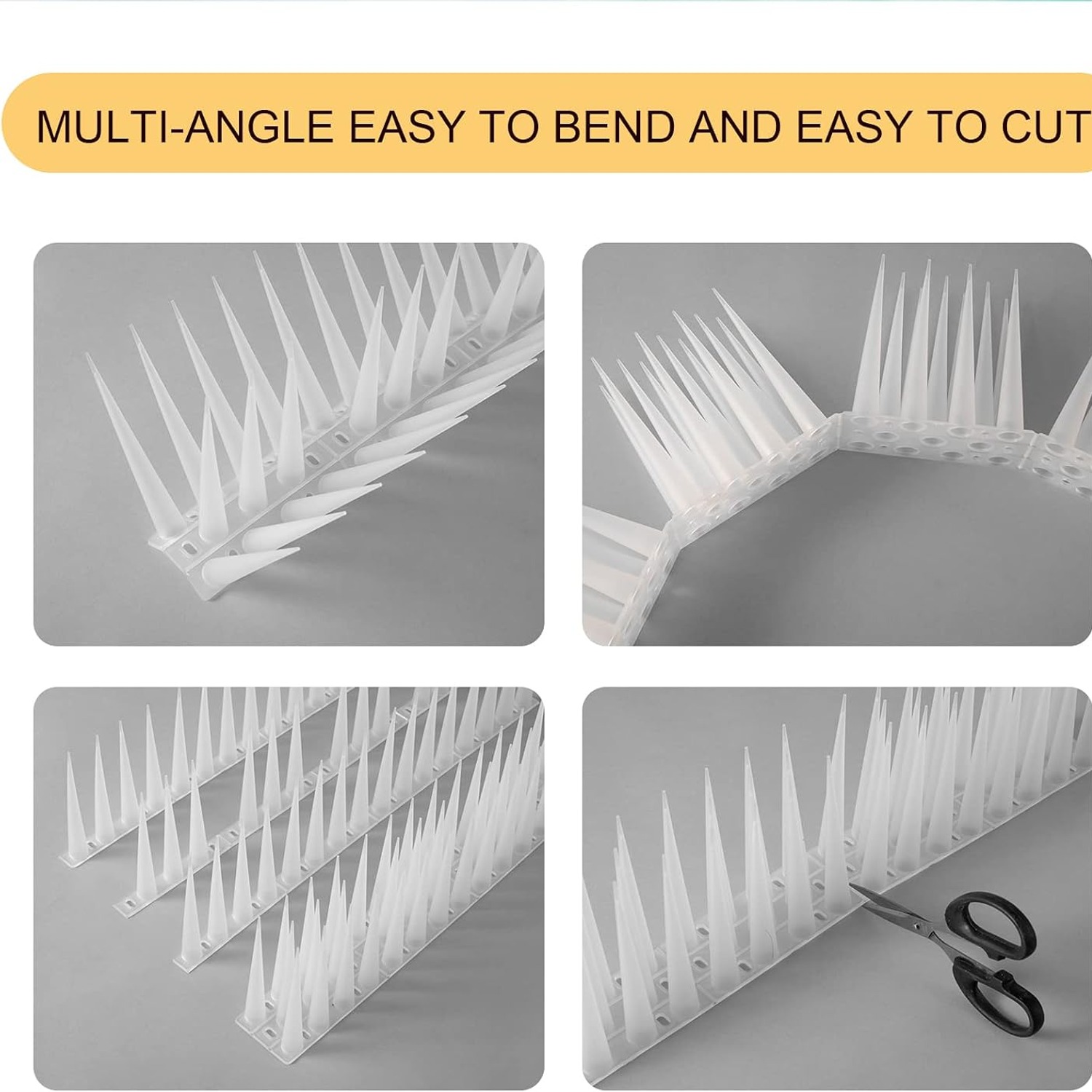
Plastic has two other advantages. It is light, which means adhesive mounting is realistic on surfaces where you do not want to drill. And the base is flexible, so it bends around curves and cuts with snips, which metal strips rarely do without a hacksaw and a filed edge.
Frosted white is also easier to live with visually than bare metal on a domestic frontage. Against render, white PVC or light brick it disappears at any distance.
Who this suits
Homeowners dealing with a sill, porch roof or balcony rail that has become a pigeon stop. Anyone whose gutters keep clogging with nesting material. Shop and cafe owners with a signboard that collects droppings right above the entrance. Landlords sorting out a complaint before it becomes a bigger repair.
It also suits people who want a solution they control. There is no technician visit and no annual service. You buy strips, you fit them on a dry afternoon, and that part of the building stops being a bird hotel.
If your problem is very small birds, think twice. Tall spikes are made for medium and large species. A sparrow can sometimes slip between prongs designed to stop a gull. For small birds, netting or a finer barrier is usually the better call.
Working out how much you need
Get a tape measure out before you order anything. Measure every run you want to protect, including the bits you are tempted to skip because they are awkward. Awkward bits are exactly where the birds will relocate to.
Then check the depth of each surface. Anything up to about 4 inches deep takes a single row. Anything deeper needs two rows or more, so double or triple your length figure for those sections. A wide parapet can eat three times the strip you expected.
This pack contains six strips. Length per strip is not given in this record, so if your run is long, work from the measurements you take on site and order with a bit of margin. Having one strip spare is far less annoying than being 30cm short with the ladder already up.
Fitting them so they stay fitted
Preparation is where most installs are won or lost. Scrape off dried droppings and old nests, wash the surface, and let it dry fully. Adhesive will not stick to grime, and the smell of an old roost actively pulls birds back.
Then pick your fixing. Outdoor adhesive or silicone works well on clean concrete, brick, render and PVC. Screws suit timber fascia and masonry where you want something permanent. Cable ties are ideal on railings, pipes and wire runs, and they come off without a trace, which rental tenants appreciate.
Lay the strips out dry first and check the fit before committing. Cut to length at the gap between spike rows rather than through a prong. Press the whole base down along its length, not just the ends, because a lifted middle section is an invitation.
Leave no gaps. Birds are patient and they will test every inch. A run with a 10cm hole in it is a run with a 10cm perch in it.
Finally, be sensible about access. Ground level and low sills are a straightforward DIY job. Roof edges, tall parapets and anything near power lines are not. Hire someone with proper access gear for those.
Keeping them working
Maintenance is light but not zero. Twice a year, have a look along each run. Clear out leaves, twigs and anything else that has collected between the spikes, because a thick enough layer of debris turns your barrier into a cushion.
Rinse the strips with a hose or wipe the base with mild soapy water when they look grubby. Skip strong solvents on the plastic. Check fixings after any big storm and re-secure anything that has shifted.
That is genuinely it. No batteries, no refills, no callouts.
Give it a couple of weeks
Birds do not read the instructions. A pigeon that has used your ledge for two years will circle it, land nearby, and try again a few times before it accepts the spot is gone. Most people see a clear drop within days and a full handover within two weeks.
If birds are still around after that, look for the gap. There almost always is one. A corner left uncovered, a strip that lifted, or a second ledge two meters away that you did not think counted.
The short version
Bird spikes work by removing the perch, not by harming the bird. Height and full coverage decide whether they work at all, and 4 inch spikes at 2 inch width handle pigeons and larger species that short strips do not. PP plastic will not rust, holds up from -15C to 80C, bends around curves and cuts to size with snips.
Measure your runs properly, clean the surface before you fit anything, fix the base down along its entire length, and leave no gaps. Do that and the ledge stays yours.