American Pest Spikes
Company
Shop By Category
T&Cs
Shop Online
  • Clear materials and product specifications
  • Free tracked USA-wide delivery over $75
  • 14-day returns

Animal deterrent spikes 40 pack | Cat and raccoon deterrent spikes | anti climb fence spikes

Animal Deterrent Spikes 40 Pack

$99.99 $119.99 Save $20
  • Long And Short Points
  • Cut To Fit
  • Weather Resistant Plastic
  • Deterrent, Not A Trap

Price: $99.99 $119.99

  • Free tracked USA-wide delivery on orders $75+, otherwise a flat $9.95
  • Pay by card or PayPal, handled by the payment provider
  • 14 days to change your mind, plus your statutory rights
Product specifications
Pack Size40 strips
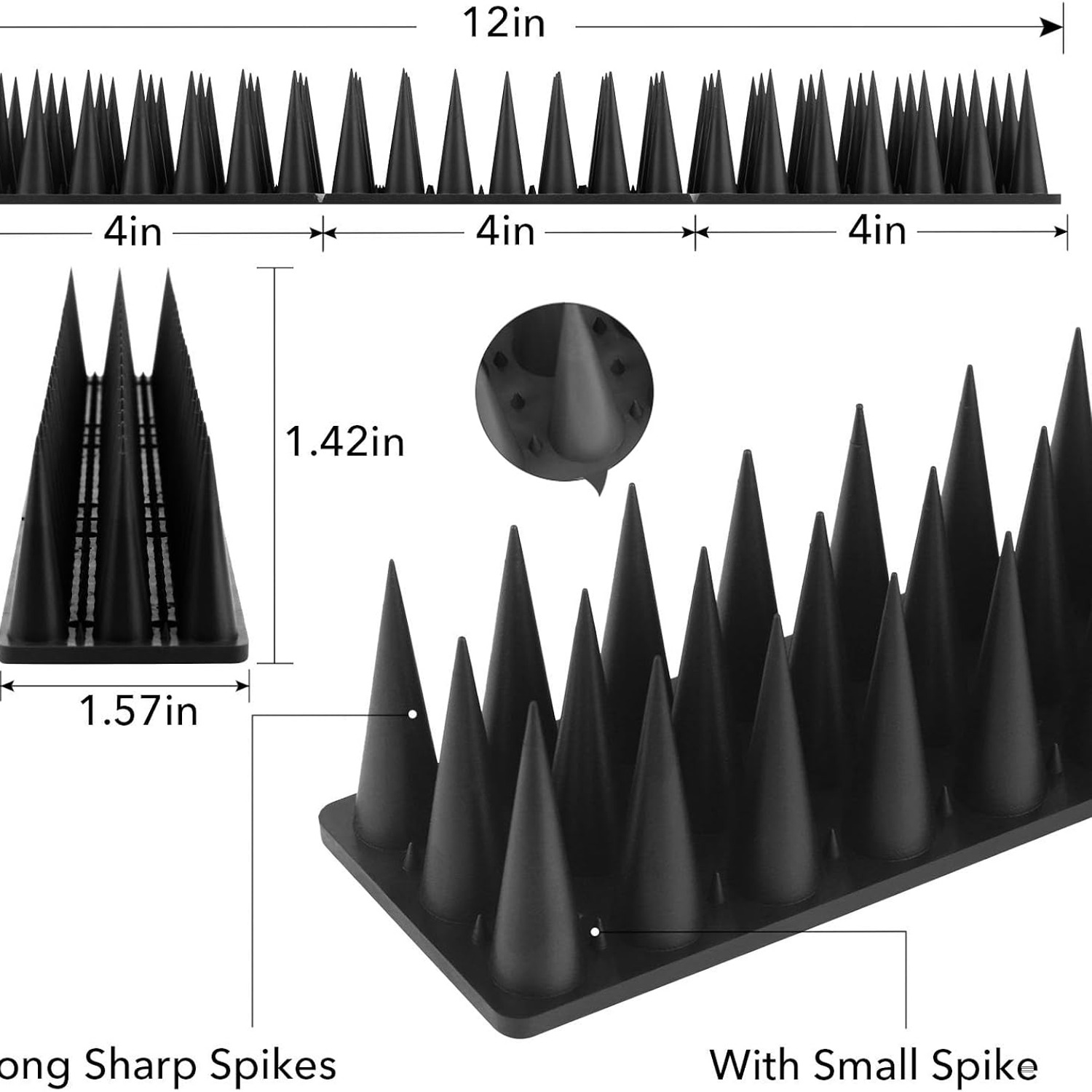
Product Dimensions11.21 x 1.57 x 1.37 in
Item Weight3.4 lb (1.54 kg)
ManufacturerBORHOOD
Spike DesignLong and short points combined
TrimmableYes, cut to required length
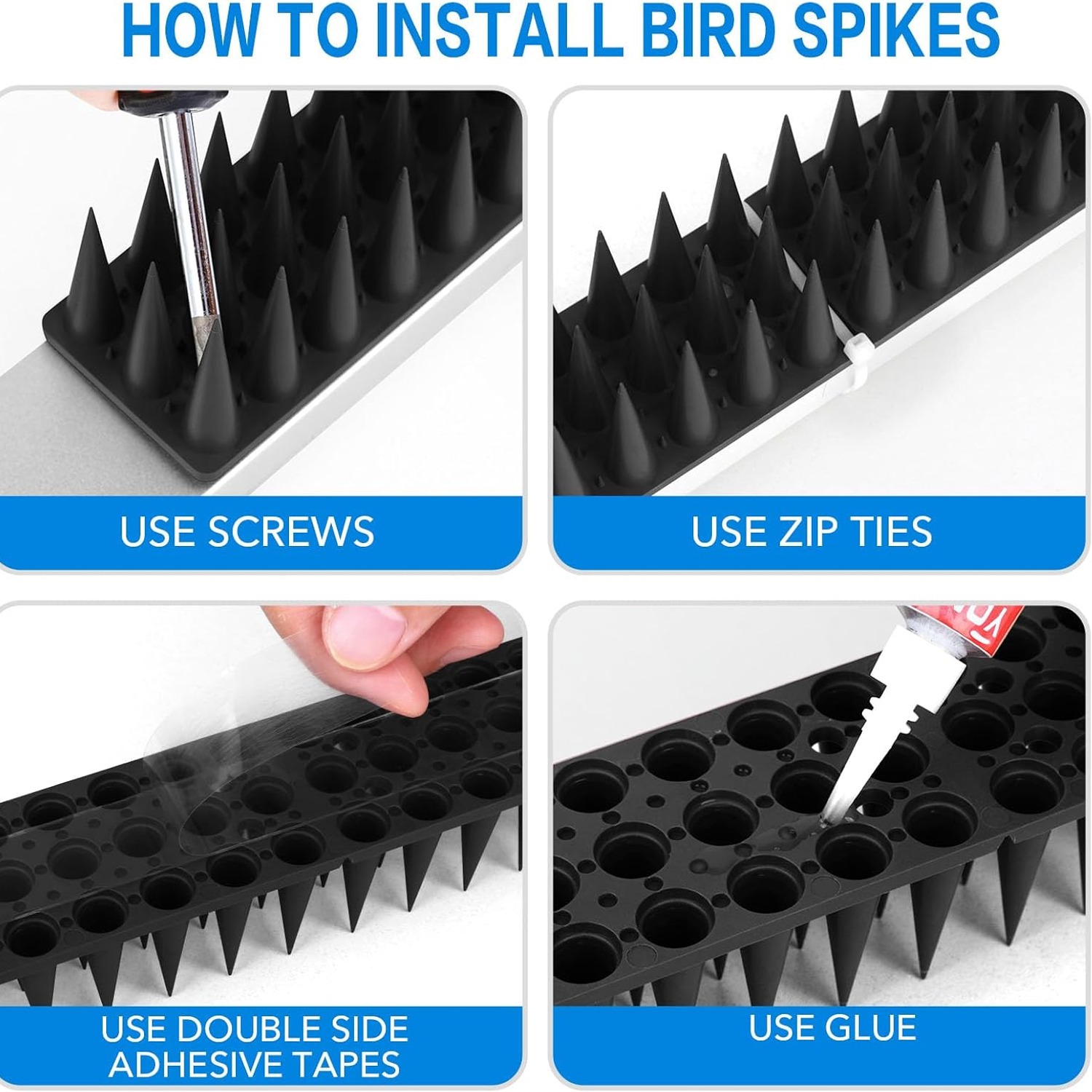
Fixing OptionsScrews, nails, adhesive, double sided tape, cable ties
ConditionNew
Weight1.54 kg
Shipping & returns

Tracked delivery anywhere in the USA. It is free on orders of $75 or more, and a flat $9.95 below that.

If it is not right for you, send it back within 14 days of delivery in resaleable condition and we refund the price you paid, including standard delivery. That is a voluntary policy we offer on top of your legal rights. You cover the cost of returning it unless the item is faulty.

If it arrives faulty, damaged or not as described, we put it right at no cost to you under the consumer protection law of your state and the Federal Trade Commission Act, return postage included.

Shipping details · Refunds and returns

Long And Short PointsMixed point heights make landing and perching awkward from the first visit.
Cut To FitTrim each strip so it follows fences, sills, rails and short gaps neatly.
Weather Resistant PlasticAcrylic plastic that will not rust and holds its shape outdoors.
Deterrent, Not A TrapWorks by discomfort and visual warning, so animals simply move elsewhere.

Take back your fence tops, sheds and sills with animal deterrent spikes that keep climbing visitors moving along.

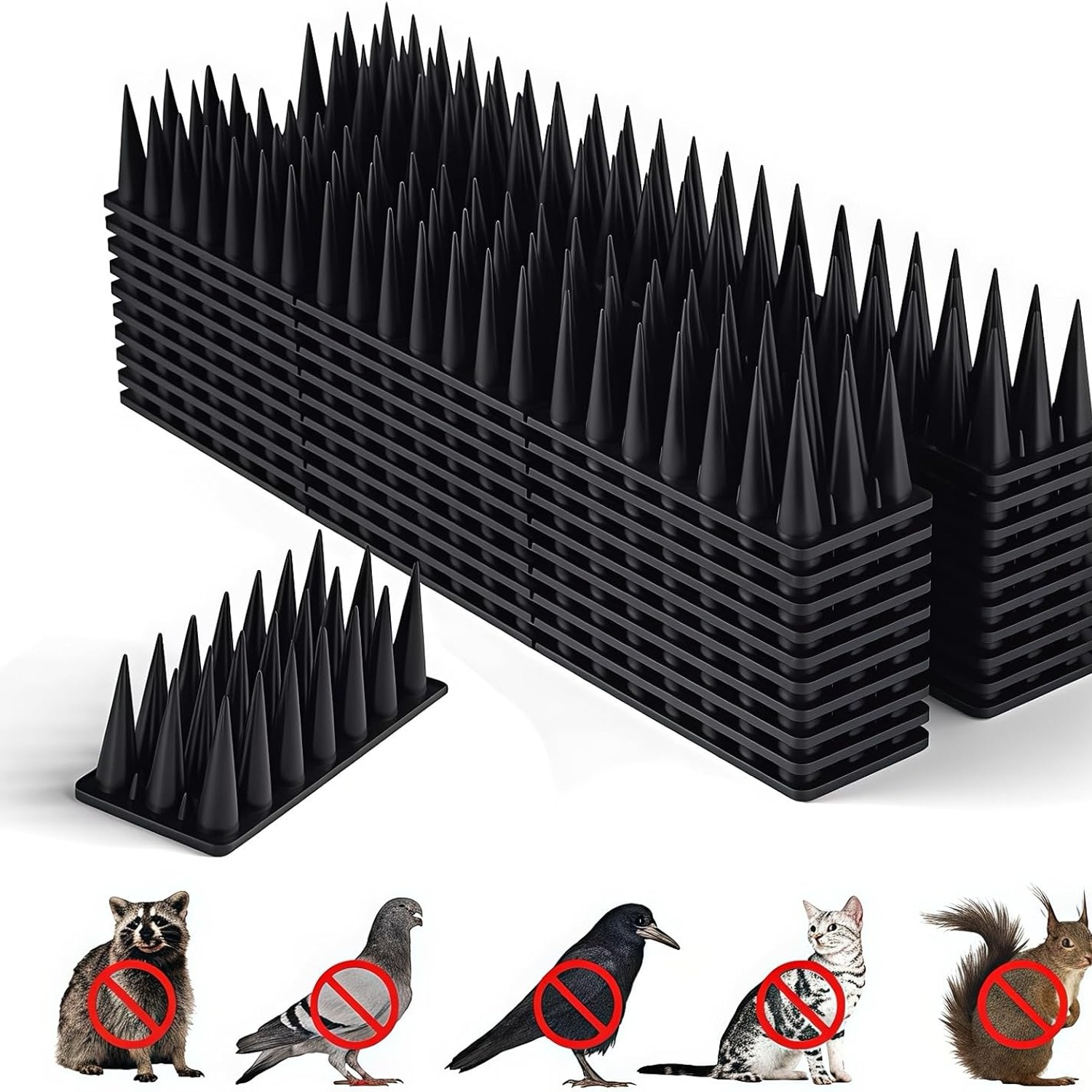
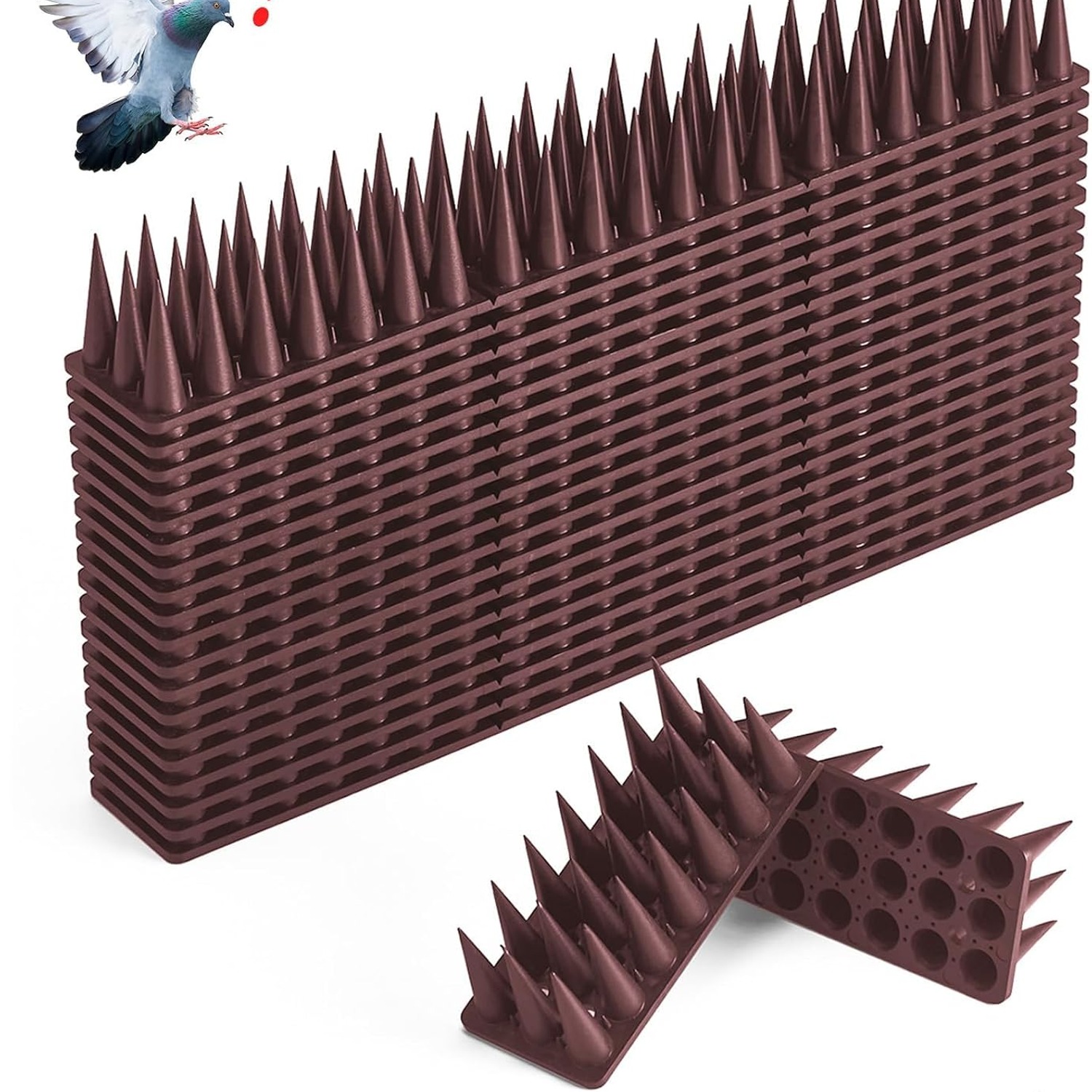
A 40 pack of trimmable acrylic plastic strips with long and short points that make landing and perching uncomfortable, without harming the animal.

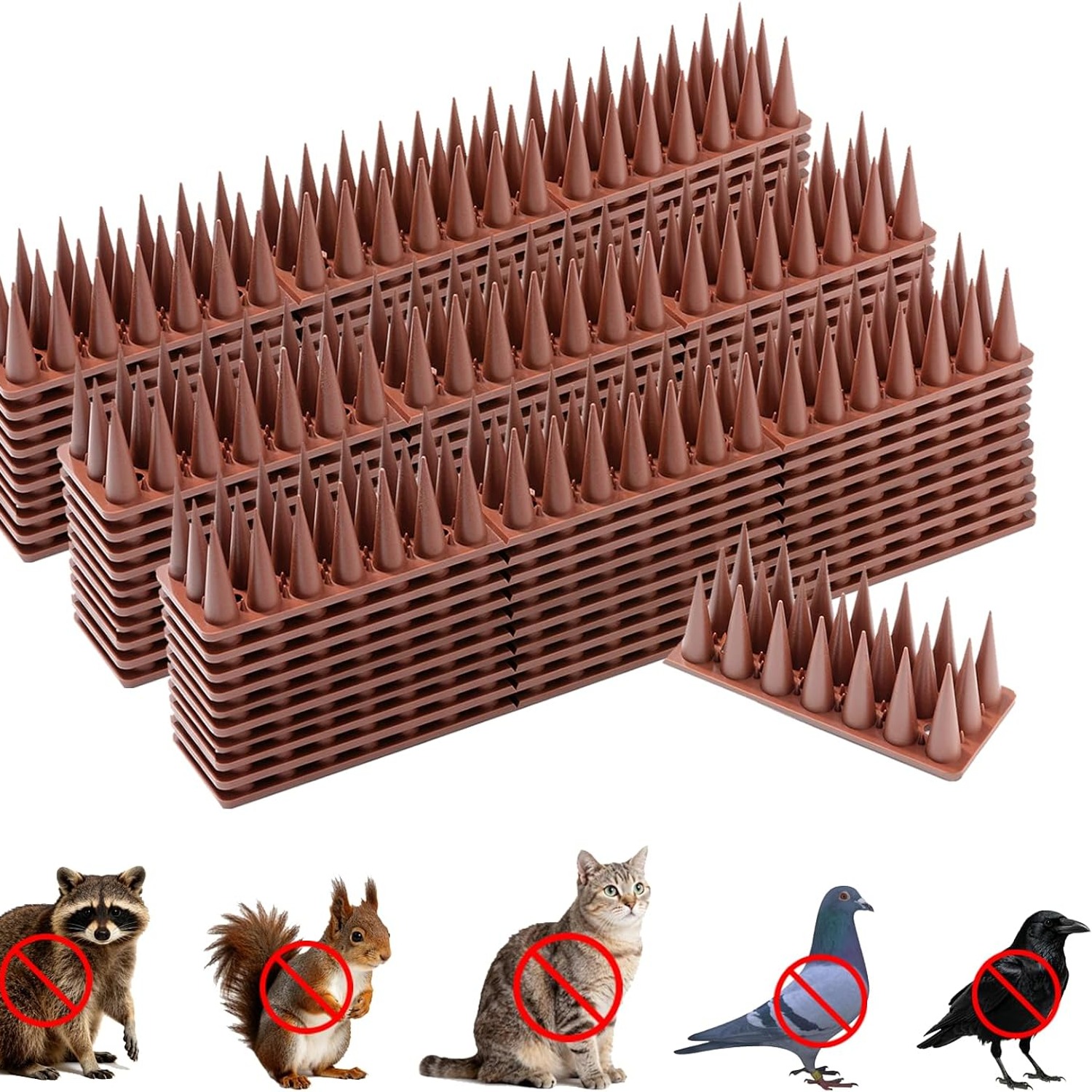
A 40 pack of deterrent spike strips gives you enough coverage for a long fence line, a shed roof edge or several window ledges in one go.

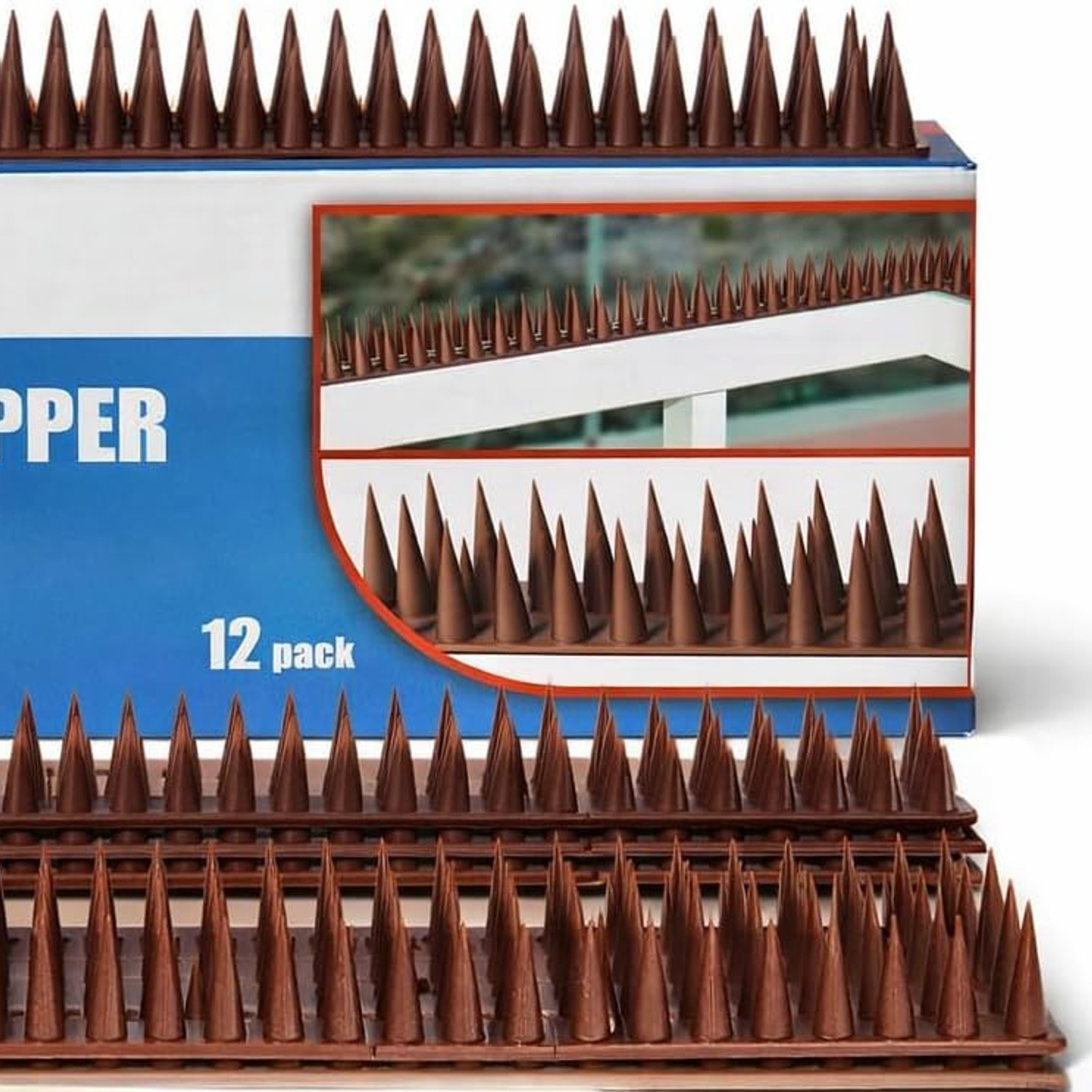
Each strip combines taller points with shorter ones, so birds and climbing animals cannot find a flat, comfortable spot to settle.

The strips are made from acrylic plastic that does not rust and holds its shape through sun, rain and frost.

You can cut any strip down to the exact length you need, which makes awkward corners, narrow rails and short runs easy to cover.

Fixing is flexible, using screws, nails, outdoor adhesive, double sided tape or cable ties depending on the surface.

Animal Deterrent Spikes 40 Pack

Most people buy spikes after the same sort of week. The cat next door has started using your fence rail as a walkway and your flower bed as a toilet. Pigeons have claimed the shed roof. A raccoon has worked out that the top of the side gate is the easiest route into the yard. Animal deterrent spikes fix the simplest part of that problem, which is the flat surface they all rely on. Take the landing strip away and most of them pick a different route within a few days.

Animal Deterrent Spikes 40 Pack

This set gives you 40 strips, which is a genuine amount of coverage rather than a token few. Each strip measures about 11.21 inches long and carries a mix of taller and shorter points. That mix matters. Tall points alone can sometimes be stepped between, while short points alone are easy to stand on. Together they make the whole surface feel unreliable underfoot, and that is what sends an animal looking somewhere else.

Animal Deterrent Spikes 40 Pack

The strips are made from acrylic plastic, so there is nothing to rust and nothing to stain a painted fence or a brick parapet. Plastic also stays light, which helps when you are fixing to a thin rail, a vinyl gutter edge or a timber capping board that will not take heavy hardware. The strips hold their shape in sun and rain rather than sagging into a flat mat.

Animal Deterrent Spikes 40 Pack

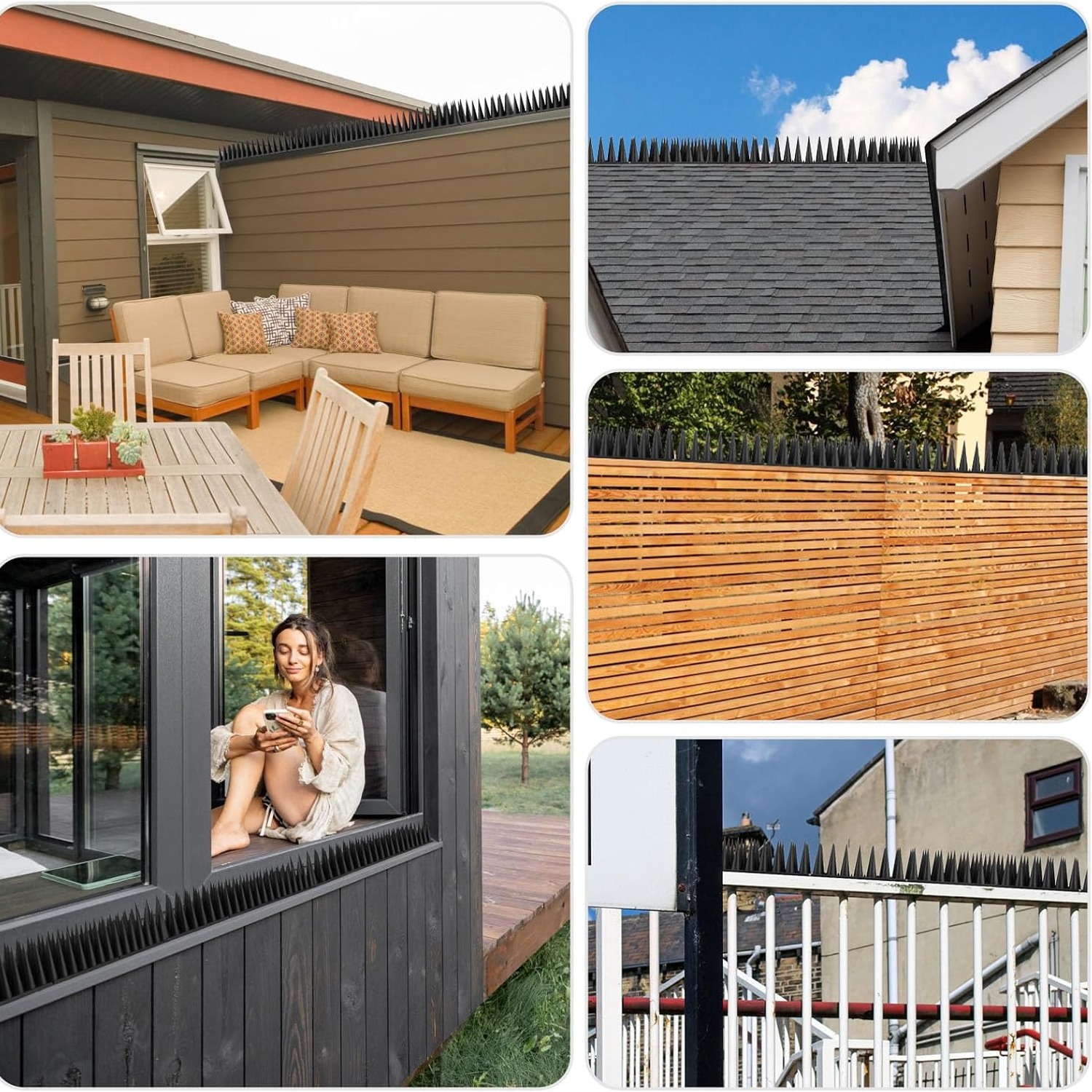
Cutting is part of the design. Real fences are never a neat multiple of one strip length, so you trim the last piece with snips or a sharp knife and keep the run continuous. The same trick covers short runs like a window sill, a meter box lid, an air conditioner housing, a porch beam or the narrow top of a gate post. Gaps are the usual reason spikes underperform, and being able to cut removes most of them.

Animal Deterrent Spikes 40 Pack

Fixing is up to you and the surface. Screws or nails are the most permanent answer on timber. Outdoor adhesive or strong double sided tape suits smooth masonry, metal and render where you would rather not drill. Cable ties are ideal for mesh fencing, railings and pipe runs. Whatever you choose, clean and dry the surface first, because that one step accounts for most long term holding power.

Not sure yet? That is fine.

A spike strip has to fit the ledge, and you cannot always judge the base width or the run from a photograph. If it is not right for you, send it back within 14 days of delivery in resaleable condition and we refund the price you paid, including standard delivery. That is a voluntary policy we offer on top of your legal rights.

If it turns up faulty, damaged or not as described, that is on us. The consumer protection law of your state covers you, and we pay the return postage. Read the full detail on our refunds and returns page, or ask us anything before you order.

Frequently Asked Questions

What exactly is in the 40 pack?

You get 40 individual spike strips, each around 11.21 inches long. Laid end to end that is roughly 37 feet of coverage. It is enough for a long fence top, a shed perimeter or several smaller ledges and sills.

How do animal deterrent spikes actually work?

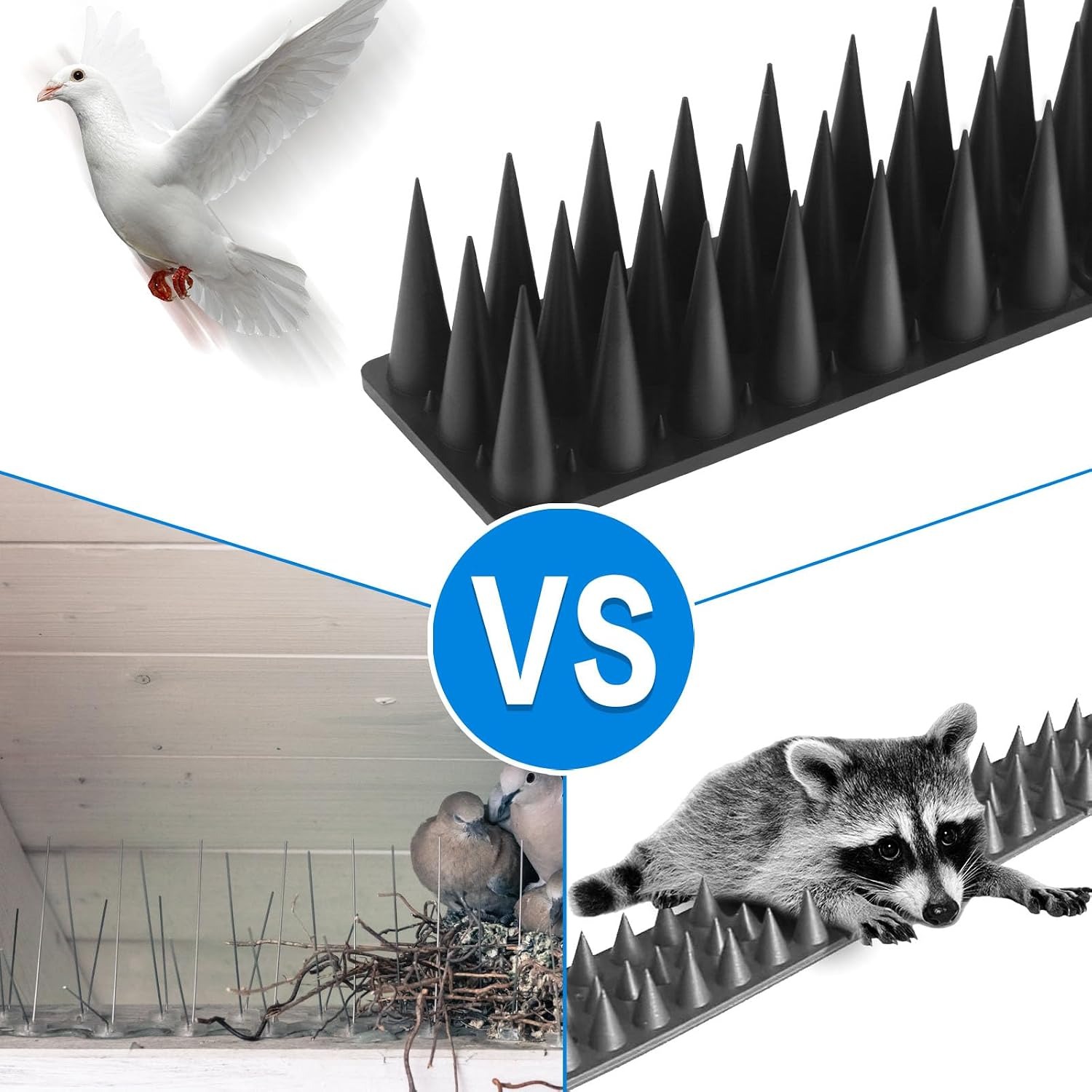
They remove the flat landing and walking surface that birds and climbing animals rely on. The uneven points make a perch feel unstable and uncomfortable, so the animal chooses an easier spot. There is no shock, poison or trap involved.

Will these hurt the animals?

They are designed as a discomfort and visual deterrent rather than a weapon. Animals normally test the surface, dislike it and move on. As with any spike product, supervise pets near newly fitted areas until you know how they respond.

Are these among the best cat deterrent spikes for fences?

Fence tops are one of the most common uses for them. Cats need a reliable flat rail to balance on, and a continuous run of spikes takes that away. The key is covering the whole rail rather than leaving step-over gaps.

Do they work on raccoons?

Raccoons often climb a fence or gate post and then walk the top rail. Spikes on that rail make the route unpleasant and usually push them toward a different path. Pair them with removing food sources for the best result.

What about possums and squirrels?

Both use narrow ledges, rails and beams as highways. Strips along those routes interrupt the run and make the trip awkward. They are a route blocker, not a whole-yard solution.

Will they stop pigeons and other birds?

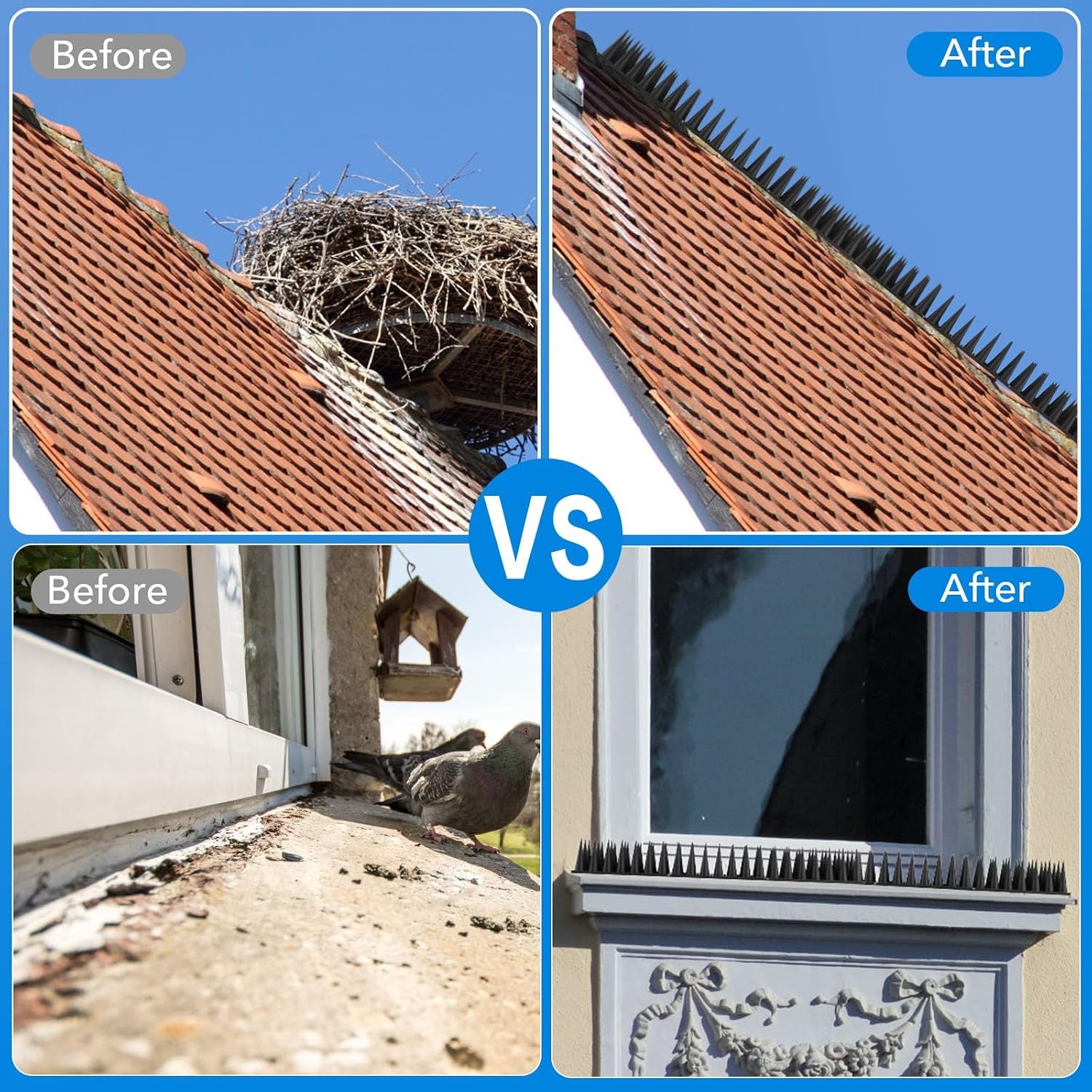
Yes, ledges, parapets, sills and gutter edges are classic pigeon landing spots. A full-width run of spikes stops them from settling there. Remember that birds will look for the nearest uncovered ledge, so plan coverage across the whole area.

Can I cut the strips shorter?

Yes, each strip is made to be cut to the size you need. Use heavy duty snips or a sharp utility knife on a stable surface. Cutting lets you follow short rails, corners and odd gaps neatly.

What are they made of?

Acrylic plastic, which does not rust and resists deforming outdoors. The exact color and finish are not specified in this record. Plastic keeps the strips light, which helps on thin rails and delicate surfaces.

How are they fixed in place?

You can use screws or nails on timber, outdoor adhesive or strong double sided tape on smooth surfaces, and cable ties on mesh, railings or pipes. The best choice depends on the surface and whether you want a permanent fit. Clean the surface first in every case.

Do I need any tools?

It depends on your fixing method. Tape or adhesive needs little more than a cloth and a cleaning solution. Screws need a drill or screwdriver, and cutting needs snips or a knife.

Can I install these myself?

Most people do. The job is mainly measuring, cutting and fixing a straight line along an edge. Allow an afternoon for a long fence run and work at a comfortable height.

How high up should they go?

Put them on whatever surface the animal actually uses, which is usually the top rail, the ledge or the roof edge. Height above ground matters less than covering the right line. Avoid working on ladders at heights you are not confident with.

Will they damage my fence?

Tape and adhesive leave the surface intact, though they can mark paint when removed. Screws and nails make small holes, as any fixing does. On painted timber, test your chosen method in a hidden spot first.

Can I use them on a roof edge?

Roof edges, parapets and gutter lips are common fitting points. Choose a fixing suited to the material and avoid anything that would block water flow. If the roof is high or steep, get someone experienced to do it.

Will they survive winter?

Acrylic plastic does not rust and is made to work outdoors through heat and cold. Snow and ice can sit on any spike product, so clear heavy build-up if you want them working through the worst weather. Check fixings after storms.

Do they need cleaning?

An occasional rinse with a hose or a wipe with a damp cloth is usually enough. Leaves, dust and droppings can build up between the points over a season. A soft brush with mild soapy water handles anything stubborn.

Can I paint them to match my fence?

Some people do use exterior plastic paint to blend them in. Test on one strip first and let it cure fully before fitting. Avoid thick coats that fill the space between points.

Are these the best anti climb fence spikes for a side gate?

Gates and gate posts are high value spots because they are the usual entry point. Cover the full width of the top, including the post caps, so there is no step-over gap. Cut a strip to fit the post exactly.

How many strips do I need for my fence?

Measure the run you want to cover in inches and divide by about 11. Add a strip or two for corners and offcuts. Covering a complete run works far better than spacing strips out.

Can I space the strips apart to save money?

You can, but it usually weakens the result. Animals quickly learn to step into the gaps, especially cats. Continuous coverage is the main reason some installs work and others do not.

Will spikes stop animals getting into my garden altogether?

They block specific routes, which is often enough. If an animal has several ways in, you may need to cover more than one line or combine spikes with other steps such as securing bins. Think of them as one part of a plan.

Do they work on smooth brick walls?

Yes, wall tops are a common fitting spot and adhesive or masonry screws both work. Make sure the top surface is clean and dry before fixing. Cut strips to follow the wall width.

Are they suitable for balconies?

Balcony rails and ledges are a frequent problem area for perching birds. The strips cut down to fit narrow rails easily. Check your building or strata rules before fitting anything to a shared structure.

What is the weight of the pack?

The listed item weight is 3.4 pounds, which is about 1.54 kg for the whole 40 pack. Individual strips are very light. That low weight is part of why they suit thin rails and light panels.

Is there a warranty?

No warranty terms are stated in this product record. If a strip arrives damaged, contact us and we will sort it out. Keep your order details handy when you get in touch.

How long does delivery take?

Delivery times depend on your country storefront and address, and the estimate is shown at checkout. You will get tracking details once the order ships. Remote areas can take a little longer.

Do these make a good gift?

They are a practical gift for a gardener, a new homeowner or anyone dealing with pigeons on the shed. Pair them with a roll of outdoor tape or a pack of cable ties and you have a complete kit. The pack size makes it feel generous rather than token.

Can I return them if I ordered too many?

Unused strips in their original condition can be returned under our standard returns policy. Start by contacting us with your order number. We will confirm the steps for your country.

What if they are not right for my situation?

Get in touch and tell us the surface and the animal you are dealing with, because the fix is often a different fixing method or better coverage rather than a different product. If it still is not the right answer, our returns policy applies to unused items in their original condition. We would rather help you get it working than have the pack sit in a shed.

Animal Deterrent Spikes, A Practical Buyer's Guide

6 min read American Pest Spikes

The problem these solve

There is a moment most people recognize. You look out the window and the same cat is strolling along your fence rail like it owns the place. Or the shed roof has turned gray with pigeon mess. Or you find a bin lid flipped off again and muddy prints on the gate post.

The frustrating part is that none of it is random. Animals take the easiest route available. A fence rail, a window sill, a parapet, a beam over the porch, all of these are flat, stable and quiet. They are roads and they are resting spots. Remove the flat surface and the route stops being easy.

That is the whole idea behind animal deterrent spikes. They are not a trap and they are not a punishment. They are a way of saying the surface is no longer comfortable, and most animals accept that answer and go somewhere else.

How spike strips work

Look closely at a strip and you will see the points are not all the same height. There is a mix of long and short. That combination is deliberate.

Tall points on their own can be stepped between by a careful animal, especially a cat, which is better at balancing than almost anything else in your garden. Short points on their own can simply be stood on if the animal is determined and the pads are tough. Mixing them means there is nowhere flat and nothing predictable. A bird coming in to land feels the surface shift and aborts. A cat testing the rail with one paw does not like the feedback and backs off.

The second part of the effect is visual. Animals read a bristling surface as risk before they even touch it. Many never make contact at all. Over a week or two the route simply drops out of their habit.

Where to put them

The honest answer is wherever the animal actually goes, not where you think it should go. Spend a day watching, or look for the clues. Smudged paint, worn moss, droppings in a line, scratch marks on a post cap. Animals are creatures of routine and they leave evidence.

Common spots include fence top rails, gate tops and gate post caps, garden wall tops, shed and garage roof edges, window sills, air conditioner housings, meter boxes, pergola beams, railing tops and the flat lip of a gutter run. Pigeons especially love anything with a view and a bit of shelter above it.

With 40 strips you have a serious amount of coverage. End to end that is around 37 feet. Most people split it between one long run, usually a fence or a roof edge, and several short patches on sills, posts and boxes.

Getting the coverage right

This is where installs succeed or fail, so it is worth being blunt about it.

Gaps ruin spikes. If you leave a 6 inch bare section in the middle of a rail, a cat will find it within three days and step across. Birds are the same with ledges, they will land in the one uncovered patch and carry on as before. Spacing strips out to make the pack stretch further feels economical and almost always disappoints.

Cover the full width too. On a fence capping board that is wider than a single strip, you may need two rows side by side, otherwise an animal simply walks the uncovered half. The same applies to wide wall tops and chunky post caps.

Cutting is your friend here. Each strip is made to be divided, so you trim the last piece of a run to length rather than leaving a stub uncovered. Snips work well, and a sharp utility knife on a stable surface does the job too. Work slowly and keep your fingers behind the blade.

Choosing your fixing method

There is no single right answer. It depends on what you are fixing to and whether you want it permanent.

Screws or nails are the strongest option on timber fences, posts, beams and sheds. They take the longest to fit and they leave holes, but they will not move in a storm and they do not care about temperature. If you are fitting to a fence you own and expect to keep for years, this is the sensible route.

Outdoor adhesive or strong double sided tape suits smooth masonry, render, metal and plastic surfaces where drilling is a bad idea, such as a rental property, a clean rendered wall or a sealed parapet. The catch is preparation. Tape sticks to clean, dry, dust free surfaces and nothing else. Wash the surface, let it dry completely, and fit on a mild day rather than in heavy sun or freezing cold.

Cable ties are the quiet hero for mesh fencing, railings, pipes and anything round. They are fast, they are reversible and they hold surprisingly well. Choose UV stable ties if you can, since cheap indoor ties go brittle after a season outdoors, and trim the tails so they do not flap.

Materials and weather

These strips are acrylic plastic. The practical benefit is that there is no rust, which matters if you are fitting near a painted fence, light render or anything where a rust streak would be obvious. Metal spikes can stain, plastic ones do not.

Plastic also keeps the weight down. The whole 40 pack is listed at 3.4 pounds, which is around 1.54 kg, so individual strips are almost nothing. That is useful on a thin top rail, a vinyl gutter edge or a lightweight panel that would not take heavier hardware.

Outdoors, plastic handles sun, rain and frost without deforming. What it does not do is shrug off a build-up of wet leaves or snow sitting between the points. Clearing that occasionally keeps the deterrent effect honest.

Living with them

Maintenance is light. Once or twice a year, hose the strips down or wipe them with a damp cloth. If there is sticky residue or droppings, mild soapy water and a soft brush will shift it. Skip solvents and scouring pads, which can dull the plastic over time.

The other job is checking fixings. After a big storm, run your eye along the line and give a few strips a gentle push. Tape can lift at the edges, cable ties can loosen, screws can back out of weathered timber. Two minutes of checking saves a whole section peeling off in the next bout of wind.

If you have pets, watch them around newly fitted areas for the first week. A cat that has used your own fence for years may need a little time to pick a new route, and you may want to give it an easier alternative, such as a clear post or a bit of uncovered wall away from your beds.

When spikes are not enough on their own

Be realistic about what a spike strip does. It blocks a surface. It does not remove the reason the animal came.

If bins are easy to open, raccoons will keep trying. If there is pet food left outside, cats will keep visiting. If a tree branch overhangs the roof, birds have a different runway. Spikes work best as one part of a simple plan. Secure the food, trim the obvious bridge, then take away the comfortable perch. Done together, that combination usually settles things within a couple of weeks.

The short version

You get 40 trimmable acrylic strips, each about 11.21 inches long, with a mix of long and short points. They stop birds and climbing animals from using flat surfaces as landing pads and walkways.

Cover the whole run with no gaps, cover the full width where the surface is wide, and pick a fixing that matches the material. Screws for timber, adhesive or tape for smooth clean surfaces, cable ties for mesh and railings.

Rinse them now and then, check the fixings after storms, and deal with any food source that is drawing animals in. Do that and a fence rail that was a highway last month quietly stops being one.

Browse the shop

Not sure how many strips you need?

Measure the run in inches, divide by about eleven, then add a couple of strips for corners and offcuts.

Ask us a question

Page summary

The Animal Deterrent Spikes 40 Pack by BORHOOD is a set of 40 acrylic plastic spike strips used to stop birds and climbing animals from landing, perching or walking along fences, ledges, roof edges, rails and sheds. Each strip measures about 11.21 by 1.57 by 1.37 inches and combines longer and shorter points so flat surfaces become uncomfortable to settle on. Strips can be cut to length for short runs and awkward corners. They attach with screws, nails, outdoor adhesive, double sided tape or cable ties. Total pack weight is listed as 3.4 pounds (1.54 kg). Color, material finish and country of origin are not specified in this record.