American Pest Spikes
Company
Shop By Category
T&Cs
Shop Online
  • Clear materials and product specifications
  • Free tracked USA-wide delivery over $75
  • 14-day returns

Cat scat mat 10 pack | Cat deterrent mat with spikes | scat mat for garden and furniture

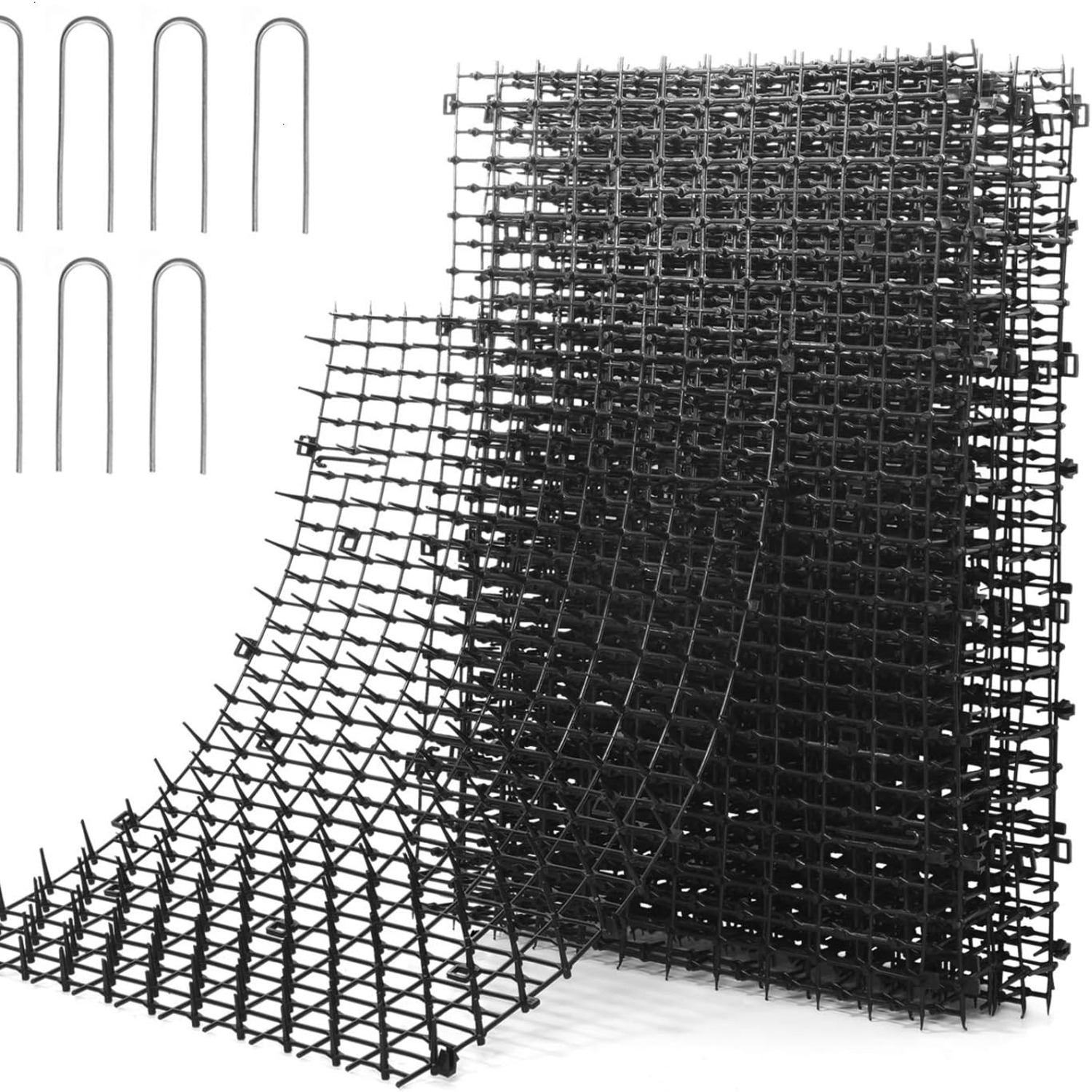
Cat Scat Mat 10 Pack with Flexible Plastic Spikes

$43.99 $52.99 Save $9
  • Ten Mats Included
  • Flexible Plastic Spikes
  • Cut To Fit
  • Splice Together

Price: $43.99 $52.99

  • Free tracked USA-wide delivery on orders $75+, otherwise a flat $9.95
  • Pay by card or PayPal, handled by the payment provider
  • 14 days to change your mind, plus your statutory rights
Product specifications
BrandPOMEAT
ColorBlack (10 piece scat mat set)
StyleGarden
MaterialPlastic
Product Dimensions6 in L x 6 in W x 8 in H (packed)
Item Weight1.9 lb (0.86 kg)
Number Of Pieces10
Unit Count10 count
Target SpeciesCat
UPC739750150221
Weight0.86 kg
Shipping & returns

Tracked delivery anywhere in the USA. It is free on orders of $75 or more, and a flat $9.95 below that.

If it is not right for you, send it back within 14 days of delivery in resaleable condition and we refund the price you paid, including standard delivery. That is a voluntary policy we offer on top of your legal rights. You cover the cost of returning it unless the item is faulty.

If it arrives faulty, damaged or not as described, we put it right at no cost to you under the consumer protection law of your state and the Federal Trade Commission Act, return postage included.

Shipping details · Refunds and returns

Ten Mats IncludedEnough coverage for a bed, a few pots and an indoor trouble spot.
Flexible Plastic SpikesUncomfortable to stand on, not sharp enough to pierce skin or pads.
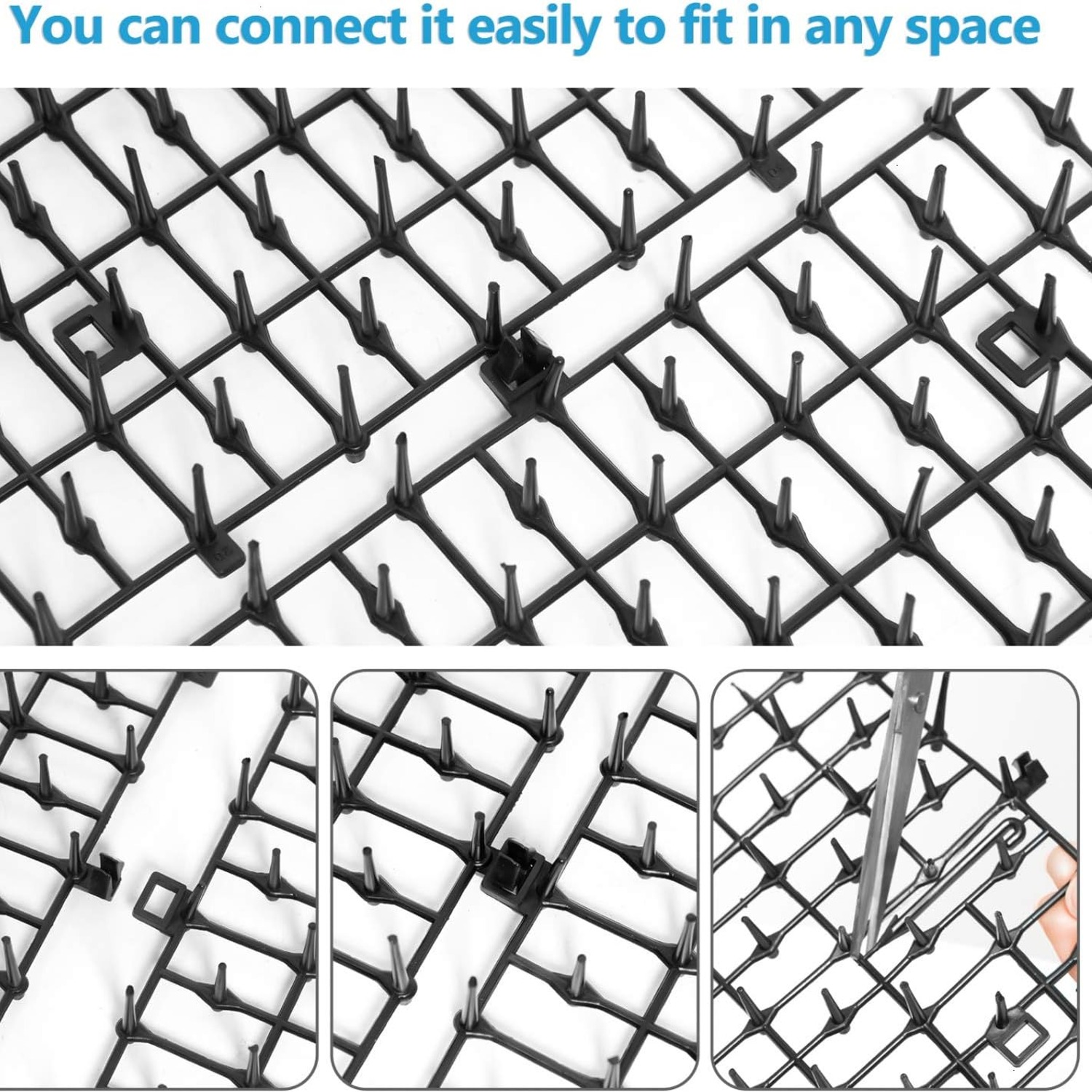
Cut To FitTrim mats into strips or shapes with household scissors.
Splice TogetherEdge interfaces let you join mats into one longer run.

Keep paws out of your flower beds and off your sofa with a cat scat mat 10 pack that works without hurting a single animal.

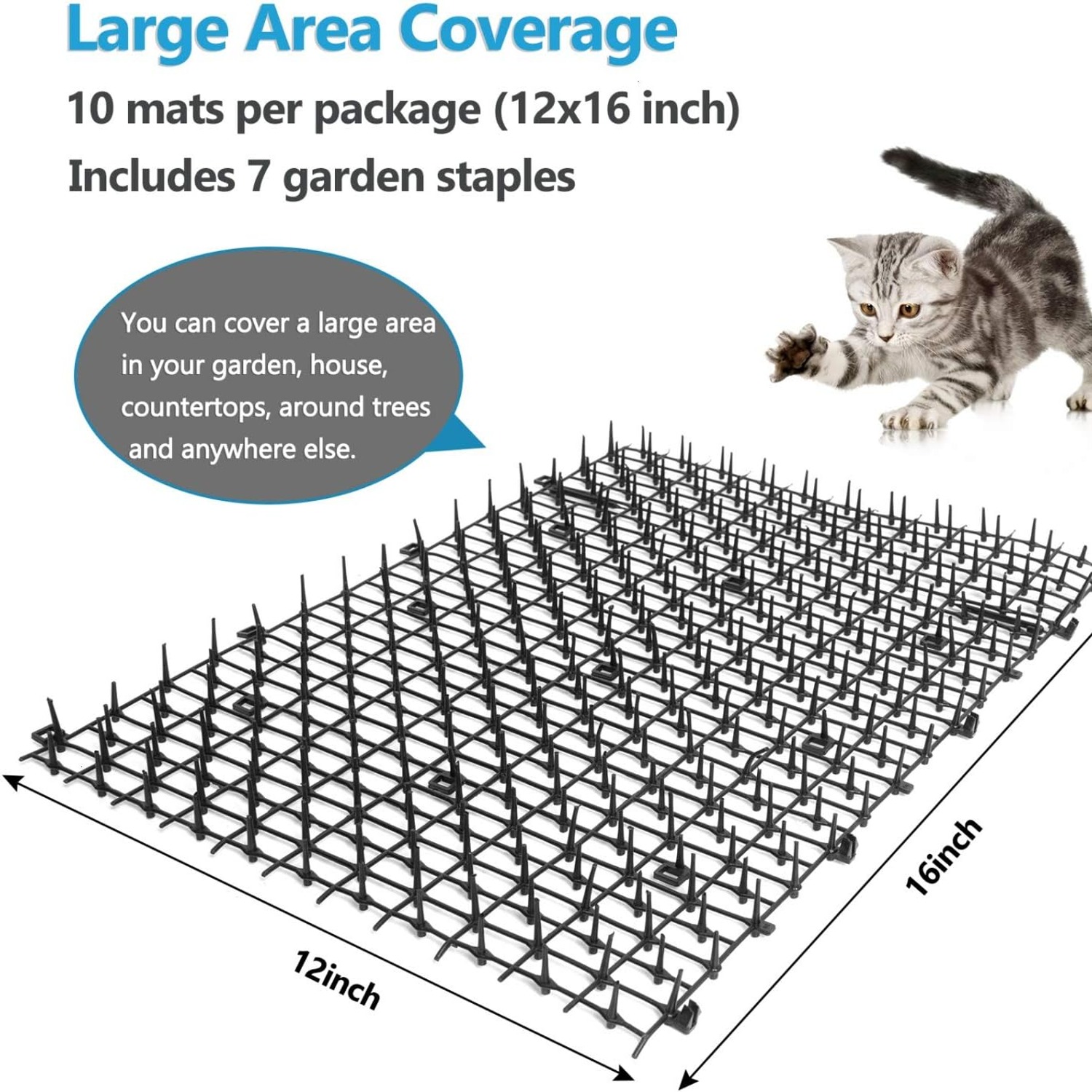
Ten flexible spiked plastic mats you can cut, clip and splice together, each sized to cover garden soil, pots, countertops, car seats or furniture.

This cat scat mat 10 pack gives you ten spiked plastic panels to lay over soil, mulch, furniture or any spot a pet keeps returning to.

The spikes are flexible plastic, so an animal feels an odd, unpleasant surface underfoot and simply walks elsewhere instead of being hurt.

Each mat can be cut with scissors into strips, squares or narrow runners so it fits around stems, pot rims, cushions and shelf edges.

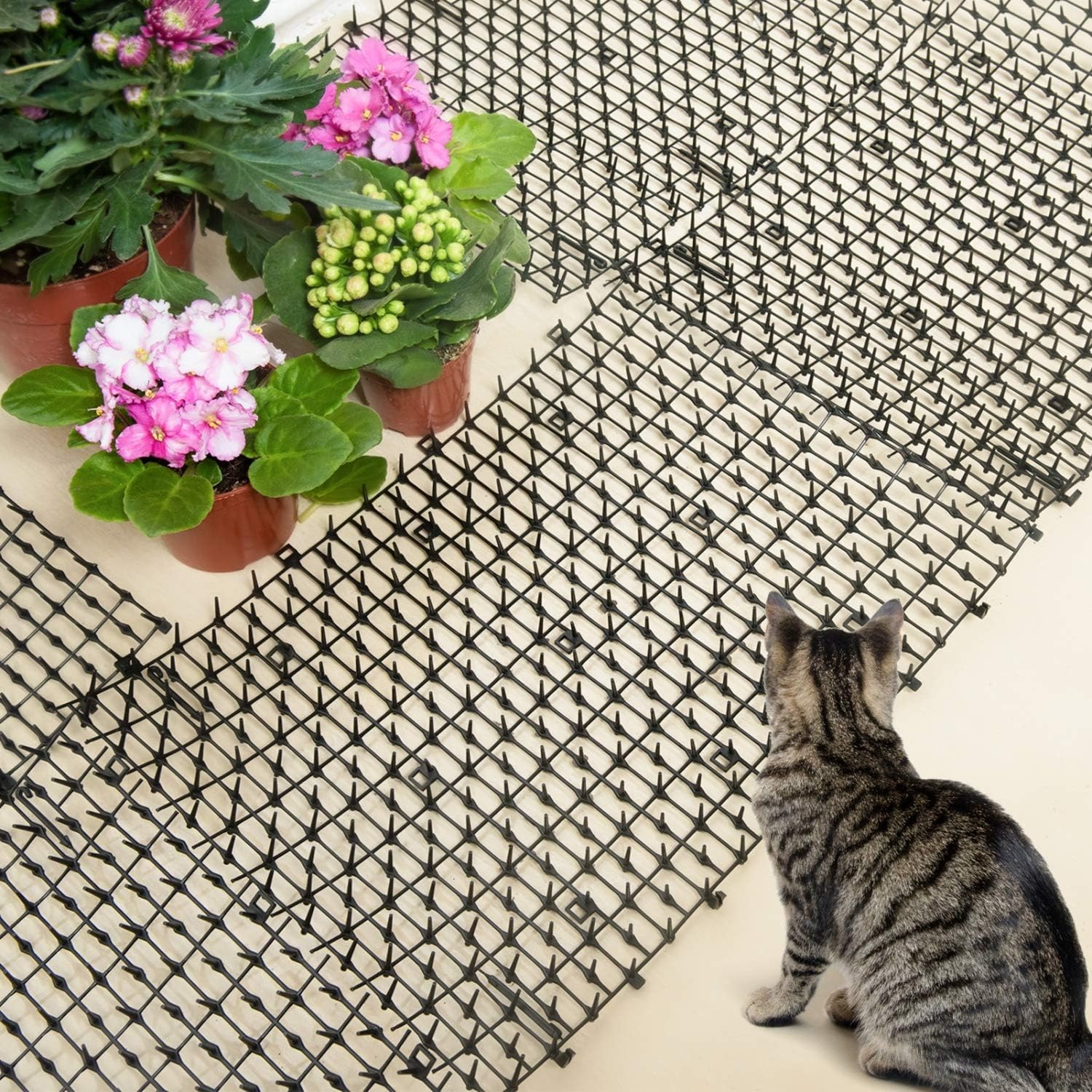
Top, bottom and side interfaces let you splice panels together into a continuous barrier across a wider bed or a long window ledge.

Lightweight and flexible, the mats sit flat on almost any surface and can be moved to a new problem area whenever the habit shifts.

Cat Scat Mat 10 Pack with Flexible Plastic Spikes

Most cat problems are habit problems. A cat finds one soft patch of soil, one warm windowsill or one favorite armrest, and it goes back to the same place every day. Shouting and shooing only work while you are standing there. A physical surface the animal dislikes works all day and all night, which is why spiked plastic mats have been a standard garden answer for years. This pack gives you ten of them, which is usually enough to cover the one or two places that cause most of the trouble.

Cat Scat Mat 10 Pack with Flexible Plastic Spikes

The way these mats work is simple. Lay a panel over the soil, mulch, cushion or ledge you want protected, spikes facing up. A cat steps on, feels a surface that is knobbly and unstable rather than soft and welcoming, and backs off. The spikes are flexible plastic, not metal, so the aim is discomfort and surprise rather than pain. Nothing punctures a paw pad. After a week or two of the same result, most animals stop even checking that spot.

Cat Scat Mat 10 Pack with Flexible Plastic Spikes

Cutting is where the pack earns its keep. The plastic is thin enough to trim with ordinary household scissors, so you can slice a mat into four narrow strips to edge a vegetable row, cut a notch to fit around a tomato stem, or make a small square that sits neatly inside a pot. The top, bottom and side edges have interfaces, which means panels clip or splice together when you need one long continuous run rather than a scatter of separate pieces.

Cat Scat Mat 10 Pack with Flexible Plastic Spikes

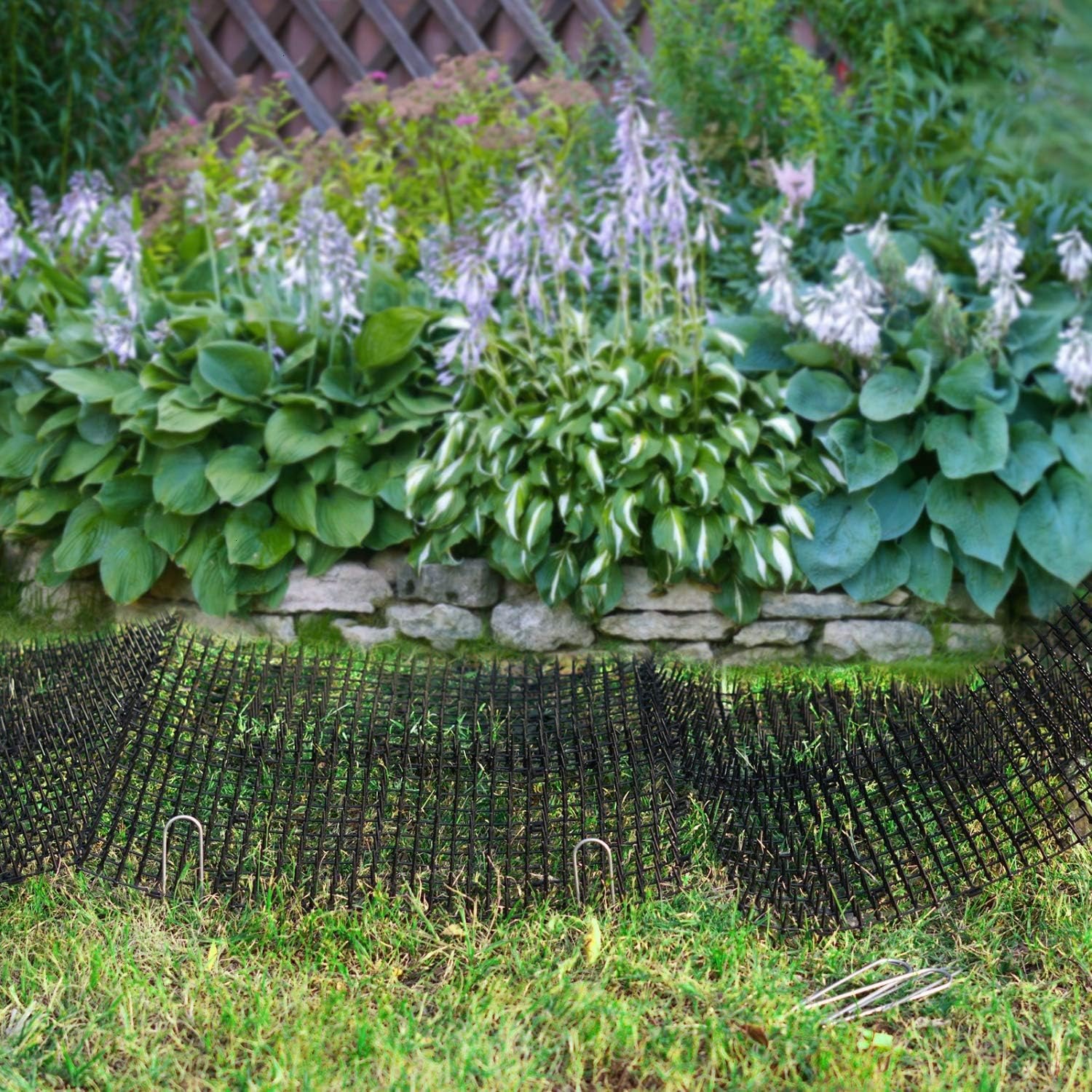
Outdoors, the usual jobs are seedbeds, freshly turned borders, raised beds, gravel paths that neighbourhood cats treat as a toilet, and large pots. Indoors, people use the same mats on sofa cushions, countertops, the top of a bookcase, inside a car footwell, or in front of a door a dog scratches. Because the mats are lightweight and flat, moving them from the garden to the living room and back takes a minute. Fixing staples and small curved hooks are included for anchoring edges in soil or along a mat seam.

Cat Scat Mat 10 Pack with Flexible Plastic Spikes

Expect this to be a training tool rather than a permanent fixture. Once the habit breaks, most people pull the mats up and keep a few in the shed for the next time a cat discovers the newly planted bed. Keeping them clean is easy. A hose or a damp cloth clears soil and leaf litter, and the panels stack flat for storage.

Not sure yet? That is fine.

A spike strip has to fit the ledge, and you cannot always judge the base width or the run from a photograph. If it is not right for you, send it back within 14 days of delivery in resaleable condition and we refund the price you paid, including standard delivery. That is a voluntary policy we offer on top of your legal rights.

If it turns up faulty, damaged or not as described, that is on us. The consumer protection law of your state covers you, and we pay the return postage. Read the full detail on our refunds and returns page, or ask us anything before you order.

Frequently Asked Questions

What exactly is in the box?

Ten black plastic scat mats with upward-facing spikes, plus fixing staples and small curved hooks for securing mat edges. The mats ship flat and stacked, with a packed size of about 6 x 6 x 8 inches. Total listed weight is 1.9 pounds, around 0.86 kg.

How does a scat mat actually stop a cat?

Cats choose spots that feel good underfoot, usually loose soil or soft fabric. A spiked mat replaces that pleasant feel with a knobbly, unstable surface the cat does not want to stand on. After a few attempts the animal simply crosses that place off its list.

Will the spikes hurt my cat?

They are designed not to. The spikes are flexible plastic intended to feel unpleasant rather than to pierce skin or paw pads. This is why many people look for the best humane cat repellent instead of shock mats or chemical sprays.

Is this safe to use around kittens?

The deterrent principle is the same, though very young kittens are clumsier and less predictable. Supervise the first few encounters and move the mat if a kitten tries to play with it rather than avoid it. For indoor use with kittens, a closed door is often simpler.

Does it work on dogs too?

Many people use spiked mats as a best dog deterrent mat for door frames, garden beds and sofa cushions. A determined large dog may push through where a cat will not, so results vary with size and stubbornness. Start with a wider covered area for bigger dogs.

What about squirrels, possums and other wildlife?

The mats are listed for cats, but any animal that dislikes standing on an uneven spiked surface may avoid them. Results with wildlife are less predictable than with cats and dogs. Digging animals that approach from underground will not be affected.

Can I cut the mats?

Yes, and that is one of the main reasons to buy a multi-pack. Ordinary household scissors will cut the plastic into strips, squares or notched shapes. Cutting makes it easy to fit around plant stems, pot rims and furniture corners.

Can I join the mats together?

The top, bottom and side edges have interfaces so panels can be spliced into a longer run. The supplied curved hooks help hold the join together. This is handy when you want one continuous barrier along a border or a window ledge.

How much area will ten mats cover?

It depends on how you cut them. Used whole, ten panels cover a decent garden bed or a couple of large pots with some left for indoor spots. Cut into strips, they stretch much further because you only need to block the approach, not carpet the whole surface.

Do I need to cover the entire flower bed?

Usually not. Cats tend to use one or two preferred patches, so covering those plus the easiest entry route is often enough. If the cat shifts to a new corner, move or add a mat there. This is how the best scat mat for flower beds setups normally end up looking.

Can I plant through the mats?

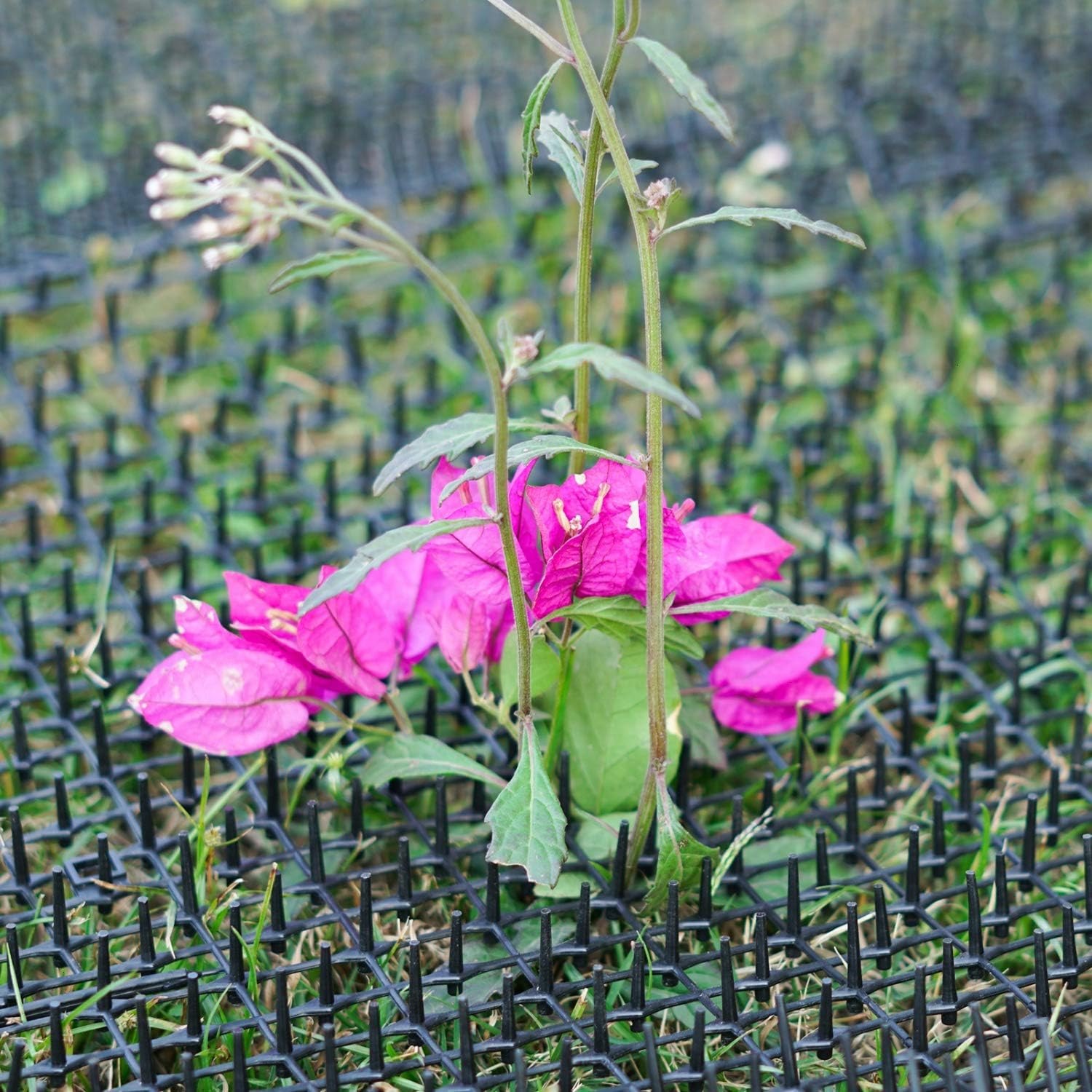
You can cut holes or notches so stems and seedlings pass through while the surrounding soil stays covered. Many gardeners cut a slit from the edge to the center so the mat can be slipped around an existing plant. Do not press spikes against soft new growth.

Will they stay put in the wind?

Use the included staples to pin the mats into soil or mulch. On hard surfaces, a stone, a pot or a strip of double-sided tape at the corners does the job. Lightweight plastic will move if you leave it loose on an exposed patio.

Can I use them on furniture?

Yes. Laying a panel on a sofa cushion, armchair or countertop is one of the most common indoor uses and is why people search for the best cat deterrent for sofa surfaces. Place them when you leave the room and lift them when you want to sit down.

Will the spikes mark my furniture?

On most firm upholstery and hard surfaces they sit flat and do no harm. On very soft leather, delicate veneer or polished timber, put a thin cloth or felt pad underneath. Always test a small hidden area first.

Can I use them in the car?

People do place them on seats and in footwells to keep pets off particular spots. Only use them in a parked vehicle and remove them before anyone sits down. Never place a mat where it could slide under the pedals.

Do they work on countertops?

Yes, countertops are a classic indoor use and a frequent reason people look for the best cat proofing for countertops. The cat jumps up, lands on something unpleasant, and learns to stop. Wipe the surface clean before cooking once the mats are removed.

Are they weatherproof?

They are plastic, so rain and watering will not ruin them. Long periods of strong sun will eventually make any thin plastic less flexible. Lifting them for winter storage will extend their useful life.

How long before I see results?

Some cats change behavior the first time they step on a mat. Others test the area for a week or two before giving up. Consistency matters more than time, so leave the mats in place rather than lifting them each day.

What if the cat just walks around the mats?

That is a good sign, because it means the deterrent is working at that spot. Follow the new path and place a mat there, or cut strips to widen the protected zone. A best anti dig mat for garden setup usually takes one or two adjustments.

Can I use them with mulch or gravel?

Yes. Lay the mat on top and scatter a light dusting of mulch over it if you want it less visible, keeping the spike tips exposed. Too much covering material will blunt the effect because the animal no longer feels the spikes.

Are they visible in the garden?

Black plastic sits fairly low and tends to disappear against soil and dark mulch, especially once planting fills in. On pale gravel they are more noticeable. Cutting them into narrow strips makes them less obvious than full panels.

How do I clean them?

A hose will shift most garden soil, and a damp cloth works for indoor dust. Let them dry before stacking so moisture does not sit between the layers. Avoid solvents and strong cleaners, which can weaken plastic.

How should I store them between seasons?

Rinse, dry and stack them flat in a shed, garage or storage box. Keep them out of direct sun and away from anything heavy that could crush the spikes. They take up very little space when stacked.

What material are the mats made from?

The listing specifies plastic. The exact polymer type and finish are not specified in this record. Color is given as black for the ten piece set.

What size is each individual mat?

The installed mat dimensions are not specified in this record. The figure given by the supplier, 6 x 6 x 8 inches, refers to the packed carton. Check the product photos for a sense of proportion against pots and cushions.

What country are these made in?

Country of origin is not specified in this record. The brand listed is POMEAT and the UPC is 739750150221. We do not state manufacturing details we cannot verify.

Is this better than a spray repellent?

Sprays wash away with rain and need constant reapplication, while a mat keeps working until you move it. Many gardeners use the best cat deterrent for garden beds as a physical layer first and keep scent products for areas they cannot cover. A mat is also cheaper over a full season.

Would this make a good gift?

It suits anyone who keeps a vegetable patch, grows seedlings or is losing a battle with a neighbourhood cat. Ten pieces means the recipient can try it in several places without rationing. It is a practical gift rather than a decorative one.

How is it delivered and how long does it take?

Orders are shipped from our supply partner and tracking is emailed once the parcel leaves the warehouse. Delivery times vary by destination and are shown at checkout. The pack is light and ships flat, so it travels well.

What if it is not right for my situation?

Contact us within the returns window shown at checkout and we will arrange a return or replacement for unused mats in their original condition. Tell us where you tried them and what the animal did, because a different placement or a cut-to-strips layout often solves it. If it still is not the right tool, we will sort the return out.

How to Choose and Use a Cat Scat Mat That Actually Works

6 min read American Pest Spikes

The problem with one favorite patch

Cats are creatures of routine. A cat that digs in your seedbed is not doing it at random. It found one spot where the soil was loose and warm and nobody chased it off, and now that spot is on its daily round. The same thing happens indoors. One armchair, one windowsill, one corner of the kitchen bench.

That routine is annoying but it is also the weakness. You do not need to fence your whole garden or cat-proof your whole house. You need to make two or three specific places feel wrong. Once they feel wrong often enough, the cat drops them from its route and the problem quietly goes away.

A spiked plastic mat is the simplest way to make a place feel wrong. It does not need batteries, it does not need refilling, and it works at three in the morning when you are asleep.

How a spiked mat works

The mats in this pack are flat plastic panels with rows of spikes pointing upward. You lay one spikes-up on the soil, mulch, cushion or ledge you want left alone.

A cat approaches, puts a paw down, and the surface is not what it expected. Instead of soft soil it gets something knobbly and unsteady. Cats hate unstable footing, and they are not inclined to work out whether it would be fine if they just pushed on. They back off and go somewhere easier.

The spikes are flexible plastic, so the point is discomfort, not injury. They are not sharp enough to break skin or pierce a paw pad. This matters if the animal you are deterring is your own pet, or belongs to a neighbor you still want to be on speaking terms with. Plenty of people go looking for the best humane cat repellent precisely because they do not want to hurt anything, they just want their lettuce seedlings to survive.

Why a ten pack rather than one or two

Buying a single mat usually ends in frustration. You cover the patch, the cat moves eighteen inches to the left, and now you need another mat. Ten panels give you room to cover the main spot, the obvious alternative, and the approach route.

They also give you room to cut. The plastic trims with ordinary scissors, so one panel can become four narrow strips. Strips are often more useful than full panels, because you are usually blocking a path rather than carpeting an area. A strip along the front edge of a raised bed can be enough. A strip across a sofa cushion can be enough.

The edges have interfaces on the top, bottom and sides, which means panels splice together when you do want one long continuous run. Twenty small curved hooks are included for holding joins and edges in place, along with seven fixing staples for pinning into soil.

Outdoor uses

The classic job is a freshly dug bed. Turned soil is irresistible, and new planting is exactly when you can least afford a cat digging around. Lay panels over the bare soil between plants, cut notches for stems, and pin the corners with staples.

Pots are the other big one. Large pots with exposed soil get used as litter trays constantly. Cut a mat to the inside diameter of the pot, slit it from edge to center so it slips around the stem, and drop it on the surface. People hunting for the best scat mat for potted plants are nearly always solving this one problem.

Other outdoor spots worth covering include gravel paths, the strip of soil along a fence where cats enter, the top of a low wall used as a highway, and a lawn edge that keeps getting scratched up. A little mulch scattered over the mats hides them, as long as you leave the spike tips clear.

Indoor and vehicle uses

Indoors, the same panels work on sofa cushions, chair seats, kitchen counters, the top of a bookcase, and the floor in front of a door a dog keeps scratching. The approach is a bit different from the garden. Outdoors you leave the mats in place for weeks. Indoors you usually put them out when you leave the room and lift them when you come back.

That on-and-off pattern still works because the cat does its exploring when the house is quiet. After a couple of weeks of finding the bench unpleasant, most cats stop jumping up at all.

For car use, people place panels on seats and in footwells of a parked vehicle to stop a dog settling where it should not. Take them out before driving. Nothing loose should ever be near the pedals.

Fitting and placement tips

Spend five minutes watching before you start laying mats. Where does the animal come in? Where does it land? Which patch is it actually using? Covering the landing zone is usually more effective than covering the whole bed.

Pin anything outdoors. Lightweight plastic will blow across the lawn in the first decent gust, and a mat lying face down is just litter. Use the staples in soil and a stone, a pot or a strip of tape on paving.

Cut generously. People are often too careful with the first mat and end up with a panel that is too small to matter. If the cat can put four paws on clear ground next to the mat, you have not changed anything.

Expect to adjust once. The animal will test the edges, find a gap, and you will move a strip. That is normal, and it is usually the end of it.

Looking after them

These mats need very little. Hose off garden soil when it builds up between the spikes, or wipe them with a damp cloth for indoor use. Let them dry before you stack them, because trapped moisture and soil make a mess.

Skip the strong cleaners and solvents. Thin plastic goes brittle when it is attacked chemically or baked in sun for years, so bringing them inside over winter will keep them flexible longer.

Lift them before you mow near a bed or do any heavy digging. Running a mower over a plastic mat is an expensive mistake for the mower.

Setting realistic expectations

A scat mat is a training tool, not a wall. A very determined animal, especially a large dog, may decide the discomfort is worth it. In that case you need a wider covered zone or a different approach altogether.

For ordinary cat problems, which is most problems, the success rate is high because cats give up easily when a spot stops being comfortable. The usual outcome is that the behavior stops in one to three weeks and never restarts, even after you remove the mats.

Keep a few spare panels in the shed. The next time you plant something new and a cat notices the fresh soil, you will want them.

The short version

Ten black plastic spiked mats, cuttable with scissors, splice-able at the edges, with staples and hooks included. Lay them spikes-up over the soil, cushion or bench the animal keeps using, pin them down, and leave them there.

They work by being unpleasant to stand on, not by hurting anything. Cut them into strips to stretch the coverage further. Expect to move one or two after the first week as the animal tests the edges.

Once the habit breaks, rinse them, stack them flat, and keep them for next season.

Browse the shop

Ready to take your garden bed back?

Order the ten pack, cover the two spots the cat keeps returning to, and give it a fortnight.

Ask us a question

Page summary

The POMEAT cat scat mat 10 pack is a set of ten black plastic deterrent mats with flexible upward-facing spikes, sold under UPC 739750150221. It is marketed for cats and is used to stop digging, scratching, climbing and toileting in unwanted places, both outdoors in garden beds, borders and pots and indoors on sofas, countertops and in cars. Each mat can be cut with scissors into strips or custom shapes, and edge interfaces allow panels to be spliced into longer runs. Fixing staples and small curved hooks are supplied. Listed item weight is 1.9 pounds (0.86 kg) and packed dimensions are 6 x 6 x 8 inches. Color, material finish, country of origin and installed mat dimensions are not specified in this record.