
The complete guide
The Practical Guide To Choosing And Fitting Pigeon Spikes
The problem with a favorite perch
Pigeons do not wander. They work a route, and once a ledge on your building becomes part of it, the same birds return to the same spot every day. That is why the washing never seems to fix anything. You clean the sill on Saturday, and by Wednesday the droppings are back, along with the smell and the mess on the car below.
Droppings are not just unpleasant. They are acidic, so over time they eat into paintwork, limestone, render and metal flashing. Nesting material blocks gutters and downpipes. In sheltered spots, a roost can bring mites and feathers into roof cavities and air intakes. The longer a perch is used, the more attractive it becomes to other birds, because the scent and the mess signal a safe place to sit.
Scaring birds off works for about a week. Plastic owls get ignored. Reflective tape blows loose. Gels go hard in the sun and sticky in the heat, and they trap feathers in a way that looks worse than the original problem. What actually works long term is taking the landing surface away, which is exactly what spikes do.
How spikes work
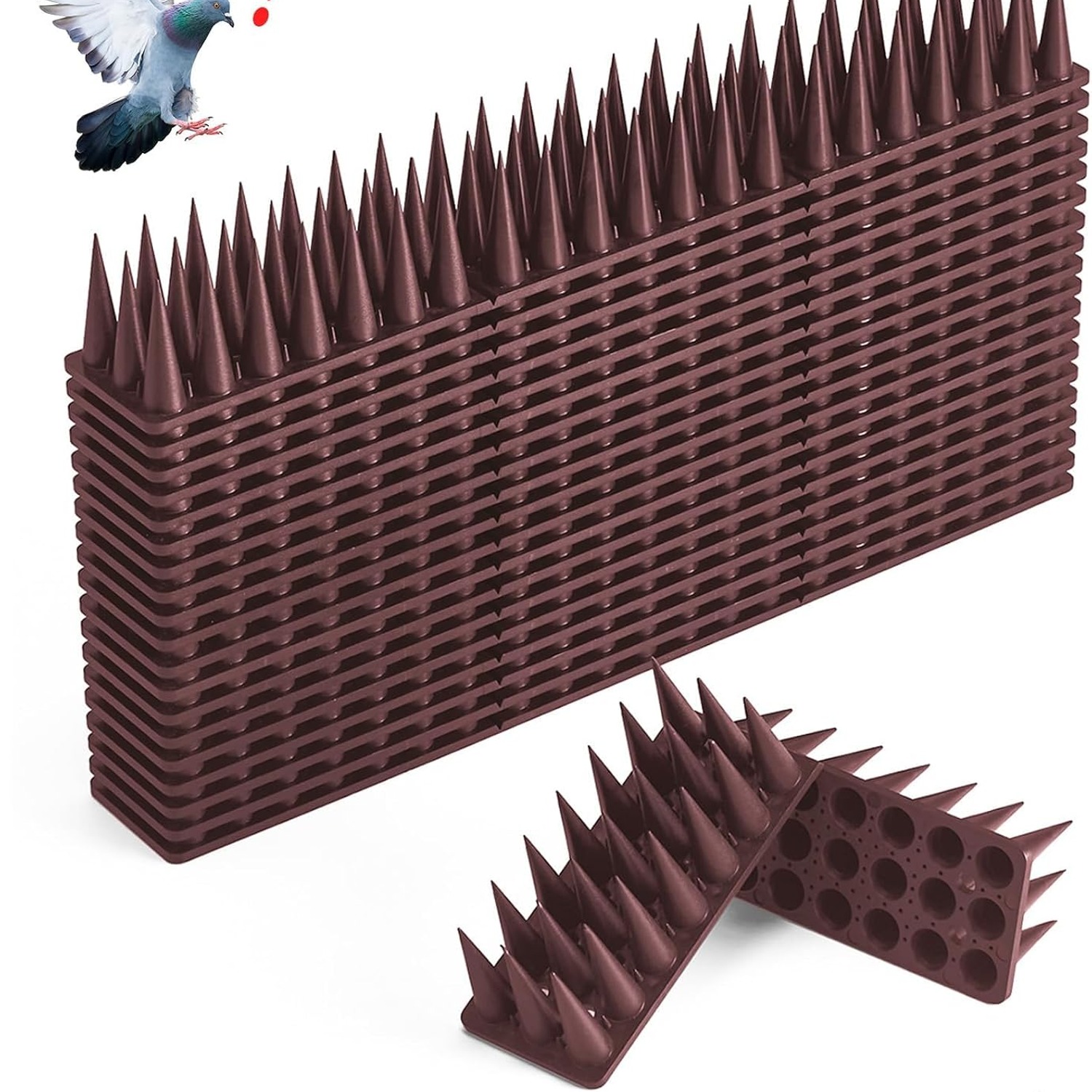
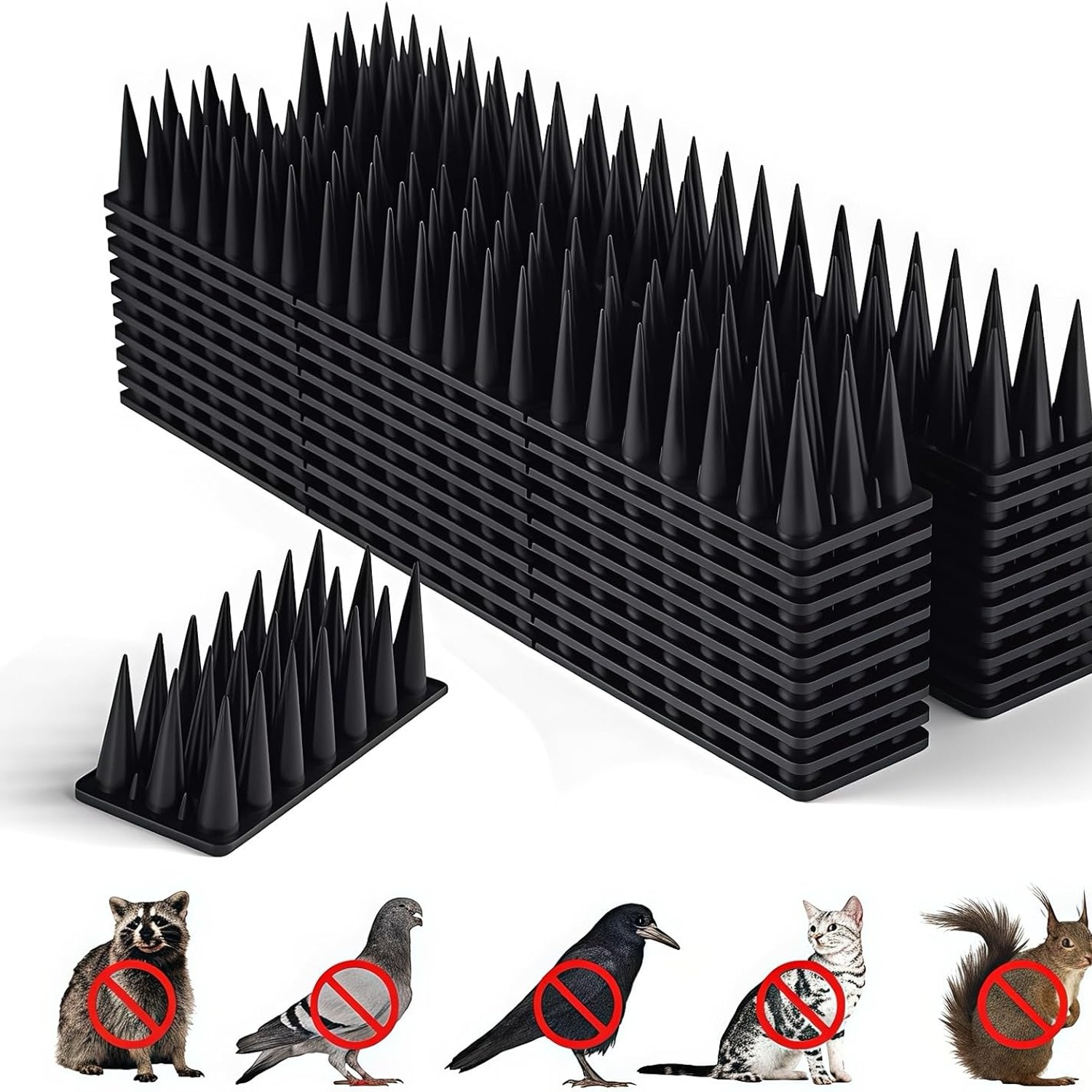
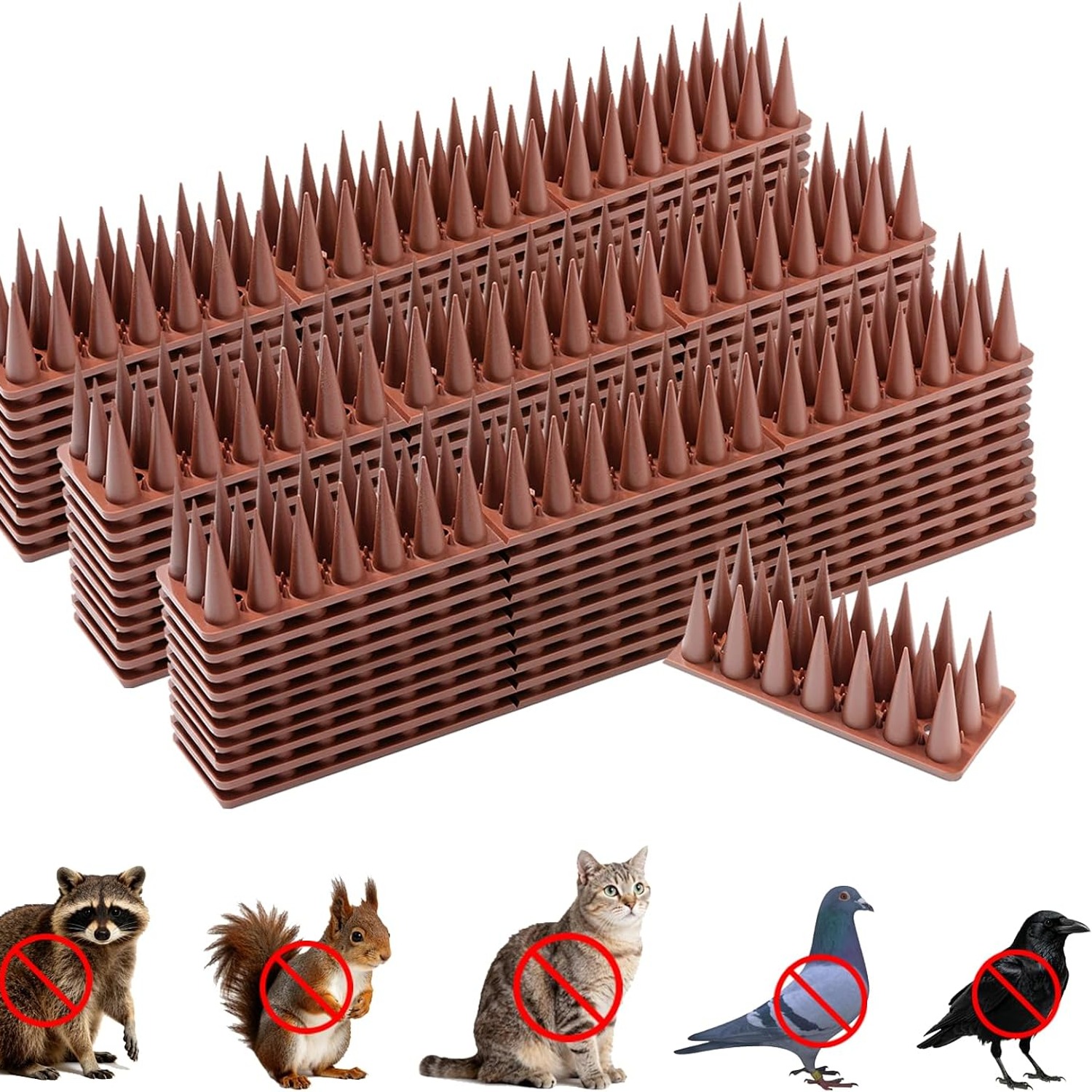
A bird needs a flat patch big enough to set its feet down and balance. Spikes fill that patch with vertical points at close spacing. A pigeon coming in to land sees no clear footing, aborts the approach, and goes to the next option on its route. Within a few days, the spot drops off the habit loop entirely.
There is nothing active about it. No battery, no noise, no spray. The power source for this kit is listed as manual, which is a formal way of saying it just sits there and does its job. That also means it keeps working when you are away, during a power cut, and in the middle of the night.
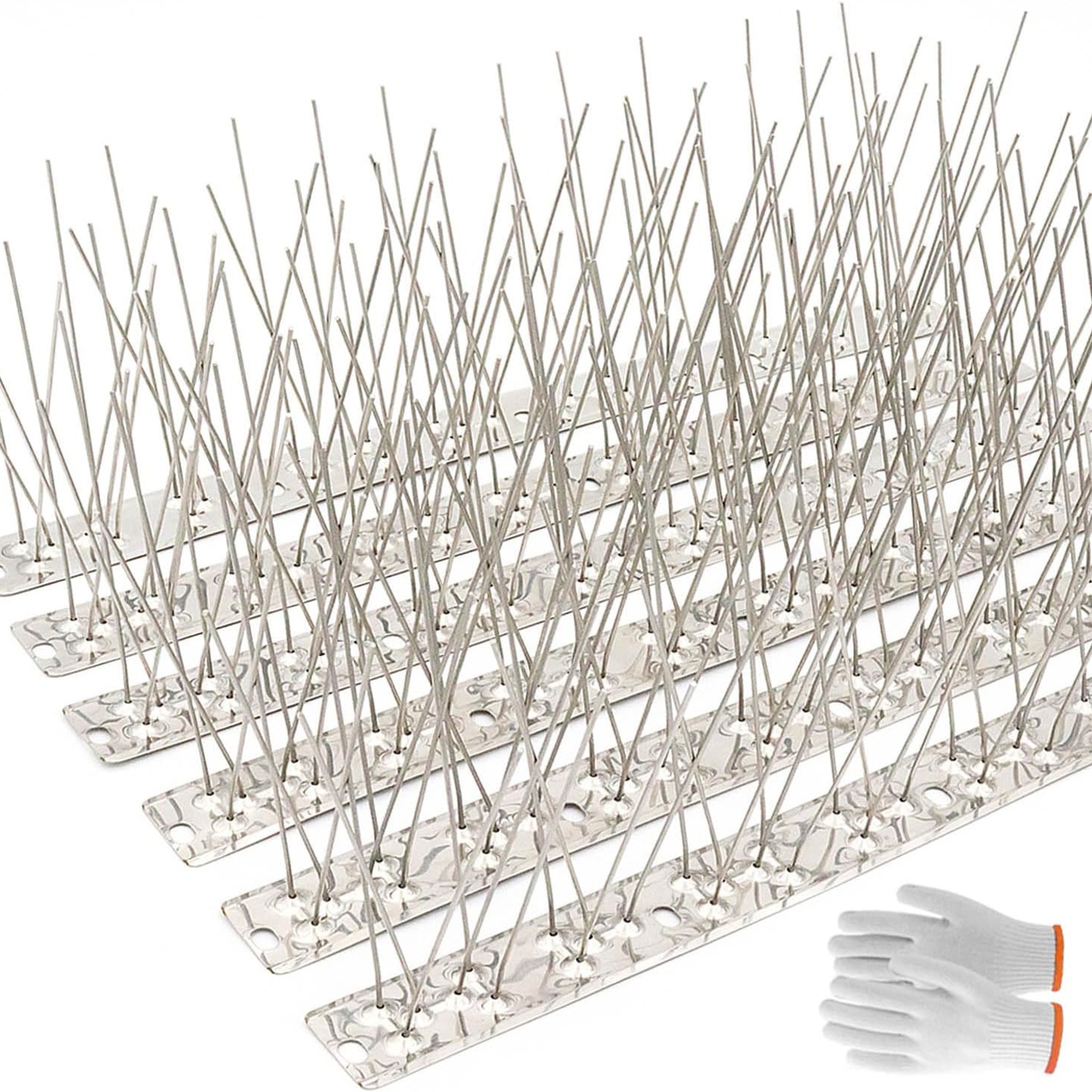
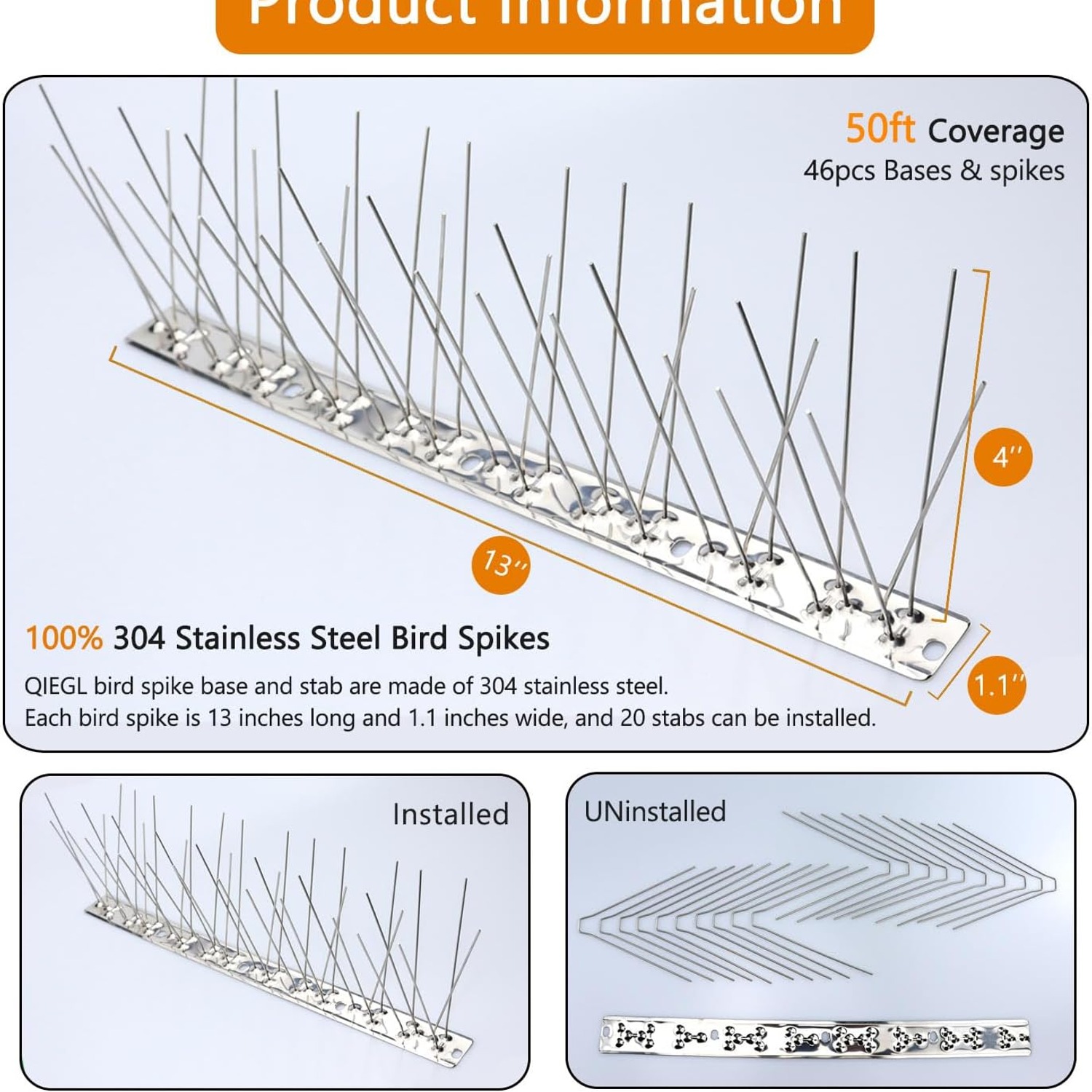
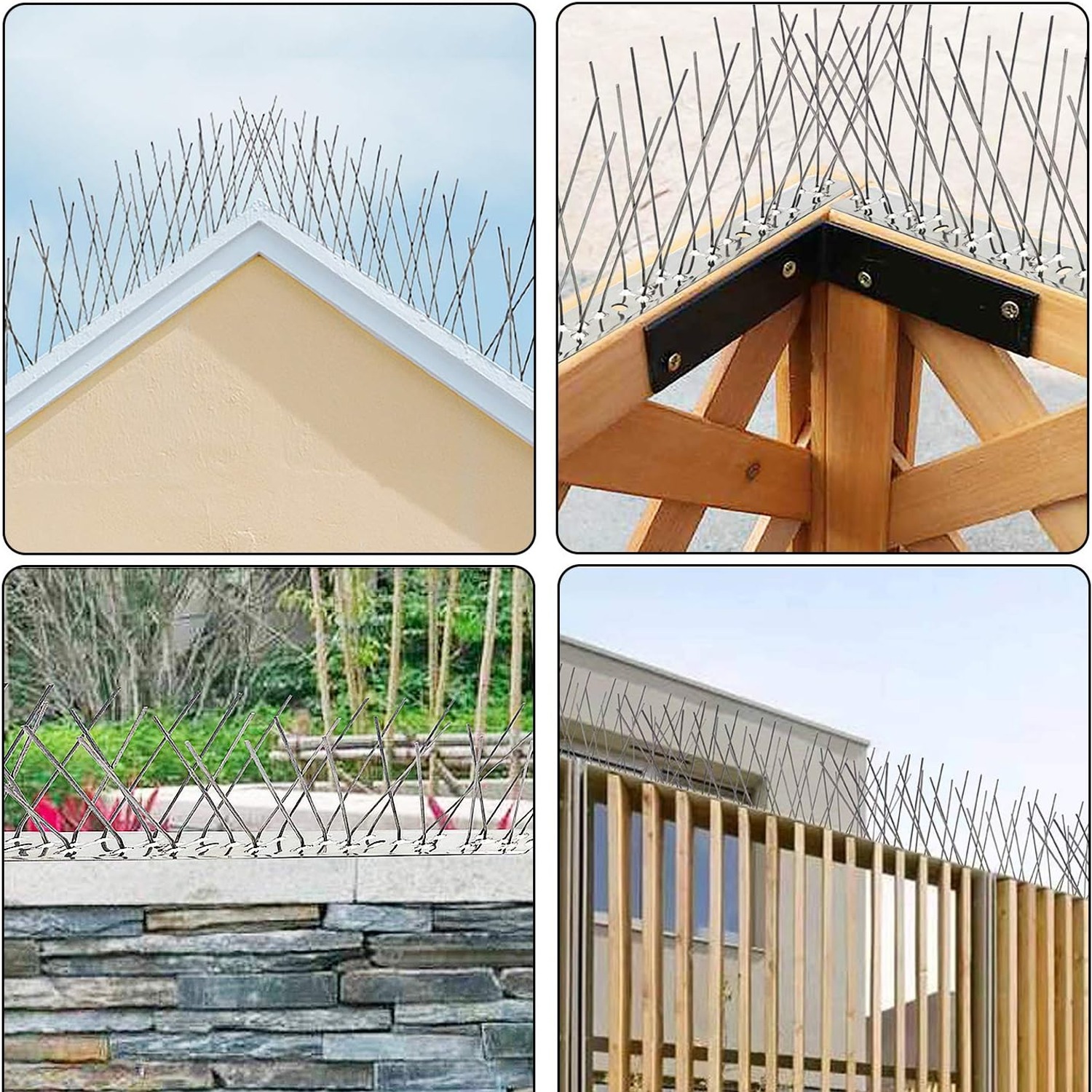
The strips in this kit are 13 inches long with 20 spike points each. There are 46 of them in the box, giving around 50 ft of coverage in total and 920 count overall. That is a useful amount. It is enough for a full front roofline on a typical house, or a long fence top, or every window sill on one elevation with some left over for the shed.
Why stainless steel is worth it
This is the part people skimp on and regret. There are plenty of cheap bird spikes made from plated or mild steel, and they look identical on day one. The difference shows up after the first wet winter, when the plating fails and rust starts. On render, sandstone or painted timber, that rust runs. You end up with orange streaks that are harder to remove than the droppings you were trying to prevent.
Both the spike points and the bases here are 304 stainless steel. It handles rain, UV, frost and salt air without degrading, which matters if you live near the coast. The silver finish also stays bright, so the strips blend into light-colored stone, render and metal rather than becoming a visible dark line along your roof.
Stainless strips also reflect a little light as they move, which adds a small extra deterrent effect on top of the physical barrier. That is a bonus rather than the main event. The spikes do the work.
Who this suits
Homeowners dealing with a roofline, balcony or fence that birds have claimed. Landlords tired of cleaning the same entrance canopy. Anyone with a carport, boat shelter or caravan annex collecting droppings. Small business owners with signage, awnings or air conditioning units that birds have adopted.
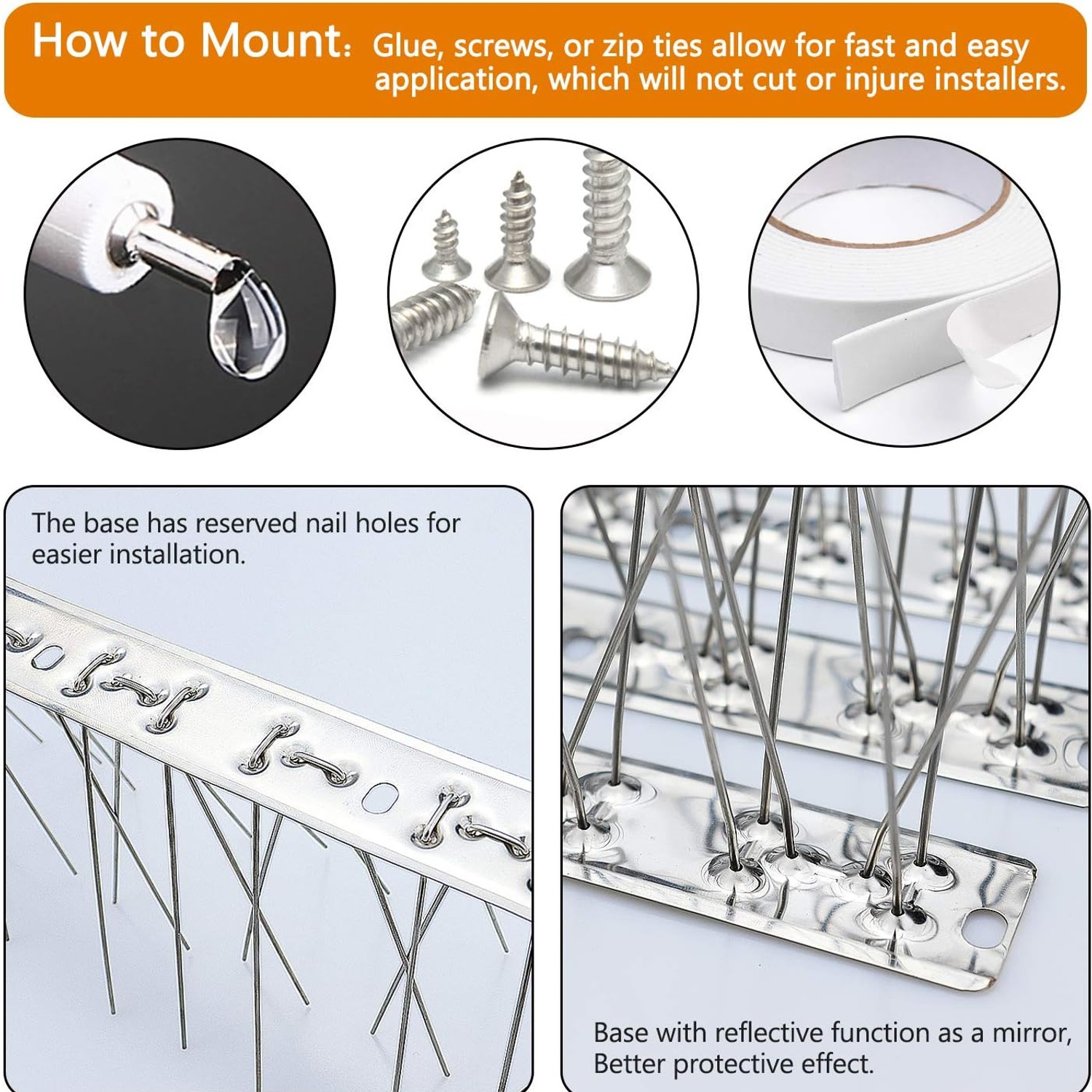
It also suits people who cannot drill. Plenty of balconies, waterproofed flat roofs and rented properties rule out screws. Because each base has four pre-drilled holes and the strips also take adhesive or straps, you can pick whichever method the surface allows. That flexibility is the practical difference between a product you can install and one that sits in the shed.
Choosing the right coverage
Start with a tape measure, not a guess. Walk the building and write down the length of every surface birds use. Include the full roof edge, the top of parapets, window sills, the capping on fences and the horizontal rails on balconies. Add the awkward extras people forget, like the top of a satellite dish bracket or the flat bar above a garage door.
Then add about ten percent. You will lose some length at corners, and you want to run spikes right to both ends of every ledge rather than stopping short. Birds are efficient. If you leave four inches of bare stone at the end of a sill, they will use those four inches.
Depth matters as much as length. A wide ledge needs more than a single line of spikes down the middle, because a pigeon will simply sit behind or in front of it. As a rule, cover the full usable depth of the surface. On narrow sills a single row is fine. On a parapet or a wide sign top, run two rows.
Fitting them without drama
Clean first. Scrape off old droppings and nesting material, wash the surface, and let it dry completely. This is not just about hygiene. Adhesive will not bond to a dirty surface, and the scent of an old roost keeps pulling birds back even after the spikes go on.
Lay the strips out dry before you fix anything. Butt them end to end so there is no gap between runs. Mark your fixing points, then work along the line. For screws, use the right plug for the material, and do not overtighten, since the bases are thin. For adhesive, apply a continuous bead along the base rather than three dots, and weight or tape the strip until it cures. For straps, pull snug and trim the tails.
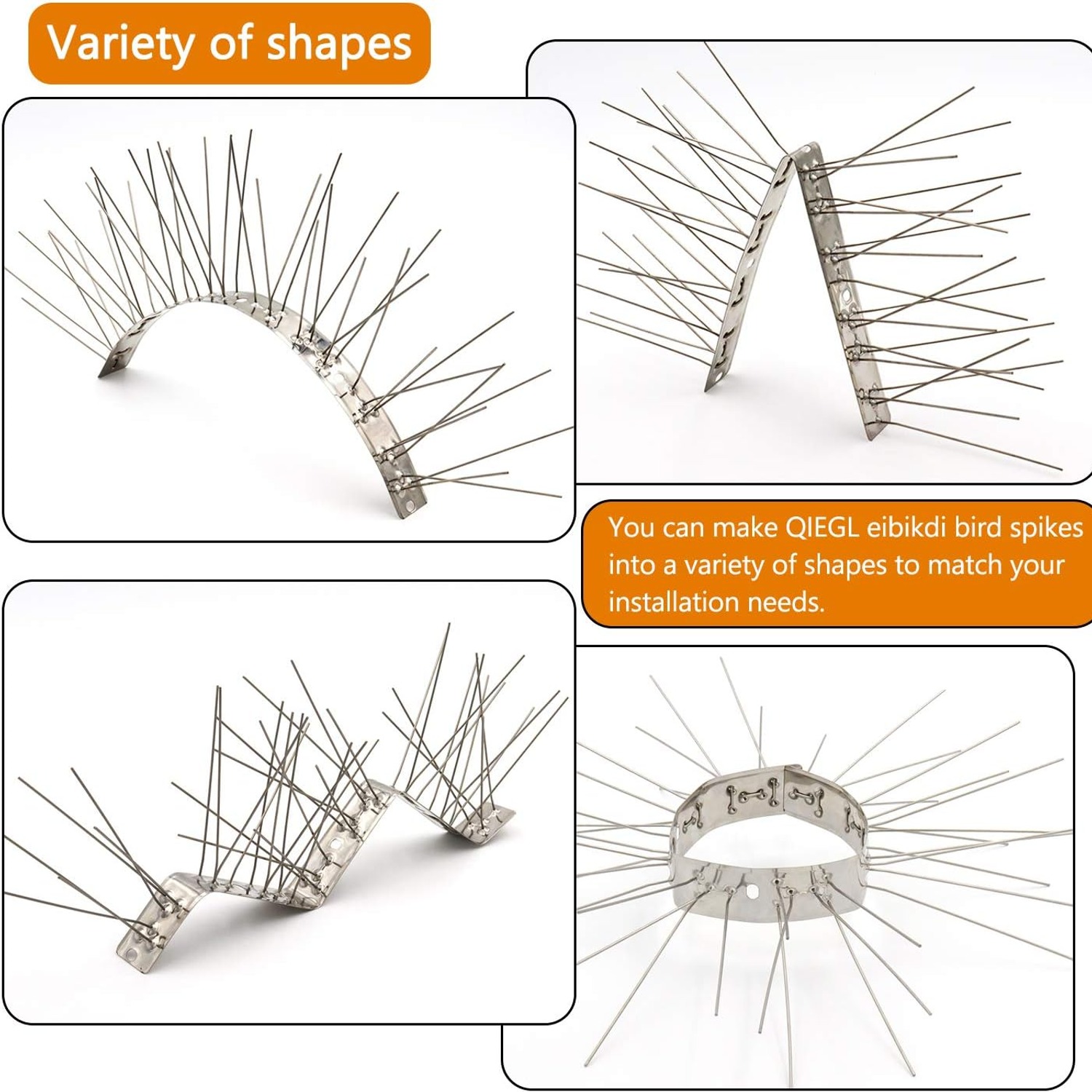
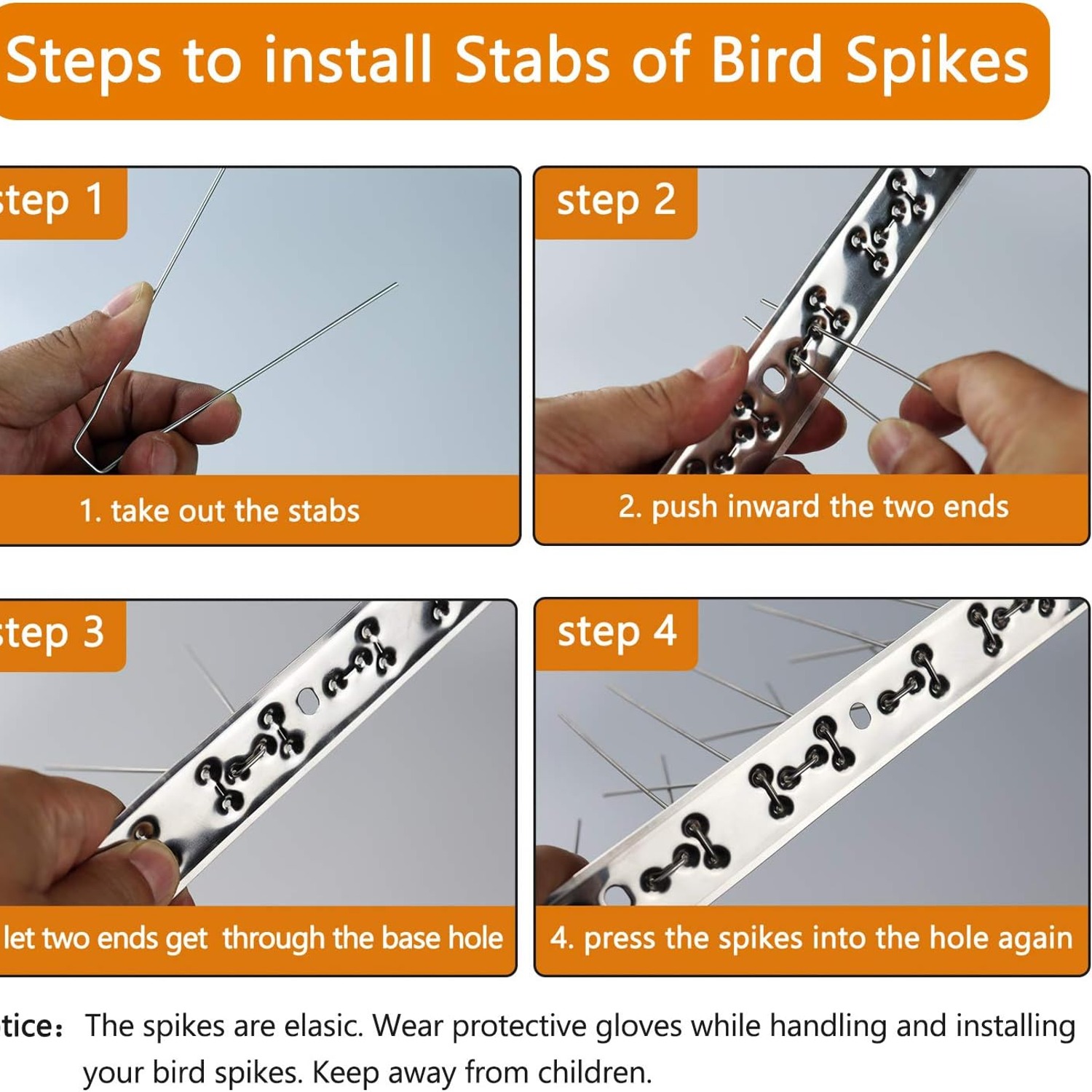
Bend the strips where you need to. Round posts, curved gutter lips and arched parapets are all straightforward, since the bases flex by hand. Wear the supplied gloves while you do this work. The points are not dangerous, but they will scratch you if you grip a strip carelessly while balancing on a ladder.
Safety is worth a line of its own. If a section is high, awkward or over a stairwell, use proper access equipment or pay someone. No ledge is worth a fall.
Care and upkeep
There is very little to do. Rinse the strips when you clean the gutters, pull out any leaves or twigs that have lodged between the points, and let them dry. If you are near the coast, an occasional hose down washes off salt.
Check the fixings once or twice a year and after any big storm. Metal lasts, but screws loosen and adhesive can lift at an edge if water gets behind it. Catching one loose strip early is five minutes of work. Finding six strips in the garden after a gale is an afternoon.
Watch for nesting attempts in the first season. Determined birds sometimes try to pile twigs on top of a spiked area to build a platform. Clear that material as soon as you see it and the attempt stops.
The short version
Pigeons come back because the perch works for them. Remove the perch and they stop coming. This kit gives you 50 ft of stainless steel spikes across 46 strips, with pre-drilled bases that take screws, adhesive or straps, and enough flex to follow curves. Measure properly, clean the surface, cover the full depth of every ledge, and check the fixings now and then. Do that, and the mess stops being a weekly job.