
The complete guide
The Practical Guide To Buying And Fitting Pigeon Spikes
The problem nobody warns you about
Birds are charming right up until they pick your building. Then the droppings start. They stain render, they eat into paintwork, they block gutters, and they make a patio or a balcony genuinely unpleasant to use. Worse, birds are creatures of habit. Once a ledge is established as a good roost, the same birds come back night after night, and their offspring learn the spot too.
Cleaning does not fix this. You can pressure wash a parapet on Saturday and find it fouled again by Wednesday. Scare devices like plastic owls and reflective tape tend to work for a week or two, until the birds work out that nothing bad ever actually happens. Netting works but is a big job and looks industrial on a house.
Spikes sit in a useful middle ground. They are a physical change to the surface, they do not rely on the bird being fooled, and once they are on, they keep working without you doing anything.
How spikes do their job
A pigeon landing on a ledge needs a flat patch big enough for both feet and enough clearance to beat its wings on approach and departure. A row of upright pins takes both of those things away. The bird comes in, finds nowhere stable, and peels off to look elsewhere.
That is the whole mechanism. There is no shock, no chemical, no noise. The bird is not injured, it is just inconvenienced, and birds are efficient animals that do not waste energy on an uncomfortable perch when an easier one exists nearby.
This is why coverage matters so much more than spike height. A 25-foot run with a four-inch bare gap in the middle is a 25-foot run with a landing pad in it. Birds find that gap within a day. When people say spikes did not work for them, the problem is nearly always incomplete coverage rather than the product itself.
Why stainless steel is worth caring about
Spike strips come in plastic, in plated steel, and in stainless. Plastic is cheap and goes brittle in strong sun after a few seasons. Plated steel looks fine on day one, but the moment the plating is scratched during installation, rust starts and runs down the wall in brown streaks. Those streaks are harder to remove than the droppings you were trying to prevent.
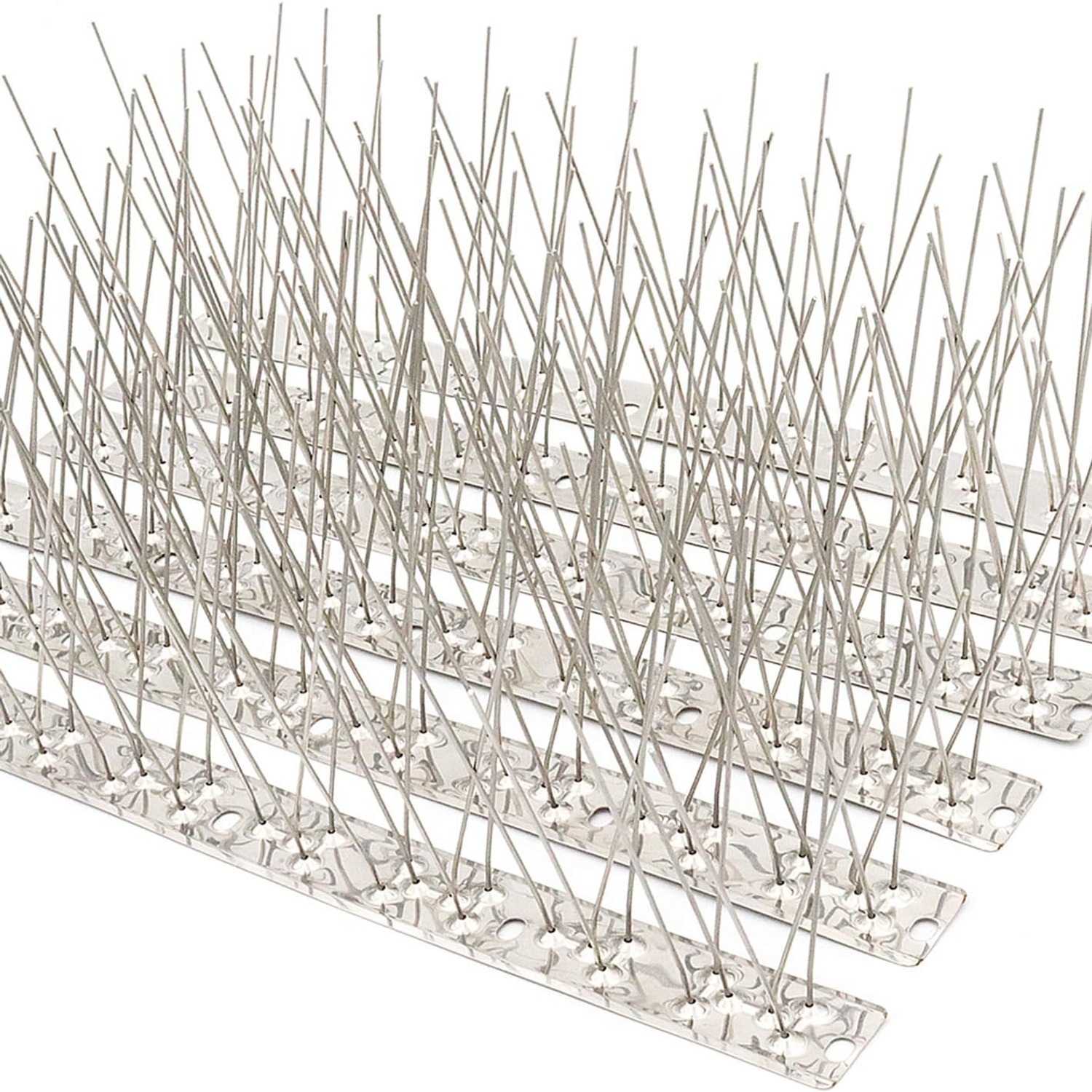
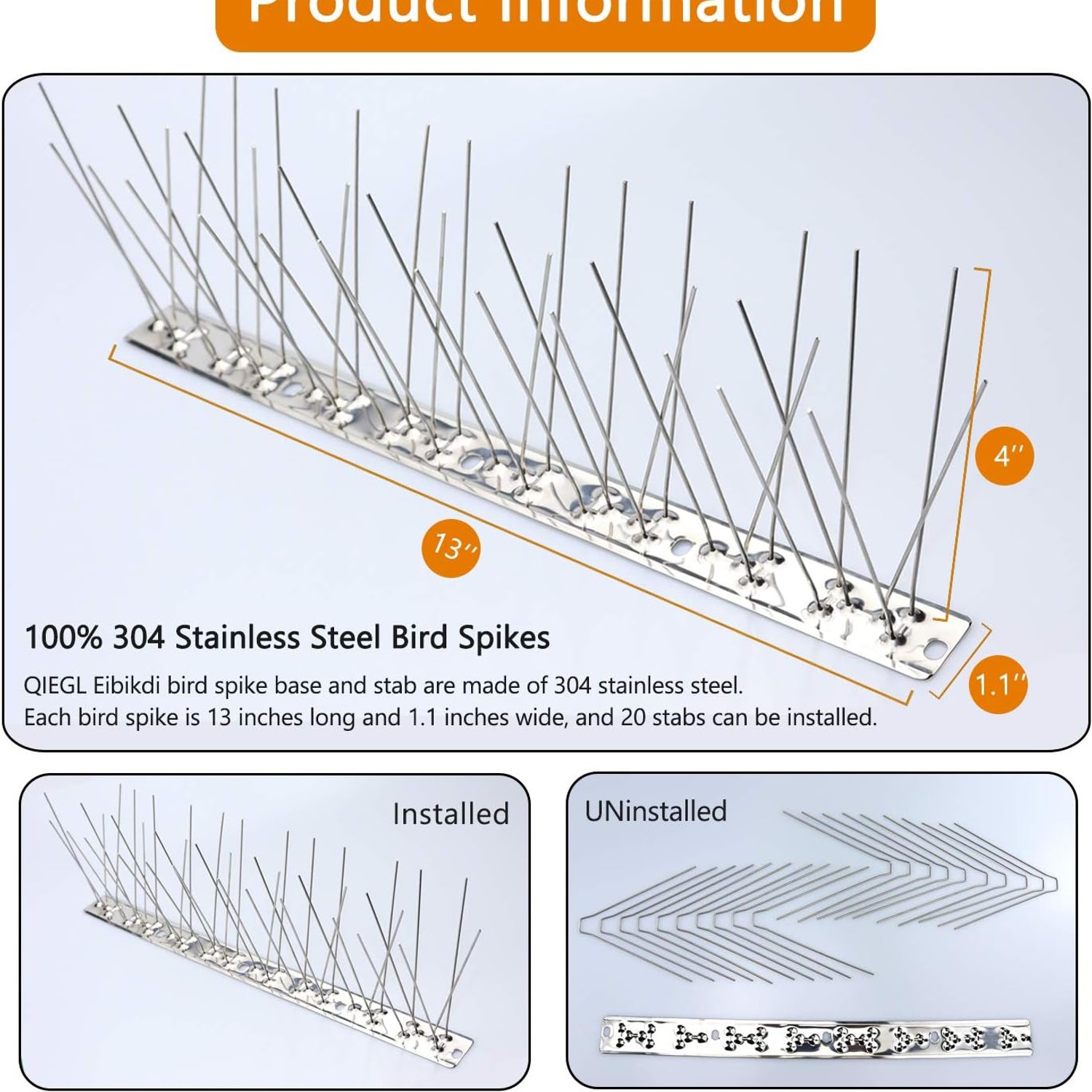
In this kit both the pins and the base are stainless steel. That is the specification worth paying for on anything fixed to the outside of a building. It means you can drill, trim and bend the strips during fitting without worrying that you have started a corrosion problem, and it means the strips will still look acceptable several years from now.
The stainless surface is also bright and slightly reflective, which some buyers consider a small extra deterrent. Treat that as a bonus rather than the main reason to buy. The physical barrier is what does the work.
Who these suit
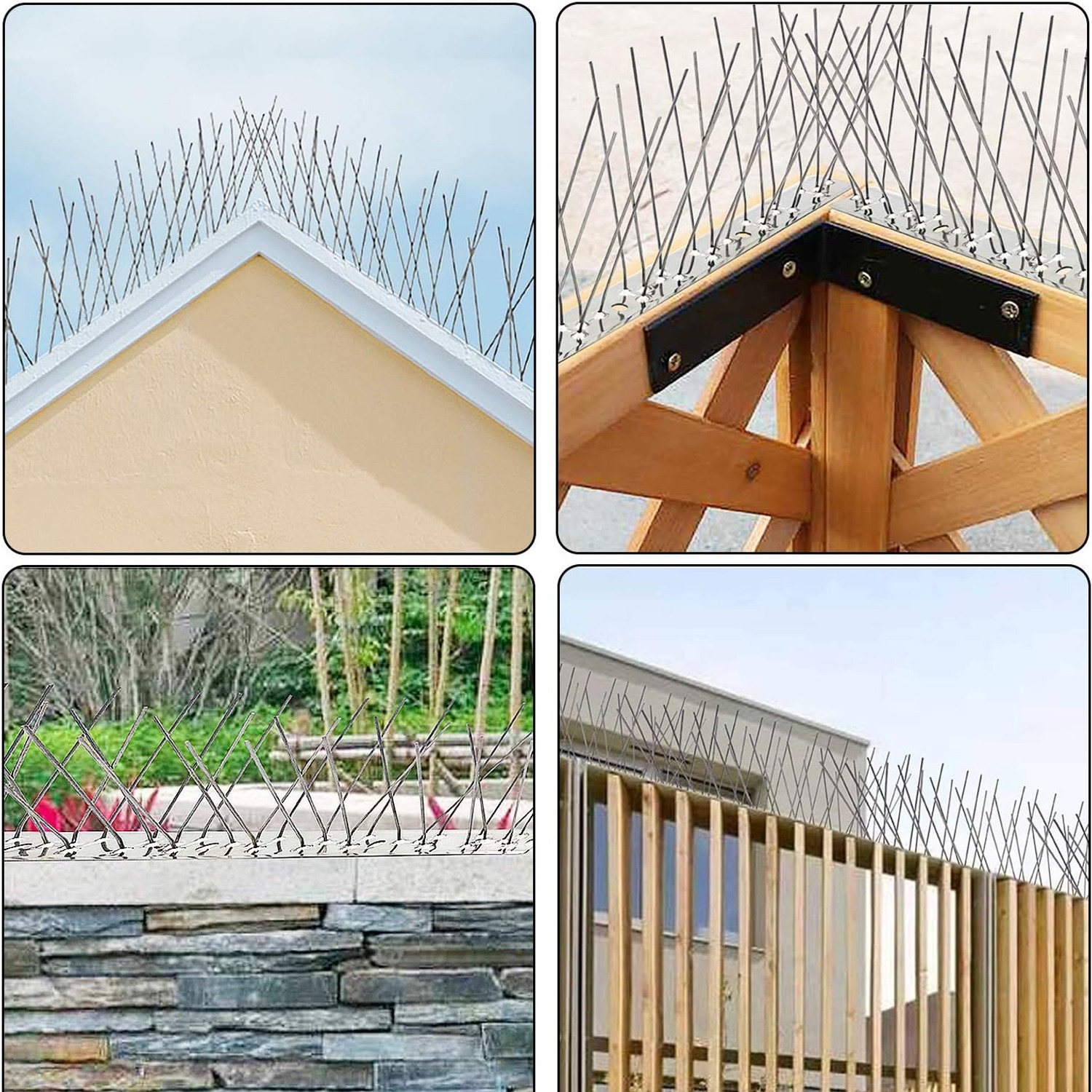
This kit makes sense if you have a defined run of ledge to protect and you are comfortable working safely at height, or you have someone who can do that part for you. Typical buyers are dealing with a gutter line, a parapet, a chimney shoulder, a fence top, a balcony rail, a shed roof, or a boat canopy frame.
The listed target species cover a wide range: pigeons, sparrows, starlings, crows, grackles, seagulls, swallows, bats and blackbirds. The suggested locations are just as broad, taking in roofs, chimneys, gazebos, TV antennas, towers, valves, landings, support structures, posts, gangways, curved surfaces and fences.
They are less suitable if the birds are nesting inside a cavity, under a solar panel, or in a roof void. In those cases the entry point needs blocking first. Spikes protect surfaces, they do not seal holes.
Working out quantity
Take a tape measure and walk the property. Write down the length of every surface where you see droppings or feathers. Do not guess from memory, because people routinely underestimate a gutter run by a third.
Add the totals and divide by 25. Round up. There is almost always one more spot you spot halfway through the job, and having a spare strip or two in the shed is much easier than waiting on a second order while you are halfway up a ladder.
Also think about depth, not just length. If your ledge is eight inches deep and your spike strip only covers three inches at the front, a gull will simply shuffle back behind it. Wide ledges need two parallel rows.
Fitting them properly
Start by cleaning. Scrape away old droppings and any nesting debris, wash the surface, and let it dry completely. This is unglamorous but it is the step that decides whether your fixing holds and whether the birds lose interest.
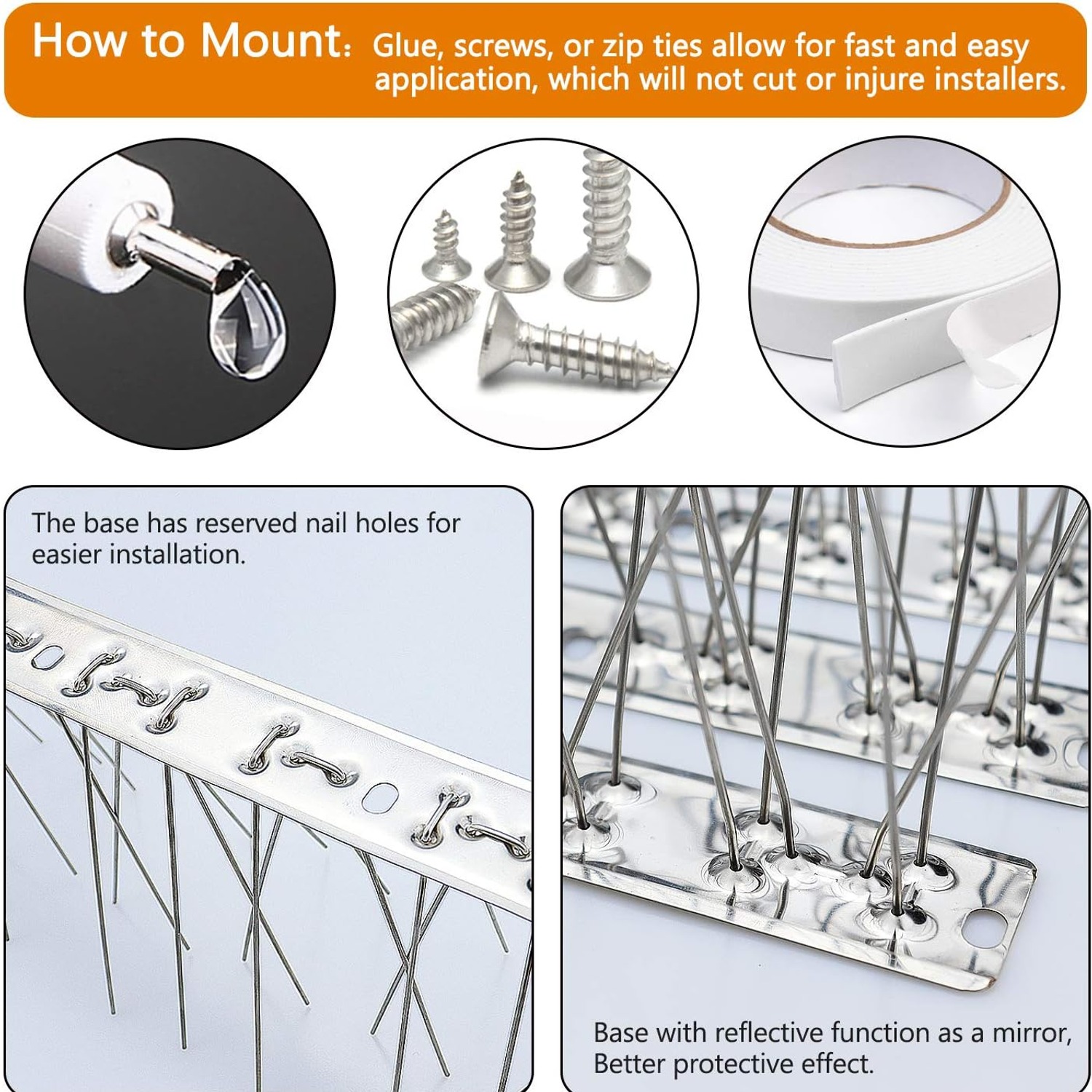
You then have three fixing options, and the pre-drilled holes in each base support all of them.
Screws are the simplest choice on timber fascia, decking or a wooden fence rail. Use stainless or galvanized screws so you are not undoing the corrosion advantage you just paid for. Drive them firm but not crushing.
Construction-grade outdoor weatherproof adhesive is the usual method on brick, concrete, stone and tile. It avoids drilling into anything you would rather not drill. Run a continuous bead the full length of the base, press down with steady pressure, and check the cure time on the tube before you walk away. Fitting adhesive the day before heavy rain is a common and avoidable mistake.
Straps or cable ties cover everything round. Pipes, handrails, antenna masts and signpost uprights all take ties neatly through the base holes. Trim the tail ends so they do not flap in the wind.
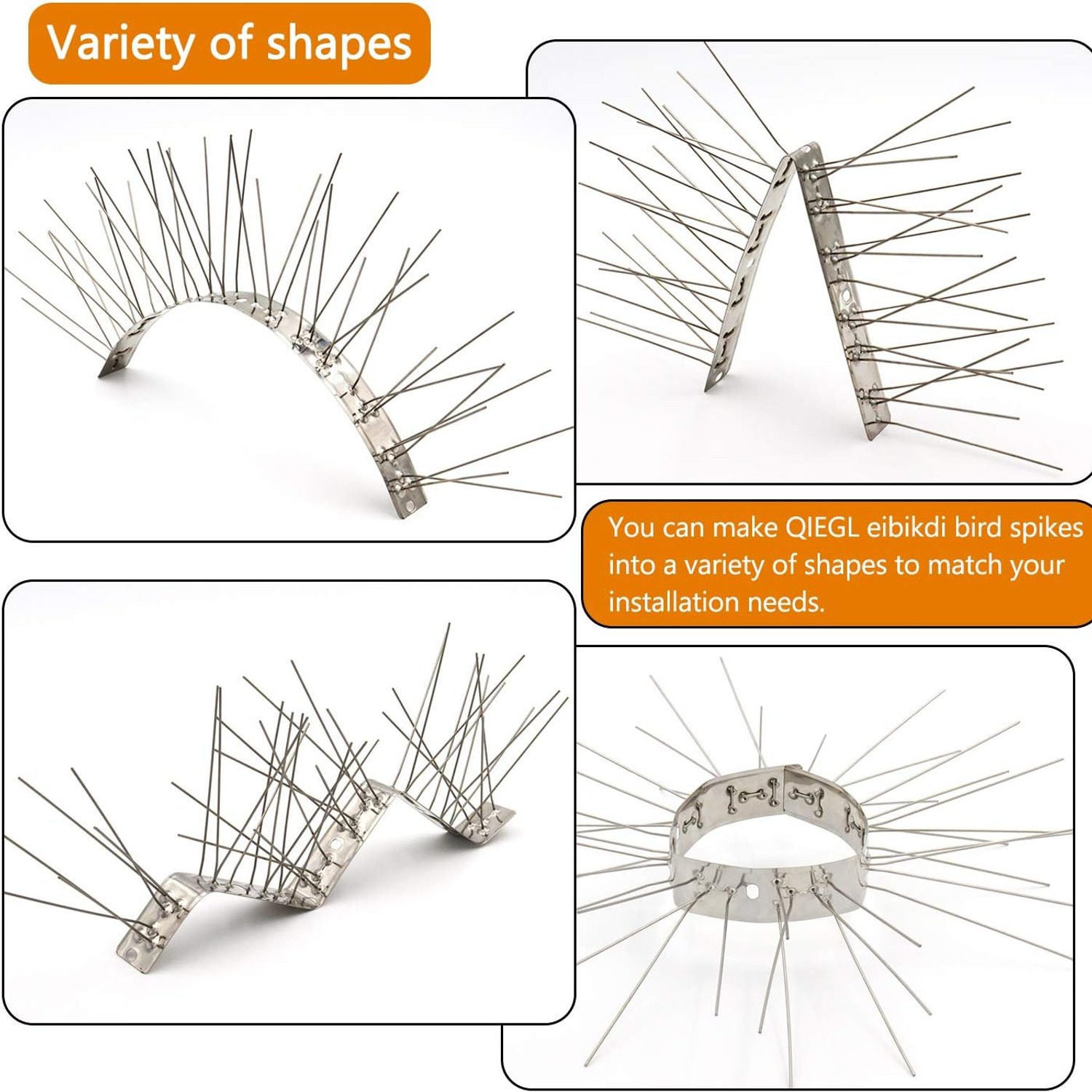
Wherever you can, bend the strips to follow the shape of the surface. A strip that hugs a curved coping leaves no gap. A flat strip sitting proud of a curve leaves a sheltered pocket, and a sheltered pocket is exactly what a nesting bird is looking for.
Keeping them working
Maintenance is genuinely minimal. Give the run a look over twice a year, ideally in spring before nesting season and again after the worst of the winter weather. You are checking two things: that nothing has lifted, and that debris has not built up along the base.
If leaves or twigs have collected, brush them out. Left alone, that debris turns into a soft layer that a determined bird can nest on, right on top of your spikes. A soft brush and five minutes solves it.
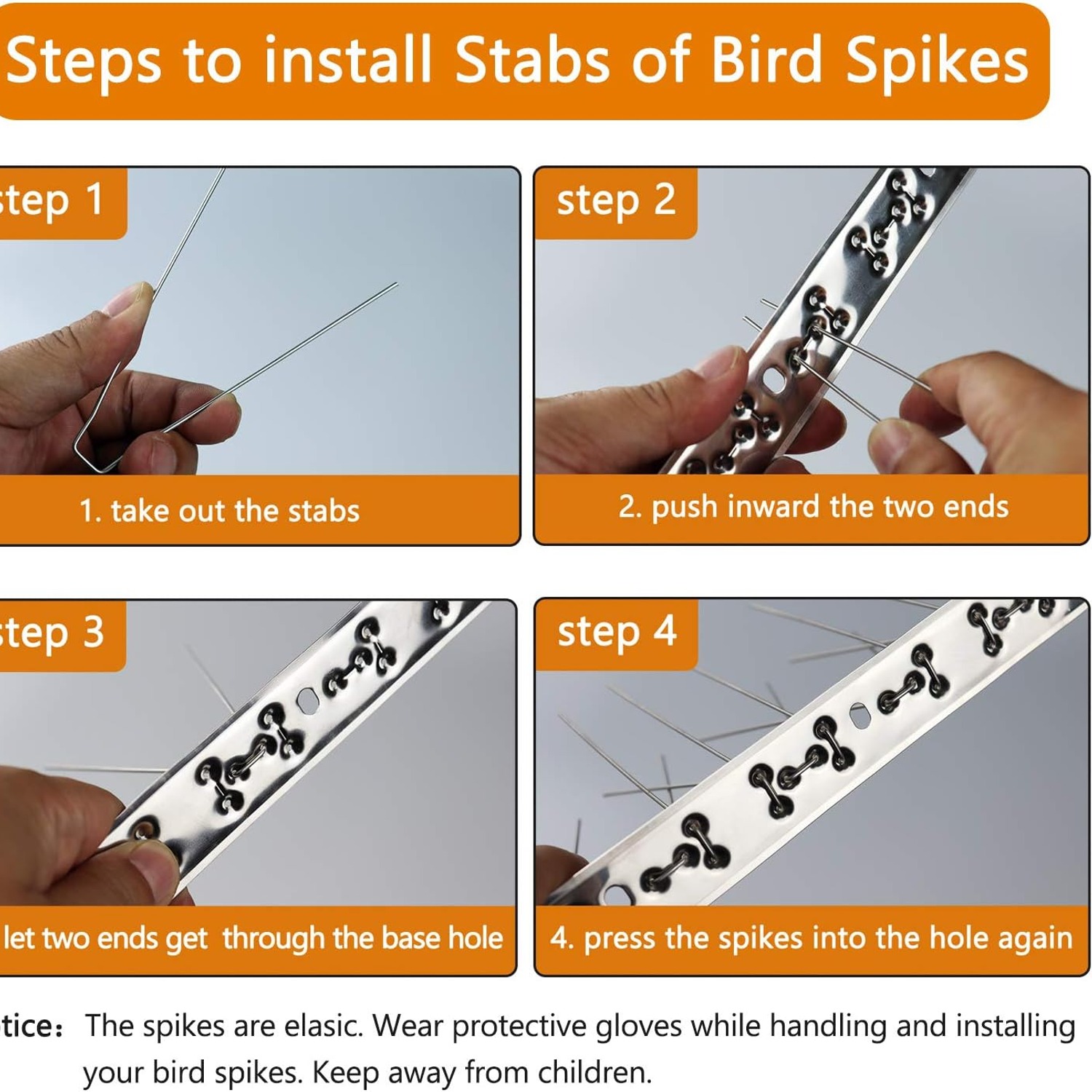
Rinse with clean water if the strips get dusty or splashed. Skip harsh acids and steel wool, which can mark the finish. Always wear gloves when handling the strips, because the pins do not get less sharp with age.
The short version
Bird mess is a habit problem, and spikes break the habit by removing the landing surface. This kit gives you 23 stainless steel strips covering 25 feet, with four fixing holes per base so screws, adhesive or ties all work, and enough flex in the base to follow curves.
Measure first, buy enough to cover everything in one go, clean the surface properly, and leave no gaps. Do that, and the ledge that has been annoying you for years stops being a problem you think about.